Beginning Hebrew: The Ultimate Beginner’s Guide to Reading, Writing, and Speaking Hebrew
Welcome to a comprehensive journey into beginner Hebrew. Whether you know a few words or you are starting from scratch, this guide is designed to lay a solid foundation for reading, writing, and speaking Ivrit—the native term for Hebrew. In this article, you will encounter a balanced mix of linguistic concepts, practical tips, and memorable practice ideas. We will cover the Hebrew alphabet (often called the aleph-bet), essential pronunciation rules, simple sentence structures, and a curated set of vocabulary you can use in daily conversations. The goal is not only to memorize letters but to build confidence in recognizing patterns, reading with fluency, and expressing yourself in Modern Hebrew while appreciating the roots of Biblical Hebrew when appropriate.
Note about terminology you will see throughout this guide: Ivrit is the native term for Hebrew. Hebrew alphabet and aleph-bet refer to the set of letters used to write the language. Niqquot (diacritical vowels) are the vowels written as marks above or below letters, while written Hebrew often appears without niqquot in everyday texts.
Why Learn Hebrew as a Beginner
There are many reasons to begin learning Hebrew today. Here are a few that resonate with most learners:
Access to culture and literature: From ancient texts to contemporary novels, learning Hebrew opens doors to a vast range of sources.
Practical communication: Modern Hebrew is spoken in Israel and among diaspora communities, making it a gateway to travel, work, and friendships.
Cognitive benefits: Learning a Semitic language strengthens memory, enhances pattern recognition, and broadens linguistic perspective.
Career and study opportunities: A growing number of programs, universities, and organizations value Hebrew language skills.
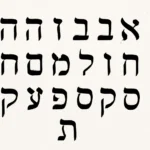
The Hebrew Alphabet: The Aleph-Bet
The aleph-bet consists of 22 consonants. Unlike English, Hebrew is written and read from right to left. In many texts, vowels are indicated using niqquot (vowel markings), but in everyday writing, vowels are often omitted. This section introduces the building blocks you will use in beginning Hebrew:
Consonants and Vowels: A Quick Overview
In Modern Hebrew, consonants carry the main lexical weight, while vowels help distinguish meaning, especially for learners. Here are a few essentials:
The letter א (aleph) is functions more as a glottal stop marker than a fixed sound in many words.
The letter ב (bet) can be pronounced as «b» or «v» depending on whether it has a dagesh (a dot) in it.
The letter ח (het) and כ/ך (kaf) produce a strong “kh” sound, while כ/ך without a dagesh can be a soft “k” in some contexts.
Vowels in niqquot include sounds like a, e, i, o, and u, represented by marks such as פַ, פֶּ, פִּ, etc.
Learning Strategy for the Alphabet
Even though many learners start with transliterations, becoming comfortable with the Hebrew script early will pay off. Here are practical steps:
Memorize the 22 consonants alongside their most common sounds.
Practice writing each letter in its uppercase and lowercase forms when applicable (note that Hebrew does not have case in the same way Latin scripts do, but you will see final forms for a few letters).
Learn occasional digraphs and how letters change when they appear at the end of a word (final forms).
Start with short, common words to build reading fluency with aleph-bet.
Reading Hebrew: From Letters to Meaning
Reading beginner Hebrew involves developing a pipeline: recognize letters, map them to sounds, use niqquot when needed, then comprehend the word in context. You will frequently encounter two modes of text: with niqquot (vowel markings) and without niqquot (vowel-less script). Below are practical guidelines to develop reading proficiency.
Phoneme awareness: Focus on the sound of each letter and combined sounds within syllables.
Word patterns: Recognize common roots and affixes that repeat across many words, such as prefixes like ה- (ha-, definite article) and suffixes indicating gender/number.
Contextual clues: Use the surrounding words to infer meaning when a word is unfamiliar.
Gradual vowel use: Start with texts that include niqquot; gradually challenge yourself with vowel-less material as your familiarity grows.
Begin with short, familiar texts. For example, practice with simple phrases like שלום (shalom) meaning “hello” or “peace,” or בַּיִת (bayit) meaning “house.” By repeatedly encountering these words, you build recognition that leads to faster reading. A few basic words to begin with are listed here for illustration:
שלום (shalom) — hello/peace
ספר (sefer) — book
בית (bayit) — house
אוכל (okhel) — food
מים (mayim) — water
Writing Hebrew: Getting Hands-On
Writing in Ivrit is a powerful skill that reinforces reading and pronunciation. This section helps you establish a practical routine for composing in Hebrew, while exposing you to the script’s directionality and structure.
Principles of Hebrew Script
Hebrew is written from right to left. When you practice, position your workbook page so that the first line starts on the right.
Most modern text uses the 22 consonants. Vowels are typically optional in everyday writing, but essential for beginners in printed materials.
Practice print writing at first, then gradually learn how to write connectedly for speed and fluency.
Structured Writing Practice
Begin with copying simple Hebrew words you already know from your reading practice, such as שלום (shalom) or ספר (sefer).
Move to writing simple sentences, e.g., אני הולך לבית הספר (ani holekh la-bayit sefer) meaning “I go to school.”
Introduce basic punctuation in Hebrew, such as the קו נקי for end-of-sentence and quotation marks when quoting speech.
Keep a daily writing journal in Hebrew: 3–5 lines about your day, with minimal transliteration.
In beginner writing, a common exercise is to translate short English phrases into Hebrew. For instance: “This is a book” can be written as זה ספר (ze sefer). While the determiner and gender agreement may feel tricky at first, practice helps you spot patterns. If you are unsure about a word’s gender, you can start with masculine nouns in the singular to build confidence.
Speaking and Pronunciation: First Steps to Communicative Hebrew
Speaking is often the most exciting part of learning any language. In Hebrew, early focus should be on clear pronunciation, basic sentence structure, and listening comprehension. This section offers practical tips to begin speaking with confidence in Modern Hebrew.
Pronunciation Guidelines for Beginners
Practice the emphatic consonants and the glottal stop that can appear with aleph in certain positions.
Be mindful of dagesh in letters like ב (bet) to distinguish between “b” and “v” sounds.
Learn the vowel system gradually; even a small set of vowel sounds can dramatically improve comprehension.
Pay attention to stress patterns. In many Hebrew words, stress falls on the last syllable, though some exceptions exist.
Useful beginners’ phrases you can practice aloud include:
שלום, איך אתה/את? (shalom, eikh ata/at?) — Hello, how are you?
אני מהיר/מהירה (ani meher/mehira) — I am fast, or more usefully as a filler for “I am working on it” in some contexts.
כמה זה עולה? (kama zeoleh?) — How much is this?
תודה רבה (toda raba) — Thank you very much.
בבקשה (bevakasha) — Please / You’re welcome.
When practicing speaking, pair pronunciation with listening. Shadow short audio clips from beginner-friendly resources, repeat after the speaker, and gradually increase the length of the phrases you mimic. Listening to Modern Hebrew speech in real-life contexts—such as conversations, podcasts, and children’s shows—will help you pick up rhythm and intonation more quickly.
Grammar Essentials for Beginners
Grammar is the scaffold that holds together reading, writing, and speaking. In beginner Hebrew, you will encounter several foundational concepts that recur across everyday speech and texts. This section distills the essentials you should master early on.
Hebrew nouns have gender: masculine and feminine. Adjectives agree with the noun in gender and number.
Plural forms and the definite article ה- ha- attach to nouns in phrases and sentences. For example, הספר ha-sefer means “the book.”
Verbs conjugate by person, number, and gender. In present tense, Hebrew often uses prefixes to indicate who is performing the action, and suffixes to indicate tense or gender in certain constructions.
Present Tense and Simple Verbs
In Modern Hebrew, the present tense often uses verb stems derived from three-letter roots. A simple pattern you can memorize is the root and binyan system. For beginners, focus on a few common verbs in the present tense, such as:
לאהוב (le’ehov) — to love
לאכול (le’echol) — to eat
לעבוד (la’avod) — to work
לכתוב (likhtov) — to write
לדבר (ledaber) — to speak/talk
Tip: Start with a few verbs in the present tense and build simple sentences like אני מדבר עברית (ani medaber Ivrit) meaning “I speak Hebrew.” As you grow, you can add pronouns and time words to expand your sentences.
Essential Vocabulary by Theme
Beginner vocabulary is most effective when organized into practical themes. Below is a curated starter list. You will see Hebrew words, their transliterations, and brief meanings. The bolded items are the core terms to remember as you build your vocabulary.
Greetings and Everyday Phrases
שלום (shalom) — hello / peace
בוקר טוב (boker tov) — good morning
ערב טוב (erev tov) — good evening
איך קוראים לך? (eikh kor’im lekha/lekha?) — What is your name?
קוראים לי… (kor’im li…) — My name is…
Numbers and Time
אחד (eḥad) — one
שניים (shnayim) — two
שלוש (shalosh) — three
שעה (sha’ah) — hour
דקה (daka) — minute
Colors, Animals, and Everyday Objects
אדום (adom) — red
כחול (kachol) — blue
כלב (kelev) — dog
חתול (hatul) — cat
מים (mayim) — water
Family and People
אבא (aba) — father
אמא (imata) — mother
משפחה (mishpacha) — family
ילד (yeled) — boy / child
ילדה (yalda) — girl
Common Phrases and Practice Exercises
As you begin to assemble phrases, you will gain fluency more quickly by repeating meaningful and practical expressions. The following are common sentences you can practice with a partner, tutor, or language exchange buddy. Each line includes the Hebrew version and a pronunciation guide in parentheses to help you speak confidently.
אני לומד עברית (ani lomed Ivrit) — I am learning Hebrew.
אני מדבר אנגלית (ani medaber anglit) — I speak English.
איפה השירותים? (eifo ha-sherutim?) — Where is the bathroom?
כמה זה עולה? (kama ze oleh?) — How much does it cost?
אני מבין קצת (ani mevin ketzat) — I understand a little.
אני צריך עזרה (ani tsarikh ezra) — I need help.
Practice tip: Keep a small notebook of phrases you use most. Each week, add a few more you encounter in conversations or media. Repetition will solidify memory and improve pronunciation. If you encounter a challenging word, break it into syllables and practice each one slowly before saying the whole word aloud.
To reinforce what you read here, you can integrate a mix of structured courses, self-study materials, and immersion experiences. The following resources and strategies are designed for a beginner highlight reel of materials that align with the approach outlined in this guide.
Textbook-based courses that cover alphabet, grammar, and vocabulary in a logical order.
Online platforms offering guided lessons, spaced repetition, and speech practice.
Language exchange apps that connect you with native Hebrew speakers for real conversations.
Reading and Listening Materials
Children’s books in Modern Hebrew for simple sentences and clear phrasing.
Short news clips or podcasts tailored to beginners in Hebrew.
Simple Hebrew songs and rhymes to train rhythm and pronunciation.
Practice Habits for Consistency
Set a daily practice target, even if it’s 15–20 minutes.
Rotate between reading, writing, and speaking activities to keep learning well-rounded.
Review learned words weekly, focusing on pronunciation and sentence formation.
Common Mistakes to Avoid
New learners often fall into some predictable traps. Being aware of them helps you progress faster and with less frustration:
Trying to master too many new words at once. Pace your vocabulary acquisition to ensure long-term retention.
Overrelying on transliteration. While helpful at the start, transition to reading and thinking in Hebrew script as soon as possible.
Assuming all nouns fit a simple plural rule. Hebrew plurals often depend on the noun’s gender and irregular patterns.
Skipping vowel marks too early. niqquot provide essential cues for beginners and prevent misreading.
A Practical Roadmap for Beginners
To help you plan a structured path from beginner to a confident commentator in Hebrew, here is a simple, flexible roadmap you can adapt to your schedule and interests:
Phase 1: Foundations (Weeks 1–4)
Learn the aleph-bet and basic letter sounds.
Read short, vowel-marked texts to build recognition.
Master essential greetings, numbers, and basic verbs.
Introduce common pronouns, prepositions, and conjunctions.
Practice speaking with a tutor or language partner.
Read accessible material without niqquot, using context to infer vowels when needed.
Phase 3: Integration and Real-Life Use (Weeks 13+)
Engage with Hebrew media: news, podcasts, music, and conversations.
Attend a language exchange session or join a Hebrew-speaking group.
Write short diary entries and reflect on daily routines, interests, and goals in Hebrew.
Different Varieties: Modern, Biblical, and Everyday Hebrew
As you advance, you may encounter Modern Hebrew, which dominates contemporary speech and media, and Biblical Hebrew, the historical form found in the Hebrew Bible. While this guide focuses on beginner Modern Hebrew, a nod to Biblical structures can enrich your understanding of roots and patterns. Here are key distinctions:
Modern Hebrew uses contemporary vocabulary, pronunciation, and idioms suitable for daily life, academia, and media.
Biblical Hebrew emphasizes older verb forms, syntactic structures, and vocabulary found in sacred and classical texts. You will typically study Biblical Hebrew separately or in a specialized course.
In daily life, you will hear Ivrit in informal conversation, formal speeches, and academic contexts. It is helpful to distinguish between formal registers and colloquial speech as you gain confidence.
Putting It All Together: A Sample 7-Day Practice Plan
If you’re looking for a concrete schedule to kickstart your beginner Hebrew journey, here is a practical plan. You can adjust the length of each session to fit your week but aim for consistency.
Day 1: Alphabet review and basic words. Write 10 words you will memorize with their pronunciations.
Day 2: Simple phrases and sentence structure. Create five 2–3 sentence dialogues using present tense verbs.
Day 3: Reading practice with niqquot. Read a short paragraph aloud and highlight difficult words.
Day 4: Writing practice. Copy a short paragraph and reproduce it without looking, then compare.
Day 5: Listening and repetition. Listen to a 5-minute beginner audio clip and repeat phrases aloud.
Day 6: Vocabulary expansion by theme. Add 10 new words related to food or travel.
Day 7: Conversation practice. Use a language partner to simulate a simple greeting and introduction.
Final Thoughts for Beginning Hebrew Learners
Starting with beginning Hebrew is a step-by-step process that builds a strong foundation for future reading, writing, and speaking. The aleph-bet provides the canvas, while niqquot and context give life to pronunciation and comprehension. Do not rush the basics; a solid understanding of letters, sounds, and simple sentence structures will pay dividends as you scale to more complex grammar and broader vocabulary. Keep your goals clear, practice consistently, and seek feedback from native speakers or qualified tutors whenever possible.
Remember these core ideas as you progress: Patience with the script, regular practice with speaking and listening, and curiosity about the language’s roots and present-day usage. By embracing both the alphabetic adventure and the practical, day-to-day applications of Hebrew, you will transform from a beginner into a confident reader, writer, and speaker in the language of Israel, Jewish history, and contemporary culture.