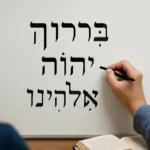
Basic Hebrew Phrases: A Beginner’s Guide to Essential Expressions and Pronunciation
Learning a new language is a journey of small steps, and Hebrew is no exception. This guide focuses on basic Hebrew phrases that are immediately useful in daily life, along with clear notes on pronunciation and semantic breadth—the idea that you learn not only what to say but also how to vary expressions to fit different contexts, genders, and levels of formality. Below you will find a structured tour through essential greetings, introductions, polite phrases, common questions, and practical expressions you can rely on when traveling, studying, or engaging with Hebrew speakers.
Hebrew Alphabet and Pronunciation: The Building Blocks
Before diving into phrases, it helps to understand the basics of spoken Hebrew. Hebrew is written with a consonant-based alphabet, and most learners encounter vowels (niqquot) in learning materials. Modern Israeli Hebrew pronunciation tends to be straightforward, but a few tips can prevent mispronunciations that confuse listeners. Here are the core points you’ll encounter in this guide:
Consonants such as ש (shin or sin), ל (lamed), מ (mem), ת (tav), and י (yod) appear frequently in daily phrases.
Vowels are often indicated in learning materials with diacritical marks (niqquot), but in everyday writing you’ll see Hebrew words without vowels. In the guide, you’ll find transliterations to help with pronunciation.
Stress usually falls on the penultimate syllable in many words, but there are common exceptions. Paying attention to where the emphasis lands makes your speech sound more natural.
Gender and number matter in Hebrew. Some phrases change form depending on whether you’re speaking to a man or to a woman, or whether you’re speaking in singular or plural. The phrases in this guide will highlight simple gendered variations where relevant.
When you see a Hebrew phrase with a transliteration, it’s a practical aid for pronunciation. The Hebrew phrases themselves are bolded in this article to emphasize the exact words you’ll hear or say. Feel free to practice them aloud, first slowly, then at a comfortable pace.
Greetings and Friendly Interactions: Making a Positive First Impression
Basic Hello and Friendly Farewells
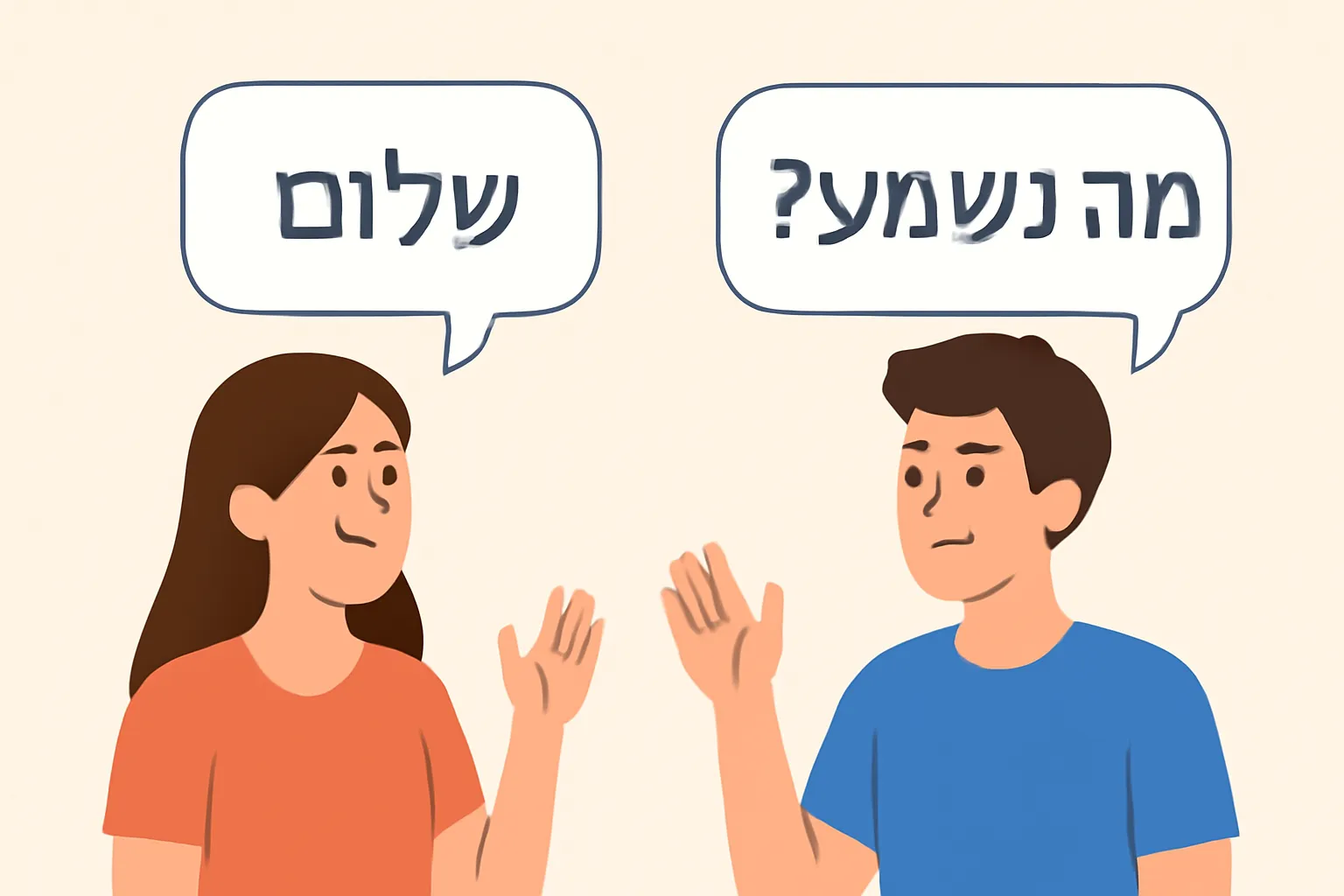
שלום (shalom) — “hello” or “peace.” This is the most common basic greeting and can be used any time of day. Pronounced sha-LOHM.
שלום עליכם (shalom aleichem) — traditional greeting meaning “peace be upon you.” Response: ועליכם שלום (aleichem shalom). Pronounced sha-LOHM ah-lay-HEM.
צהריים טובים (tzohorayim tovim) — “good afternoon.” Pronounced tso-ho-RA-yim TOH-vim.
ערב טוב (erev tov) — “good evening.” Pronounced eh-REV tohv.
להתראות (lehitra’ot) — “goodbye” or “see you.” Pronounced leh-heet-rah-ot.
ביי (bye) — casual “bye.” Pronounced bye.
Variations and context matters. For instance, you might say שלום וברכה (shalom u’vracha) to send a blessing-like greeting, or שלום לך (shalom lekha) to a man and שלום לך (shalom lakh) to a woman, both meaning “peace to you” in a casual way. In friendly interactions, you can sprinkle warmth by pairing a greeting with the person’s name: שלום, [Name] (shalom, [Name]).
בבקשה (bevakasha) — “please” or “you’re welcome,” depending on position in the sentence. Pronounced buh-vah-KA-sha.
תודה (toda) — “thank you.” Pronounced to-DA.
Variants: תודה רבה (toda raba) for “thank you very much”; תודה מאוד (toda me’od) also expresses thanks with emphasis.
בבקשה (bevakasha) as “please” when requesting something; אין בעד מה (ein be-ad ma) or לא נורא (lo nora) as “you’re welcome” alternatives depending on region.
סליחה (sli-cha) — “excuse me” or “sorry.” Pronounced slEE-cha.
Variants: אני מצטער (ani mitsta’er) for a male speaker; אני מצטערת (ani mitsta’eret) for a female speaker. Pronounced mit-sta-EHR and mit-sta-REH-et, respectively.
In practical terms, pairing greetings with a small gesture or smile helps create a welcoming moment. When you say בבקשה after a request, you signal courtesy. If someone thanks you, responding with אין בעד מה (you’re welcome) can feel natural in many contexts.
Introducing Yourself and Asking for Names
Introducing yourself is one of the most frequent tasks in conversation. Hebrew often uses concise phrases to convey name and identity, and there are friendly variants you can use depending on formality and context.
שמי [Name] — “My name is [Name].” Example: שמי דוד (shmi David). Pronounced sh-mee dah-VEED.
קוראים לי [Name] — Another common form meaning “I am called [Name].” Example: קוראים לי דוד (kor-e-yim li David). Pronounced ko-re-YIM lee dah-VEED.
אני נקרא/נקראת (ani nikra/nikret) — used in some formal or written contexts, meaning “I am called” with a gendered form (nikra for masculine, nikret for feminine). Pronounced ah-nee nek-RAH/ah-nee nek-RET.
Putting it together in a simple exchange:
שלום, שמי דוד. נעים מאוד להכיר אותך. (Shalom, shmi David. Na’im meod le’hakir otkha.) — “Hello, my name is David. Nice to meet you.”
שלום, קוראים לי דוד. מה שמך? (Shalom, kor’im li David. Ma shemkha/shmekh?) — “Hello, I’m David. What is your name?”
Responding to a name introduction also follows simple patterns:
נעים מאוד (na’im meod) — “Very nice to meet you.”
נעים מאוד, [Name] (na’im meod, [Name]) — “Very nice to meet you, [Name].”
Everyday Questions and Clarifications: Asking for Information and Understanding
In daily life, you will ask and answer countless questions. Here are practical phrases you can use in shops, streets, classrooms, and homes. Each phrase includes a version to adapt to gender where relevant, and variations for different levels of politeness or formality.
Where Is … ? How Do I Get to … ?
איפה זה? (eyfo zeh?) — “Where is this?”
איך מגיעים ל- [destination] — “How do you get to [destination]?” For example: איך מגיעים לתחנה? (eykh magi’im le-takhana?) — “How do you get to the station?”
איפה השירותים? (eyfo hash’rutim?) — “Where are the restrooms?”
אפשר לעזור לי? (efshar la’azor li?) — “Could you help me?”
היכן נמצא/ נמצאת [location]? (hei-kan nimtsa/nimtset) — “Where is [location]?” depending on gender and phrasing.
Notice how questions can be adapted with different nouns or pronouns. For example, you can say איך אפשר להגיע ל-הרכבת? (eykh e’efshar la’agia la-hakevet?) to ask about reaching a train station. The more you practice, the more natural it becomes to tailor questions to the place you’re in.
Common Clarifications: I Didn’t Understand, Could You Repeat?
לא הבנתי (lo hevanti) — I didn’t understand (masculine). For a female speaker: לא הבנתי (lo hevanti) can be used in many contexts, but you can specify: לא הבנתי, שוב? (lo hevanti, shuv?) — “I didn’t understand, again?”
אפשר לאמר זאת שוב? (efshar le’amer zot shuv?) — “Could you say that again?”
איך אומרים [word] בעברית? (ehkh omrim [word] be’ivrit?) — “How do you say [word] in Hebrew?”
Numbers, Time, and Calendar: Handling Daily Scheduling
Numbers are essential for prices, dates, ages, and time. Hebrew uses a decimal system, and it helps to know the basic card of numbers from one to ten, plus a few key larger numbers. Here are the basics with transliterations and practical phrases:
אחד (ehad) — one
שתים/שניים (shtayim/shnayim) — two (masculine/feminine usage varies by noun gender)
שלושה (shaloshah) — three
ארבעה (arba) — four
חמשה (hmsha) — five
שבעה (shiva) — seven
שמונה (shmonah) — eight
תשע/תשעה (tesha/tesha) — nine
עשר (eser) — ten
Practical phrases:
כמה זה עולה? (kama ze oleh?) — “How much does this cost?”
זה יקר מדי (ze yakar m’ode) — “This is too expensive.”
אפשרכה לשלם בכרטיס? (efshar le’shalem be’karta) — “Can I pay by card?”
היום (ha-yom) — today
מחר (machar) — tomorrow
אתמול (etmol) — yesterday
היום זה יום שני (ha-yom ze yom sheni) — “Today is Monday.”
השעה עכשיו (ha-sha’a ayon) — “What time is it now?”
When expressing time, you’ll often hear phrases like השעה שש (ha-sha’a shesh) for “six o’clock” in the evening or morning, depending on context. In Israeli everyday speech, you’ll frequently use 24-hour style in informal settings, but for beginners, sticking to the 12-hour format with clear “am/pm” indicators is perfectly acceptable:
בוקר טוב. השעה שמונה בבוקר (Boker tov. Ha-sha’a shmoneh ba-boker) — “Good morning. It’s eight in the morning.”
אחרי הצהריים (akhare ha-tzohorayim) — “afternoon” as a time reference.
Shopping, Eating Out, and Social Etiquette
Everyday interactions in markets, cafés, and restaurants use practical phrases that you can rely on immediately. The following are common expressions, with variations to fit formality or simple personalization.
Shopping Phrases
כמה זה? (kama ze?) — “How much is this?”
אני רוצה את זה (ani rotzeh et ze) — “I want this” (masculine speaker). For a female speaker: אני רוצה את זה (ani rotzah et ze).
יש לך/ לכם [item]? (yes lekha/lh/ lakhem [item]?) — “Do you have [item]?”
הצעת מחיר (hatz’at mehir) — “price offer” or “quote” in a negotiating context.
זה טוב לי (zeh tov li) — “This is good for me.”
Dining Out: Food, Orders, and Gratitude
ฉה/תודה רבה (todah rabah) — wait, your text might show Thai characters by accident; use Hebrew: תודה רבה (toda raba) — “thank you very much.”
אני רוצה להזמין (ani rotzeh lehazmin) — “I want to order.”
החשבון בבקשה (haḥeshbon bevakasha) — “The check, please.”
טעים (ta’im) — “delicious” (masculine). For feminine: טעימה (ta’ima).
אפשר לקבל תפריט ללא ג’לטין? (efshar lekabel taftir lelo gelatin?) — “Can I get a menu without gelatin?” (example of a dietary question; vary as needed).
Common Expressions for Travelers: Politeness, Safety, and Clarity
Travel requires concise, clear phrases. Here are practical tools to navigate hotels, airports, trains, and public spaces with confidence. Each item includes a variant to fit your gender or the level of formality you want to convey.
אני א[gender] אס — not. Instead focus on core phrases: אני מאבד/ת את الطريق (ani me’abe’d/et et ha-tariq) — “I’m lost.” Male: אני אבדתי (ani avadti); female: אני אבדתי (ani avadti). For locating: איפה אני? (eifo ani?) — “Where am I?”
הייתה לי שאלה (hayta li she’ela) — “I have a question.”
הם מדברים אנגלית? (hem medabrim anglit?) — “Do they speak English?” Even if you don’t, the phrase is a helpful starting point to ask for help.
אילו תחנות? איזו תחנה? (eylu tekhanot? eizo tekhana?) — You’ll ask about stations with variants depending on singular/plural and gender.
Pronunciation Tips: How to Sound More Natural
Pronunciation is often the bridge between basic comprehension and confident conversation. Here are practical tips to refine your Hebrew-speaking skills:
Listen first: Try to imitate rhythm and stress patterns from native speakers, whether in music, podcasts, or conversation exchanges.
Focus on vowels: Niqquot are less critical in informal writing, but in speech, pronouncing vowels clearly helps others understand you. Practice common vowel sounds that appear in the phrases above.
Stress patterns: Many Hebrew words place primary stress on the penultimate syllable, but there are numerous exceptions. If you’re uncertain, repeat after a native speaker and ask for feedback.
Gender and agreement: When you address a man versus a woman, adjust phrases that use gendered endings. For beginners, start with gender-neutral or commonly used phrases, then learn the two-syllable differences for words like “thank you” and “excuse me.”
A quick practice routine you can try daily:
Pick 5 phrases from this guide and repeat them aloud 10 times each, focusing on accuracy of the Hebrew word and its transliteration.
Record yourself and compare with native audio samples. Note any differences in stress or vowel length.
Use the phrases in context: pair greetings with someone you know or practice with a language partner, aiming for natural rhythm rather than perfect pronunciation on day one.
Practical Variations: How to Adapt Phrases to Context
One of the most valuable skills in language learning is the ability to adapt a phrase to fit different contexts. Here are examples that show how a single idea can take multiple forms while preserving meaning.
שלום עליכם (shalom aleichem) — traditional, warm greeting.
היי, מה נשמע? (hey, ma nishma?) — casual “Hey, what’s up?”
להתראות מאוחר יותר (lehitra’ot me’ukhar yoter) — “See you later” (less common than lehitra’ot but perfectly understandable in informal speech).
Variations for “What is your name?”
איך קוראים לך? (eykh kor’im lekha/lekha?) — common, gendered: to a man לה’, to a woman לך changes to לך vs לך depending on spelling conventions. Simpler for beginners: מה שמך? (mah shemcha/shemcha for male, shemkh for female) — “What is your name?”
שלום, מי אתה/את? (shalom, mi ata/at?) — “Hello, who are you?” more exploratory but not as common for meeting strangers. Use with care in formal contexts.
אני קורא/קוראת לך בשם (ani kore/ko’eret lekha/lekha be-shem) — “I’m calling you by the name [name],” a sentence structure you’ll rarely need in casual conversation but useful in introductions in certain contexts.
Variations for “I am [Name]” and “My name is [Name]”
שמי [Name] — concise and natural: “My name is [Name].”
קוראים לי [Name] — “I am called [Name].”
אני נקרא [Name] (ani nikra [Name], masculine) or אני נקראת [Name] (ani nikret [Name], feminine) — formal or careful usage in writing or formal speech.
Common Mistakes to Avoid and How to Correct Them
Every learner makes missteps, but awareness helps you improve faster. Here are some frequent errors and practical corrections:
Forgetting gender agreement: When addressing a man, prefer masculine forms like אתה (ata) and קוראים לי (kor’im li). For a woman, use את (at) and feminine endings. Practice with context to reinforce correct usage.
Overemphasizing transliteration: Relying too heavily on transliteration can slow down your ability to recognize Hebrew words in writing. Try to associate each bold Hebrew phrase with its pronunciation and meaning, and gradually read without transliteration.
Conflating casual and formal registers: A simple phrase like שלום can be used informally, but when you’re in a formal setting (e.g., meeting a professor or a business contact), you might want to opt for polite openings and closings like שלום, נעים להכיר (shalom, na’im lehakir) — “Hello, nice to meet you.”
Ignoring cultural nuances: Hebrew-speaking environments often value warmth and directness. A quick, friendly greeting paired with a polite “please” can set a positive tone for conversations.
To turn this guide into real speaking confidence, follow a practical starter plan you can adapt to your schedule:
Choose a daily routine moment (greeting a neighbor, asking for directions, or ordering coffee) and practice a small set of phrases for that context. For example: בוקר טוב (boker tov) + הצעה? (hazot?) — “Good morning. Could I have…?”
Create a printable quick-reference sheet with 8–12 phrases you’ll use most often, each with its bold Hebrew form and a brief pronunciation note.
Record yourself reading the phrases aloud, then compare to a native speaker or a teacher’s recording to adjust intonation and rhythm.
Engage in micro-practice sessions with a language partner or a conversation app, focusing on using at least one greeting, one polite phrase, and one question per session.
Expand gradually: add a small set of new phrases each week, keeping a small vocabulary list with bolded phrases to reinforce retention.
Conclusion: Embracing the Path to Fluency Through Essential Phrases
Mastering basic Hebrew phrases is less about memorizing long dialogues and more about arming yourself with a reliable toolbox of expressions for everyday life. The phrases in this guide are chosen for their practicality, cultural resonance, and potential for variation. By focusing on pronunciation accuracy, becoming comfortable with gendered forms, and practicing in real-world contexts, you build a solid foundation for more advanced learning.
As you continue, remember that language is not only about words but about connection. A warm greeting, a clear question, a polite thank-you, and a friendly goodbye can open doors, create rapport, and invite conversation. Use the variations provided here to adapt to different social contexts, and don’t be afraid to ask for repetition or clarification when you’re practicing with native speakers. With time and dedication, these basic phrases will become second nature, and you’ll be ready to explore more complex expressions, idioms, and conversational nuances in Hebrew.