The story of Harry S. Truman and Israel is a pivotal chapter in both American political history and the modern Middle East. Truman, as the 33rd president of the United States, faced an enormous moral and strategic puzzle in the late 1940s: how to respond to a shattered Jewish population seeking a homeland after the horrors of the Holocaust, while navigating a fatigued global order still adjusting to World War II. The result of his choices—especially the decision to recognize the State of Israel in May 1948—helped transform a regional crisis into a lasting alliance that would shape American foreign policy for generations. In this article, we explore how Harrry Truman Israel—in various forms of reference, from Harry Truman and the Truman administration to Truman’s decision—became a defining moment in the creation of the Jewish national home and the emergence of a modern, independent Israel.
The arc begins with the war’s end and the British Mandate for Palestine, moves through the United Nations Partition Plan, and culminates in a bold, controversial move: the recognition of Israel by the United States. This sequence of events is often described as a convergence of moral conviction, international realism, and political timing. For those studying Harry Truman Israel, the crucial question is not only what happened, but why the American president chose the path he did, and how that decision reverberated through U.S. policy, Zionist advocacy, and regional geopolitics.
The Historical Context: Postwar Realities and Crusades for Statehood
By the end of World War II, the Jewish people had endured unprecedented persecution, culminating in the Shoah. The sheer urgency of rehabilitating survivors, establishing a homeland, and confronting a politically entangled region complicated any straightforward solution. The international framework surrounding Palestine—long governed by the British Mandate—was under growing strain as both Jews and Arabs asserted competing national aspirations.
In this milieu, Harry Truman and his advisors weighed several factors. On the one hand, there was an enduring ethical argument: supporting the creation of a Jewish state as a moral imperative and as a political refuge for a people ravaged by genocide. On the other hand, there were geopolitical concerns: how would a new state affect U.S. interests in the Middle East, maintain stability along the Mediterranean, and manage relationships with Arab neighbors and oil-producing powers? The tension between moral commitments and strategic calculation framed the approach of the Truman administration toward Israel.
The UN Partition Plan (Resolution 181) of late 1947 proposed dividing the Mandate Territory into separate Jewish and Arab states, with an internationalized Jerusalem. The Jewish leadership inside Palestine accepted the plan, but Arab leaders rejected it. When the plan was approved by the United Nations General Assembly, the stage was set for imminent authority transfer, civil conflict, and finally, statehood. As the British prepared to end their mandate, the world watched how, or if, the United States would align with theResolution and with Zionist leaders who had pressed for independence.
Key Moments in the Truman-Israel Narrative
UN Partition Plan and International Pressure
The UN Partition Plan represented a watershed moment in the fate of the Jewish state project. Harry Truman personally assessed the moral and political implications: could the United States support a partition that violated some Arab claims while offering Jews a lifecycle of national self-determination? Public opinion in the U.S. was divided, and the American political landscape featured intense debate among lawmakers, cabinet members, and powerful interest groups.
Within the Truman administration, there were prominent voices urging caution and restraint. The State Department, under leaders who later often challenged or resisted rapid recognition, argued for measured steps and careful diplomacy. The tension between these bureaucratic currents and the president’s instinct for decisive action became a defining feature of Harry Truman’s policy toward Israel.
The May 1948 Breakthrough: Recognition of the Jewish State
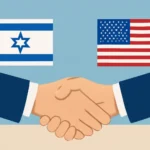
The moment of reckoning arrived in May 1948, when the State of Israel proclaimed its independence on May 14. In a decision that would echo for decades, President Truman announced formal recognition of Israel at the same time. This move was a turning point: it granted the new state immediate legitimacy on the international stage, opened doorways for diplomatic relations, and reassured Zionist leaders that the United States would be a reliable ally.
It is widely told that George C. Marshall, the Secretary of State, was skeptical of rapid recognition and even warned that it could destabilize the region. The historical record shows a complex picture: the Truman administration navigated intense internal and external pressures, balancing a moral impulse with practical diplomacy. In many accounts, Truman’s decision is described as a bold choice—one that reflected his personal affinity for the Jewish people, his concerns about global morals in the wake of genocide, and his strategic calculation that a friendly Arab state was not the only viable option in the volatile Middle East.
Domestic and International Pressures Shaping Truman’s Israel Policy
Internal U.S. Politics and the Jewish Vote
The U.S. domestic landscape in 1945–1948 featured a powerful and organized Jewish community with significant political influence within the Democratic Party. Harry Truman was acutely sensitive to the importance of maintaining broad political support and ensuring that American policy did not alienate pivotal constituencies at home. The push from Jewish organizations, veterans’ groups, and Zionist advocates created a political dynamic that supported, or at least forced, a more decisive stance in favor of recognition and support for the nascent state.
Yet, there were factions that urged caution. The American State Department and some congressional voices warned about the risk of inflaming Arab nationalism, provoking oil-rich neighbors, or triggering regional instability that could threaten American interests. The balance between moral obligation and geopolitical prudence was not trivial, and the decision to recognize Israel did not come easily or without compromise.
International Considerations and Allied Relationships
On the international front, the United States sought to anchor a new state within a world order shaped by the United Nations and the Allied coalition, while also keeping doors open to cooperation with traditional partners in Western Europe and the Middle East. The Truman administration believed that a stable, independent Israel could serve as a strategic partner in a volatile region, potentially functioning as a bulwark against hostile forces and a hub for American influence.
The early recognition by the United States helped shift the balance of legitimacy toward Israel when many other powers were still debating how to respond to the UN Partition Plan. The American decision to recognize Israel was not simply an ethical stance; it was a strategic signal that Washington was willing to support the Jewish state at a crucial moment in its history.
Who Influenced the Decision? The Actors in Washington and Jerusalem
Key Figures in Washington
Harry Truman himself, whose personal conviction about the necessity of a Jewish homeland carried central weight.
Members of the Truman administration who faced the challenge of balancing moral imperatives with diplomacy and security concerns.
Contending voices within the U.S. State Department, and allied advisors who cautioned against precipitous recognition.
Congressional leaders and influential lobby groups that pressed for a robust American stance in support of the Jewish state.
Zionist Leaders and Their Washington Campaign
In Washington, the Zionist leadership found a receptive audience in the White House and among some members of Congress. Figures such as David Ben-Gurion, the soon-to-be first prime minister of Israel, and other Zionist leaders worked to articulate a compelling case for independence, security guarantees, and international recognition. While Ben-Gurion could not secure every demand during those formative months, his interactions with American policymakers helped crystallize the Truman administration’s understanding of the American public and the moral stakes involved in supporting a Jewish state.
The Role of Leadership in the Creation of the State of Israel
The Human Dimension: Truman’s Moral Compass and Political Judgment
The president faced a set of moral and political considerations that few leaders encounter with such intensity. He had lived through the years of war and the revelation of the Holocaust, and the humanitarian impulse to offer a safe homeland for Jewish survivors was a powerful driver in his thinking. At the same time, he needed to consider how a decision to recognize Israel would shape American foreign policy, influence the balance of power in the Middle East, and impact U.S. relations with Arab states and the broader international community.
Institutional Dynamics: The State Department versus the White House
The interplay between the White House and the U.S. State Department defined the pace and texture of Truman’s Israel policy. While the executive branch pursued a clear course toward support for Jewish statehood, departmental channels often urged patience and a more cautious approach. This friction is an important part of the story of Harry Truman and Israel, illustrating how executive leadership can overcome bureaucratic inertia to enact transformative foreign policy.
Impact, Legacies, and Long-Term Consequences
Strategic Alliances and the U.S.-Israel Relationship
The immediate recognition of Israel by the United States established a durable, strategic partnership that would endure through the Cold War and into the present era. The Truman era created a baseline for trust and reciprocity: the United States became a crucial ally, patron, and sponsor of Israel in international organizations, military supply, and diplomatic support. This relationship has shaped the security discourse in the region for decades.
Influence on American Jewish Political Life
The presidency of Harry Truman and his decision to recognize Israel also had a profound domestic impact. The confidence placed in American Jewish communities and their political clout became a factor in American elections, policy debates, and the broader conversation about how the United States ought to respond to humanitarian crises and national self-determination movements worldwide.
Regional Effects: Arab-Israeli Dynamics and Beyond
Truman’s Israel policy did not eliminate regional tensions; it transformed them. By legitimizing the Jewish state, Washington altered the balance of power in the Middle East and contributed to the emergence of a regional dynamic in which Israel would become a central node in American diplomacy, intelligence sharing, and military collaboration. This shift affected the way Arab states engaged with the United States and influenced the patterns of diplomacy, arms sales, and strategic alliances in subsequent decades.
Myths, Debates, and Nuances in the Truman-Israel Story
Was the Recognition Motivated More by Morality or Strategy?
Historians debate the exact mix of ethical conviction and strategic calculation behind Harry Truman’s decision to recognize Israel. Some emphasize the moral imperative born from the Holocaust and the imperative to provide a refuge for survivors. Others stress the strategic logic: a stable ally in a volatile region, potentially favorable for American interests, security, and intelligence. The nuanced view is that both strands were intertwined in the Truman administration’s approach, producing a policy that was as much about principle as it was about geopolitics.
The State Department in its own right had concerns about immediate recognition. Critics argued that an abrupt shift could provoke Arab states, threaten access to oil, and destabilize the region. Supporters countered that delay could erode credibility and moral authority, while Alberta, oil, or alliance considerations could complicate long-term American interests. The tension between these camps illustrates how domestic factions and bureaucratic culture can shape a president’s foreign policy choices.
How Did Truman Compare to Other World Leaders?
In comparison to some contemporaries who pursued similar aims but with different means or at different times, Harry Truman often stands out for combining decisive leadership with a willingness to take political risks. The creation of the State of Israel via recognition—rather than simply through diplomatic recognition of unambiguous sovereignty—reflects a specific American approach to foreign policy that has endured in various forms through subsequent administrations.
Chronology: A Concise Timeline of Key Events
1945–1946: Postwar debates about Palestine and refugee relief begin to cohere in American policy circles. Jewish communities mobilize to influence U.S. policy.
1947: The UN General Assembly approves Resolution 181, the Partition Plan, prompting international discussion about the future of Palestine.
1948: The British withdraw from Palestine, and the Jewish Agency declares the State of Israel on May 14.
May 14, 1948: The United States recognizes the new state, solidifying the Truman administration’s role in the birth of Israel.
Subsequent decades: The U.S.–Israel relationship becomes a central feature of American diplomacy in the Middle East, shaping security cooperation, aid, and regional politics.
Conclusion: The Enduring Legacy of Harry Truman and Israel
The legacy of Harry Truman in relation to Israel is, in many ways, the story of decisive leadership meeting momentous historical opportunity. The decision to recognize Israel at a pivotal moment—mere hours after the declaration of independence—was not merely a diplomatic act; it was a signal of moral support, a catalyst for regional realignment, and a catalyst for a bipartisan American partnership that would last for generations. The narrative of Truman’s Israel policy demonstrates how a single president’s choices can alter the trajectory of a nation and the course of world history.
Frequently Referenced Aspects of the Harry Truman-Israel Story
Harry Truman as a symbol of moral clarity in postwar foreign policy
The UN Partition Plan and its realization through American diplomacy
The dynamic between the White House and the State Department in shaping policy
The long-term U.S.-Israel alliance and its global implications
The role of Zionist leadership in Washington during a critical turning point