Hear O Israel: God Is One – A Deep Dive into the Shema
The Shema is often described as the heartbeat of Jewish faith. It is both a concise creed and a lifelong practice, a declaration that shapes daily life and community identity. This article offers an in-depth exploration of the Shema, its famous opening phrase, and the broad spectrum of meanings that scholars, theologians, and practitioners have drawn from it across the centuries. While the exact wording that begins with “Hear, O Israel” is brief, the implications are vast: a call to allegiance, a statement of unity, and a guide for love, obedience, and memory. In the pages that follow, you will encounter variations of the phrase—sometimes rendered as Hear O Israel, sometimes as Hear, O Israel, or Listen, Israel—each reflecting a nuance of how readers engage with the text in different languages, traditions, and moments of prayer.
When we speak of Hear O Israel God is One, we touch on more than a linguistic assertion. We touch the character of monotheism in Judaism, the way a single sentence anchors a vast legal, ethical, and liturgical system, and the way a community remembers its history and its covenant. This article surveys the core line, its textual home in the Torah, its theological breadth, and its living presence in worship, study, and everyday conduct. It uses variations of the opening phrase to illuminate how one succinct declaration can carry multiple levels of meaning while remaining a unifying refrain for Jewish life.
The Core Declaration: The Text, the Translation, and the Opening Words
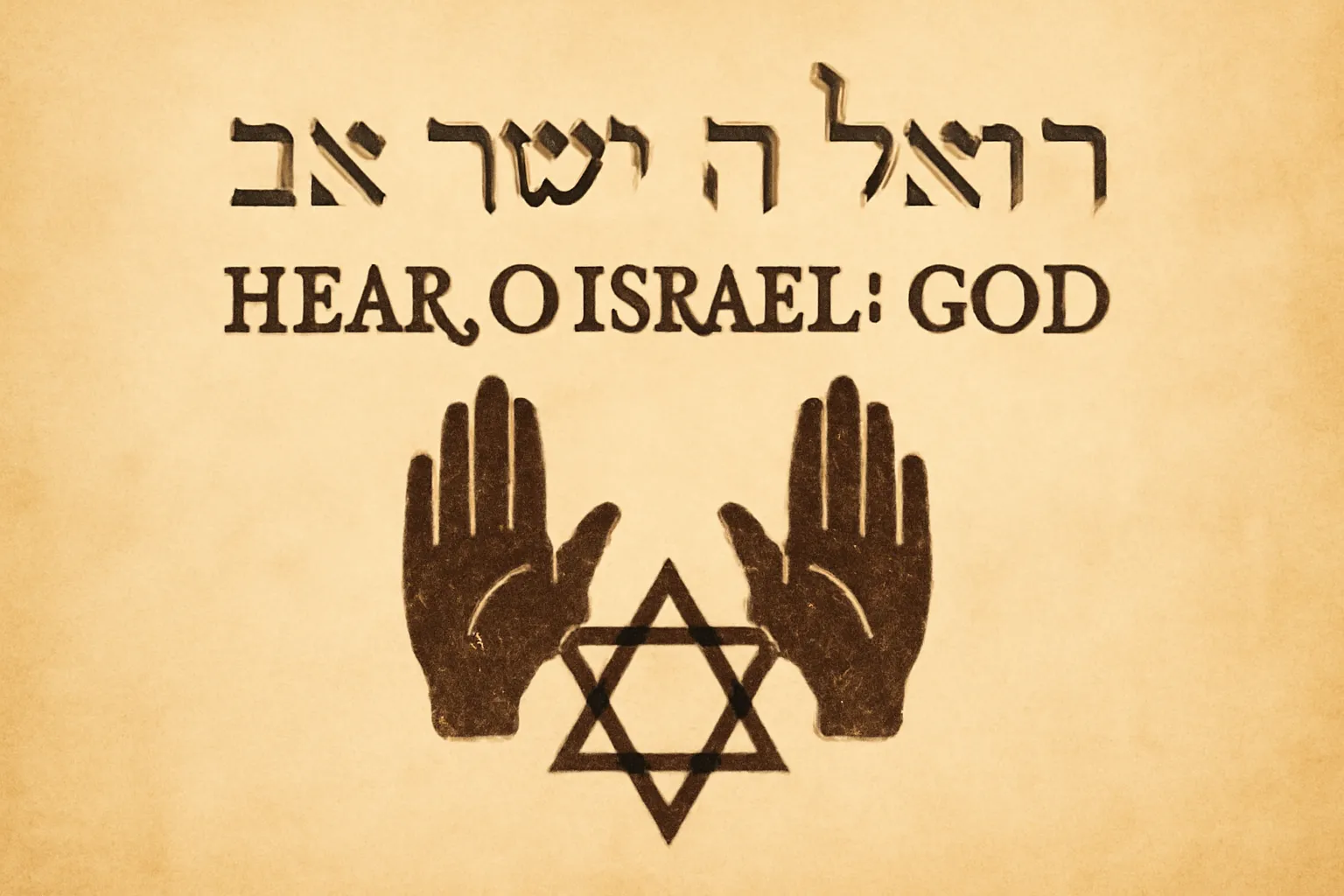
At the heart of the Shema stands the cry for divine unity: “Hear, O Israel: The Lord our God, the Lord is One.” This traditional rendering comes from Deuteronomy 6:4, and it is followed by a second line and additional verses that exhort love for God and the transmission of these truths to future generations. In Hebrew, the essential line is often transliterated as “Shema Yisrael Adonai Eloheinu Adonai Echad”, with Echad serving as the crucial word usually translated as “one” or “unique” in tribal and theological contexts.
There is an entire tradition of how this one word functions within the larger fabric of Jewish theology. Echad can be understood as numeric one, as indivisible unity, or as a statement about the totality of God’s sovereignty and oneness with creation. Across centuries, commentaries have debated whether the Shema affirms a single, indivisible God or a unity that encompasses all that exists. What remains central is not a technical dispute, but a practical commitment: to acknowledge God as the sole ruler, the sole object of worship, and the sole source of moral authority.
The full verse is often introduced with the line in Hebrew and then translated into local languages for study and prayer. In many liturgical traditions, it is followed by the call to recite and remember: the commands “you shall love the Lord your God”, the injunction to teach the Shema to children, and the instruction to keep God’s words in memory through daily ritual actions.
Textual Context and Canonical Placement
The Shema is the opening paragraph of Deuteronomy 6:4–9; it is commonly followed by Deuteronomy 11:13–21, and then by Numbers 15:37–41 in many traditions. Together, these three sections form the “Three Parshiyot” that reinforce memory, obedience, and covenant faithfulness.
The opening verse is read aloud in daily prayer in both morning and evening services in many Jewish communities. It is also inscribed on mezuzot (the parchment affixed to doorposts) and tefillin (phylacteries), marking the text as an ever-present reminder of the covenant.
Across translations, the essential sense remains: a declaration of God’s unity and a summons to allegiance. The exact wording may vary slightly in English translations, but the core claim—monotheistic devotion to a single God—remains intact.
Theological Significance: Monotheism, Unity, and the Nature of God
If the Shema is the “shout” of monotheism in the Jewish tradition, it is also a complex meditation on the nature of God: how God is one, how God relates to Israel, and how God’s unity informs ethical life. The question of God’s unity is not simply a numerical claim; it is a theological posture that organizes how Jews understand revelation, divine action, and human responsibility.
Monotheism in the Shema
Monotheism in Judaism is not merely about denying the existence of other powers; it is about asserting that there is one God who is the ultimate source of all being and moral order. The Shema places this assertion at the center of daily life.
Unity emphasizes that God is indivisible, without a multiplicity of essence or competing centers of power. This unity informs debates about divine attributes, providence, and the relationship between God and the world.
In rabbinic and medieval thought, the concept of Echad is explored in light of God’s hiddenness and revealed acts in history. The unity of God does not preclude personal relationships between God and humanity; rather, it grounds those relationships in a singular divine will.
The Shema’s concise form invites readers to consider what it means to worship a God who is one, who is unique, and who is the sole source of moral law. It also raises questions about how God’s oneness shapes community life, ritual practice, and the interpretation of Scripture. For many readers, the opening line serves as a constant reminder that faith and life are not two separate realms but a single, continuous obedience to the one God.
Liturgy and Practice: How the Shema Is Used in Daily Life
The Shema is not merely a statement of belief; it is a practice—the phrasing that followers hear, recite, and internalize. Its recitation is often described as a daily act of devotion that binds generations and geographies into a shared spiritual rhythm.
Daily Recitation and Ritual Contexts
In many Jewish communities, the opening line of the Shema is recited twice daily: at morning and at night. The recitation anchors the day and the night within a framework of commitment and memory.
The Shema is also central to the wearing of tefillin (phylacteries) in morning prayer, particularly on weekdays. The passages of the Shema and related verses are included inside the tefillin boxes as a tangible reminder of God’s unity and sovereignty.
The mezuzah, a parchment scroll affixed to doorposts, bears the Shema’s opening line as part of its content. This placement serves as a physical reminder each time one enters or leaves a space, linking home life with worship and memory.
Liturgical Array: Beyond the Opening Verse
The Shema is not a solitary sentence but a gateway into a broader proclamation about love, obedience, and transmission of faith. The second line—often paired with “Barukh shem kevod malchuto le’olam va’ed” (Blessed be the name of His glorious kingdom forever and ever)—is traditionally chanted or recited in many communities after the first verse. Though the exact vocalization can vary by tradition, the sense remains: blessing and acknowledgment with reverence and memory. The subsequent verses within the Shema’s Parshiot reinforce how love of God should shape daily conduct, the education of children, and the rituals that mark the home and the community.
Historical Development: From Ancient Israel to Rabbinic Judaism
To understand the Shema’s enduring influence, it helps to trace its historical trajectory—from ancient liturgical uses to the structured Rabbinic traditions that shaped much of Jewish worship. The opening declaration has roots in a lived ancient faith—one that emphasized covenant and exclusive worship of the God of Israel—yet it has grown through centuries of interpretation, debate, and practice.
Ancient Context and Early Readings
The verses comprising the Shema reflect a covenantal world in which loyalty to the one God is the core of communal identity. In the ancient Near East, claims about God’s unity stood in contrast to polytheistic cultures; Judaism’s stance was both radical and formative for later monotheistic thought.
Textual cross-pollination can be seen in how other ancient traditions spoke of divine kingship, providence, and ethical order. The Shema’s emphasis on “hearing” and “remembering” aligns with a broader ancient Near Eastern tradition of pledging allegiance to a ruler and a deity.
Rabbinic Transformation: Law, Covenant, and Memory
In Rabbinic Judaism, the Shema becomes a central organizing principle for law, ethics, and worship. The verses that follow the opening line contribute to a robust program of education (“teach them diligently to your children”), daily practice, and ritual memory.
Classical commentators, including the great sages of the Talmud and later medieval thinkers, engaged with the Shema to deepen the understanding of God’s unity, the nature of revelation, and the relationship between divine command and human action.
Interpretive Traditions: Classical and Modern Perspectives
Interpretation of the Shema spans a broad spectrum—from literal readings of the words to philosophical explorations of unity, love, and obedience. Across centuries, scholars have offered insights that illuminate how the opening phrase functions within faith, law, and daily life.
Classical Rabbinic Insights
Many rabbis emphasize that the Shema’s command to love God with all one’s heart, mind, and strength (the later verses included in the broader Parsha) grounds ethical behavior and social responsibility. The call to love God becomes a comprehensive framework for justice, mercy, and devotion.
The unity of God, expressed in Echad, is often discussed alongside the mystery of divine transcendence and immanence. Rabbis argue that God’s oneness does not diminish God’s presence in the world; rather, it anchors the moral and spiritual pursuits of humanity.
Modern Theological and Philosophical Readings
In modern Jewish thought, the Shema continues to be a touchstone for discussions about religious pluralism, ethical monotheism, and the relationship between faith and everyday life.
Some contemporary theologians emphasize how the Shema’s repeated calls to remember, teach, and bind one’s life to God inspire cultural and educational initiatives, social justice, and interfaith dialogue that respects distinct theological commitments.
Ethical and Civic Implications: Love, Obedience, and Transmission
The Shema’s instruction to love God is not a private sentiment alone; it translates into concrete actions, commitments, and community life. The ethics embedded in the text illuminate how a monotheistic faith can shape personal virtue, family life, and public conduct.
Love as Action
The directive to love the Lord your God with all your heart, soul, and strength implies more than feeling; it calls for a wholehearted commitment that influences choices in work, family, and community service.
By linking belief to daily practice, the Shema establishes a holistic approach to spirituality that integrates worship with justice, compassion, and integrity.
Memory, Education, and Covenant
The command to teach these truths to the next generation positions education as a sacred duty. The home, school, and synagogue become spaces where memory is cultivated and transmitted across generations.
Remembering the unity of God also means recognizing the unity of the community itself. The Shema’s emphasis on one God reinforces a shared responsibility for the well-being of others in the covenant community.
Symbolism and Cultural Impact: Beyond the Page
Over time, the Shema has become a symbol not only of belief but of cultural identity, liturgical rhythm, and communal memory. Its influence extends into art, music, architecture, and education, shaping how communities articulate concepts of God and moral living.
Ritual Objects and Practices
Mezuzot and tefillin place the Shema on doorposts and within the body, respectively, turning a textual declaration into a lived ritual. These practices transform the abstract notion of God’s unity into a constant, tangible reminder in daily life.
In liturgical settings, the Shema often sits at the center of the Amidah and other prayers, creating a sonic and spiritual link between personal devotion and communal worship.
Variations of the Opening Phrase: Semantic Breadth and Global Readings
The directive to “hear” or to “listen” to Israel’s God appears in multiple English renderings, each offering a slightly different emphasis. Here are some common variations and what they convey:
“Hear, O Israel: The Lord our God, the Lord is One.” — The standard traditional English rendering used in many classic translations.
“Hear, O Israel: The Lord our God, the Lord is One.” — A slight punctuation shift that stresses the unity of the Lord with ownership by a community.
“Listen, Israel: The Lord is our God, the Lord is One.” — A neutrally rendered option that emphasizes listening as active reception of revelation.
“Hear O Israel, God is One.” — A concise form used in some devotional or study contexts, focusing on the core claim of unity.
“Hear, O Israel: The One God, the Lord our God, is Echad.” — A variant that foregrounds the numeric sense of Echad while preserving the covenantal predicate.
In English translations, the phrase often carries layers of interpretation: it is a call to hear, a confession of allegiance, and a theological statement rolled into one compact sentence. The diversity of phrasing in English and other languages demonstrates how translators and readers approach the same ancient text from different cultural and historical vantage points while preserving the essential message about God’s oneness.
Contemporary Relevance: The Shema in the 21st Century
Today, the Shema remains a living guide for individuals, families, and communities. It shapes prayer life, ethical commitments, and social conduct. Its enduring relevance stems from its combination of simplicity and depth: a single sentence that invites ongoing reflection, conversation, and action.
Personal Devotion and Family Life
For many people, the Shema serves as a daily touchstone—a moment of pause to re-center the self, reflect on commitments, and renew one’s resolve to act with integrity in all spheres of life.
In families, the practice of teaching and reciting the Shema with children can become a powerful form of heritage transmission, shaping generations’ sense of purpose, belonging, and responsibility to others.
Interfaith Dialogue and Ethics
The Shema’s articulation of a single divine authority offers a point of common ground and rigorous dialogue with other faith traditions that emphasize a single, sovereign God. Engaging with the Shema can illuminate contrasts and shared values in discussions about monotheism, revelation, and ethical living.
Ethically, the Shema’s imperative to love God and to teach this love to the next generation provides a model for civic life: a commitment to truth, compassion, and the protection of the vulnerable within a community.
Common Misconceptions and Clarifications
As with any foundational text, there are misperceptions that deserve clarification to avoid misunderstandings about the Shema and its place in Jewish thought.
Misconception: The Shema Trivially Proves Monotheism
While the Shema proclaims God’s unity, some readers might assume it resolves every debate about God’s nature. In fact, classical Jewish thought treats the unity of God as a starting point for ongoing discussion about God’s ways, attributes, and relation to the world. The text invites humility and continued study rather than definitive closure on every philosophical question.
Misconception: The Shema is Exclusively Historical
Although the Shma has deep historical roots, its function in worship and daily life remains vibrant in contemporary Judaism. The text continues to inspire devotion, pedagogy, and ethical action in modern communities around the world.
Bringing It All Together: The Shema as a Living Declaration
From its opening phrase to its concluding exhortations, the Shema remains a dynamic and unifying core of Jewish faith. It is a reminder that the one God, the Lord, stands as the center of life, creation, law, and memory. It calls people to hear more than with their ears; it invites a lifelong alignment of heart, action, and community with the divine will. By embracing the Shema’s universality and particularity—its exclusive claim and its call to love—readers can approach the text not as a static doctrine but as a living invitation: to recognize the one who is Echad, and to order one’s life in light of that recognition.
Practical Takeaways for Readers
Reflect on unity: Consider what it means for God to be one in your theological framework and in your daily interactions with others.
Practice memory: Use the Shema as a daily anchor to remember and live out ethical commitments—toward family, neighbors, and society at large.
Teach and transmit: Embrace the responsibility to teach these truths to the next generation and to pass on a tradition of devotion, justice, and compassion.
Align worship and life: Let the declaration of God’s unity inform how you work, vote, study, and care for the vulnerable.
As a final reflection, consider the phrase “Hear O Israel: God is One” not only as a doctrinal statement but as a guide to living with integrity in a world of diverse beliefs. Whether you approach it as a scholar, a practitioner, or a curious reader, the Shema offers a concise entry point into a long conversation about faith, fidelity, and the shared pursuit of a just and compassionate life. The variations of the opening lines—be it “Hear, O Israel”, “Listen, Israel”, or “Hear O Israel, God is One”—each invite a different emphasis while keeping the central promise in view: the unity of the divine and the call to respond with love, obedience, and memory.