The Hebrew calendar and language present a distinctive way of talking about the days of the week. While many languages label days by celestial bodies or by borrowed terms, Hebrew relies on a combination of ordinal naming, religious significance, and practical usage. The sequence runs from the Sunday-like beginning of the week to the Sabbath rest at its end. In modern Hebrew, you will hear clear, ordinal-based names for six days and a special, sacred name for the seventh. In biblical and rabbinic sources, the terminology reflects both the act of creation and the rhythm of practice. This article offers a detailed guide to the Hebrew week days, focusing on names, meanings, and pronunciation, with variations you may encounter in everyday speech, liturgy, calendars, and education.
Name, Meaning, and Pronunciation: A Quick Map
Before we dive into each day, here is a compact map you can refer to quickly. The list shows the Hebrew name, the English translation, and a simple phonetic guide so you can speak with confidence.
Yom Rishon (יום ראשון) — First Day — pronounced «yom ree-SHON» or «yom ri-SHON» depending on regional accent.
Yom Sheni (יום שני) — Second Day — pronounced «yom SHEH-nee» or «yom SEH-nee.»
Yom Shlishi (יום שלישי) — Third Day — pronounced «yom shlee-SHEE» or «yom shlEE-shee.»
Yom Revi’i (יום רביעי) — Fourth Day — pronounced «yom reh-vee-EE» or «yom ree-vee-EE.»
Yom Shishi (יום שישי) — Sixth Day — pronounced «yom shee-SHEE» or «yom shee-SHEE» (with stress on the second syllable).
Shabbat (שבת) — Seventh Day / Sabbath — pronounced «shah-BAHT.» Also often referred to as Shabbat in everyday speech and as Yom HaShabbat in liturgical or calendar contexts.
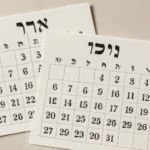
Note: In weekly calendars and in secular Hebrew usage, you may also see the shorthand יום א׳ (Yom Aleph) for the first day, and similarly יום ב׳ (Yom Bet) for the second, and so on. These abbreviations come from the Hebrew letters Aleph, Bet, Gimel, etc., and are common on calendar pages and in classrooms.
Sunday: Yom Rishon — The First Day
Hebrew name: יום ראשון (Yom Rishon)
Meaning: literally “First Day”. The ordinal framing signals the start of the week and the sense of a fresh cycle.
Pronunciation: /jom riˈʃon/ in common transliteration. The emphasis typically lands on the second syllable of Rishon.
Usage in daily life: In Israel and in Jewish communities around the world, Sunday is the day that begins the workweek for most adults, though some schools and institutions operate on alternative schedules. In calendars, you will find Yom Rishon used in formal day-by-day listings, while casual conversation may simply say “Sunday” translated into Hebrew as Yom Rishon when clarity is needed.
Historical and liturgical nuances
In biblical and rabbinic literature, the first day carries significance as the day of creation’s opening phase, when the Creator brought forth light and order. Today, this association remains cultural rather than ritual, but you may still encounter references to the First Day in holidays, study cycles, and liturgical readings that trace the structure of the week.
Variations you might hear
Some speakers refer to Yom Aleph when enumerating days in a formal or classroom setting.
In colloquial speech, you may hear a contraction or diminutive like Yom Rishon with a softer vowel sound depending on the speaker’s accent.
In a calendar app or printed calendar, Sunday is marked with “ראשון” in Hebrew or with the prefix “Yo-” depending on the design.
Meaning: “Second Day”. The second day continues the sequential naming that begins with Yom Rishon.
Pronunciation: /jom ˈʃe.ni/; emphasis typically on the first syllable of Sheni.
In modern use, Monday often marks the return to routine after the weekend. In Hebrew education and journalism, you will see Yom Sheni used in formal writing, while spoken language may simply say “Sunday and Monday” as Yom Rishon v’Yom Sheni.
Practice saying the two-word phrase “Yom Sheni” together, without inserting extra vowels. The Hebrew “i” sound at the end of Sheni is crisp and short.
When writing, you might see the abbreviation יום ב׳ for “Yom Bet” on calendars, especially in Israeli contexts.
Tuesday: Yom Shlishi — The Third Day
Hebrew name: יום שלישי (Yom Shlishi)
Meaning: “Third Day”; the ordinal progression continues in a straightforward way.
Pronunciation: /jom ʃliˈʃi/; the Shlishi syllable often bears the primary stress.
In many Hebrew textbooks and online resources, Yom Shlishi serves as a model for vowel patterns in Hebrew, illustrating how the second syllable commonly carries the vowel shift from the base form.
Context and usage
As a weekday label, Yom Shlishi is standard in calendars, schedules, and formal writing. In casual speech, you might hear people say “Tuesday” translated as Yom Shlishi, or simply say the date in Hebrew, e.g., yom chamishi for the Thursday portion of the week.
Wednesday: Yom Revi’i — The Fourth Day
Hebrew name: יום רביעי (Yom Revi’i)
Meaning: “Fourth Day”; the naming reflects the ordinal sequence and is a standard part of Hebrew week labeling.
Pronunciation: /jom ʁe.viˈi/ or /jom ree-vee-EE/ depending on speaker and accent. The Revi’i part is where learners often pause briefly between syllables.
Wednesday holds a particular place in Jewish practice as the midpoint of the workweek for many, and in Israeli culture it is often described as the middle day of the typical workweek depending on religious and cultural observances. While not a holy day itself, Wednesday appears frequently in calendars and planning tools as a stable anchor in the week’s rhythm.
Thursday: Yom Chamishi — The Fifth Day
Hebrew name: יום חמישי (Yom Chamishi)
Meaning: “Fifth Day”; this name continues the orderly progression of weekdays in Hebrew.
Pronunciation: /jom χa.miˈʃi/; the Chamishi syllable emphasizes the second vowel, with a breathy, aspirated kh sound for Ch.
In many calendars and schools, Thursday is often a day when plans for the upcoming Shabbat begin to take shape. You may see phrases like הכנת השבת (preparations for Shabbat) appearing in notices and announcements as the week nears its end.
Friday: Yom Shishi — The Sixth Day
Hebrew name: יום שישי (Yom Shishi)
Meaning: “Sixth Day”; this is the day immediately preceding Shabbat and is central to the Friday routine in both everyday life and religious practice.
Pronunciation: /jom ʃiˈʃi/; the second syllable Shishi has a bright, repetitive “shee-shee” sound.
Friday in Hebrew culture often carries the flavor of Erev Shabbat — the eve of Sabbath — a phrase that signals both anticipation and practical activity: shopping for Shabbat meals, lighting candles, and greeting family and friends with Shabbat peace. In some contexts you will see or hear Erev Shabbat used to designate Friday evening or Friday in general, especially in religious or traditional settings.
Erev Shabbat: A Name that Captures the Moment
Erev Shabbat translates to “the eve of Shabbat.” It emphasizes the transition from the weekday to the sacred time of rest that begins with sunset on Friday. In Israeli daily life, people often say, “Shabbat starts tonight” or “We are preparing for Shabbat,” and the sense of anticipation is a key cultural feature of this day.
Meaning: “Rest” or the day of cessation. Shabbat is a weekly day of rest commanded in the Torah, with a rich corpus of folk practice, liturgy, and family customs surrounding it.
Pronunciation: /ʃaˈbat/
Shabbat is at the heart of the Hebrew week for many communities. It is observed from Friday evening to Saturday evening in traditional practice, with rituals such as lighting candles, blessing the challah, attending synagogue services, and sharing a festive meal. You might also hear the expression “Shabbat Shalom” (שבת שלום), a common greeting that means “Sabbath peace.”
Alternate and regional terms
In some contexts you may encounter Yom HaShabbat (יום השבת), literally “the day of Shabbat,” as a form of emphasis in liturgical, educational, or calendar-related language. The specific phrase Shabbat is deeply associated with rest, sanctity, and Jewish identity, and it appears in poetry, sermons, and spiritual writings with a tone that underscores its special status.
Pronunciation Guide: Vowels, Stress, and Common Pitfalls
Hebrew pronunciation can be challenging for learners who come from non-Semitic language backgrounds. Here are a few practical tips to help you speak the weekday names clearly and confidently.
The consonant Y at the start of Yom is pronounced like the “y” in yes. The word begins with a strong, short syllable: Yom.
The vowels in Hebrew are usually not written in everyday writing (they are usually indicated by diacritical marks in Hebrew texts like the Tiberian niqquim). In transliteration, you’ll see vowels to guide you, but native spelling relies on consonants. When you see ri|shon, the i is a short “ee” sound; the stress tends to fall on the second syllable in most of these terms: ri-SHON, she-NI, shi-SHI, re-VI-i, cha-MI-shi, shi-SHI.
The Ch in Chamishi and Shishi represents a guttural sound common in Hebrew (phonetically similar to the Scottish loch or German Bach). Don’t rush this sound; a thoughtful, aspirated breath helps clarity.
Shabbat is a closed, two-syllable word: Shab-bat, with the emphasis on the first syllable for many speakers and a natural brief pause between syllables.
When you encounter Erev Shabbat, the rev component is a single, short “rehv” with a rolled or tapped quality depending on dialect. The second word Shabbat remains the same as above.
The naming convention for the Hebrew week is deeply rooted in biblical and rabbinic thought, yet it has evolved into a practical system for contemporary life. Here are some key strands of that context.
Biblical foundations: In Biblical Hebrew, the days are sometimes described by ordinal phrases rather than named as First, Second, etc. However, rabbinic literature and later Hebrew usage formalized the ordinal names you see today, providing a predictable order for study, calendar construction, and liturgical planning.
Religious calendar: The Sabbath (Shabbat) stands apart as a sacred time of weekly rest, reflection, and community gathering. The other six days are considered ordinary weekdays that support work, learning, and family life.
Secular and modern Hebrew usage: In everyday life, Israelis use the names in a way that mirrors the structure of a workweek. Yet in Jewish communities around the world, the days retain their liturgical associations in prayers, Torah study schedules, and holiday observances. The language smoothly spans both secular and sacred domains.
Regional Variations and Variants in Speech
In addition to the standard Yom Rishon through Shabbat, you will encounter several regional or contextual variations that reflect education, education systems, and calendar practices.
Yom Aleph / Yom Bet: These shorthand forms are common in calendars and classroom materials. They emphasize the ordinal nature without spelling out the full names; you might see יום א׳ on a weekly planner.
Erev Shabbat vs Shabbat Eve: In English-language contexts, you may see both phrases; in Hebrew, Erev Shabbat is the standard term for the Friday evening environment and activities.
In Ashkenazi or Mizrahi communities, you may hear slight pronunciation shifts, but the core forms Yom Rishon through Shabbat remain intelligible across dialects.
Practical Examples: How to Use These Names in Real Life
Whether you are learning Hebrew, planning a trip, or organizing a classroom, here are some practical examples that show how the weekday names function in real life.
Calendar planning: “The meeting is scheduled for Yom Sheni.” “We will meet on Yom Shlishi at 10 a.m.”
Education: In language practice, a teacher might present the sequence using a chart: Yom Rishon → Yom Sheni → Yom Shlishi → Yom Revi’i → Yom Chamishi → Yom Shishi → Shabbat.
Religious study: A study group might plan sessions on Yom Revi’i to align with the weekly Torah portion schedule, while noting that Shabbat has its own concentrated study and prayer cadence.
Travel and hospitality: Hotels and tour operators in Israel often label days in Hebrew on signage and itineraries, using Shabbat to denote special hours or closures, and Erev Shabbat to indicate Friday evening programming.
Common Questions about Hebrew Week Days
Here are some frequently asked questions that learners and travelers often have, with concise answers to help you navigate conversations and texts.
Q: Are there any other names for the days besides Yom Rishon, Yom Sheni, etc.? A: In everyday modern Hebrew you mostly encounter the ordinal names, but you may see Yom Aleph, Yom Bet and other shorthand forms on calendars or in educational contexts. The Sabbath is always Shabbat (or Yom HaShabbat in some phrases).
Q: Is Friday always considered the sixth day? A: Yes, in the standard counting system, Friday is the sixth day, preceding Shabbat. The term Erev Shabbat highlights the anticipation of the Sabbath.
Q: How is the Sabbath observed in relation to the week? A: Shabbat is a distinct, sacred period beginning Friday evening and ending Saturday night, with rites such as candle lighting, Torah reading, and family meals. It forms the anchor of the week, giving rhythm and rest to the community.
Q: Do people sound the weekdays differently in religious settings? A: In liturgical contexts, you may hear the terms pronounced with careful articulation and sometimes slightly more formal intonation. In casual conversation, you’ll still recognize Yom Rishon through Shabbat, but with a more relaxed delivery.
Historical Reading List: Suggested Further Studies
If you’d like to explore more about the origins and usage of Hebrew weekday names, here are some topics and sources that can deepen your understanding:
Introduction to Biblical Hebrew cadence: how ordinal day terms appear in scriptural and post-biblical Hebrew literature.
Rabbinic calendars and the development of day-naming conventions in Mishnah and Talmudic sources.
Modern Hebrew calendars and the use of Yom Aleph / Yom Bet in educational settings.
Cultural practices around Erev Shabbat in different Israeli and diaspora communities, including language, cuisine, and music.
Pronunciation guides and listening resources to refine your ability to hear and reproduce subtle Hebrew vowels and consonant qualities.
Conclusion: The Rhythm of a Hebrew Week
The Hebrew week is a blend of numeric order and sacred time. From the First Day through the Seventh Day, each label carries a sense of sequence and purpose. The system is elegant in its simplicity: six straightforward weekdays precede a day set apart for rest and reflection. Whether you study the language for travel, religious studies, or personal enrichment, knowing the names, meanings, and pronunciations of Yom Rishon, Yom Sheni, Yom Shlishi, Yom Reviʻi, Yom Chamishi, Yom Shishi, and Shabbat will help you understand Hebrew texts, plan activities, and engage with people across communities. The week’s structure is not just a schedule; it is a cultural blueprint that reflects how Hebrew speakers see time, work, family, and sacred rest as parts of a cohesive life story.