How Many Days After Rosh Hashanah Is Yom Kippur? A Clear Guide
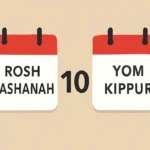
If you’ve ever wondered how many days after Rosh Hashanah is Yom Kippur, you’re not alone. This pair of sacred days sits at the heart of the Jewish calendar, forming the capstone of the high holy days season. The straightforward answer is that Yom Kippur falls on the 10th day of Tishrei, which means there are ten days from the first day of Rosh Hashanah to Yom Kippur inclusive and nine days after the initial Rosh Hashanah day if you count days strictly after that first day. In common religious discourse, these ten days are known as the Ten Days of Repentance. Below is a detailed guide to understanding the timing, the counting methods, and the practical implications for observance and study.
Overview: The Short Truth About the Timing
The Jewish calendar assigns specific dates to holy days according to the month of Tishrei. Rosh Hashanah marks the beginning of the civil year and is observed on the 1st and 2nd days of Tishrei in most communities. Yom Kippur, the Day of Atonement, comes on the 10th day of Tishrei. Consequently, the interval between the two holidays is governed by the structure of the month of Tishrei itself.
Rosh Hashanah typically spans two days for traditional communities outside of Israel, and in Israel as well, with the holiday beginning on 1 Tishrei.
Yom Kippur falls on 10 Tishrei.
The period between them is commonly referred to as the Ten Days of Repentance or Aseret Yemei Teshuva.
Because days of the week shift yearly, the specific day of the week on which Yom Kippur falls changes from year to year. This is one reason why people often ask, “What day of the week is Yom Kippur?” or “How many days after Rosh Hashanah does Yom Kippur occur this year?” The answer remains anchored in the same dates: 10 Tishrei for Yom Kippur, and 1–2 Tishrei for Rosh Hashanah, depending on local practice and calendar year type.
Jewish Calendar Basics: Rosh Hashanah, Yom Kippur, and the Month of Tishrei
To truly understand the timing, it helps to know a few calendar basics. The Jewish calendar is lunisolar, meaning it is based on lunar months and adjusted to solar years to keep the seasons aligned. The month of Tishrei is one of the most important in this cycle, hosting several major holidays, including Rosh Hashanah, the fast of Yom Kippur, and the days that lead into the festive season of Sukkot.
Rosh Hashanah — the Jewish New Year, observed as a two-day holiday (1 Tishrei and 2 Tishrei in many communities). It is a time of judgment, reflection, and the sounding of the shofar.
Ten Days of Repentance — the period from the first day of Rosh Hashanah through Yom Kippur, a time for introspection, prayer, fasting, and teshuvah (repentance).
Yom Kippur — the Day of Atonement, a solemn fast day focused on atonement, reconciliation, and spiritual purification. It occurs on 10 Tishrei.
The conventional way to describe the interval is that Yom Kippur comes after a series of days that invite repentance and self-scrutiny, culminating in a fast on Yom Kippur. In Hebrew, this period is often summarized as Aseret Yemei Teshuva, literally “ten days of returning” or repentance.
Counting Methods: Inclusive vs. Exclusive
Language about dates and counting can be a little tricky. Here are two common ways people phrase or count the interval between Rosh Hashanah and Yom Kippur:
Inclusive counting — If you count the first day of Rosh Hashanah and include it in the tally, the period from 1 Tishrei to 10 Tishrei comprises ten days. This is the sense in which the Ten Days of Repentance are described: they extend from the first day of Rosh Hashanah to the day of Yom Kippur.
Exclusive counting — If you count days strictly after the first day of Rosh Hashanah (i.e., counting from 2 Tishrei through 10 Tishrei), you have nine days between the two holidays. In everyday conversation, many people refer to the period as “ten days of repentance,” even when describing the days that follow the first day of Rosh Hashanah.
Both formulations are common in Jewish education and practice. The essential fact remains that the calendar marks Yom Kippur on 10 Tishrei, and the days leading up to it are the Ten Days of Repentance. For practical purposes, most people refer to the interval as ten days in total, which aligns with the traditional naming and the liturgical rhythm of the season.
The Ten Days of Repentance: A Focused Window for Reflection
Beyond the arithmetic of dates, the period between Rosh Hashanah and Yom Kippur carries a powerful spiritual pedagogy. The Ten Days of Repentance are a time for examination, confession, and reform in belief and behavior. The practice includes special prayers, the recitation of Selichot (extra penitential prayers), and intensified personal and communal introspection. While the exact observance can vary by community and tradition, some common threads include:
Self-examination and personal to-do lists for making amends.
Prayer and study as means to understand moral failures and how to repair relationships with others and with God.
Social reconciliation and the repair of broken bonds within families and communities.
Fasting and abstention on Yom Kippur itself as a capstone to the period of repentance.
These practices frame the question, “how many days after Rosh Hashanah is Yom Kippur?” not only as a matter of calendar arithmetic but as a spiritual timeline. The day you reach on 10 Tishrei is the culmination of a season marked by prayer, reflection, and communal accountability.
Rosh Hashanah and Yom Kippur in Practice: Observance Across Communities
Although the core dates are fixed, local practice can shape how people experience the interval. Here are some practical notes that help paint a fuller picture of the timing and the rhythm of the season:
Two-day Rosh Hashanah tradition — For many Jewish communities outside Israel, Rosh Hashanah is officially observed for two days (1 Tishrei and 2 Tishrei). The second day reinforces the sanctity of the holiday and extends the period of contemplative mood into early autumn.
One-day Rosh Hashanah practice — Some communities in Israel and among certain traditions may observe Rosh Hashanah for a shorter period, though the custom of two days remains common in most Orthodox and many Conservative and Reform communities.
Yom Kippur timing — Yom Kippur is always observed on 10 Tishrei, regardless of whether Rosh Hashanah was observed for two days or one. This consistency anchors the Ten Days of Repentance in the calendar.
Shabbat considerations — If a Shabbat intersects with the Ten Days of Repentance, special liturgical additions and customs may apply, illustrating how the calendar’s alignment affects practice.
In practice, families and communities plan around the chronology: the lead-up to Rosh Hashanah, the days of repentance, and the culminating fast of Yom Kippur. For learners and newcomers, understanding that Yom Kippur is on 10 Tishrei helps anchor study, liturgy, and scheduling of observances, even as local customs vary.
Examples and Scenarios: Visualizing the Interval
To make the timing more tangible, here are representative scenarios that illustrate the relationship between Rosh Hashanah and Yom Kippur. Note that the exact days of the week will change from year to year, but the dates do not.
Scenario A: If 1 Tishrei falls on a Sunday, then 2 Tishrei is Monday, 3 Tishrei is Tuesday, and 10 Tishrei falls on a Tuesday. In this scenario, Yom Kippur would begin in the evening of Tuesday and extend into Wednesday, depending on local customs for candle lighting and end of fast.
Scenario B: If 1 Tishrei falls on a Thursday, then 10 Tishrei falls on the next Sunday. Yom Kippur would be observed on Sunday evening into Monday, a schedule that affects work, school, and travel plans for those observing the day.
Scenario C: In leap years or years with particular calendar adjustments, the same rule applies: Yom Kippur remains on 10 Tishrei, and the exact weekdays shift yearly, illustrating the importance of checking a current calendar each year.
These examples demonstrate that while the day of week changes, the date of Yom Kippur on 10 Tishrei provides a fixed anchor. The practical takeaway is simple: plan around the dates, and you’ll align with the proper season of reflection and fasting.
Frequently Asked Questions
What is the exact number of days between Rosh Hashanah and Yom Kippur?
The canonical interval is described as ten days, known as the Ten Days of Repentance. If you count inclusively from the first day of Rosh Hashanah (1 Tishrei) to Yom Kippur (10 Tishrei), you have ten days. If you count exclusively from the day after 1 Tishrei, you have nine days between them. The traditional labeling emphasizes the ten-day period as a special season of introspection.
In most traditional practice, yes, Rosh Hashanah is observed for two days, 1 Tishrei and 2 Tishrei, in order to ensure that the holiday is observed in full. Some individuals or communities may adopt different customs, but the date conventions remain anchored in the calendar: Yom Kippur is on 10 Tishrei.
Can Yom Kippur fall on a weekday?
Yes. Yom Kippur can fall on any day of the week, depending on the year. The day of the week shifts every year because the Hebrew calendar is lunisolar. The important fixed date is 10 Tishrei, which determines the period of fasting and remembrance irrespective of the day of the week.
Does this timing differ in Israel?
The core dates remain the same: Rosh Hashanah begins on 1 Tishrei and Yom Kippur is on 10 Tishrei. Observance patterns may vary slightly due to local customs, but the calendar itself does not change for Israel in this regard.
Why is it called the Ten Days of Repentance?
This period between Rosh Hashanah and Yom Kippur is traditionally viewed as a window for spiritual return, repentance, and reconciliation. The name comes from the idea that there are ten days of opportunity to seek forgiveness and repair relationships before the holiest day of atonement.
What should someone do during the Ten Days of Repentance?
Common practices include increased prayer, reflection, study, and, for many, intensified acts of charity and reconciliation. Observers may read portions of liturgy that focus on confession and atonement, attend services, and recite Selichot in the early days of the season. The exact customs vary by tradition and community.
For someone new to the calendar or planning travel, study, or family gatherings, here are quick, practical takeaways about the timing:
Know the fixed dates: Yom Kippur is always on 10 Tishrei.
Expect a two-day Rosh Hashanah in most communities, even if local practice varies in isolated cases. Plan travel or family events accordingly.
Count both ways—the ten-day framing is traditional, but the countdown from the first day of Rosh Hashanah can be understood in inclusive or exclusive terms depending on the context.
Check a current calendar each year to confirm the exact day of the week on which Yom Kippur falls, as this affects daily routines, work, and school schedules.
By keeping these practical points in mind, you can navigate the timing with confidence and participate meaningfully in the season’s spiritual rhythm.
Closing Reflections: The Timeless Rhythm of the Holidays
The question “How many days after Rosh Hashanah is Yom Kippur?” invites more than a numerical answer. It opens a window into a centuries-old rhythm that blends ritual timing, personal examination, and communal life. The days between the two holidays are not merely a calendar interval; they are a structured period meant to cultivate introspection, forgiveness, and renewal. Whether you measure the span as ten days of repentance or as a nine-day interval after the first day of Rosh Hashanah, the spirit remains the same: a deliberate journey from awareness to atonement, from reflection to reconciliation.
In this way, the timing becomes a guide for living: it grounds study and prayer in a concrete cadence, invites honest self-assessment, and culminates in the transformative observance of Yom Kippur. The exact dates may shift year to year, but the flow of the season—beginning with Rosh Hashanah and culminating with Yom Kippur—endures as a powerful pattern in Jewish life.