Introduction: Understanding the Interval Between Rosh Hashanah and Yom Kippur
The question “How many days between Rosh Hashanah and Yom Kippur?” sits at the intersection of sacred timekeeping, liturgical rhythm, and lived tradition. For many Jews and students of Jewish history, this span is not just a calendar gap but a consciously observed period known as the Ten Days of Teshuvah or the Aseret Ymei Teshuvah.
Rosh Hashanah marks the Jewish New Year, a time of reflection, prayer, and the sounded hope of new beginnings. Yom Kippur, ten days later, is the Day of Atonement, a solemn fast and culminating act of repentance. Together, they bracket a powerful season during which communities engage in personal and communal introspection, commit to changes, and seek reconciliation with God, with others, and with themselves. The precise count of days depends on how you count—from the first day of Rosh Hashanah to the day of Yom Kippur, and whether you view the interval inclusively or exclusively. In Jewish tradition, however, this period is most famously described as ten days, known as the Ten Days of Teshuvah.
In this article, we will explore the canonical counting of these days, explain why the interval is described as ten days, discuss how calendar variations (such as Israel versus the Diaspora observance) affect the counting, and provide insights into the liturgical rhythm, practical observances, and everyday life during this sacred span. By using multiple viewpoints and careful definitions, we hope to illuminate both the numerical and the spiritual dimensions of the question.
The Ten Days of Teshuvah: What They Signify
The phrase “Ten Days of Teshuvah” signifies a focused period of repentance, prayer, and self-correction preceding the most solemn day in the Jewish year. These days are part of the broader festival season known as the Yamim Noraim, or the Days of Awe. During this time, individuals examine their actions, seek forgiveness from those they may have harmed, offer acts of charity, and commit to personal reform in the coming year.
The structure of the period is theological as well as chronological. It begins on Rosh Hashanah, the Jewish New Year, which inaugurates a period of divine scrutiny and mercy. It ends on Yom Kippur, the Day of Atonement, when the gates of heaven, according to tradition, are opened and the fate of the year is sealed. Although the phrase “Ten Days of Teshuvah” is common, you will also hear the term “Aseret Ymei Teshuvah” in Hebrew. Both refer to the same span of days, with the same spiritual intent: to turn, repair, and return.
In practical terms, these days are marked by heightened prayer, the recitation of special penitential liturgy, and a shift in individual and communal behavior. People may engage in more charitable giving, seek to reconcile relationships, and study texts on repentance, ethics, and communal responsibility. The number itself—ten—becomes a frame for reflection that is both expansive and purposeful.
How the Calendar Shapes the Count: Rosh Hashanah, Yom Kippur, and the Days Between
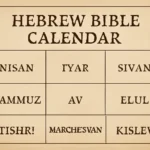
To understand the distance between Rosh Hashanah and Yom Kippur, it helps to map the Jewish calendar in a simple way. The cycle is measured in Tishrei, the first month of the civil year and the seventh month of the ecclesiastical year in the Hebrew calendar. The days of the period can be described as follows:
Rosh Hashanah Day 1 — 1 Tishrei. This is the first day of the festival and the starting point of the Ten Days of Teshuvah.
Rosh Hashanah Day 2 — 2 Tishrei. In the Diaspora, many observe two days of Rosh Hashanah; in Israel, the holiday is observed for one day (1 Tishrei) in most communities.
Day 3 through Day 9 — 3–9 Tishrei. The days in between include days of prayer, contemplation, and the progressive intensification of penitential liturgy.
Yom Kippur — 10 Tishrei. The Day of Atonement and the culmination of the period.
Taken together, these days form a continuous line of sacred time from the eve of the new year to the fast of the day of atonement. The cadence is deliberate: first hearing the call to repentance, then engaging in personal and communal acts of teshuvah, and finally entering the holy day of fasting and reconciliation on Yom Kippur.
The calendar’s structure of the days is not merely ceremonial. It reflects a theological movement: from judgment to forgiveness, from introspection to renewal. The year’s spiritual inventory is opened on Rosh Hashanah, and on Yom Kippur the process reaches its apex and, in many traditions, its last seal. Because the period is part of a fixed lunisolar calendar, its dates shift in relation to the Gregorian calendar year, but the pattern—ten days of opportunity for repentance—remains constant.
Counting Methods: Inclusive and Exclusive Perspectives
When people ask how many days lie between Rosh Hashanah and Yom Kippur, there are two common ways to count. Both are correct, but they answer different questions. The distinction is subtle but important for clarity.
Inclusive Counting: Ten Days in Total
In the most widely cited formulation, the interval from the first day of Rosh Hashanah through the day of Yom Kippur is ten days. This is the basis of the term “Ten Days of Teshuvah”. In inclusive counting, you begin with RH Day 1 (1 Tishrei) and include RH Day 2 (2 Tishrei) and every day up to Yom Kippur (10 Tishrei).
Exclusive or Intervening Days: Eight Days Between
If you count only the days strictly between the two holidays, excluding both RH Day 1 and Yom Kippur, you arrive at eight days (the days 2 Tishrei through 9 Tishrei inclusive, depending on how you phrase it). Some people refer to those intervening days as the core period of reflection, though in common usage the phrase “Ten Days of Teshuvah” captures the entire interval that begins with the RH observance and ends with the Yom Kippur observance.
What This Means in Practice
For practical purposes, many synagogues and communities teach and organize around the inclusive count: the period from the start of Rosh Hashanah through the end of Yom Kippur is ten days of spiritual opportunity. When educators or scholars want to emphasize the idea of the days that lie «between,» they may point to the eight days of days 2–9 Tishrei to highlight the pace and progression of repentance, alongside the two boundary days that frame the period.
Diaspora vs Israel: How Locale Affects the Observance and the Count
Another important dimension is geography. In Israel, Rosh Hashanah is typically observed for a single day, 1 Tishrei, while the Diaspora commonly observes two days, 1–2 Tishrei. Yom Kippur, by contrast, is observed on 10 Tishrei in both locales, though the preceding Yom Tov of Kol Nidre falls on the evening preceding Yom Kippur and is celebrated across communities.
Because of these variations, the practical counting can differ by community:
In Israel, the ten-day arc that begins on 1 Tishrei and ends on 10 Tishrei still applies, but the RH Day 2 is not observed as a distinct holiday in most communities.
In the Diaspora, many families celebrate RH across two days (1–2 Tishrei), followed by the rest of the period until Yom Kippur, still culminating in 10 Tishrei.
The effect is largely ceremonial, but it matters for ritual timings, synagogue schedules, and family observances.
Liturgical Implications of Locale
The material differences between locales influence how people prepare for the season. In a two-day RH tradition, there are additional prayers, extended services, and distinct liturgical insertions on RH Day 2. In Israel, the focus remains on the single RH service, followed by the Selichot prayers, the daily penitential prayers, and the progressive intensification of prayers leading up to Yom Kippur. Regardless of locale, the arc remains a unified spiritual itinerary: mindful assessment, sincere repentance, and a communal or personal pledge to repair.
The spiritual cadence of the Ten Days of Teshuvah is reinforced by a structured set of prayers and customs. While practices vary by community, several core elements recur across traditions.
Selichot — penitential prayers usually begin in the weeks leading up to Rosh Hashanah and intensify in the days immediately before the holiday. They appeal to God’s mercy and set the tone for the period.
Shofar blasts — on the conclusion of Rosh Hashanah, the shofar is blown as a call to repentance, galvanizing the spiritual mood for the days ahead (in many communities, this is observed on the first morning of RH or during subsequent days).
Ushpizin and hospitality — some communities welcome guests and emphasize charity and hospitality as a way to enact Teshuvah in practice.
Prayers of penitence — throughout the days, special liturgical additions emphasize confession (vidui) and the petition for forgiveness.
Kol Nidre — on the eve of Yom Kippur, the Kol Nidre service opens the fast with solemn, poignant melodies and a vow to nullify certain kinds of vows, historically emphasizing personal accountability and humility.
Ne’ilah — the closing service of Yom Kippur, often considered the final moment of judgment, with a sense of nearing closure and the hope for absolution as the fast ends.
The prayers are not merely repetitive rituals; they are attempts to shape a mindset: to own one’s missteps, seek forgiveness, repair relationships, and prepare to return to a correct path in the year ahead.
Practical Observances During the Ten Days
Beyond the liturgy, people observe the Ten Days of Teshuvah through acts that reflect the spirit of repentance:
Confession and introspection — individuals review their deeds, words, and intentions, acknowledging faults they want to rectify.
Charity and acts of kindness — giving to those in need, volunteering, and engaging in repair of social harms.
Family and community reconciliation — making amends, apologizing, and strengthening ties with friends and relatives.
Study — reading and learning about teshuvah, ethics, and Jewish law can deepen understanding of the moral dimensions of the season.
Historical Perspectives: The Ten Days in Jewish Thought
The concept of a penitential period between a new year and a day of atonement has deep roots in Jewish liturgy and ethics. While the exact terms and practices have evolved over centuries, the underlying idea remains robust: a structured time for turning away from wrong and aligning with a higher moral standard.
Early sources in rabbinic literature emphasize the power of repentance and the possibility of forgiveness during this time. The phrase Aseret Ymei Teshuvah appears in post-biblical sources and becomes a standard liturgical and ethical frame for the season. The period’s significance also reflects communal memory: a shared time when communities come together under shared prayers, shared obligations, and a shared hope for spiritual renewal.
Throughout history, Jewish communities have adapted the Ten Days of Teshuvah to local circumstances, languages, and customs, all while maintaining the core structure: a boundary between the joyous, reflective start of the year and the solemn, redemptive day that closes the season.
Practical Guide: Planning Around the Ten Days of Teshuvah
Whether you are observing in a formal synagogue environment, at home with family, or studying these days as part of personal spiritual practice, practical preparation helps maximize the impact of the period.
Key Preparations for Individuals and Families
Check the calendar for dates in your year, especially since Hebrew dates shift with the lunar cycle. Note whether your community observes Rosh Hashanah on one day or two.
Plan acts of teshuvah — write down one or two concrete ways you want to repair or improve in the coming year.
Schedule time for reflection — set aside moments of quiet contemplation, journaling, or guided study.
Prepare for fasting (if observing Yom Kippur) — arrange meals, consult medical guidance if needed, and plan ways to manage the fast with family or community support.
Community Planning and Observance
Synagogue services — arrive early for Selichot and other penitential services; plan for longer morning services during the High Holy Days.
Charity drives — many congregations coordinate tzedakah campaigns or food drives during this period.
Havdalah and transition — as the season progresses, communities often mark transitions between days with special rituals or readings.
Educational Approaches for Schools and Home Learning
Teachers and parents can design curricula and activities that explore the themes of repentance, forgiveness, and renewal. Consider using:
Text-based studies of selections from Machzorim (the High Holy Day prayer books) and ethical texts.
Creative writing prompts about personal transformation and accountability.
Community service projects aligned with the spirit of Teshuvah.
Common Questions About the Interval Between Rosh Hashanah and Yom Kippur
Because this topic touches both calendar math and religious practice, you may encounter some frequently asked questions. Here are concise answers to a few of them.
Question 1: Why is it called the Ten Days of Teshuvah if the calendar shows more or fewer days depending on locale?
The label “Ten Days of Teshuvah” refers to the traditional, inclusive counting from the first day of Rosh Hashanah through Yom Kippur. In practice, the exact number of days you observe may differ if your community observes Rosh Hashanah for one day (Israel) or two days (Diaspora). The core idea, however, is the same: the interval provides a dedicated period for repentance before Yom Kippur.
Question 2: How does the calendar handle two days of Rosh Hashanah in the Diaspora?
In communities outside Israel, Rosh Hashanah is observed on 1–2 Tishrei. The ten-day arc is then counted from the first day of RH through Yom Kippur on 10 Tishrei, with 2 Tishrei serving as an additional holiday day at the start. The effect is to extend the holiday cycle by one day before the main penitential period intensifies in the days that follow.
Question 3: Is Yom Kippur always on 10 Tishrei?
Yes. The Yom Kippur fast and observance universally align with 10 Tishrei in the Hebrew calendar. This date is fixed within the lunisolar framework of Tishrei, even though the exact date on the Gregorian calendar shifts from year to year.
Question 4: How do different communities observe Selichot and other penitential prayers?
Practices vary widely. Some communities begin Selichot prayers on the Saturday night before Rosh Hashanah or a few days prior, while others intensify Selichot in the days immediately preceding the holidays. The depth and cadence of confession, forgiveness rituals, and the intensity of liturgical elements reflect local traditions, rabbinic guidance, and community preferences.
Question 5: Can non-Jews learn from or participate in the Ten Days of Teshuvah?
Absolutely. While the core observances are specific to Jewish law and ritual life, the themes of repentance, self-examination, and renewal have universal appeal. People from many backgrounds study these ideas to reflect on personal growth, ethical conduct, and relationships. If you participate in public services or educational programs, you may encounter terms like teshuvah, Selichot, and Ne’ilah, which can be discussed with respect for their religious significance.
Putting It All Together: Why the Interval Matters Theologically and Practically
The Ten Days of Teshuvah form a bridge between the festive start of a new year and the solemn day of atonement. The interval is not merely a countdown; it is a map for moral and spiritual recalibration. Theologically, it suggests that human beings are capable of real change and that mercy is accessible through sincere repentance, repair, and restitution.
Practically, the period shapes how communities organize time, study, prayer, and charity. It has historically reinforced a sense of communal accountability: that one’s actions affect others and that the collective can be improved through individual acts of conscience. While the counting can be described in numerical terms—ten days—the lived experience is rich with meaning, emotion, and purpose.
Key Takeaways
Ten Days of Teshuvah is the traditional framing for the interval from Rosh Hashanah to Yom Kippur.
The days are structured by the lunisolar Hebrew calendar, with regional differences in RH observance (one day in Israel, two days in the Diaspora).
The interval includes significant liturgical moments such as Selichot, Shofar, Kol Nidre, and Ne’ilah, as well as personal acts of repentance, charity, and reconciliation.
There is both an inclusive count (1–10 Tishrei) and an interpretable inner count (2–9 Tishrei) that can be described as the days strictly between the two holiest days.
The spiritual aim is universal in its resonance: growth, forgiveness, and renewal for the year ahead.