Hebrew Alphabet Quiz: Test Your Alef-Bet Knowledge
Welcome to a comprehensive guide and practical resource for testing your Alef-Bet knowledge.
This article is designed to be both educational and actionable, offering a variety of approaches to
learning the Hebrew alphabet, practicing recognition and recall, and building confidence through an
interactive-style quiz framework. Whether you are a beginner starting from scratch or someone who wants
to refresh long-standing knowledge, this guide presents variations of the Hebrew alphabet quiz
that fit different learning contexts, goals, and time commitments.
Understanding the Alef-Bet: Keys to the Hebrew Alphabet
The Hebrew alphabet, traditionally called the Alef-Bet or Alef-Bet, is a
set of 22 consonant letters used in writing Biblical and modern Hebrew. While many learners focus on shapes,
sounds, and names, a robust understanding includes recognizing final forms, common letter pairs, and the
way vowels are indicated (or sometimes omitted) in different texts.
The Letters and Their Sounds
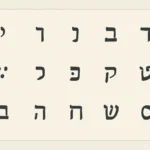
The core letters of the Hebrew alphabet are 22 consonants, most of which have distinct names
and phonetic values. Some letters have sounds that shift slightly depending on vowel markings, position in
the word, or historical pronunciation.
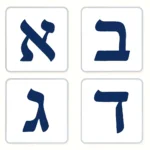
Alef (א) — a glottal stop or a placeholder for vowels; often silent in modern Hebrew
Bet (ב) — with a dot (dagesh) it is a hard “b”; without a dot it can be a soft “v” in modern pronunciation
Gimel (ג) — hard “g” as in gal
Dalet (ד) — resembles a doorway; “d” sound
Hei (ה) — “h” sound, often present at the ends of words
Vav (ו) — “v” or “o/u” as a vowel indicator
Zayin (ז) — “z” sound
Het (ח) — a fricative similar to a hard “kh”
Tet (ט) — aspirated “t”
Yod (י) — “y” sound; also used as a vowel indicator
Final Kaf (ך) — final form of kaf
Kaf (כ) — “k” as in kaf; final form is ך
Lammed (ל) — “l” sound
Mem (מ) — “m” sound; final form ם
Nun (נ) — “n” sound; final form ן
Samekh (ס) — “s” sound
Ayin (ע) — a guttural stop or glottal feature; often silent in modern Hebrew
Pe (פ) — “p” as in peg; final form ף
Tzadi (צ) — “ts” or “ts” sound; final form ץ
Qof (ק) — “k” or “k without aspiration”
Resh (ר) — rolled or guttural “r”
Shin (ש) — “sh” with a dot on the right; sin variant has the dot on the left
Tav (ת) — “t” sound; some dialects distinguish between “t” and “s”
Final forms appear at the ends of certain letters when they reach word-final position: final kaf (ך), mem (ם), nun (ן), pe (ף), and tsadi (ץ). These shapes help in reading and word segmentation, especially in print
materials and formal texts.
Unlike fully vocalized Latin alphabets, Hebrew often omits vowels in everyday writing but
preserves them in children’s books, Bible texts, poetry, and learning materials through a system of
diacritical marks known as niqqud. When learning through a quiz, you may encounter
questions that pair a consonant with specific niqqud to form a syllable or to clarify pronunciation.
What Makes a Good Hebrew Alphabet Quiz?
A well-structured Hebrew alphabet quiz should align with learners’ goals, provide clear
feedback, and gradually increase in complexity. The best quizzes combine recognition, recall, and
application—helping you move from rote memorization to confident use of letters in reading and writing.
Learning Goals for an Alef-Bet Quiz
Identify each letter by name and glyph
Distinguish between regular and final forms
Differentiate between hard and soft pronunciations when relevant
Match letters to their current or historical sounds
Associate letters with basic words for context
Associate diacritic marks with vowel sounds
Question Types You Might Encounter
Multiple-choice items for letter identity and name recognition
Matching letter shapes to their names
Ordering a sequence of letters to form a simple word
Identification of a letter from an isolated image
Audio-to-text recognition where you identify the letter based on a spoken sound
Vowel association with niqqud patterns
Designing and Taking an Alef-Bet Quiz: Practical Tips
Whether you are preparing for a formal assessment or simply practicing for personal growth, these
practical tips can help you maximize learning gains from a Hebrew alphabet quiz.
Active Recall and Spaced Practice
Create a routine that alternates between quick, daily recall sessions and longer weekly reviews. Use flashcards
or quiz apps that implement spaced repetition to optimize long-term retention of letters,
final forms, and common digraphs.
Mix of Digital and Pen-and-Paper Practice
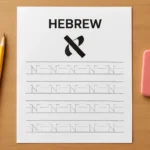
While digital quizzes provide instant feedback, handwriting practice reinforces memory through
motor learning. Combine digital drills with a paper alphabet chart, tracing exercises, and writing simple
words to consolidate recognition and recall.
Progressive Difficulty
Start with a beginner-level Hebrew alphabet quiz that covers the 22 letters and their names.
Progressive variants should gradually incorporate final forms, diacritics, and basic word-building tasks.
Types of Questions in a Hebrew Alphabet Quiz
The following list illustrates common formats you might see in a robust quiz about the Alef-Bet.
Letter identification from an image or drawing (name the letter).
Sound association—which sound does this letter usually make in modern Hebrew?
Final form recognition—identify the final form of a given letter.
Vowel pairing—select the niqqud that corresponds to a syllable or word.
Order the letters—drag or arrange a subset of letters to form a correct sequence.
Letter vs. letter pair—distinguish visually similar letters (e.g.,bet with/without dagesh, kaf vs. khaf variants in handwriting).
Word-building challenges—use a small set of letters to create a valid Hebrew word or family of words.
Sample Hebrew Alphabet Quiz Questions
The following sample questions show how a practical Hebrew letters quiz might be structured.
Answers and explanations appear after the question set to help you learn from mistakes.
Correct answer: B) Alef. Alef is often silent and serves as a placeholder for vowels.
Which letter has a final form that looks like ך when it appears at the end of a word?
A) Kaf
B) Mem
C) Nun
D) Pe
Correct answer: A) Kaf. The final form of Kaf is ך.
Identify the final form of Mem.
A) ם
B) ן
C) ף
D) ך
Correct answer: A) ם. Mem sofit is the final form used at word end.
What is the primary function of the vowel diacritics known as niqqud in Hebrew texts?
A) To indicate punctuation
B) To indicate tense
C) To indicate vowel sounds
D) To indicate plural forms
Correct answer: C) To indicate vowel sounds. In many texts, niqqud is omitted, but it clarifies pronunciation when present.
The letter with the typical “sh” sound and a dot on the right side is:
A) Shin
B) Sin
C) Tav
D) Zayin
Correct answer: A) Shin. The dot to the right of the letter denotes the “sh” sound.
Which pair correctly matches the letter with its final form?
A) Bet — final form
B) Mem — final form is ם
C) Nun — final form is ן
D) Tsadi — final form is ץ
Correct answer: B) Mem — final form is ם, and C) Nun — final form is ן, and D) Tsadi — final form is ץ are also correct pairs for the other items in the set.
If you see the letter with a dot inside like ב, what is its name and sound with dagesh?
A) Bet, “b” sound
B) Vet, “v” sound
C) Gimel, “g” sound
D) Dalet, “d” sound
Correct answer: A) Bet, “b” sound. The dagesh indicates the hard consonant sound in modern usage.
Which letter is commonly used as a vowel placeholder but can carry a consonant sound in certain positions, and is written as א?
A) Alef
B) Ayin
C) Aleph
D) Ayin
Correct answer: C) Aleph. Alef/Aleph represents a glottal stop or functions as a placeholder for vowels.
Identify the letter that typically has the “t” sound and appears in the word for “you” (singular, masculine) in Hebrew.
A) Tav
B) Tet
C) Tav with a dot
D) Shin
Correct answer: A) Tav. Tav represents a “t” sound in many forms of modern Hebrew.
In a beginner-friendly Alef-Bet exercise, which letter is commonly taught first due to its simple shape and core sound?
A) Bet
B) Alef
C) Gimel
D) Dalet
Correct answer: B) Alef. Alef is often introduced early because it acts as a placeholder for vowels in many words.
Which letter belongs to the group that has a distinct final form used at word-end?
A) Pe
B) Reish
C) Kaf
D) Yod
Correct answer: C) Kaf. The final form for Kaf is ך.
Answer Key Summary
For learners who want to review quickly, here is a concise answer key to the sample questions above:
B
A
A
C
A
A
B
C
A
B
Scoring, Feedback, and Tracking Progress
A thoughtful scoring system helps keep learners motivated and provides clear feedback on areas that need more
practice. Here is a practical framework you can adopt or adapt for your own Hebrew alphabet quiz:
Points per question: Assign a base value (for example, 1 point per question). For more challenging items, raise the value to 2 points.
Partial credit: Consider awarding partial points for near-miss answers in questions that require multiple parts, like matching with close distractors.
Progress indicators: Show a quick progress tally (e.g., “22/22 letters mastered” or “Final forms recognized: 5/5”).
Feedback notes: After each quiz attempt, provide a short explanation for each answer—especially for incorrect responses—to facilitate learning and recall.
Spaced repetition plan: Recommend a follow-up schedule, such as a short review the next day, then a 3-day gap, followed by a weekly review, to cement the Alef-Bet memory.
For long-term learning, maintain a log or journal of your practice sessions. You can track metrics like accuracy rate, time per answer, and types of mistakes (e.g., confusing finals with regular forms, or mixing up letter names).
Variations of the Hebrew Alphabet Quiz
Quizzes can be tailored to different learning contexts. Here are variations of the Hebrew alphabet quiz designed
to keep practice engaging and targeted to specific goals:
Beginner Friendly Alef-Bet Quiz
Focus on the 22 letters plus the five final forms. Use simple image prompts and letter names, with minimal
diacritical content. Great for a first pass to build familiarity with shapes and names.
Alef-Bet and Vocalization Quiz
Integrate niqqud or vocalization patterns for learners who want to connect letters with vowel sounds.
This variant helps with pronunciation accuracy and reading fluency in simple texts.
Emphasize word-final shapes: ך, ם, ן, ף, ץ.
Present pairs of letters in isolation and ask learners to pick the correct final form in a sentence frame or a word.
Letter Names and Sound Matching
Present a consonant name or phonetic cue, and learners must select the correct letter glyph or match a sound to the letter.
Speed-Run and Timed Drills
Add time pressure to improve fluency. Timed drills can help learners gain rapid recognition, which is useful for reading
Hebrew texts more efficiently.
Printable vs. Digital
Some learners prefer printable worksheets that can be used offline. Others benefit from interactive digital quizzes,
which can provide automatic scoring, hints, and adaptive difficulty.
A robust set of resources supports Hebrew alphabet learning and helps you customize quizzes to your needs.
Flashcard apps and platforms that support Hebrew letters (for example, mnemonic-based flashcards for letter shapes and sounds).
Quiz sets on language-learning platforms that include 22-letter identification and final-form recognition.
Printable charts featuring the Alef-Bet with names and pronunciations for quick reference.
Digital writing exercises that practice letter formation, stroke order, and neatness.
Video tutorials explaining the Alef-Bet, with visual demonstrations of each letter’s stroke order and common words.
For more in-depth exploration, look for resources that combine letter recognition, vowel patterns,
and reading practice in cohesive lessons. A holistic approach helps learners connect the alphabet to real text.
Common Challenges and How to Overcome Them
Learning the Hebrew alphabet presents unique hurdles. Here are some of the most common ones and practical strategies to overcome them:
Confusing Final Forms: Practice with dedicated drills that focus only on final forms until you can reliably distinguish them at a glance.
Letter Similarities: Letters like Bet and Vet, or Kaf and Khaf, have similar shapes. Use color-coding or mnemonic cues to differentiate them.
Pronunciation Variations: Some letters have different sounds in modern Hebrew vs. historical or biblical contexts. Learn modern Hebrew pronunciations first, then explore historical variants as a separate module.
Vowel Complexity: Niqqud can be overwhelming. Start with unvowelled texts and gradually introduce niqqud in simple word-level quizzes.
Reading Fluency: Combine alphabet quizzes with short reading passages. This reinforces recognition in a meaningful context.
By identifying your pitfalls, you can tailor a targeted practice plan that addresses your weaknesses while
maintaining motivation through small wins and measurable progress.
Putting It All Together: A Study Plan for a Hebrew Alphabet Quiz
Here is a practical, four-week study plan that uses a variety of Alef-Bet quizzes to build competency step by step:
Week 1: Focus on the 22 letters, their names, and basic shapes. Daily ten-minute quick quizzes, plus
a longer 20-minute session on two or three letters each day.
Week 2: Introduce final forms and basic niqqud for vowels. Include identification and matching
exercises, and trace letter shapes on paper to reinforce motor memory.
Week 3: Begin integrated reading practice with short, vowel-light passages. Use a mixed quiz
format that includes identification, sound matching, and word-building challenges.
Week 4: Increase the complexity with short sentences, basic punctuation recognition, and timed drills.
End with a comprehensive quiz covering the full range of letters, final forms, and basic vowel usage.
Throughout the plan, track your performance, reflect on mistakes, and adjust your study time allocation. The goal
is to reach a point where you can recognize letters quickly, recall their names and sounds, and read simple
Hebrew text with confidence.
Frequently Asked Questions about the Hebrew Alphabet Quiz
Below are answers to common questions learners ask about Hebrew alphabet quizzes.
What is the best order to learn the Alef-Bet?
The typical approach is to learn letter names first, then shapes, followed by final forms and basic vowels. Some learners prefer to learn by frequency in modern Hebrew texts, while others start with the simplest shapes to build confidence quickly.
Should I memorize the final forms separately?
Yes. Because final forms are used at word ends, dedicating time to memorize them early helps with reading accuracy and prevents confusion during more advanced practice.
Can I use English transliterations in a Hebrew alphabet quiz?
Transliteration can be helpful in early stages but should be gradually phased out to promote pure recognition of Hebrew letters and sounds.
How long does it take to become proficient in the Alef-Bet?
Timelines vary by learner, but a focused, consistent approach—20–30 minutes several days a week—often yields meaningful progress within a few weeks to a couple of months.
Are there mobile apps for Hebrew alphabet practice?
Yes. Several apps offer letter recognition, final-form practice, and niqqud-enabled exercises. Look for options that provide feedback and progress tracking.
Final Thoughts: Why a Hebrew Alphabet Quiz Matters
A well-designed Hebrew alphabet quiz is not just a test of memory; it’s a map of your learning journey.
By combining letter recognition, sound association, and contextual reading practice, you prepare yourself to
engage with real Hebrew texts—ranging from children’s books to modern newspapers and holy scriptures—with increasing
fluency and accuracy.
Remember to vary your practice, celebrate small wins, and use immediate feedback to adjust your study plan. With
consistent effort and thoughtful use of Alef-Bet quizzes, you’ll build a durable foundation for
literacy in Hebrew that will support you as you explore more advanced topics such as basic grammar, sentence structure,
and vocabulary acquisition.