When learning Hebrew, one of the most practical and frequently used phrases is the simple declaration
“I am here.” In Hebrew, that sentiment can be expressed in several closely related ways, each carrying
its own nuance and typical context. The core idea is straightforward: you are present in a location or
situation. Yet the exact wording can convey formality, immediacy, emphasis, or grammatical gender, and
it can shift your tone from casual to formal within seconds.
This article explores I am here in Hebrew from multiple angles: how to say it, how to
pronounce it, and how to use it in everyday conversation, in professional settings, and in written
communication. You will find a variety of options—from the simplest and most common to more explicit
constructions that describe position, intention, or presence. By the end, you will have a toolkit of
phrases you can rely on in different contexts, along with guidance on when and how to choose one form
over another.
Core Expressions: The Most Common Ways to Say “I Am Here”
The Hebrew language offers several standard ways to communicate that you are present in a location. Here are
the main options you are likely to use, with notes on when each is most natural.
אני כאן (ani kan) — I am here. This is the simplest and most universal form. It works in almost all
casual and many formal situations when you simply want to state your presence.
אני פה (ani po) — I am here. This version uses the colloquial word po/פה for “here.” It is very common in everyday speech and has a friendly, informal tone.
אני כאן כדי … (ani kan kedei …) — I am here to … . Add purpose or motive
after this setup. For example, “I am here to help” would be אני כאן כדי לעזור (ani kan kedey la’azor).
אני נמצא כאן (ani nimtza kan) — I am located here. Used when you want to
emphasize your physical location, often in semi-formal to formal contexts. The masculine form is נמצא; for a female speaker you will encounter a feminine form (see below).
אני נמצאת כאן (ani nimtza’t kan / ani nimtazit kan) — I am located here
(feminine). This explicit gender form is common in professional settings, formal introductions, or when precise location is being described and the speaker is female.
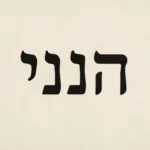
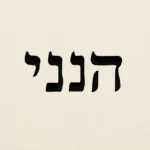
הנה אני כאן (hineh ani kan) — Here I am. An emphatic, attention-getting way to present
yourself, often used when you want to draw attention or re-introduce yourself in a conversation.
Pronunciation Guide: How to Say It Clearly
Pronunciation is essential for being understood, especially when Hebrew letters and vowels may differ from your
native language. Here are practical pronunciations and tips for the most common forms above.
אני כאן — ani kan
Pronunciation tip: «ah-nee kahn» with the emphasis on the second syllable. The word kan sounds like “con” with a short ‘a’ as in father.
אני פה — ani po
Pronunciation tip: «ah-nee poh» with the final vowel as a clear, short o. Po rhymes with “go” but is shorter.
אני כאן כדי לעזור — ani kan kedey la’azor
Pronunciation tip: kedey sounds like “keh-day.” The word la’azor is “la-oh-zor” with a soft emphasis on the second syllable.
אני נמצא כאן — ani nimtza kan
Pronunciation tip: nimtza approximates “neem-tsa.” The consonant cluster tz is like “ts” in “cats.”
אני נמצאת כאן — ani nimtza’t kan
Pronunciation tip: The feminine form adds a soft t ending: nimtza’t (“neem-tzah-t”).
הנה אני כאן — hineh ani kan
Pronunciation tip: hineh sounds like “heh-neh” with a soft e. The phrase ends with kan, as in “here.”
If you are learning Hebrew phonology, you may also encounter the alternative po vs. kan
usage depending on whether you are specifying a location in space or simply indicating presence in a more general sense.
In practice, אני כאן and אני פה are the go-to forms for most conversations, while נמצא/נמצאת כאן are chosen when you want to emphasize the idea of physical location or presence in a place
(such as a building, city, or venue) and you wish to be precise about gender.
Gender and Agreement: What Changes with Who Is Speaking
Hebrew has grammatical gender for verbs, adjectives, and participles in many contexts, and this affects how you
express “I am here” in some sentences. Here is a succinct guide to avoid common pitfalls and to sound natural.
Masculine speaker: The standard, most common form is אני כאן or אני פה. If you want to stress location, you can also say אני נמצא כאן.
Feminine speaker: In formal or location-focused statements, you may say אני נמצאת כאן. In everyday speech, many female speakers still say אני כאן or אני פה, depending on the level of formality.
Neutral or unspecified: For general statements without highlighting gender, אני כאן is perfectly acceptable
and widely understood in all contexts.
A useful way to remember this is that Hebrew often keeps the subject explicit in formal sentences. If you are describing
your physical location with a professional tone, you will often choose the explicit form נמצא/נמצאת כאן that matches your gender, rather than relying solely on אני כאן.
If you arrive late to a venue or you want to announce your presence to a host, you can say:
Here I am. In Hebrew: הנה אני כאן (hineh ani kan).
I have arrived. In Hebrew: הגעתי (haga’ti) can be paired with כאן to convey “I have arrived here” in a broader sense, or you can say אני כאן to emphasize your current presence.
3) In a Workplace or Classroom
In professional settings, it is common to assert your presence with a simple statement or to situate your presence relative to work tasks:
I am here to work on the project.אני כאן כדי לעבוד על הפרויקט (ani kan kedey la-avod al ha-pro-yect).
We are here to collaborate.אנחנו כאן לשתף פעולה (anachnu kan lesha-teif pa-koa).
4) Conversational Contexts: Emphasis and Response
In conversation, אני כאן can serve as a response to a question like “Where are you?” or as a gentle assertion when someone asks you to join a discussion:
Question: Where are you? — אני כאן.
Response with emphasis: הנה אני כאן — “Here I am.”
Confusing “here” words: כאן (kan) vs. פה (po). Use כאן in writing or more formal contexts and פה in everyday speech.
Omitting the subject in formal contexts: In some formal sentences, explicitly stating אני (I) helps avoid ambiguity, especially in written Hebrew or in professional settings.
Gender-sensitive forms: If you are describing your own location in a gender-specific sentence, use the feminine form נמצאת when appropriate. In casual speech, many speakers still rely on אני כאן without gender marking.
Pronunciation pitfalls: Hebrew vowels change the sound of words. Practice the short vowels in אני כאן (ah-nee kahn) vs. אני פה (ah-nee poh) to avoid mispronunciation that could obscure meaning.
Variations and Nuances: Semantics Beyond “I Am Here”
To convey subtle distinctions and broaden semantic breadth, you can use several related phrases. Each carries nuance that helps you tailor your sentence to the situation:
אני כאן כדי להתחיל (ani kan kedey lehatkhil) — I am here to begin. Useful when you show up at a meeting and intend to start a session.
אני כאן עכשיו (ani kan akhshav) — I am here now. Emphasizes immediacy or arrival in the present moment.
נמצא כאן (nimtza kan) — Found here / located here. Common in descriptions or when pointing out a location in a guide or on a map.
נמצאת כאן (nimtzat kan) — Found here / located here (feminine speaker). Useful in formal announcements or descriptive text.
כאן ואני (kan va-ani) — Here and I. A stylistic reversal used in storytelling or emphasis in speech (less common in everyday speech, but found in literature or dialogue scripts).
הנה אני כאן (hineh ani kan) — Here I am. A classic phrasing for drawing attention or making a confident entrance.
Grammar Notes: Present Tense and the Absence of “To Be”
Hebrew typically drops the verb “to be” in the present tense, so most phrases meaning “I am” simply use the subject and a locative or predicative element. The absence of the verb to be in the present tense is a characteristic feature of modern Hebrew. This means that sentences like אני כאן are complete and natural without an auxiliary verb.
When you want to express location as a state or condition rather than a simple presence, you may use the verb להימצא (le-him-atzé) in forms like להימצא כאן (to be found here / to be located here) or the participial forms נמצא and נמצאת to emphasize location. The choice depends on formal context and on whether you want to stress the act of being found in a place.
Practical Dialogue: Short Scenarios You Can Use Right Away
Here are compact, ready-to-use exchanges that demonstrate how “I am here” can anchor a conversation in real life. Each dialogue snippet includes the Hebrew line, a transliteration, and the English meaning.
Situation: Meeting a colleague in a lobby
Hebrew: היי, אני כאן.
Transliteration: Hey, ani kan.
Meaning: Hi, I am here.
Situation: Introducing yourself at a workshop
Hebrew: שלום, أنا כאן כדי לעזור.
Transliteration: Shalom, ani kan kedey la’azor.
Meaning: Hello, I am here to help.
Situation: Announcing arrival at a venue
Hebrew: הנה אני כאן, ready to start.
Transliteration: Hineh ani kan, ready to start.
Meaning: Here I am, ready to start.
Customization: Adapting “I Am Here” for Different Audiences
As you gain experience with Hebrew, you’ll notice that the best form of “I am here” varies with audience, purpose, and setting. Here are guidelines to tailor your phrasing for diverse readers and listeners.
Casual conversations with friends: Stick with אני כאן or אני פה for quick, natural exchanges. These are the most comfortable in everyday chats, texting, and social media comments.
Formal meetings or presentations: Use אני כאן for presence, or אני נמצא כאן/אני נמצאת כאן when you want to emphasize your physical location with gender agreement.
Written Hebrew (signage, instructions, guides): Prefer כאן for here and consider נמצא כאן or נמצאת כאן when adding clarity about position, especially in multi-step directions.
Signaling urgency or emphasis: Use הנה אני כאן to grab attention or to introduce yourself in a situation where you want to be clearly noticed.
Supplementary Resources: Immersive Ways to Practice
To internalize these expressions and gain fluency, consider the following practice ideas:
Watch short videos or dialogues in Modern Hebrew that include lines like אני כאן or הנה אני כאן, and repeat aloud to ingrain pronunciation.
Record yourself saying different variants, then compare with native speakers or language learning apps to refine tone and rhythm.
Write quick exchanges or role-plays that feature you arriving at a location, introducing yourself, or helping someone. Use at least two forms (for example, אני כאן and אני נמצאת כאן or אני נמצא כאן).
Read signage and informal postings in Hebrew—look for examples of כאן vs. פה and notice when each is used.
To make your Hebrew more natural, pair I am here with surrounding phrases that you’ll likely need in real conversations. Here are several frequently used companions:
Hello, I am here to learn.שלום, אני כאן כדי ללמוד (Shalom, ani kan kedey lilmod).
Here I am, ready to start.הנה אני כאן, מוכן להתחיל (hineh ani kan, mun malesh lehitkhil).
We are here to collaborate.אנחנו כאן לשתף פעולה (anachnu kan leshateif pa’ula).
I am here with you.אני כאן איתך (ani kan itcha) for masculine or אני כאן איתך (ani kan itakh) for feminine, depending on pronoun and gender context.
Summary: Building Confidence with “I Am Here” in Hebrew
The expression אני כאן is the backbone of saying “I am here” in everyday Hebrew. Its versatility comes from the
ability to pair it with others: to convey purpose (כדי לעשות), location emphasis (נמצא/נמצאת כאן),
or emphasis and attention (הנה אני כאן). The choice between כאן and פה,
and between gendered forms such as נמצא vs. נמצאת, allows speakers to express subtle shades of meaning
while remaining clear and natural.
Final Tips for Learners
As with any language, the best way to master these phrases is through consistent exposure and practice. Here are a few actionable tips:
Practice both אני כאן and אני פה in short, daily dialogues. Alternate between the two to feel the nuance.
When you want to stress your location, adopt אני נמצא כאן or אני נמצאת כאן as appropriate to your gender and the formality of the setting.
Use the emphatic form הנה אני כאן when you need to capture attention or make a confident entrance.
If you are practicing listening, note how native speakers switch between kan and po depending on whether the context is spatial or idiomatic.
In writing, lean toward כאן for clarity, and reserve פה for casual, spoken language.
Whether you are greeting someone, announcing your arrival, or simply signaling your presence in a room, the Hebrew expressions
covered in this article will help you communicate clearly and confidently. With practice, you’ll find that your ability to say I am here
in Hebrew opens doors to more natural conversations, smoother social interactions, and more precise self-presentation in a Hebrew-speaking environment.