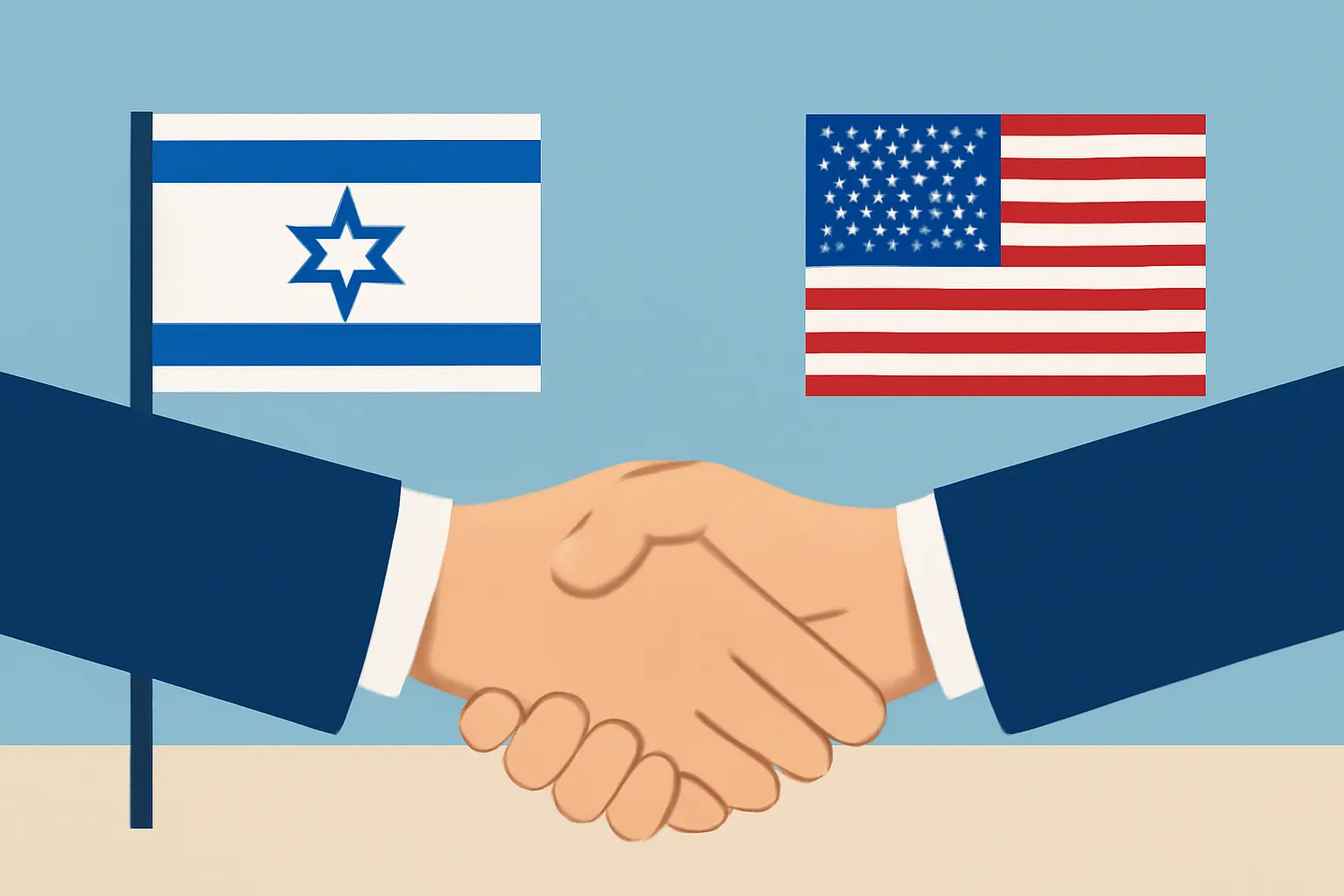
Overview: The Core of the Israel–United States Relationship
Since the founding years of the modern state of Israel and the emergence of the United States as a global power, the alliance between Israel and the United States has evolved from cautious diplomatic engagement to a deeply integrated strategic partnership. In many contexts, Israel allies with the U.S. not merely as a matter of transactional support, but as a shared framework built on security interests, democratic ideals, and converging values. Today, the U.S.–Israel partnership shapes regional security, technology ecosystems, intelligence frameworks, and diplomatic calculations across multiple administrations and changing geopolitical landscapes.
This article presents a comprehensive look at Israel–U.S. cooperation, tracing its key facts, exploring its implications for policy and regional stability, and outlining possibilities for the future of the U.S.–Israel relationship. Throughout, the emphasis is on clarity about how the partnership functions, why it endures, and what it means for policymakers, businesses, researchers, and ordinary citizens in both countries.
Historical Context and Evolution
The bond between Israel and the United States did not begin as a single program or a singular event. It emerged from a confluence of wartime alliance considerations, political sympathies, and shared strategic calculations in the Cold War era, followed by transformative decades of cooperation. The early modern phase involved military assistance, diplomatic recognition, and reciprocal security commitments that laid the groundwork for a dependable alliance.
Over time, the relationship matured through landmark milestones, including the normalization of relations with neighboring states, collective responses to regional crises, and sustained collaboration in defense research and technological innovation. While the partnership has faced disagreements and policy debates, its central pillars—security guarantees, intelligence collaboration, and economic ties—have endured. The phrase Israel–U.S. alliance is often used to describe a multi-faceted framework rather than a single constraint or treaty, reflecting a dynamic that responds to changing strategic needs.
Milestones in the U.S.–Israel Relationship
Early diplomatic ties established in the 1940s and 1950s, with the United States recognizing Israel and beginning security conversations that would deepen over time.
Military aid and security arrangements that gradually increased, laying the groundwork for a robust defense partnership.
Camp David Accords and subsequent peace processes, which helped align U.S. diplomacy in the region with Israeli security interests and regional normalization efforts.
Qualitative Military Edge concept and ongoing defense planning that sought to preserve Israel’s military superiority in the region, supported by American defense hardware and training.
10-year security aid packages, including a notable multi-year memorandum of understanding (MOU) concluded in the 2010s, committing billions of dollars in defense assistance and advanced systems.
Technology and innovation collaboration that turned Israel into a major partner in cybersecurity, aerospace, medical tech, and other high-tech sectors, often described as a shared innovation ecosystem with the United States.
Key Areas of Cooperation
Defense and Security
The core of the U.S.–Israel partnership rests on formal and informal security arrangements that include ongoing military aid, joint trainings, and collaboration on counterterrorism and defensive systems. Israel allies with the United States in ways that strengthen both nations’ strategic posture in the Middle East, particularly in maintaining a qualitative military edge and deterring conventional and unconventional threats.
Foreign Military Financing (FMF) and technology transfers that equip Israel with advanced capabilities while aligning with American industrial and defense standards.
Joint military exercises and interoperability initiatives that allow American and Israeli forces to operate seamlessly in combined scenarios.
Defense procurement of systems such as missile defense, precision strike platforms, and intelligence-surveillance-reconnaissance (ISR) assets, often with U.S. support or co-development.
Strategic planning to address evolving threats, from missile arsenals to cyber warfare and asymmetric operations.
Intelligence and Counterterrorism
Intelligence cooperation forms a critical, often less visible, pillar of the alliance. The United States and Israel share high-level intelligence on regional dynamics, counterterrorism, cyber threats, and proliferation risks. This collaboration contributes to preventing attacks, disrupting terrorist networks, and informing diplomatic policy.
Technology, Innovation, and Economic Ties
The partnership extends into science, technology, and economic exchange. Israel’s robust tech sector—founded on a culture of innovation—complements the U.S. market and research institutions. The result is a powerful ecosystem for startups, research laboratories, venture capital, and multinational technology companies. In practice, Israel allies with the U.S. in a mutual pursuit of breakthroughs in cyber, aerospace, health tech, environmental tech, and clean energy.
Joint research programs and government-funded collaborations that accelerate technology development.
Venture capital and private sector collaboration bridging Israeli ingenuity with American capital and markets.
Cybersecurity leadership with shared defense and commercial interests in protecting critical infrastructure.
Diplomacy, Politics, and Regional Strategy
Diplomatically, the United States and Israel coordinate their positions on a range of regional issues, including conflict resolution, settlement policy debates, refugee concerns, and regional security arrangements. The relationship influences how other nations view a potential alignment with Washington and Jerusalem, shaping broader regional diplomacy and alliance-building.
People-to-People, Education, and Cultural Exchange
The bond between the two countries also manifests through education exchanges, scientific fellowships, and cultural programs. These ties help cultivate mutual understanding, support a skilled workforce, and strengthen long-term goodwill that reinforces the broader U.S.–Israel partnership.
Implications for Policy, Security, and Global Leadership
The working relationship between Israel and the United States has wide-ranging implications beyond bilateral interests. It shapes U.S. foreign policy in the Middle East, influences the balance of power in regional politics, and affects international norms around security, technology, and diplomacy.
Regional stability: The partnership contributes to deterrence and crisis management, but it can also complicate peace negotiations if partners hold divergent views on settlements, borders, or sovereignty claims.
Allied trust and credibility: A steadfast alliance signals reliability to other partners and potential allies, reinforcing American leadership in security alliances around the world.
Technology leadership: Collaborative innovation strengthens both economies and helps set standards in cyber and defense tech that influence global markets.
Resource and energy security: Security cooperation can support resilience in energy markets and critical supply chains, particularly in times of regional volatility or global disruption.
Diplomatic leverage: The U.S.–Israel partnership provides Washington with levers to advance broader diplomacy, including partnerships with Arab states, European allies, and other regional actors.
Domestic Politics and Public Discourse
Both countries wrestle with domestic debates about policy directions related to security aid, settlement policy, human rights considerations, and the balance between strategic alliance and ethical concerns. The way these debates are navigated can alter the tone of the partnership, but the underlying strategic alignment has persisted across administrations with varying political orientations.
The U.S.–Israel relationship intersects with global norms on arms control, nonproliferation, humanitarian considerations, and international law. The partnership influences how the United States contributes to international institutions, how it coordinates sanctions and diplomacy, and how it supports regional actors in pursuing security while upholding legal and humanitarian standards.
Challenges and Critiques: A Honest, Balanced View
No thriving alliance operates without a candid assessment of its limitations and tensions. For the Israel–United States relationship, several challenges are regularly discussed in policy circles, the media, and academic debates.
Policy disagreements on settlements and borders can strain public diplomacy and complicate peace initiatives, even if the security alliance remains intact.
Resource allocation and dependence concerns arise when large-scale aid and access to advanced technology shape the budgets and strategic priorities of both nations.
Public opinion and political cycles in either country can influence the vigor of joint initiatives and the speed of decision-making on sensitive issues.
Ethical and humanitarian considerations in conflicts and civilian protection require ongoing dialogue and accountability to maintain legitimacy on the world stage.
Regional dynamics including the roles of other powers, shifting alliances, and non-state actors can complicate a straightforward interpretation of the alliance as a monolithic bloc.
Critics of close U.S.–Israel alignment argue that it can limit flexibility in pursuing a broader regional peace process or that it may distort U.S. foreign policy priorities. Proponents counter that steadfast alliance serves American security interests, fosters innovation, and stabilizes an otherwise volatile region. The nuanced truth is that Israel as a partner with the United States brings both clear benefits and complex trade-offs that require ongoing dialogue, transparency, and adaptive policy design.
Strategic Risks and Contingencies
In a world of rapidly evolving threats—cyber warfare, advanced missiles, space security, and misperceptions—risks can accumulate if incentives drift apart. Contemporary assessments emphasize the importance of maintaining robust channels of communication, clarity on red lines, and mechanisms for crisis management to prevent misunderstandings from escalating into conflict.
The Future of the U.S.–Israel Partnership
The trajectory of the Israeli alliance with the United States over the coming decade will be shaped by a combination of strategic opportunities, domestic political dynamics, and global trends. The future of the U.S.–Israel relationship hinges on sustaining common interests while accommodating legitimate differences, adapting to new technologies, and expanding the horizon of regional diplomacy.
Strategic Outlook: What to Expect
Looking ahead, several fundamental drivers are likely to shape the partnership:
Continued security cooperation and defense modernization, including joint development and procurement of advanced systems that maintain Israel’s safety and ensure interoperability with the United States.
Expanded innovation ecosystems that accelerate research in cybersecurity, health technology, and sustainable energy, creating a bilateral pipeline from laboratories to markets.
Diplomatic activism that leverages the alliance to support regional security architectures, conflict resolution efforts, and coordinated responses to global crisis scenarios.
Human rights and humanitarian considerations as forums for dialogue, ensuring that security priorities are balanced with internationally recognized norms.
The evolving regional landscape, including breakthroughs achieved through the Abraham Accords, affects how Israel aligns with the United States. Normalization with key Arab states alters regional security calculations, economic ties, and intelligence-sharing arrangements. The future may see expanded cooperation with Gulf and North African partners, creating new corridors for multilateral security and technology collaboration under the U.S.–Israel umbrella.
Risks and Scenarios for the Next Decade
Analysts often contemplate several scenarios:
Continuity scenario: The partnership deepens steadily, with greater joint investments in defense, tech, and regional diplomacy, anchored by bipartisan political support in the United States and broad consensus in Israel.
Stability-with-conditions scenario: The alliance remains intact but operates with stricter conditions on certain policies, such as human rights or settlement-related issues, to preserve broader international legitimacy.
Adaptive alliance scenario: The United States and Israel recalibrate parts of their relationship to accommodate shifting regional players, new technologies like AI and autonomous systems, and evolving threat perceptions.
Polarization scenario: Domestic political shifts create periods of tension or recalibration in policy toward Israel, requiring deliberate diplomacy to sustain long-term collaboration.
Policy Recommendations for a Stronger Partnership
To maximize the constructive potential of the U.S.–Israel partnership, policymakers in both capitals might consider:
Maintaining robust, transparent security aid with clear strings on end-use and accountability mechanisms.
Investing in cooperative research programs that accelerate shared breakthroughs while ensuring ethical standards and international norms are upheld.
Enhancing crisis-management communications to prevent misperceptions during conflicts or rapid geopolitical shifts.
Expanding people-to-people ties through academic exchanges, fellowships, and cultural programs that reinforce mutual understanding.
Balancing regional diplomacy by leveraging the alliance to pursue peace initiatives and encourage constructive engagement with regional actors.
Conclusion: Why the Partnership Matters and How It Might Evolve
The relationship between Israel and the United States is a defining element of contemporary global security architecture. Its enduring strength comes from a combination of strategic alignment, complementary capabilities, and a shared commitment to democratic principles, innovation, and regional stability. As the world faces new threats—ranging from cybercrime to state-based aggression and complex humanitarian emergencies—the U.S.–Israel partnership stands as a critical instrument for deterrence, resilience, and collaborative problem solving.
Looking forward, the next generation of this alliance will likely be characterized by deeper integration in defensive systems, greater joint investment in technology and science, and more nuanced diplomacy that accommodates diverse regional voices while preserving essential security guarantees. The best possible future for the partnership involves continuous adaptation, transparent dialogue, and a shared conviction that both nations benefit from a stable Middle East, a thriving tech sector, and a global framework that upholds the rule of law and human dignity.
For citizens, policymakers, and scholars alike, understanding Israel allies with the U.S. in this broad sense—beyond headlines to the underlying mechanisms—offers insight into how enduring alliances are built, maintained, and reimagined in an ever-changing world.