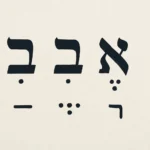
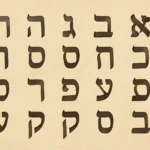
Hebrew vowels are not independent letters like aleph or bet. They are diacritic marks that attach to consonants to indicate how a word should be pronounced. In Hebrew, these marks are known as niqqud (also spelled nekudot, nikud, or nikkud). For learners and readers of Modern Hebrew, niqqud can be a helpful guide, especially in textbooks, children’s books, prayer books, and language courses. For fluent adult readers of everyday Hebrew, niqqud is often omitted, and vowels are inferred from context, habit, and morphology. This article is a comprehensive guide to niqqud and pronunciation, with explanations of the signs, their sounds, and practical tips for reading and learning.
What are Niqqud and why do vowels matter in Hebrew?
Unlike English and many other languages, Hebrew uses a script where the basic letters convey consonants, while the vowels are optional diacritical marks called niqqud. The niqqud signs tell you where to place the tongue, how open the mouth should be, and whether a syllable is long or short, which can distinguish meaning in otherwise identical sequences of consonants. In short, niqqud helps you read and pronounce words accurately and unambiguously, especially for beginners, religious texts, and literature where precise pronunciation matters.
There are several contexts in which vowels play an especially important role:
Learning new vocabulary and pronunciation—the signs provide the intended sounds and help prevent misreading.
Distinguishing homographs—words with the same consonants can have different vowel patterns and meanings.
Reading narratives or poetry where nuance and meter depend on precise vowel placement.
Teachable moments in linguistics and phonology that illustrate how vowels behave in a Semitic language family.
The core Niqqud signs: names, sounds, and usage
The full set of niqqud signs is rich, but most learners start with a core group of vowels. The following list covers the most important signs, their general pronunciation in Modern Hebrew, and a typical example. For each entry, the English name is given, followed by the Hebrew sign in parentheses, a short description, and a simple illustrative word. When you see a Hebrew example, you can read it aloud using the transliteration in parentheses to help bridge to pronunciation.
Pataḥ (ַ) — a short a sound, as in “father.” Example: אָב (father) would be read with a short a in certain contexts, but in common usage you’ll often see pataḥ under a consonant to denote the a sound: פַּה (peh with pataḥ) would render something like “pa” in borrowed or syllabic forms.
Kamatz (ָ) — a longer or more open a sound, often compared to the “a” in “father.” Example: שָׁלוֹם (shalom) shows kamatz after the shin to yield the sha portion.
Segol (ֶ) — an e sound, as in “bet” (in many dialects). Example: סֶפֶר (sefer) indicates an e sound on the first syllable.
Tzere (ֵ) — a longer e sound, similar to the English long e in “they.” Example: מֶלֶךְ (melek) shows a shifted pattern where a close e can be heard in some pronunciations of the second syllable depending on tradition.
Chirik (ִ) — a short i sound, as in “machine.” Example: מִשְׁפָּט (mishpat) exhibits the i in the first syllable.
Holam (ֹ) — a long o sound, often realized as o in Modern Hebrew. It is typically written as a dot above the consonant or as a holam formed by a ו (vav) with a dot above in some spellings. Example: יוֹם (yom) yields yo.
Holam haser (ֹ) on its own (without a vav) — also yields an o vowel under the consonant; a form you’ll encounter in biblical and poetry texts.
Shuruk (וּ) — a long u sound, written as a vav with a dot inside (the dot is a dagesh). Example: יוּם (yom) can be heard as yoom depending on context, though in most Modern Hebrew spellings you’ll see the vav carrying the shiur sound in words that require u.
Kubutz (ֻ) — a short u sound, used in a few poetic/folk spellings and certain loanwords; more common in certain dialectical representations than in everyday Modern Hebrew.
Shva (ְ) — a very light or almost silent vowel. There are two important flavors:
Shva na’ (also called shva nach) is typically pronounced as a short e or can function as a marker of syllable division rather than a full vowel in certain positions.
Shva nach (the “silent” variant) may be realized as almost nothing in continuous speech, especially when not stressed or at the end of a word.
Hataf vowels — three compact vowels that occur after certain consonants. They are sometimes called micro-vowels and are written as:
Hataf Pataḥ (ֳ) — a reduced a sound, a shorter form of pataḥ.
Hataf Qamatz (ֲ) — a reduced a sound that is closer to a central vowel than a full kamatz.
Hataf Segol (ֱ) — a reduced e sound, shorter than a full segol.
Dagesh (dots inside a letter) — not a vowel, but a sign that changes the consonant’s sound (dagesh forte) or marks a doubled letter in some contexts. It interacts with niqqud in predictable ways; it is essential for accurate pronunciation in biblical and liturgical texts, and it affects how a syllable begins or emphasizes a consonant.
When you study these signs, you’ll notice that Modern Hebrew often uses a simplified system, relying on context to guide pronunciation. In Biblical and liturgical contexts, the signs are more fully observed, and the nuanced differences between shva, shva na, and shva nach are pronounced more distinctly. The best practice is to become comfortable with the full set and then learn to apply them according to the text you are reading.
Special note on vowels and stress
In Hebrew, syllable structure and stress can influence how vowels are realized. In Modern Hebrew, stress typically falls on the penultimate or antepenultimate syllable in many words, but exceptions abound, especially with borrowed terms and some native roots. Niqqud marks help you identify the intended vowel but not always the exact stress pattern; you will often infer the stress from common usage, dictionaries, and accent patterns. When you encounter a word with niqqud, pay attention to how the vowels clash with the typical stress location of that word’s root family.
The sign Shva (ְ) is unique among Hebrew vowels because it is not a fixed sound. Its realization depends on position and context. There are two main flavors to understand:
Shva Na (shva naוּ) is commonly realized as a light vowel or even a glottal stop in some contexts. In careful reading, you often hear a tiny, quick e or a hint of color in the voice when the syllable before it is stressed or when the signs across word boundaries create rhythm.
Shva Nach (shva nach) is typically silent or very close to silence in pronunciation. When a syllable begins with a letter that carries shva nach, the reader may skip the vowel altogether or realize a diminutive e sound depending on the following vowels and consonant cluster.
As a learner, you’ll build intuition by reading aloud and listening to native speech. A typical practice step is to compare a niqqud-marked text with an unmarked text for the same sentence and hear where the shva marks create subtle differences in rhythm or emphasis. This helps your ear connect the dots between the marks and the actual sound in speech.
Reading strategies: from accuracy to fluency
Jumping from recognizing signs to fluent reading takes practice. Here are practical strategies to improve your pronunciation and comprehension:
Start with controlled texts: Use beginner-friendly books or graded readers that include niqqud. Read aloud slowly, focusing on identifying each vowel sign and its sound.
Build a personal vowel chart: Create a chart with each niqqud sign, its common sound, and example words. Refer to it while you read to reinforce associations.
Use minimal pairs: Practice words that differ only by a single niqqud sign (for example, words that share consonants but have pataḥ vs. segol). This sharpens your perception of small differences.
Read aloud with audio support: Listen to native speakers or high-quality recordings of the same text and imitate the tone, rhythm, and vowel realization. Repetition helps embed correct pronunciation patterns.
Switch between marked and unmarked text: After gaining confidence, try reading a niqqud-marked passage, then the same passage without niqqud. See how much you can infer from context and then check against the marked version.
Use dictionaries with vowels: When you encounter a word you don’t know, look it up in a bilingual or Hebrew dictionary that includes niqqud and phonetic guides (transliteration) to bridge the gap until you’re comfortable with the orthography alone.
Practice etymology and roots: Hebrew roots often reveal vowel patterns. Recognizing patterns such asוְהָלָךְ (walk) or לִקְטֹף (to pick) helps you predict and remember vowel placements in related words.
Vowel patterns in biblical, liturgical, and modern usage
Hebrew has evolved. The same consonantal sequence can receive different vowel patterns across Biblical Hebrew, rabbinic/poetic Hebrew, and Modern Hebrew. Here are some guiding contrasts:
Biblical Hebrew often preserves a richer set of hataf vowels and a larger variety of shva realizations. Texts like Torah readings and prophetic books rely on traditional pronunciation rules that may vary regionally (e.g., Ashkenazi, Sephardi, Mizrahi traditions) but share a common diacritic system in the written form.
Rabbinic and liturgical contexts tend to employ standardized pronunciations for prayer and study. The niqqud signs help preserve the precise cadence and vowel quality that underpins certain liturgical formulas and biblical cantillation.
Modern Hebrew generally uses a simplified vowel system in everyday writing. The pronunciation of vowels tends to be more uniform across speakers, and the niqqud marks are frequently omitted in newspapers, signage, and most digital communication. However, niqqud remains essential in textbooks, bilingual texts, children’s literature, and formal writing to ensure unambiguous reading for learners and non-native readers.
Practical notes for learners: how to approach niqqud effectively
For learners, the following practical notes can guide your study and practice:
Don’t fear missing a sign—even experienced readers skip niqqud in certain contexts. Use context and word patterns to guide your reading and then fill in gaps with your knowledge of vowel possibilities.
Learn key words with diacritics as anchors. Words such as שָלוֹם (shalom), תּוֹרָה (torah), מֶלֶךְ (melek), and סֵפֶר (sefer) illustrate how common vowel patterns map onto meaning.
Remember the dagesh when you see a consonant with a dot inside. The presence or absence of a dagesh can interact with the vowel signs and affect pronunciation, especially with gutturals or letters that have special relationships to vowels.
Practice with authentic texts: children’s books, Jewish prayer books (siddur), Hebrew poetry, and short stories designed for language learners provide a range of contexts for niqqud use.
Use technology to your advantage: many language apps, e-readers, and Hebrew keyboards can display niqqud and provide audio pronunciations. Turn niqqud on when you need it and off when you’re practicing fluency.
Technological and typographic considerations
In the digital age, niqqud representation intersects with typography, encoding, and font support. Here are essential notes for learners who operate with computers and devices:
Unicode and encoding: Hebrew niqqud signs are encoded as combining characters that attach to base consonant letters. Proper rendering relies on fonts and text layout engines that support right-to-left typesetting and combining characters. Ensure your software uses UTF-8 (or a compatible encoding) and a compatible Hebrew font to display niqqud correctly.
Choosing fonts: Not all fonts render niqqud with the same clarity. For learners, select fonts designed for Hebrew that provide clear diacritics and comfortable letterforms. Font families labeled as “Hebrew” or “Arabic/Hebrew” often include good niqqud support.
On-screen input: Many keyboards allow you to add niqqud by using dedicated keys or keyboard shortcuts. If you’re typing a diacritized text, you’ll typically type the base letter and then apply the vowel sign(s) beneath or above it. Some word processors also offer macros or insert-ons to automate common niqqud patterns in teaching materials.
Accessibility: For readers with reading difficulties, niqqud can be a crucial bridge to accurate pronunciation. Materials that include niqqud can be more accessible, especially for new learners, children, or readers not yet confident in decoding consonantal sequences alone.
Common patterns and reference: a quick cheat sheet
Below is a concise reference you can keep handy as you study. It lists the vowel sign, its typical sound, and an example word where the vowel occurs. The examples use common words to illustrate familiar patterns.
Pataḥ (ַ) — a short a; example: בַּיִת (beit) “house” in the pataḥ pattern; often appears in root families with an a sound in the first syllable.
Kamatz (ָ) — a broad a; example: שָׁלוֹם (shalom) with kamatz under the shin to create the sha sound.
Segol (ֶ) — an e; example: סֶפֶר (sefer) gives an e in the first syllable.
Tzere (ֵ) — a longer e; example: טֵלֵוִויִם (television) in borrowed terms, and the general e sound helps distinguish from segol in some contexts.
Chirik (ִ) — an i; example: מִסְפָּר (mispar) “number” shows the i in the first syllable.
Holam (ֹ) — an o; example: יוֹם (yom) “day” with an o sound following the y.
Shuruk (וּ) — an u; example: חוּל (khul) though you’ll often see Modern Hebrew spellings with a vav carrying the u sound without niqqud in everyday text.
Kubutz (ֻ) — a short u; relatively rare in modern usage but present in historical texts and certain transliterations.
Shva (ְ) — often silent or a light e, dependent on context; used to separate syllables and shape rhythm.
Hataf vowels (ֳ, ֲ, ֱ) — reduced vowels: a, a (reduced), and e (reduced) in specific phonological environments; they appear in classical texts and in certain vowel schemas in poetry or liturgy.
How vowels influence meaning and nuance
In Hebrew, small changes in vowel patterns can alter a word’s grammar, tense, or meaning. For instance, shifting from segol to tzere on a given consonant can pivot between a noun and a verb form in some root families, or alter a preposition’s role in a sentence. In biblical poetry, the same consonant skeleton with different niqqud patterns can shift emotional tone, tense, or aspect. In modern usage, vowels guide pronunciation for new learners and clarify ambiguities in unfamiliar vocabulary.
Beyond transliteration, niqqud helps you access the morphology of Hebrew words. Hebrew words are often built from roots with three consonants and a network of affixes. The vowels interact with the roots to shape forms such as past tense, imperfect, and participles. For students, understanding this system makes it easier to guess the pronunciation and meaning of unfamiliar words encountered in contexts like news, essays, or literature.
Historical and dialectal variation in vowel realization
Although the niqqud signs are standardized in most modern texts, dialects and historical pronunciations present subtle differences in how vowels are realized. For example:
Ashkenazi readers historically distinguish certain vowels differently from Sephardi and Mizrahi readers, especially in sacred texts. Even though the written niqqud remains the same, the spoken output can differ in nuance and timing.
In Modern Hebrew, vowel sounds converge toward contemporary norms, reducing some of the regional distinctions that were common in earlier centuries of Hebrew literature.
In Biblical and Liturgical contexts, cantillation marks (trope) interact with vowel signs to shape pronunciation and phrasing. While cantillation is a separate system from niqqud, the two work together to convey precise chanting patterns.
Practical tips for teachers and learners: designing effective lessons
If you are teaching or learning Hebrew, consider a multi-stage approach that blends recognition with production. A few effective strategies include:
Begin with a visual glossary of niqqud signs, linking each sign to its sound, common situations, and example words.
Use rhythmic dictation activities where students listen to a sentence and write down the niqqud marks, then compare with a model text.
Incorporate phonetic transcription (transliteration) as a bridge, gradually reducing dependency as learners gain confidence in reading niqqud directly.
Integrate digital resources such as e-books with niqqud, language apps, and audio libraries to diversify exposure to authentic vowels in context.
Encourage learners to read aloud in a comfortable pace, focusing on vowel clarity and consonant articulation. Over time, aim for smoother rhythm and natural pronunciation while retaining accuracy.
A compact reference: quick nouns and ions of vowels you’ll encounter
To help you memorize the most frequently used signs in real texts, here is a compact reference of some common niqqud and their general realizations in Modern Hebrew. This list is not exhaustive, but it covers the vowels you’ll encounter most often in standard reading material:
Pataḥ — a as in father, common in first syllables of new words; example word pattern shows a short a.
Kamatz — a broadly as in “father”; often seen in stressed syllables.
Segol — e as in “bed” or “they” depending on the word; frequent in nouns and verbs.
Tzere — e as in “they,” often used in suffixes and verb inflections.
Chirik — i as in “machine”; common in roots with the pattern mi- or ni-.
Holam — o as in “go” when written above consonants; as a vowel sign or in combination with vav.
Shva — silent or a very light e, particularly in non-stressed syllables or word junctions.
Hataf vowels — reduced forms that appear in specific phonological environments and add compactness to the vocalization.
Dagesh — a consonantal marker that influences how a letter sounds; part of the consonant system rather than a vowel.
Putting it all together: an outline for a study plan
If you’re starting from scratch, here is a practical plan you can follow over several weeks or months. The plan assumes you have access to a basic Hebrew primer, a reader with niqqud, and audio resources for listening practice.
Week 1–2: Vowel recognition — focus on the core signs: pataḥ, kamatz, segol, tzere, chirik, holam. Learn the typical sounds and memorize one example word for each sign.
Week 3–4: Shva and the hataf family — understand the difference between shva na and shva nach. Practice with short sentences to feel the rhythm.
Week 5–6: Dagesh and interactions — study how the dagesh interacts with vowels and affects pronunciation, especially in common root patterns.
Week 7–8: Reading practice with niqqud — read graded texts with niqqud, first slowly, then with increasing pace. Use audio to compare your pronunciation with native speech.
Week 9–12: From niqqud to fluency — gradually move to texts with little to no niqqud. Continue to check unfamiliar words with a dictionary that provides pronunciation guidance.
Sample reading exercise: a short niqqud-marked paragraph
The following paragraph illustrates how niqqud appears in a typical modern text. It is intended for practice and illustration. If your browser renders Hebrew correctly, you should see the niqqud signs above or below the letters:
The exact vowels and words here are for illustration; when reading real texts, you’ll encounter a wider variety of vowel patterns. Use this kind practice to reinforce how each sign sounds and how it shapes meaning in context.
Further resources: where to study more
To deepen your understanding of Hebrew vowels and pronunciation, consider the following types of resources. Different learners benefit from different approaches, so you may combine several methods to suit your goals:
Textbooks and primers that explicitly teach niqqud and phonology, with exercises and answer keys.
Online courses offering guided practice, audio examples, and interactive quizzes focused on niqqud and Hebrew phonetics.
Dictionaries that provide pronunciation guides, transliteration, and niqqud for headwords and related forms.
Audio libraries of native speakers reading Hebrew texts—useful for hearing the natural realization of vowels in connected speech.
Pronunciation apps that emphasize listening discrimination and production of each vowel sound in context.
Common myths and clarifications about niqqud
As you explore niqqud, you may encounter a few common misconceptions. Here are quick clarifications to help you avoid common traps:
Myth: Niqqud exists to complicate Hebrew. Reality: Niqqud is a tool to disambiguate pronunciation, especially for learners and liturgical reading, and to preserve historical and morphological distinctions.
Myth: Niqqud is always necessary to read Hebrew. Reality: In modern everyday writing, niqqud is usually omitted. Readers rely on context and vocabulary knowledge, but niqqud remains crucial in learning and in certain texts.
Myth: All vowels sound the same in Hebrew. Reality: Different vowels have distinct sounds, and vowel realization can shift with stress, dialect, and word form. Even small changes in niqqud can change meaning.
Myth: The niqqud set never changes. Reality: The basic set is stable, but there are regional and stylistic variations, especially in poetry, liturgy, and historical texts where older conventions may appear.
Closing thoughts: embracing the full spectrum of Hebrew vowels
Learning Hebrew vowels and mastering niqqud is a journey from decoding signs to feeling confident in pronunciation and reading fluency. The system of vowel signs gives you a precise map of how words are meant to sound, while the consonantal skeleton provides a rich framework for meaning and morphology. As you practice, you’ll notice that certain vowel patterns recur across roots and word families, helping you build intuition and expand your vocabulary more efficiently.
Whether your goal is liturgical study, academic Hebrew, or everyday communication in Modern Hebrew, a solid grasp of niqqud will deepen your comprehension and enrich your reading experience. The signs may seem intricate at first, but with consistent practice and exposure to varied texts, you’ll gain both accuracy and ease in pronunciation. And as you advance, you’ll begin to hear the signs more naturally, recognizing the subtle textures of the language in poetry, prose, and conversation alike.