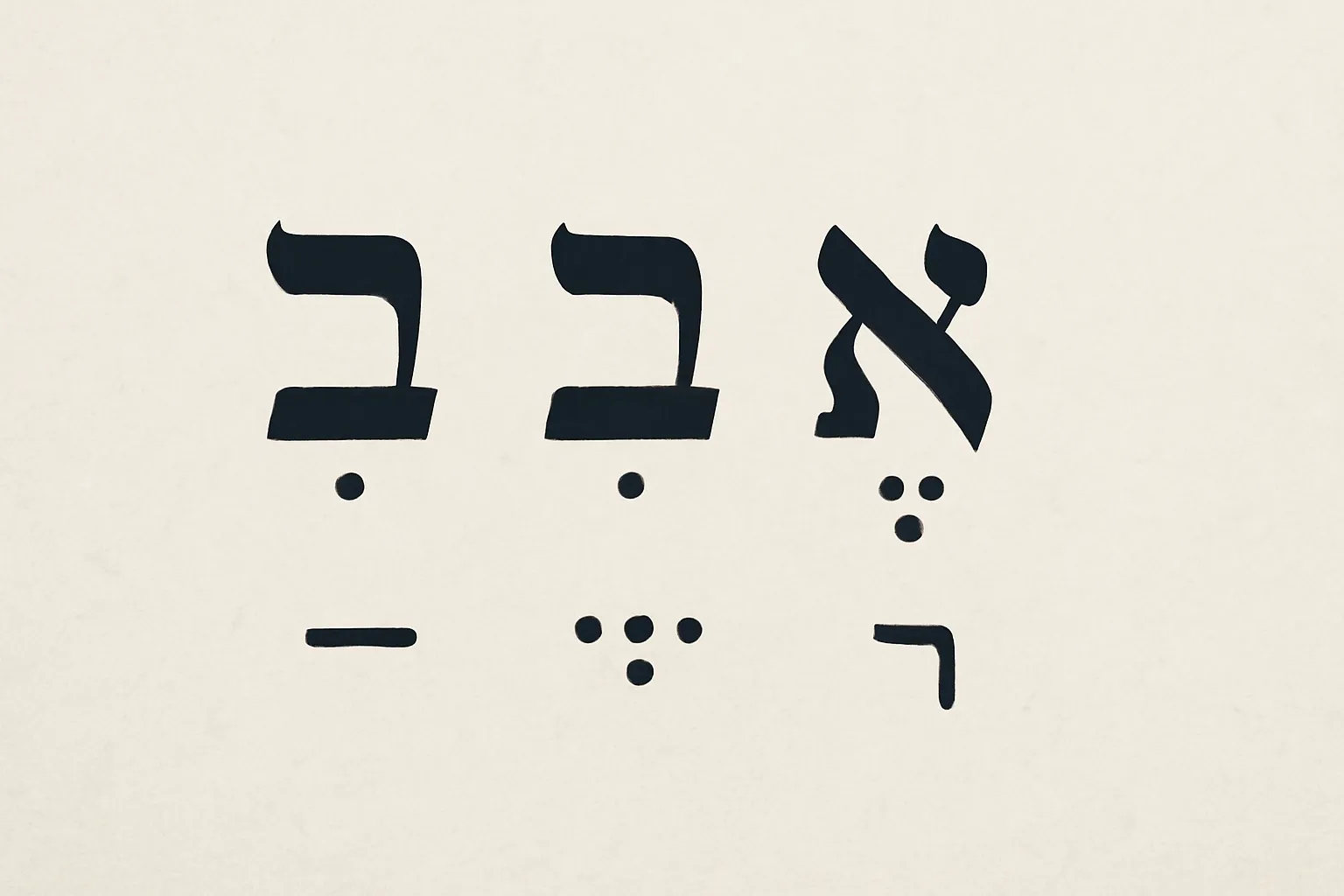
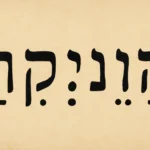
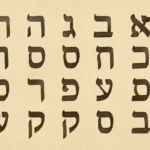
Hebrew writing uses a robust system of consonantal script augmented by a family of vowel points known as niqqudot (singular: niqqud). These marks, tiny but essential, guide pronunciation, disambiguate meaning, and support learners as they move from recognition to fluent reading. In everyday Modern Hebrew, many texts appear without niqqudot, especially newspapers, signs, and casual writing. Yet for beginners, religious study, poetry, or scholarly work, niqqudot are indispensable. They provide a transparent map from letters to sounds and help readers reconstruct the intended vowels and rhythm of a word.
This article offers a complete yet approachable guide to niqqudot. You’ll learn what each sign represents, how signs interact with letters, how certain signs come in pairs or with special forms, and how educated readers navigate sentences with and without diacritics. We’ll also discuss practical strategies for learners, common pitfalls, and resources you can use as you progress from beginner to confident reader.
What are Niqqudot? The Basics
Niqqudot are a system of vowel signs added to consonants to indicate pronunciation. They originated in the Tiberian system developed by Masoretes (scribes in Tiberias) around the first millennium CE and became the standard for biblical texts and instructional material. The goal was to preserve precise pronunciation in contexts where ambiguous consonants might otherwise lead to misreading.
In written Hebrew, you typically see two layers:
The base consonants (letters such as א, ב, ג, ד, ה, ו, ז, ח, ט, י, כ/ך, ל, מ, נ, ס,ע, פ/ ף, צ/ץ, ק, ר, ש, ת).
The niqqudot (the marks placed around or beneath those letters to signal vowels). Some niqqudot are placed below the consonant, others above, and a few combine into specific shapes when used with certain letters or in special contexts.
The Core Vowel Signs: A Quick Field Guide
Here are the most common vowel signs you’ll encounter. For each sign, you’ll see a short description of the sound, typical usage, and a simple example that demonstrates its role in a word.
Hiriq (ִ) — the “i” vowel
The hiriq is a single dot placed under the consonant and represents the short or long i sound, as in “machine” or “sing” in certain contexts. It is one of the most recognizable vowels for beginners because the sound is stable across many words.
Example skeleton: a consonant + i sound → consonant + ִ. A typical demonstration would be a word like [consonant] + i in a simple pattern to illustrate the sound, such as כִּ (the combination is used in real words; here it serves to show placement of the sign).
Segol (ֶ) — the “e” vowel (short)
The segol uses three dots arranged in a triangular pattern under the consonant and generally signals a short e sound, similar to the e in “bed.” In many words, the segol marks a classic, crisp vowel that appears in everyday speech.
Tzere (ֵ) — the “e” vowel (longer or slightly different in certain contexts)
The tzere presents as two dots arranged horizontally and can be heard as a long e or a slightly longer vowel than segol in some environments. It is a very common vowel in both Biblical and modern usage, serving as a reliable guide to pronunciation.
Patach (ַ) — the “a” vowel (open a)
The patach is a simple horizontal line under the consonant and points to a broad a sound, like the a in “father.” It is one of the most familiar vowels for learners, often appearing in simple syllables.
Kamatz (ָ) — the “a” vowel (longer or broader in many contexts)
The kamatz resembles a small T-like mark (varies in its printed shape depending on font) under the consonant and generally indicates another a sound, sometimes longer or more open than patach. In many words, kamatz and patach can sound quite similar, but the distinction helps readers resolve ambiguity in non-diacritized texts.
Qamatz Qatan (ֳ) — a narrower or special form of the “a” vowel
The qamatz qatan is a special form used in some rare or specific lexical contexts. In practice, you’ll meet it less often than the basic kamatz or patach, but it remains part of the full niqqudot inventory for accurate reading in certain words.
Shva (ְ) — two forms, the silent and the quick “e” or null sound
The shva is a subtle sign with two practical manifestations: a subtle, almost silent beat (similar to a halt or very short vowel) or, in specific contexts, a light e sound. There are two main readings: shva na (pronounced as a light “e” or sometimes like a pause) and shva nach (often silent). The choice depends on linguistic context (morpheme boundaries, stressed syllables, and word history).
The holam marks a long o sound. In practice, it is most often realized as o when it appears above a letter or, in conjunction with a vav or other configurations, as o plus a consonant cluster. There are orthographic nuances for holam that authors use to signal different phonetic realities in Biblical, liturgical, or modern varieties.
Cholam (also seen as Holam Malei in some discussions) — another form of “o”
The term cholám or “holem” refers to another way of signaling the o vowel, but the practical effect is similar to holam in many contexts. The distinction often arises in descriptions of historical pronunciation or in specific spellings where a dot above a letter is used to imply the long o sound.
Shuruk and Kubutz — voweled vowels built with different signs
Hebrew has two familiar “u” sounds that are historically tied to the letter vav:
Shuruk — the u sound written with a vav that carries a dot inside the letter (Vav + Shuruk). In practice, you’ll see the vav as the carrier for the vowel, producing the sound u as in “rule.”
Kubutz — a three-point sign that also signals the u sound in many textual traditions—often appearing in non-voweled contexts, but it is a standard approach to indicate the same vowel in traditional diacritic systems.
In modern curricula, you may also encounter vowel sign combinations where kubutz and shuruk coexist with letter forms to convey the same u sound in different lexical or historical contexts. The takeaway is that u in Hebrew can be spelled in more than one way, and niqqudot give readers the interpretive clue about which form is intended in a given word.
Special Topics: Dagesh, Shva Na, and Reading Rhythm
Beyond the simple vowel signs, there are a few related features that influence pronunciation and meaning.
A dagesh is a dot placed inside certain consonants to indicate a qualitative change—most famously a hard pronunciation for letters that can be either hard or soft (for example, bet vs. vet, kaf vs. khaf, pe vs. fe). It is not a niqqud sign, but it often appears alongside niqqudot and interacts with how a reader interprets the consonant’s sound in a given word.
When you’re learning to read, pay attention to dagesh because it helps distinguish pairs of letters that otherwise look the same. In many modern texts, the presence or absence of dagesh can shift the word’s pronunciation and meaning.
Shva na vs. Shva nach and Rhythm
The two readings of shva are not merely theoretical—they affect rhythm and emphasis in a sentence. Hebrew poetry, liturgical verses, and careful prose often rely on the precise placement of shva to regulate syllable timing. A reading with shva na (pronounced) might pause differently from shva nach (silent or reduced). When you’re learning, it helps to listen to native speakers or to read aloud with a teacher who can guide you through these subtle rhythm changes.
How Niqqudot Help with Meaning and Ambiguity
Because Hebrew has many consonants in common among words, vowel marks help disambiguate meaning. Consider a hypothetical pair where the consonant sequence stays the same, but the vowels change:
Consonants A-B-G = a three-letter skeleton that can carry different meanings depending on the vowels attached.
By changing from patach to kamatz or from hiriq to tzere, you can transform a string of letters into different words with distinct semantics.
In dictionaries, niqqudot are essential: they tell you which word is intended when the same consonant skeleton could form multiple words. In textbooks and children’s books, you often see full diacritics to train students until they can predict the most common pronunciations by context alone.
Common Modern Usage: When Niqqudot Are Important and When They’re Often Omitted
In Modern Hebrew, many everyday texts omit niqqudot. This is not a flaw; it reflects a long-standing practice that the reader’s familiarity with language and context supplies the vowels. However, niqqudot remain crucial in certain contexts:
Dictionaries and lexical references
Religious texts and poetry
Children’s books and language-learning materials
Texts that require precise pronunciation for teaching Hebrew as a second language
Scholarly works that discuss morphology, etymology, or phonology
If you’re a learner, you’ll likely encounter texts with and without niqqudot. The strategy is to read the diacritized sections carefully, then use your context-reading skills to infer vowels in undiacritized passages. Your goal is to build both recognition (seeing the letters) and production (pronouncing the vowels) as you gain confidence.
Practical Learning Path: From Beginner to Comfortable Reader
Learning niqqudot is a stepwise process. Here’s a practical path that many learners use to progress efficiently.
Familiarize with the signs: learn the name, sound, and typical spelling patterns for each niqqud sign. Create a simple flashcard set you can study daily.
Practice with short words: begin with consonant-vowel-consonant patterns (CVC) and common roots. Use words with standard vowels like hiriq, patach, segol, tzere, and kamatz to get comfortable pronouncing them in context.
Read diacritized passages: start with children’s books or beginner readers that include niqqudot. Listen to recitations while following along to connect the marks with spoken sounds.
Gradually move to mixed texts: transition to material that alternates between diacritized phrases and undiacritized sentences. Practice identifying the vowels in the diacritized sections, then infer vowels in the others.
Use dictionaries deliberately: when you encounter an unfamiliar word, check its niqqudot in a reliable dictionary. Note how different vowels yield different pronunciations and meanings.
Engage with audio resources: listen to audio books or recordings of Hebrew texts. If possible, follow along with the text and point to each vowel sign as you hear the corresponding sound.
Sample Reading Scenarios: How Niqqudot Play Out in Practice
To illustrate how niqqudot function in real reading, here are two representative scenarios.
Religious or liturgical reading: In Biblical or liturgical Hebrew, precise vowelation is often essential. You may see complex patterns where the same consonant string carries a variety of vowel shapes throughout a text, signaling tense, aspect, or older grammatical forms. Niqqudot guide you through those patterns with subtlety and clarity.
Everyday language learning: In conversation or modern texts, you might encounter simpler diacritics (rarely all seven at once) but you’ll still benefit from recognizing the most common signs. Over time, you’ll recognize how modern usage adapts vowels in loanwords, proper nouns, and technical vocabulary.
Typography, Encoding, and Digital Tools
When you work with niqqudot on a computer or device, a few practical considerations help ensure correct display and editing.
Unicode provides standardized code points for Hebrew letters and niqqudot. Make sure your document declares a UTF-8 encoding to avoid mojibake (garbled characters).
Fonts matter: choose fonts that correctly render niqqudot in the size you need. Some fonts render diacritics with clearer spacing, which improves readability for beginners.
Input methods vary by platform. On many systems, you can switch to a Hebrew keyboard layout to input letters and diacritics directly. In other cases, you may copy and paste from a diacritized word list or use an on-screen tool to assemble correct sequences.
Proofreading with niqqudot requires attention to alignment: diacritical marks always attach to the preceding consonant and do not float independently. If you see a konsonant with a mark that doesn’t seem to fit the word, re-check the underlying letters and whether you’re mixing niqqudot systems (for Biblical vs. Modern Hebrew contexts).
Common Pitfalls and How to Avoid Them
Even experienced readers sometimes trip over niqqudot. Here are frequent mistakes and practical tips to avoid them.
Assuming all vowels are equally common: Some signs appear less often in modern text (e.g., kamatz qatan in certain lexical environments). Don’t assume you will see them everywhere; build familiarity with the most common patterns first.
Confusing similar sounds: Patach and kamatz can feel close in casual listening, and segol vs tzere sound differences may blur in fast speech. Practice with examples and listen to careful diction to sharpen discrimination.
Overreliance on one word: A single word may appear with diacritics in one source and without in another. Train both recognition (reading) and production (pronunciation) so you can adapt when the diacritics are missing.
Ignoring shva nuances: Shva na and shva nach can influence rhythm and meaning. When you’re learning, pause at shva markers and think about whether the word is likely to carry a vowel or a quick break in the stream of speech.
Assuming consistent diacritics across dialects: Biblical, Rabbinic, and Modern Hebrew dialects have distinct practices regarding diacritics and their realization. Be prepared to encounter variations in older texts and in linguistic discussions about pronunciation history.
A Brief Glossary of Terms
The following quick definitions can help you navigate discussions about niqqudot with confidence.
Niqqudot
The system of vowel signs used with Hebrew consonants to indicate pronunciation.
Hiriq
A single dot under a consonant representing the i sound.
Sheva
A sign under a consonant with two main readings: shva na (pronounced or near-silent) and shva nach (often silent or very light).
Patach
An open, short a sound under a consonant.
Kamatz
A longer or broader a sound under a consonant, distinct from patach in certain contexts.
Tzere
A two-dot sign signaling a long e sound.
Segol
A three-dot sign signaling a short e sound.
Holam
A sign or sign form indicating a long o sound.
Cholam / Holem
Alternative terms for the /o/ vowel, seen in various transliteration and historical descriptions.
Shuruk
The u sound represented by a vav with a dot inside or similar orthographic convention.
Kubutz
A three-dots sign indicating the u sound in certain traditional spellings.
Dagesh
A dot inside a letter that can alter the consonant’s pronunciation; not a niqqud, but commonly discussed together with diacritics.
To illustrate, here are several representative forms you might encounter. Each example shows a consonant base with one or more niqqudot to indicate how the vowels shape pronunciation. Note that the exact glyphs you see depend on fonts and encoding, but the underlying principle remains the same: the vowel signs tell you how to vocalize the consonant sequence.
שָׁלוֹם — Shalom (peace, hello): shin with kamatz, lamed with shva, vav with holam, mem final with no diacritic added beyond normal letter forms.
אִישׁ — Ish (a man): aleph with hiriq, shin with shva, final shin or sin with a diacritic that marks plural or tense in particular transliterations; in basic reading it signals a simple “i + sh” pattern.
עֹלָם — Olam (world, forever): ayin with holam, lamed with kamatz, mem sofit without diacritics beyond the standard ending.
כָּתַב — Katav (wrote): kaf with kamatz, tav with patach or qamatz depending on vocalization conventions, illustrating how a root can appear with different vowel shapes in derived forms.
בֵּן — Ben (son): bet with segol or tzere depending on tradition; a common noun illustrating how a single consonant can support multiple vowel patterns in related lexemes.
Historical Context: Why the System Looks the Way It Does
The niqqudot system arose from a scholarly effort to preserve accurate pronunciation as Hebrew texts aged and spread across communities. The Masoretes—scribes who carefully copied and annotated Biblical texts—developed a precise notation to mark vowels because the consonantal script alone was insufficient to guarantee consistent reading across time and geography. The Niqqudot provide a phonological map that helps readers recognize root patterns, morphological forms, and syntactic cues in a language with a rich verb system and a robust noun structure.
Today, teachers and linguists emphasize that niqqudot are a tool for phonological awareness and readiness for learning. They also highlight that as learners progress, you increasingly rely on context and grammar to predict pronunciation when diacritics are absent. Even for native speakers, niqqudot remain a useful reference in poetic or classical Hebrew, where pronunciation can reflect subtle distinctions and historic depth.
Practical Exercises for Beginners
To consolidate your understanding, try these practical exercises.
Exercise A: Identify the vowel from a diacritized word. Look at a short line of text and list the niqqudot you see under each consonant. Note how the vowels pattern the word’s syllables and rhythm.
Exercise B: Convert undiacritized words to diacritized form. Take a modern Hebrew sentence missing niqqudot and practice adding diacritics from memory or from a trusted dictionary. Compare with a diacritized version to check accuracy.
Exercise C: Create minimal pairs with different vowels. Build two short words that share the same consonant skeleton but differ in one vowel sign (e.g., patach vs kamatz under a single consonant) and listen to how their meanings diverge.
Exercise D: Read aloud with diacritics while following a recording. Pause at each vowel sign, pronounce it clearly, and notice how syllable boundaries and emphasis shift with different vowel lengths.
Further Resources: Books, Dictionaries, and Digital Tools
Whether you’re a self-learner or a student in a classroom, a curated set of resources can accelerate your mastery of niqqudot.
Textbooks for beginners that include diacritics on every page, enabling steady practice with consistent vowels.
Hebrew dictionaries with full niqqudot for root forms and morphological variants, essential for precise reading and word etymology.
Online courses and audio materials that pair written diacritics with native pronunciation models.
Mobile apps and flashcard sets focusing on niqqudot recognition and transcription, great for bite-sized daily practice.
Fonts and typography guides that help you present niqqudot clearly in print or on screen, minimizing misreads caused by punctuation or spacing.
Conclusion: Embracing Niqqudot as a Learning Tool
Niqqudot are more than decorative marks on a page. They are a phonetic archive that preserves pronunciation history, fosters precise communication, and supports learners as they traverse from recognizing letters to reading with fluency. For beginners, niqqudot offer a structured pathway: start with the most common vowels, practice with short words, read diacritized texts regularly, and gradually approach undiacritized materials with confidence. Remember that reading Hebrew with niqqudot is a skill you cultivate, not a single magical trick. It grows through consistent practice, listening, and exposure to a range of linguistic contexts—from everyday Modern Hebrew to the more poetry-rich and historically informed varieties.
Whether your aim is to read prayer texts, study Biblical Hebrew, or simply enjoy Hebrew literature in its full vocal richness, understanding niqqudot will deepen your comprehension and accelerate your progress. With time, the signs become less mysterious and more like familiar signposts that guide you through the beautiful terrain of Hebrew language and its enduring cultural legacy.