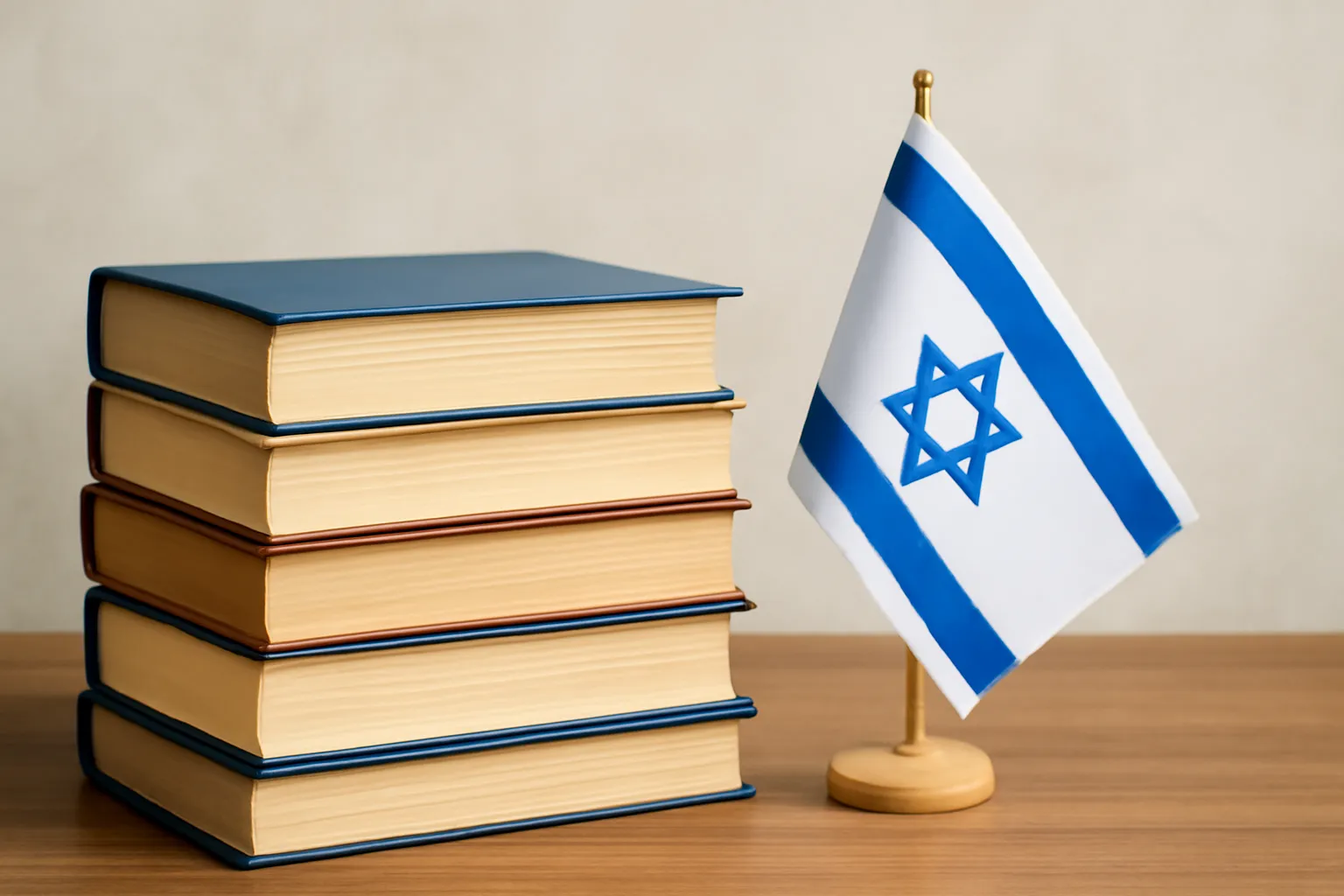
If you are looking for essential reads on history and culture related to Israel, you have a broad and deeply rewarding shelf to explore. The island of literature about Israel spans political history, social change, religious heritage, war and peace processes, and the rich tapestry of life in a country that is both a political state and a cultural phenomenon. This article curates a diverse set of titles that together offer a well-rounded sense of where Israel came from, how its people imagine themselves, and how outsiders perceive the country. You will find foundational histories, balanced arguments about the Arab–Israeli conflict, intimate memoirs, and fiction that peers into everyday life in modern Israel. Throughout, key terms and ideas—such as Zionism, diaspora, Jerusalem, and identity—are highlighted to help you navigate these complex conversations. The aim is not to endorse a single narrative but to present a spectrum of perspectives that illuminate the past and illuminate the present.
Readers beginning their journey into Israel’s history are often looking for reliable, readable accounts that build a chronological scaffold while also offering critical perspectives. The titles in this section are chosen for their broad coverage, engaging storytelling, and scholarly rigor. They lay out the arc from late 19th-century Zionist movements through the creation of a Jewish state, through wars, immigration waves, and the ongoing evolution of Israeli society.
Israel: A History by Martin Gilbert (historian, 2008) — This comprehensive narrative traces the long arc of Zionist settlement and the birth of the Israeli state, situating the story within global historical currents. Gilbert’s lucid prose helps readers see the milestones—from political negotiations to military conflicts—while also highlighting the human experiences behind those events. It is a strong, reliable starting point for readers who want a broad, contextual understanding of the nation’s formation.
Israel: A Concise History of a Nation Reborn by Daniel Gordis (2014) — Gordis offers a more compact, narrative-driven account that emphasizes pivotal decisions, ideologies, and turning points. This book is especially useful for readers who prefer a brisk, accessible survey that still retains depth on issues like state-building, security challenges, and the moral questions that accompany a nation’s emergence.
A History of Modern Israel by Ilan Pappé (2006; revised editions exist) — Pappé presents a provocative lens on modern Israeli history, emphasizing demographic shifts, state power, and the contested narratives surrounding the Israeli–Palestinian conflict. While some readers may encounter challenge in navigating disputed interpretations, the book remains essential for those seeking a critical, analytic perspective that interrogates commonly told stories.
Righteous Victims: A History of the Zionist-Arab Conflict, 1881–2001 by Benny Morris (1999) — A landmark study of the conflict, Morris traces the interplay of Jewish and Arab national movements across decades of upheaval. The work is noted for its careful sourcing and willingness to engage with uncomfortable questions about both sides. It is particularly valuable for readers who want a thorough, evidence-based history of the roots and evolution of the dispute.
The Lemon Tree: An Arab, a Jew, and the Heart of the Middle East by Sandy Tolan (2006) — A narrative nonfiction that centers on two families—one Jewish and one Palestinian—whose lives intersect during the era of upheaval surrounding the establishment of the state. This book personalizes the history, making distant political debates tangible through human stories of memory, loss, and the possibility of reconciliation.
Jerusalem: The Biography by Simon Sebag Montefiore (2011) — While not a straight history of the modern state, this monumental work traces the city of Jerusalem from ancient to contemporary times. It helps readers understand how the city has remained a central symbol for multiple faiths, a focal point of political contest, and a magnet for devotion. For those who want to connect the national story to the geography and sacred history that shapes it, Montefiore’s narrative is indispensable.
In these foundational histories, you will encounter a range of methodological approaches—from broad synoptic histories to tightly argued studies of specific moments. The common thread is a commitment to tracing how history and identity are built amid conflict and cooperation, migration and memory, faith and politics.
Cultural Voices and Personal Narratives
Literary windows into Israeli life
Israel’s culture is expressed not only through politics and war, but through intimate storytelling, poetry, and novels that illuminate daily life, moral choices, humor, trauma, and resilience. The following selections offer readers a close-up view of how Israelis—of diverse backgrounds and generations—conceptualize home, belonging, and statehood. They also provide a bridge for readers who want to move from macro-history to micro-experience—how culture feels, sounds, and tastes in a country that sits at the crossroads of continents and histories.
A Tale of Love and Darkness by Amos Oz (2002; English translation 2004) — A deeply personal memoir that interweaves Oz’s childhood in prestate Israel with the formation of a new national consciousness. The book offers an intimate meditation on memory, storytelling, and the moral complexities of building a homeland while confronting personal and collective pasts.
To the End of the Land by David Grossman (2008/2010 English translation) — A sprawling, lyrical novel that foregrounds the emotional terrain of a mother whose son is sent to the frontiers of a decade of conflict. It is a meditation on grief, courage, and the ways in which families survive in a country perpetually at risk. Grossman’s writing is often cited for its emotional honesty and its ability to translate national fear into human scale.
The Bus Driver Who Met a Bear by Etgar Keret (short stories collection; translated in the 2000s) — Keret’s witty, humane, and often surreal stories capture modern Israeli life with a light touch that belies deeper questions about identity, modernity, and the gaps between generations. These stories are accessible entries into a contemporary cultural landscape and invite readers to think about everyday ethics and choices in a political context.
Selected Poems of Yehuda Amichai — Amichai is one of Israel’s most beloved poets, and his work bridges the personal and the national. Translations of his poetry reveal a language that negotiates memory, love, exile, and homeland with tenderness and precision. Poetry is a powerful route into Israeli culture because it distills complex feelings into concise, resonant lines.
In the Likeness of God: An Anthology of Israeli Poetry (edited collection; various translations) — For readers who want a tour through multiple voices and generations, poetry anthologies provide a mosaic view of how Israelis express faith, doubt, pride, and humor.
These cultural narratives reveal not only how Israelis imagine their past but how they imagine their future. They illustrate the dynamic interplay between memory and invention, where literature becomes a space to rethink national myths, challenge stereotypes, and consider what it means to belong in a country with a long history of immigration and reinvention.
Portraits of Conflict and Peace: Diverse Perspectives
Engaging with contested histories
Israel’s history cannot be told without addressing the ongoing conflict and the processes of negotiation, peace-building, and memory that accompany it. The following works provide nuanced, sometimes controversial, but always thoroughly argued perspectives that invite readers to weigh evidence from multiple sides. They help readers understand how people on different sides of the line interpret the same events in radically different ways, which is essential for any thoughtful study of Israel and the conflict.
The Lemon Tree by Sandy Tolan — Also listed above under foundational histories, this narrative about two families—one Jewish, one Palestinian—serves as a powerful eyewitness account of the human stakes in the region. It reads as a bridge between scholarship and empathy, encouraging readers to see common humanity amid political divides.
Righteous Victims by Benny Morris — Also cited in the historical section, Morris’s analysis remains a frequent reference point in debates about the early years of the state and the Arab–Israeli conflict. The book’s nuanced approach—acknowledging missteps and consequences on all sides—offers a framework for evaluating policy decisions and historical memory.
The Ethnic Cleansing of Palestine by Ilan Pappé (2006) — A contentious but widely read account that challenges conventional narratives about the 1948 period. For readers approaching this topic, Pappé’s work invites careful comparison with other histories to understand the range of interpretations that shape today’s discourse.
Reading across these works encourages a move beyond partisan positions toward a more comprehensive engagement with history, memory, and narrative authority in the public sphere. They remind us that the story of Israel is not a single line but a web of experiences, memories, and interpretations that continue to shift over time.
Jerusalem and the Place of Memory
Cities as mirrors of national narrative
Jerusalem is not just a city; it is also a symbol, a contested space, and a site where religion, politics, and daily life intersect in powerful ways. Reading about Jerusalem through different lenses helps illuminate how landscape and memory shape political claims and personal identities. The following works foreground the city and its layered history.
Jerusalem: The Biography by Simon Sebag Montefiore — A sweeping chronicle that treats the city as a living historical character. The book surveys the many empires and cultures that have claimed Jerusalem over centuries and explains how the city’s sacred status influences contemporary political realities.
City of God or City of Sand: Jerusalem in Modern Israeli Writing (anthology) — A curated collection of essays and fiction that traces how modern Israeli authors write about the city, its sacred sites, and the everyday life of its residents. This kind of volume helps readers connect literary imagination with real-world geography and politics.
These narratives foreground space and place as essential components of national identity. They invite readers to consider how urban geography and sacred geography interact with the politics of statehood, settlement, and international diplomacy.
Memoir, Biography, and Personal Histories
Intimate windows into national life
Personal writings—whether about wartime service, family life, or political engagement—offer intimate vantage points on the larger story of Israel. They remind readers that behind every policy decision and historical milestone lie human experiences, choices, and consequences. The following books fall into the memoir and biography category, providing first-person or closely observed accounts that deepen understanding of what it means to live in and respond to this country.
Be Ready for War: A Soldier’s Memoir — A representative example of Israeli veteran narratives that illuminate how civic duty, fear, and resilience intersect on the ground. Memoirs like these show how ordinary citizens participate in extraordinary moments of national history.
My Promised Land: The Triumph and Tragedy of Israel by Ari Shavit (2014) — A landmark narrative that blends personal reflection with historical analysis. Shavit’s chronicle fosters empathy for a nation that has both extraordinary achievements and difficult choices, encouraging readers to consider how a people negotiates moral dilemmas in the context of security and democracy.
A Tale of Love and Darkness (referred to above) by Amos Oz — A memoir that reads as a personal chronicle of a nation’s birth and the memory-work that accompanies political life.
To the End of the Land by David Grossman — While primarily a novel, it functions as a deeply personal meditation on motherhood, loss, and the ways in which public violence reshapes private lives.
These personal narratives are crucial for readers seeking a human-scale understanding of identity, belonging, and the moral complexities that accompany living in a country at the intersection of global currents and local realities.
Choosing the Right Books for Your Course of Study or Personal Journey
How to build a balanced, insightful reading list
When assembling a library about Israel—whether for academic study, personal exploration, or cultural literacy—consider a mix of genres: sweeping histories, careful political analyses, evocative memoirs, poetry, and fiction. This breadth helps readers understand not only the events that shaped the state but also the social fabric that sustains it. Here are some practical guidelines for building your reading list:
Start with a broad history to establish a frame of reference, then move to more focused treatments of specific periods or issues.
Pair a critical historical work with a human-centered narrative (for example, a history with a memoir or a case-study like The Lemon Tree).
Include literary works—poetry, novels, and short stories—to experience culture from inside. These works reveal how people think, feel, and imagine their futures in a complex landscape.
Be mindful of biases and perspectives. Many of these titles engage in debate—read critically and compare viewpoints across authors.
By combining these types of reading experiences, you can gain a nuanced understanding of Israel that respects both historical facts and human stories—the bedrock of any informed study of this region.
Beyond the Basics: Helpful Routes for Different Readers
Guided pathways through history, culture, and conflict
Readers enter the world of Israel from different angles: some want the cold light of historical analysis, others seek to understand lived experience, and many wish to engage with literature that dramatizes moral questions and everyday life. Below are suggested pathways to help you tailor your reading journey.
For newcomers: Start with Israel: A History or Israel: A Concise History of a Nation Reborn to establish the timeline and major forces shaping the state. Then branch out into more specialized works like Righteous Victims and The Lemon Tree for deeper conflict studies.
For readers who prefer personal narrative: Read A Tale of Love and Darkness and My Promised Land to gain insight into personal memory, national identity, and public life in Israel. Add To the End of the Land for an intimate, emotionally resonant perspective on war, loss, and resilience.
For those curious about Jerusalem: Combine Jerusalem: The Biography with historical overviews to understand how the city’s sacred status and contested history influence contemporary politics and daily life.
For readers seeking a balanced debate: Include both The Ethnic Cleansing of Palestine and contemporaneous counter-narratives in other histories to compare interpretations and to recognize the existence of robust scholarly disagreements on key periods.
Regardless of the path you choose, critical reading and an awareness of multiple viewpoints will greatly enrich your understanding of Israel and its place in global history and culture.
Final Thoughts: The Value of Books About Israel
Reading about Israel is an invitation to move between timeframes, perspectives, and disciplines. It is a way to understand how a young nation negotiates its security needs, moral questions, and cultural ambitions while also engaging in the universal human conversations about memory, belonging, and hope. The books highlighted in this article are not an endorsement of a single narrative; rather, they offer a spectrum that helps readers appreciate the complexity and dynamism of the country. Whether you are a student, a teacher, a traveler, or a curious reader, these works contribute to a more nuanced comprehension of history and culture in Israel, illuminating how a people and a state continue to evolve in conversation with neighbors, allies, and critics around the world.
As you build your library, remember that some of the most powerful insights come from pairing historical analyses with personal stories, and from reading across genres—history, journalism, memoir, poetry, and fiction. This multi-voiced approach helps ensure that you encounter both the broad patterns that shape events and the intimate realities of the people who live within them. In the end, the journey through books about Israel is less about choosing a single authoritative account and more about engaging with a living dialogue—one that extends beyond the page and into the minds of readers everywhere.