Hebrew Alphabet Meanings: A Complete Guide to Letters, Symbols, and Their Origins
The Hebrew alphabet is more than a writing system. It is a tapestry of history, culture, linguistics, and even mysticism. Twenty-two distinct letters carry phonetic value, numerical meaning, and a spectrum of symbolic associations that stretch from ancient road signs of Semitic caravans to modern classrooms and digital keyboards. This article offers a comprehensive tour of the Hebrew alphabet, its origins, its letter-by-letter meanings, and the ways scholars, students, and readers engage with these signs today.
Overview of the Hebrew Alphabet
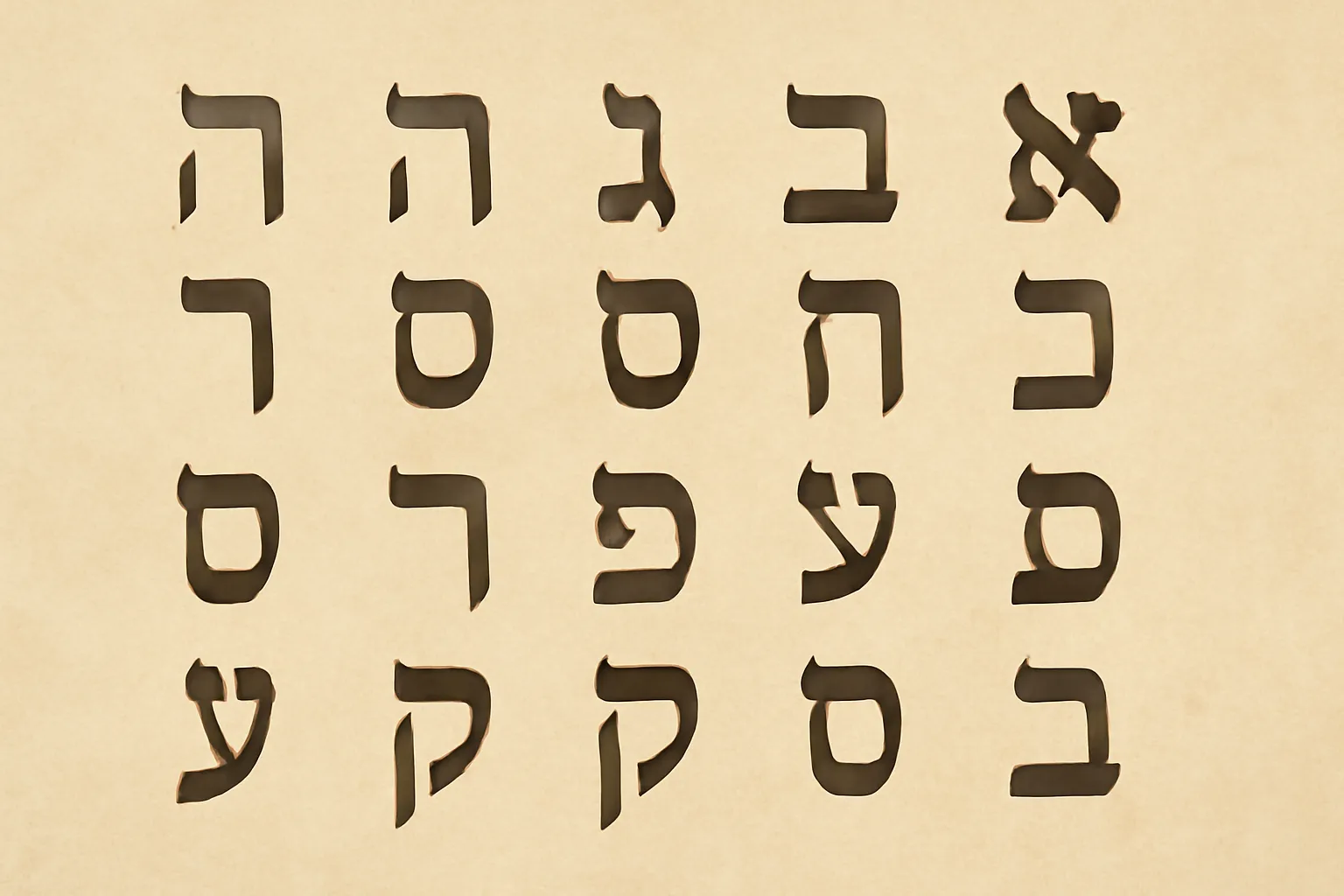
The standard Hebrew script used today is called Ketav Ashuri, or the “square script.” It evolved from earlier Semitic scripts and became the primary way Hebrew was written for religious, scholarly, and daily use. Historically, Hebrew is written with a system that is largely consonantal (an abjad), where vowels are often not written, but vowel indicators exist in a conventional form called niqqud in liturgical texts and educational materials. The combination of consonants, vowels (when shown), and diacritical marks gives readers a robust toolkit for pronunciation, meaning, and context.
Key concepts to keep in mind as you read about the alphabet include:
22 letters form the core alphabet, not counting final forms (details below).
Some letters have a final form used only when the letter appears at the end of a word.
The letters have names, many of which describe ancient pictographic associations (ox, house, door, window, etc.).
Each letter has a numeric value in gematria, a traditional system of numerology and symbolism.
Vowels are often implied in plain text and spelled out with niqqud in pointed texts or for learners.
The Origins: From Ancient Signs to a Modern Alphabet
To understand the meanings of the Hebrew letters, it helps to glimpse their historical arc. The Hebrew alphabet’s lineage runs through the ancient Canaanite and Phoenician scripts, then into the Paleo-Hebrew and finally the square Hebrew script used today. This journey includes:
Phoenician roots: The earliest clearly attested forms of the letters appear in the Phoenician script, used by traders and scribes in the first millennium BCE. The shapes were visual signs, often tied to objects in daily life (for example, an ox head or a house) and the sounds associated with them.
Proto-Calriform connections: As scribes adapted the alphabet across dialects, the letter shapes evolved, yet the basic consonantal system remained intact. The phonetic values were stabilized into the 1st millennium BCE in the land of Israel and neighboring regions.
Paleo-Hebrew to Ketav Ashuri: The early scripts used by Israelite communities gradually gave way to the square- or block-style script known as Ketav Ashuri, especially in religious manuscripts and later in printed texts. This shift helped standardize orthography and facilitated reading across communities.
Masoretic vowels: In the medieval period, Masoretes added a sophisticated system of vowel signs (niqqud) and cantillation marks to preserve pronunciation and chant in Hebrew liturgy and scholarship.
Throughout these stages, the letter names, the sound values, and the symbolic associations of each character grew richer, layered with religious, cultural, and mathematical significance. Today, learners and researchers alike explore the alphabet through multiple lenses: linguistic history, script design, religious textual practice, and numerological tradition.
The 22 Letters and Their Meanings
Below you will find an organized tour of the Hebrew letters. Each entry includes the name, the sound, the numeric value, the final form status, the historical origin, and a note on symbolic associations where appropriate. For convenience, every letter is presented in a dedicated subsection with a short, readable description and bullet points for quick reference.
Aleph (א) — The Silent Seat and Breath
Name: Aleph
Sound: Generally a glottal stop; often silent in modern pronunciation, but it acts as a home for vowels in certain contexts.
Value: 1
Final form: None
Origin: From the Proto-Canaanite/ Phoenician aleph glyph representing an ox’s head; historically linked to concepts of strength, beginning, and breath.
Symbolic meaning: Unity, breath, beginnings; serves as a place-holder for vowels and a gateway between consonants.
The Aleph is a widely discussed letter in Jewish mysticism: its home in a word often points to the idea that meaning begins with breath and intention, even when the letter itself carries no hard sound. In modern writing, Aleph frequently acts as a resilient carrier for surrounding vowels.
Bet (ב) — The House
Name: Bet
Sound: B (as in “bat”) when pointed with a dagesh; otherwise a soft vowel-led consonant in some forms.
Value: 2
Final form: None
Origin: From a pictograph representing a “house”; the shape evolved into a letter that functions as a building block of words.
Symbolic meaning: Home, household, space, structure; frequently used to symbolize domestic or intimate contexts in rabbinic literature and poetry.
Note: The dagesh is a dot placed inside Bet to indicate a hard stop; without it, Bet often has a softer or vowel-led pronunciation in some historical and liturgical contexts.
Gimel (ג) — The Camel
Name: Gimel
Sound: G (as in “go”)
Value: 3
Final form: None
Origin: From a pictograph of a camel; the name and image connected to travel and movement.
Symbolic meaning: Carrying, journey, ascent; often used in folk etymologies to evoke progression and motion in language.
Dalet (ד) — The Door
Name: Dalet
Sound: D
Value: 4
Final form: None
Origin: From a pictograph representing a doorway or threshold; the idea of access, entry, and passage.
Sound: Silent in modern Hebrew but can carry a glottal onset in some traditions; often worked with vowels as a starter.
Value: 70
Final form: None
Origin: From a pictograph of an eye; the name Ayin points to sight and perception in many rabbinic texts.
Symbolic meaning: Vision, perception, awareness; the awareness of self and others in language and story.
Pe (פ) — The Mouth
Name: Pe
Sound: P or F (when with the sofit form, final form often represents a variation);
Value: 80
Final form: Pe sofit (ף)
Origin: From a pictograph of a mouth.
Symbolic meaning: Communication, speech, expression; language itself as a tool for connection or constraint.
Tzadi (צ) — The Fish or Hook
Name: Tzadi
Sound: Tz (a combination sound similar to “ts”)
Value: 90
Final form: Tzadi sofit (ץ)
Origin: From a pictograph that has been associated with a fish or a curved hook in different traditions.
Symbolic meaning: Righteousness, integrity, striving toward a higher standard; the final form emphasizes completion.
Qof (ק) — The Monkey or the Eye of a Circle
Name: Qof
Sound: Q (a guttural stop often transliterated as “k” with a deeper sound)
Value: 100
Final form: None
Origin: From a Phoenician sign whose name is often linked to qoph, with interpretive roots in terms pointing to a circle or a protective eye motif; the exact pictograph is debated.
Symbolic meaning: Vision, sovereignty, completion; the circle-like element in some ancient forms lends a sense of wholeness.
Origin: From a pictograph representing the head or a person’s profile.
Symbolic meaning: Leadership, authority, intellect; often associated with the mind’s surface and the face’s visibility in speech.
Shin (ש) and Sin (ש) — The Teeth
Name: Shin or Sin (the same letter, distinguished by a dot on the right for Shin and on the left for Sin)
Sound: Shin = Sh; Sin = S
Value: 300
Final form: None
Origin: From a pictograph relating to teeth or a sharp point; the two pronunciations reflect a single glyph with phonetic variation.
Symbolic meaning: Judgment, discernment, teeth as a metaphor for biting truth; in mystical contexts, it can point to enlightenment or severity depending on usage.
Tav (ת) — The Mark or Sign
Name: Tav
Sound: T
Value: 400
Final form: None
Origin: From a pictograph representing a mark or sign; used to indicate a completed thought or a seal of truth.
Symbolic meaning: Truth, covenant, completion; often interpreted as a seal, a boundary, or a finality in textual context.
Final Forms and Special Shapes
Five Hebrew letters take a special final form when they appear at the end of a word. This feature helps distinguish word boundaries and adds visual variety to the text. The final forms are:
Kaf sofit (ך) for Kaf
Mem sofit (ם) for Mem
Nun sofit (ן) for Nun
Pe sofit (ף) for Pe
Tzadi sofit (ץ) for Tzadi
These five final shapes are a distinctive feature of Hebrew typography and calligraphic tradition. They also aid in fast word recognition in printed text and handwriting. It is important to note that the final forms do not change the pronunciation or the numeric value of the letters; they merely provide a stylistic and orthographic variation.
Numbers, Gematria, and the Letters
In addition to their phonetic values, each letter carries a gematria value—a traditional numerical value used in Jewish kabbalistic and scholarly contexts. The standard values are:
Aleph = 1, Bet = 2, Gimel = 3, Dalet = 4, He = 5, Vav = 6, Zayin = 7, Het = 8, Tet = 9
Yod = 10, Kaf = 20, Lamed = 30, Mem = 40, Nun = 50, Samekh = 60, Ayin = 70, Pe = 80, Tsadi = 90
The final forms share the same numeric values as their non-final counterparts. For example, Mem (40) equals Mem sofit (40).
Gematria is a symbolic and interpretive practice. It is used in Jewish mysticism, Bible study, and numerological analysis, but it does not determine everyday pronunciation.
Some letters can be combined to form larger numbers (for example, 400 is Tav, and combinations like Tav + Shin represent 700 in certain traditions).
Vowels, Niqqud, and Practical Reading
Hebrew originally printed without vowels; readers use context, grammar, and knowledge of roots to infer pronunciation. In learning materials, teachers often introduce niqqud, the system of vowel signs placed under or above letters. These marks include:
Other marks include Quibuts and Hataf variants for nuanced vowel lengths.
In everyday modern Hebrew orthography, many texts—especially newspapers and signage—omit niqqud. Learners rely on context to derive pronunciation, while religious texts and poetry often preserve diacritics to ensure precise reading. Understanding niqqud helps reveal subtle distinctions and can illuminate semantic nuance—for instance, how shifting a vowel in a root can alter meaning, form, or emphasis.
Pronunciation Variants: Regional and Historical Considerations
Within the >Hebrew-speaking world, you’ll find several traditions that shape how letters are pronounced in speech. The two most prominent families are the Ashkenazi and Sephardi readings, with many sub-dialects. Some highlights:
Aleph can function as a glottal stop in Ashkenazi speech, or disappear entirely in Sephardi and modern Israeli pronunciation.
Vav often serves as a consonant “v” in modern Hebrew; as a vowel carrier, it can indicate “o” or “u” sounds when it stands with niqqud or in orthographic patterns.
Ch (Het) and Kh (a common transliteration of Het) reflect a pharyngeal or glottal fricative in older or more traditional phonetic descriptions; in modern Hebrew, Het is typically a stronger, aspirated h-sound in many dialects.
Shin and Sin are spelled identically but distinguished in reading by dot placement; this is a classic example of how diacritical marks and orthography work together to convey meaning.
Symbolic and Esoteric Meanings Across Traditions
Beyond phonetics and numerology, the Hebrew letters are central to various mystical and philosophical traditions. In Kabbalah and Jewish mysticism, each letter is thought to embody a set of divine attributes and cosmic correspondences. Typical themes include:
Aleph as a symbol of unity and the hidden breath of God; in many texts, Aleph represents the insufflation of the Divine into Creation.
Bet as the house of God and the starting point of the biblical narrative; the letter’s opening in the word Bereshit symbolizes a beginning or home for the divine presence.
Gimel and Dalet as a paired journey—giving and receiving, moving from entry to exit; their place in the alphabet mirrors a path through life’s thresholds.
Shin and Tav are often tied to concepts of judgment, truth, and covenant, with the triadic emphasis of Shin’s “fire” and Tav’s “mark” representing completion and integrity.
It’s important to approach these symbolic attributions as interpretive tools rather than strict linguistic rules. Different schools and teachers emphasize different associations, and many modern readers engage with these meanings as a way to connect language to spirituality, ethics, and culture.
Learning Strategies and Practical Tips
Gaining fluency with the Hebrew alphabet goes beyond memorizing a list. Here are practical steps and memorable strategies to help you internalize letter shapes, sounds, and meanings:
Visual mnemonics: Associate each letter with its traditional pictograph meaning (ox, house, door, window, etc.).
Flashcards: Create cards that show the letter form on one side, and its name, sound, numerical value, and a symbolic note on the other.
Final forms practice: Memorize which letters have final forms (Kaf, Mem, Nun, Pe, Tsadi) and learn their shapes in script margins so you don’t confuse them with their non-final shapes.
Gematria inside context: Start with simple two-letter combinations and estimate their numerical value to reinforce the idea that letters encode numbers as well as phonemes.
Niqqud practice: If you’re learning pronunciation, work with pointed texts (Chumash, Siddur, or Hebrew grammar books) that show vowel markings and cantillation marks.
Reading practice: Read words with diacritics at first, then gradually move to unpointed texts as you gain confidence.
Quick Reference: A Yearning to Memorize the Alphabet
For a fast recap, here is a concise reference list of the 22 letters in order, with their basic features. This is helpful when you’re starting out or when you need to check a spellings guide or a gematria chart quickly.
Alef — 1 — No final form
Bet — 2 — No final form
Gimel — 3 — No final form
Dalet — 4 — No final form
He — 5 — No final form
Vav — 6 — No final form
Zayin — 7 — No final form
Het — 8 — No final form
Tet — 9 — No final form
Yod — 10 — No final form
Kaf — 20 — Final form: Kaf sofit
Lamed — 30 — No final form
Mem — 40 — Final form: Mem sofit
Nun — 50 — Final form: Nun sofit
Samekh — 60 — No final form
Ayin — 70 — No final form
Pe — 80 — Final form: Pe sofit
Tzadi — 90 — Final form: Tsadi sofit
Qof — 100 — No final form
Resh — 200 — No final form
Shin — 300 — No final form
Tav — 400 — No final form
Putting It All Together: Why the Hebrew Alphabet Still Matters
Understanding the meaningful architecture of the Hebrew letters offers several practical and intellectual payoffs. It helps you:
Read Hebrew with greater historical awareness, appreciating how script evolved from ancient pictographs to modern typography.
Engage with religious or literary texts in a more nuanced way, especially when glyph shapes and vowel indicators carry textual weight.
Appreciate the mathematical elegance of the script—numbers are woven into the letters themselves, a feature that has inspired centuries of scholarship and creative interpretation.
Develop a sense of how language encodes culture, belief, and memory—how a single letter can be a sound, a symbol, a number, and a doorway to a tradition.
Appendix: Compare and Contrast — Related Script Systems
For readers curious about the broader family of writing systems that shaped the Hebrew alphabet, here are short comparisons to keep in mind:
Phoenician Alphabet: The direct ancestor of Hebrew, with many letters bearing similar shapes and sounds. Its use spread across the Levant and Mediterranean commerce routes, creating a shared heritage among several Semitic languages.
Paleo-Hebrew: An earlier Hebrew script closely related to Phoenician; the shapes look different from modern Hebrew but represent the same phonemes and structure in many contexts.
Square Script (Ketav Ashuri): The canonical script of Hebrew today, adopted for religious, scholarly, and secular texts; its geometric forms emphasize readability and tradition.
Aramaic and Modern Adaptations: Aramaic influence helped standardize script forms in later centuries; modern usage remains faithful to this lineage while adapting to print and digital typography.
The Hebrew alphabet is not a closed system locked in the past; it is a living, adaptable tool that connects readers to a long chain of language, culture, and spiritual memory. From the ox-head origins of Aleph to the final form of Tsadi, each letter offers a doorway into history, mathematics, aesthetics, and meaning. Whether you approach Hebrew as a language learner, a student of religious texts, a linguist, or a curious reader, the letters themselves invite you to discover how sound, symbol, and story weave together in one of humanity’s oldest and most enduring writing traditions.