What is a Hebrew Alphabet Poster? A Printable Wall Chart for Learning the Aleph-Bet
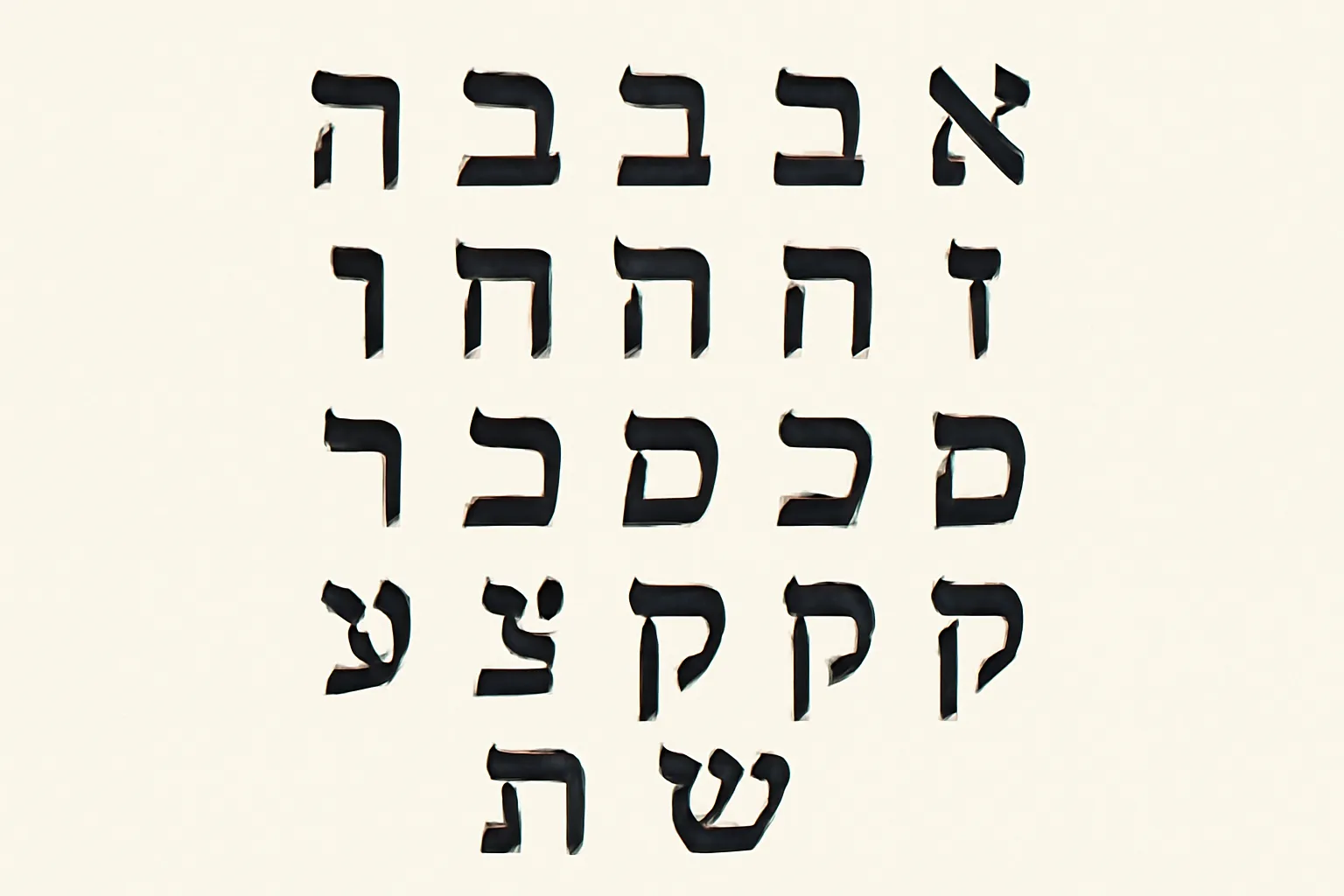
A Hebrew alphabet poster is more than a decorative wall hanging. It is a
functional learning tool designed to introduce, reinforce, and recall the
Aleph-Bet—the set of 22 consonants that form the basis of modern and biblical Hebrew.
When described as a printable wall chart, the poster becomes a versatile
resource you can print at home, in a classroom, or at a print shop. The term
«poster» implies visual richness—color, typographic clarity, and a layout that makes
it easy to skim and memorize. The term «printable» emphasizes practicality: you can download a digital file,
print it on your preferred size, and mount it in a place where daily exposure supports learning.
In this article, you will encounter variations of the phrase
Hebrew alphabet poster and related concepts
such as the Aleph-Bet wall chart, the Aleph-Bet chart, or the Hebrew letters poster.
Each phrasing signals the same educational objective: to provide a clear, ready-to-use visual
representation of Hebrew letters along with their names, sounds, and example usage.
The Aleph-Bet: Letters, Names, and Sounds
Hebrew letters are written from right to left, and a well-designed Hebrew alphabet poster
helps beginners acclimate to this directionality from the first glance. The Aleph-Bet
consists of 22 consonants. Unlike the Latin alphabet, most Hebrew letters do not carry an inherent vowel
sound; vowels are often supplied by separate diacritic marks called niqqud, or they appear in
transliteration and glosses on a learning poster.
Consonants and Final Forms
A standard printable chart highlights two important features:
- The 22 primary consonants with their standard forms, names, and typical pronunciations.
- The final forms of five letters that change shape when they appear at the end of a word:
Kaf (כ → ך), Mem (מ → ם), Nun (נ → ן), Pe (פ → ף), and Tsadi (צ → ץ).
A comprehensive poster often presents each letter with:
- Hebrew letter character
- Letter name in transliteration (Aleph, Bet, Gimel, Dalet, etc.)
- Common phonetic approximation for English readers (where applicable)
- One or more example words to illustrate usage
Vowels and Niqqud
While the classic Aleph-Bet includes only consonants, many learning posters pair
the letters with optional niqqud vowels or a transliteration guide. The niqqud system uses dots and lines
above or below letters to indicate vowel sounds. On a beginner-friendly poster, niqqud is often shown
in a subdued or optional layer so that learners can graduate from consonantal reading to fuller vowel
pronunciation as they grow more confident.
In addition, a well-crafted poster might feature simple, transliterated words that use the letter in focus,
giving early readers a practical sense of how the letter sounds in real Hebrew syllables. This blend of
letter identity, sound cue, and example usage makes the poster a practical tool for focused, incremental
study.
Design Principles for a High-Quality Hebrew Alphabet Poster
A poster designed to aid learning should balance accuracy with readability. The best Hebrew alphabet posters
meet several core design principles that support both visual appeal and educational value.
Color-Coding and Grouping
Color can be a powerful mnemonic aid. A thoughtful Hebrew letters poster might group
letters by phonetic families (for example, gutturals, labials, and sibilants) or by their placement in the alphabet.
Color-coding helps learners quickly locate a letter in the sequence and reinforces memory through association.
Typography and Legibility
Choose a clean, sans-serif or serif font with clear character shapes. The poster should maintain high contrast
between letters and background. For print readiness, ensure that the Hebrew glyphs are crisp at the chosen size
and that transliterations or glosses are legible without crowding the letter forms.
Layout and Spacing
A practical layout reserves space for:
- The letter itself in large size
- The name (transliteration or Hebrew name) beneath or beside the letter
- A short phonetic cue or sound
- One example word with English gloss
The aim is to make the poster scannable at a glance, so beginners can quickly identify a letter and its usage.
Accessibility Considerations
Accessibility matters. Consider a high-contrast version for readers with visual challenges, or provide a
large-print option. If you publish digitally, include alternative text for each letter block and
ensure keyboard navigability for screen readers. A robust poster can serve a diverse range of learners,
from aspiring scholars to late-in-life language enthusiasts.
Printing and Formats: Printable Options and Sizes
The practical value of a -printable wall chart rests partly on how easily you can access and reproduce it.
A modern Hebrew alphabet poster is often distributed in multiple digital formats to accommodate different printing setups and usage scenarios.
Digital Formats and Download Options
Common formats include:
- PDF — ideal for precise printing at home or through a print shop; preserves layout and typography.
- PNG or JPG — convenient for sharing online or using as a screen-friendly reference.
- SVG — scalable vector version for high-resolution posters at any size; excellent for large prints.
When choosing a format, consider how you plan to print and whether you want a poster with or without niqqud.
A niqqud-enabled version can be helpful for beginners, while a niqqud-free version is closer to traditional,
textbooks-style layouts.
Sizes, Orientation, and Print Tips
Typical poster sizes include:
- A4 (210 x 297 mm) — compact and easy to print at home
- Letter (8.5 x 11 inches) — common in the United States
- A3 (297 x 420 mm) — a larger, more legible option
- Posters for classroom display (for example, 24 x 36 inches or 36 x 48 inches) — ideal for shared spaces
Printing tips:
- Use a high-quality printer or professional printing service for crisp letter forms.
- Print on matte stock to reduce glare and improve readability, especially in well-lit rooms.
- Consider lamination or a protective cover if the poster will endure frequent handling.
Practical Ways to Use a Hebrew Alphabet Poster
A poster is most powerful when integrated into a structured learning routine. Here are practical strategies to maximize impact.
- Daily exposure: Place the poster at eye level in a learning space and refer to a few letters each day.
- Right-to-left reading practice: Align activities with the natural Hebrew reading direction to build fluency.
- One-letter focus: Pick a letter per study session and pair it with its uppercase/lowercase shapes, name, and a few words.
- Flashcard integration: Create flashcards featuring the letter, its name, and an example word; use spaced repetition.
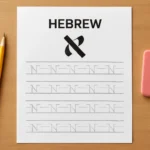
- Writing practice: Copy letters by hand on scratch paper or with a tracing surface to reinforce motor memory.
- Vocabulary linking: Build a small set of words that feature the target letter to deepen context.
- Color-coding: Use color cues from the poster to connect related sounds or letter groups.
Letter-by-Letter Mini Glossary: The 22 Letters of the Aleph-Bet
Below is a compact glossary that mirrors what you might find on a comprehensive Hebrew alphabet poster.
Each entry includes the Hebrew character, its name, a transliteration, a brief note on the sound,
and an example word with a gloss.
- א — Aleph (Alef); sound: often silent or glottal stop; example: אבא (aba) meaning father.
- ב — Bet (Beit); sound: b with dagesh, or v without; example: בית (beit) meaning house.
- ג — Gimel; sound: g; example: גמל (gamal) meaning camel.
- ד — Dalet; sound: d; example: דלת (delet) meaning door.
- ה — Hei (Hey); sound: h; example: הספר (hasefer) meaning the book.
- ו — Vav (Waw); sound: v or as a conjunction “and”; example: וילה (villa) meaning villa.
- ז — Zayin; sound: z; example: זהב (zahav) meaning gold.
- ח — Het (Chet); sound: guttural kh; example: חיים (chaim) meaning life.
- ט — Tet; sound: t (emphatic); example: טוב (tov) meaning good.
- י — Yod; sound: y; example: ילד (yeled) meaning boy.
- כ — Kaf (Chaf); final form כּ → ך; sound: k or kh; example: כן (ken) meaning yes.
- ל — Lamed; sound: l; example: לילה (laila) meaning night.
- מ — Mem; final form מ → ם; sound: m; example: מים (mayim) meaning water.
- נ — Nun; final form נ → ן; sound: n; example: נמל (namal) meaning harbor.
- ס — Samekh; sound: s; example: סוד (sod) meaning secret.
- ע — Ayin; sound: glottal stop or a voiced pharyngeal; example: עולם (olam) meaning world.
- פ — Pe (Fe/Pe); final form פ → ף; sound: p or f; example: פה (peh) meaning mouth.
- צ — Tsadi; final form צ → ץ; sound: ts; example: ציון (tzion) meaning Zion or mark.
- ק — Qof; sound: k (uvular); example: קול (kol) meaning voice.
- ר — Resh; sound: rolled r; example: ראש (rosh) meaning head.
- ש — Shin (Sin); sound: sh; example: שלום (shalom) meaning peace.
- ת — Tav; sound: t; example: תורה (torah) meaning Torah.
Variants and Special Versions of the Poster
There is no single universal template for a Hebrew alphabet poster. Designers adapt the same
core content to different learning contexts. Here are common variants you might encounter or want to create:
- With niqqud: A vowel-marked version appropriate for beginners who need vowel guidance.
- Without niqqud: A clean, traditional consonant-only layout suitable for intermediate or advanced learners.
- Transliteration-enabled: A version that includes transliterations next to each letter or word to aid pronunciation.
- Color-coded by family: Letters are grouped by phonetic features (labials, gutters, fricatives, etc.) for mnemonic support.
- Final-forms emphasis: A layout that explicitly marks the five final forms and their endpoints in words.
- Bilingual gloss: Each example word includes an English gloss to connect meaning with form.
Creating Your Own Hebrew Alphabet Poster: A Quick Guide
If you want a fully customized poster, you can design and print your own. The process is approachable and rewarding.
Here is a concise workflow to get you started.
- Define your goal: Decide whether you want a focus on reading, pronunciation, or vocabulary integration.
- Choose a format: Pick a format (niqqud vs. no niqqud, transliteration or not, color scheme).
- Assemble content: List the 22 letters, their names, and one simple example word per letter.
- Design layout: Plan a grid that fits your chosen size and ensures clear reading order from right to left.
- Test readability: Print a draft at a small size to check spacing, then scale up as needed.
- Print and display: Use high-quality stock, laminate if needed, and place the poster where it will receive daily attention.
Usage Scenarios: Where a Hebrew Alphabet Poster Shines
A high-quality poster for learning the Aleph-Bet shines in a number of settings:
- Classrooms where students benefit from a shared visual reference during Hebrew language lessons.
- Homeschool environments where parents guide daily reading practice with a consistent, repeatable cue.
- Study corners or libraries as a passive memory aid that reinforces recognition during independent study.
- Public spaces like language labs or community centers, where a clear wall chart can spark curiosity and conversation.
Care and Longevity: Keeping Your Poster Useful
To maximize the longevity and usefulness of your printable wall chart, consider a few practical steps:
- Protect the poster with lamination or a dry-erase laminate if you intend to annotate and reuse the same sheet repeatedly.
- Place it under good lighting to keep the letters crisp and reduce eye strain during study sessions.
- Rotate emphasis: if you notice a learner struggling with a subset of letters, temporarily highlight those letters in a colored marker for focused review.
- Save a digital backup in multiple formats (PDF and SVG, preferably) so you can reprint exact copies if needed.
An inclusive educational resource recognizes diverse learning needs. When you design or choose a Hebrew alphabet poster,
consider options that support a wider audience:
- Large-print or high-contrast versions for readers with low vision.
- Alternative text descriptions for images to assist screen readers in digital formats.
- Clear, unambiguous letter shapes, especially for learners who are just beginning to differentiate similar glyphs (for example, the subtle differences between כ and ם in final form).
Here are answers to common questions learners and educators ask about Hebrew alphabet posters.
- Do I need niqqud on a poster to learn Hebrew? Not always. Niqqud helps with pronunciation for beginners, but many learners progress by reading the consonant-only alphabet and using transliteration or audio resources until they are comfortable with vowels.
- Should I print the poster in color or black-and-white? Color can aid memory and differentiation, but a high-contrast black-and-white version is perfectly usable, especially when printing in budget scenarios.
- How long does it take to learn the Aleph-Bet using a poster? It varies by learner, but with daily short drills (5–10 minutes) and consistent exposure, many begin recognizing letters within a few weeks and can read simple words within a couple of months.
- Can a poster teach pronunciation? A poster alone teaches recognition and a baseline sense of sounds; pairing it with audio resources, speaking practice, and teacher feedback accelerates pronunciation mastery.
A well-crafted poster for the Hebrew alphabet is a compact, durable, and versatile learning tool. Whether you call it a Hebrew alphabet poster, an Aleph-Bet wall chart, an Aleph-Bet chart, or a Hebrew letters poster, the underlying goal remains the same:
to empower learners with quick recognition, supportive context, and frequent exposure to the building blocks of Hebrew.
By combining thoughtful design with practical teaching strategies, you create a resource that supports both classroom instruction and independent study.
The result is a flexible tool that grows with the learner—from recognizing individual letters to reading simple Hebrew sentences.
For teachers and tutors, additional considerations can help a poster reach more students. Some educators create a
«master poster» that includes all 22 letters with their names and a few example words, plus a detachable insert
page featuring bilingual glosses for occasional vocabulary work. This approach allows the classroom to pivot between a
pure letter-learning phase and a broader vocabulary-building phase without changing the core reference material.
In all settings, a clear, accurate, and engaging Hebrew alphabet poster remains a cornerstone resource—one that supports consistent practice, strengthens memory, and invites curiosity about Hebrew language and culture.