Hebrew Vocab: Essential Words and Phrases for Beginners
Starting to learn Hebrew means building a toolkit of core words and phrases you can use every day. This article offers a comprehensive, learner‑friendly guide to essential Hebrew vocabulary, with clear examples, transliterations, and variations to help you navigate gender, number, and common usage. You’ll find practical lists you can memorize, sample sentences to model your own speech after, and notes on how words are related through roots and patterns. Whether you are studying Modern Hebrew for travel, conversation, or study abroad, this guide aims to make your first steps confident and enjoyable.
Note: Hebrew is written from right to left, and many learners encounter differences between formal dictionary forms (the infinitive) and everyday spoken usage. I’ve included both the native Hebrew spellings and the transliterations in parentheses for convenience, and I’ve bolded the Hebrew terms to highlight the core vocabulary you’ll want to recognize and recall quickly.
Essential Greetings and Everyday Phrases
Greet people, introduce yourself, and express gratitude with a small set of basic phrases you’ll hear and use often. Below you’ll see the Hebrew forms in bold, followed by transliterations to help you pronounce them correctly.
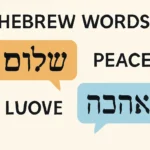
שלום (shalom) — hello, peace, and also goodbye; a versatile greeting. You can say שלום to someone when you meet and when you part.
בוקר טוב (boker tov) — good morning. You’ll often hear this before starting the day.
ערב טוב (erev tov) — good evening. A friendly evening greeting.
לילה טוב (laila tov) — good night. A common way to wish someone a restful night.
מה נושא? (ma nishma?) — How’s it going? or What’s new? A casual greeting among friends. An alternate casual form is מה נשמע (ma nishma or ma nishma shelcha/shelchi for male/female).
היי (hey) — hi; a casual loanword from English, widely used in informal speech.
שלום עליכם (shalom aleichem) — a traditional greeting meaning “peace be upon you,” more formal or traditional; you’ll hear it in some communities or in liturgical contexts.
תודה (toda) — thank you. A fundamental polite word; you can add a suffix to show formality: תודה רבה (toda raba) — thank you very much.
בבקשה (bevakasha) — please; also means “you’re welcome” in response to thanks. You’ll hear it often in shops or restaurants.
סליחה (sliḥa) — excuse me / sorry; useful for getting someone’s attention or apologizing.
אין בעד מה (ein be’ad ma) — you’re welcome (literally, “there is nothing to thank for”).
Tip: When you’re uncertain about formality, pair a greeting with the person’s age or relationship. For friends, היי or שלום works well; for store clerks or officials, use שלום or בבקשה plus a polite תודה.
Small conversational phrases you’ll use at the start or end of a chat:
איך אתה מרגיש? (eich ata margish) — How do you feel? (masculine) / איך את מרגישה? (eich at margisha) — How do you feel? (feminine).
אני מצטער/ת (ani mitsta’er/mitsta’eret) — I’m sorry (masculine/feminine).
מדבר/מדברת אנגלית? (medaber/medaberet anglit?) — Do you speak English? (masculine/feminine). If not, you can say אנגלית מדברת? (anglit medaberet) asking about speaking English or you can simply say אנגלית? (anglit).
Numbers, Time, and Date
Numbers form the foundation for telling time, counting, prices, and dates. Below are the most frequently used numbers and time expressions, with gender and usage notes where relevant.
אפס (efes) — zero
אחד (eḥad) — one (masculine); אחת (achat) — one (feminine). In counting nouns you’ll often adjust for gender, so you might say אחד ספר (eḥad sefer) for “one book” (masculine noun) or אחת החלטה (achat hakhlata) for “one decision” (feminine noun).
שתיים (shataim) — two (feminine form found in fixed phrases); שניים (shnayim) — two (masculine). Small note: when counting masculine nouns you’ll typically use שניים, and for feminine nouns you’ll often use ן? (shniyot) or shtayim/shtayim? — practice varies by phrase. Common stand-alone is שניים.
שלוש (shalosh) — three (feminine), שלושה (shalosha) or שׁלֹש? The standard for numbers 3-10 changes with the noun gender, but for quick usage think of שלוש for three in many everyday phrases.
ארבע (arba) — four; חמש (ḥamesh) — five; שש (shesh) — six; שבע (sheva) — seven; שמונה (shmona) — eight; תשע (tese) — nine; עשר (eser) — ten.
עשר (aser) — ten; אחד עשר (ehad eser) may appear in some contexts; commonly you’ll hear just עשר as a counting unit.
Numbers 11–20 combine the base forms with a suffix or descriptive wording, e.g. אחת עשרה (achat esreh) for eleven (feminine) and אחד עשר (eḥad eser) for eleven (masculine), continuing with עשרים (esrim) for twenty. In practical usage, you’ll most often hear the Arabic-numeral style (11–20) in conversation and media.
Time-telling basics you’ll want to memorize:
שעה (sha’ah) — hour; עגול would be surplus; to tell time you’ll typically say the hour number followed by שעות (sha’ot) or simply say the hour and minutes. For example: השעה ארבע (ha’ SHA’ah arba) roughly “It is four o’clock.”
בוקר (boker) — morning; צהריים (tzohorayim) — afternoon; לילה (laila) — night. The common phrases are בוקר טוב, צהריים טובים (tzohorayim tovim) — good afternoon, and לילה טוב (laila tov) — good night. If you need to say a time more precisely, you might say: השעה שש וחצי (ha’ sha’ah shesh veḥatzayim) — six thirty, with the literal sense preserved in more formal contexts.
ימים (yamim) — days; שבוע (shavua) — week; חודש (ḥodesh) — month. The standard weekday names you’ll encounter: יום ראשון (Yom Rishon) — Sunday, יום שני (Yom Sheni) — Monday, and so on, ending with שבת (Shabbat) for Saturday.
Pronouns, Verbs, and Simple Sentences
Pronouns determine verbs and agreement. Hebrew pronouns have masculine/feminine forms and singular/plural variants. Here are the core pronouns with simple usage examples in the present tense and infinitives:
אני (ani) — I
אתה (ata) — you (masculine singular); את (at) — you (feminine singular)
הוא (hu) — he; היא (hi) — she
אנחנו (anachnu) — we
אתם (atem) — you (masculine plural); אתן (aten) — you (feminine plural)
הם (hem) — they (masculine); הן (hen) — they (feminine)
Here are some common infinitive verbs in their dictionary form, along with short example sentences to illustrate how they’re used:
לאהוב (le’ehov) — to love. Example:אני אוהב (ani ohev) / אני אוהבת (ani ohevet) — I love / I like. For “I love you,” you’d say אני אוהב אותך (ani ohev otcha) or אני אוהבת אותך (ani ohevet otach).
לאכול (Le’echol) — to eat. Example:אני אוכל (ani ochel) / אני אוכלת (ani ochelet) — I eat / I am eating.
לכתוב (likhtov) — to write. Example:אני כותב (ani kotev) / אני כותבת (ani kotevet) — I write / I am writing.
לדבר (ledaber) — to speak. Example:אני מדבר (ani medaber) / אני מדברת (ani medaberet) — I speak / I am speaking.
לראות (lir’ot) — to see. Example:אני רואה (ani ro’ah) / אני רואה (ani ro’im) — I see (masc. fem. forms differ with the speaker).
ללכת (lalechet) — to go / to walk. Example:אני הולך (ani holekh) / אני הולכת (ani holechet) — I go / I am going.
לבוא (labo) — to come. Example:אני בא (ani ba) / אני באה (ani ba’ah) — I come / I am coming.
לעשות (la’asot) — to do / to make. Example:אני עושה (ani oseh) / אני עושה (ani osah) — I do / I am doing.
Practice tip: start with subject‑verb structures that describe your daily routines. For example, אני אוכל (ani ochel) means “I eat,” and you can attach objects to form sentences: אני אוכל תפוח (ani ochel tapuḥ) — I eat an apple. As you grow more comfortable, you’ll begin to mix tenses and add adjectives and nouns to create richer statements.
Nouns: People, Places, and Everyday Objects
Nouns carry gender and plural forms, but you’ll get the hang of common items quickly by grouping them into everyday categories. Here are representative lists you can memorize and practice with:
אנשים (anashim) — people; איש (ish) — man; אישה (isha) — woman; ילדים (yeladim) — children; משפחה (mishpacha) — family.
בית (bayit) — house; דירה (dira) — apartment; רחוב (rekhov) — street; מוסד (mosad) — institution; בית ספר (beit sefer) — school.
כסף (kesef) — money; אוטו (oto) — car (informal); מכונית (mechonit) — car (formal/longer); מונית (monit) — taxi.
ספר (sefer) — book; עיתון (itim) — newspaper; ספרייה (sifriya) — library; מחשב (machshev) — computer.
Some practical phrases with nouns:
כמה זה עולה? (kama ze oleh?) — How much does this cost? (Use זה (ze) for masculine and זו (zo) for feminine nouns depending on what you are pointing to.)
איפה הוא/היא? (eifo hu/hi?) — Where is he/she?; איפה זה? (eifo ze?) — Where is this?
אני מחפש/מחפשת (ani mekhakes/mekhakeset) — I am looking for (masculine/feminine). Example: אני מחפש כוס מים (ani mekhesh kos mayim) — I’m looking for a glass of water.
Colors, Sizes, and Shapes
Color, size, and shape vocabulary is tremendously useful for shopping, fashion, and description. Here are common terms with quick usage notes:
אדום (adom) — red; אדומה (adoma) feminine; אדומים (adomim) plural for masculine items.
כחול (kachol) — blue; כחולה (kachola) feminine; plural כחולים (kacholim).
במגירת (b’mitgurat) — in the drawer; בגדול (b’gadol) — in large size; בקטן (b’katan) — in small size.
Question Words and Useful Phrases for Inquiry
Question words help you gather information quickly. Here are the essential interrogatives you’ll encounter, plus a few ready‑made question phrases you can reuse in everyday conversation.
מי (mi) — who
מה (ma) — what
איפה (eifo) — where
מתי (matay) — when
מדוע (lamed-dalet? or madua in common speech) — why; 为什么 never mind; in Hebrew, מדוע is formal, and למה (lama) is common in speech.
איך (eich) — how
איזה (eyze) — which / what kind of
כמה (kama) — how much / how many; can be used for price or quantity
Constructing simple questions: you can combine these with verbs and nouns to form practical sentences:
איך מגיעים למוזיאון? (eich magi’im le’muzeon?) — How do you get to the museum?
איזה צבע אתה אוהב? (eyze tzeva ata ohev?) — Which color do you like? (to a male); איזה צבע את אוהבת? (eyze tzeva at ohevet?) — Which color do you like? (to a female)
כמה זה עולה? (kama ze oleh?) — How much does it cost?
מתי יש פּגישה? (matay yesh p’gisha?) — When is the meeting?
Places, Directions, and Travel Phrases
Getting around requires directional vocabulary and typical travel expressions. Here are practical terms to know for navigating a city, a campus, or a neighborhood:
כמה זמן לוקח? (kama zman loko’ach?) — How long does it take?
אני מחפש/מחפשת תחנה (ani mekhakes/mekhapet taḥana) — I’m looking for a station.
התחנה הבאה (ha-taḥana ha-ba’ah) — the next station.
Food, Dining, and Shopping Vocabulary
Food and shopping are practical contexts where you’ll use Hebrew daily. Below are essential terms to help you order, ask for items, and handle small purchases.
אוכל (okhel) — food; אוכל (okhel) also means eater; מזון (mazon) is a more formal term for nourishment.
מים (mayim) — water; מים גBij (mas mayim) — bottled water; תה (te) — tea; קפה (kafe) — coffee.
מסעדה (mis’ada) — restaurant; תפריט (tafarit) — menu; להזמין (lehazmin) — to order; כמה זה? (kama ze?) — how much is it?
חשבוני (kheshboni) — my bill; חשבונית (kheshbonit) — receipt; תודה, זה היה טעים (toda, ze haya ta’im) — thank you, it was tasty.
Useful dining phrases for busy days or casual meals:
בבקשה תפריט צהריים (bevakasha ta’arish tzaharaim) — please, the lunch menu; להביא חשבון (le’havi kheshbon) — bring the check.
אני צמא/צמאה (ani-tsa’m/tsma’ah) — I am thirsty; אני רעב/רעבה (ani ra’ev/ra’ava) — I am hungry.
אפשר לקבל חשבון? (efshar lekabel kheshbon?) — Can I get the bill?
Hebrew Grammar Essentials for Beginners
To quickly gain confidence, it helps to understand a few core grammatical features that affect how words behave and how sentences are formed. Here are concise notes on gender, number, the definite article, and possessives.
Gender matters: Hebrew nouns have grammatical gender (masculine and feminine). Adjectives and verbs agree with the noun they describe. For example, בית גדול (bayit gadol) — a big house; בית גדולה would be incorrect because “bayit” is masculine, so you use the masculine form גדול (gadol).
Plural endings: masculine plural often ends in ‑ים (im), while feminine plural often ends in ‑ות (ot). Example: ספרים (sefarim) — books (masculine plural); מורות (morot) — teachers (feminine plural).
Definite article: The definite article in Hebrew is a prefix: ה (ha‑) attached to the noun. Example: הספר (hasefer) — the book; הבית (habayit) — the house. Unlike English, there is no separate word for “the.”
Possessive forms: Possession is often shown with suffixes attached to the noun or with construct state. Common examples: הספר שלי (hasefer sheli) — my book; הספר שלך (hasefer shelcha) — your book (masc); הספר שלך (hasefer shelach) — your book (fem).
Root patterns: Hebrew vocabulary often derives from roots (usually three consonants) that cluster related meanings. For example, the root כתב (K-T-V) yields כתב (katav) — wrote; כותב (kotev) — writes; כתוב (ktuv) — written; מכתב (mikhtav) — letter. Recognizing roots helps with semantic breadth and memory.
Practical tip for beginners: when you learn a new word, try to identify any recognizable root or pattern and note at least one related word. For example, from כתב (k’tav) you can connect מכתב (mikhtav) and כותב (kotev). This approach builds a network in your memory rather than isolated pieces of vocabulary.
Practice Tips and Learning Resources
Consistency is key for vocabulary retention. Use a mix of passive exposure (songs, films, news) and active practice (flashcards, speaking with a partner, writing sentences). Here are actionable strategies and trusted resources to support your study.
Spaced repetition: Build a daily routine with flashcards that gradually increase intervals between reviews. Focus on the most common words first (greetings, numbers, days, common verbs).
Label your environment: Put Hebrew labels on items in your home or desk. For example, שולחן (shulchan) on the table, כוס (kos) on the cup, and so on. This daily exposure cements vocabulary in context.
Practice with simple sentences: Write or speak one or two sentences daily using the verbs and nouns you’ve learned. For instance, אני אוהב קפה (ani ohev kafe) — I love coffee; הספר על השולחן (hasefer al ha-shulchan) — The book is on the table.
Engage with native material: Listen to Hebrew radio or podcasts, watch Hebrew TV shows or news, and review transcripts to connect spoken and written forms. Try to identify at least five new words per week from authentic sources.
Find language partners: Conversation practice accelerates acquisition. Use language exchange apps or local communities to practice greetings, questions, and everyday phrases with native speakers or fellow learners.
Recommended beginner-friendly resources for vocabulary and practice:
Introductory Modern Hebrew textbooks and workbooks with vocabulary lists and exercises.
Online flashcards and spaced repetition platforms that support Hebrew characters and transliteration.
Beginner Hebrew courses offered by universities, community centers, or reputable language platforms.
Hebrew‑learning communities and forums where you can ask for clarification and share practice exercises.
Vocabulary Quick Reference: Core Terms by Topic
For quick study, here is compact, topic-based reference you can print or save. The Hebrew terms are bolded, with transliterations in parentheses for quick recall.
Greetings and Polite Phrases: שלום (shalom), בוקר טוב (boker tov), ערב טוב (erev tov), תודה (toda), בבקשה (bevakasha), סליחה (sliḥa).
Numbers: 0 אפס (efes); 1 אחד/אחת (eḥad/achat); 2 שניים/שתי (shnayim/shtay); 3 שלוש/שלושה (shalosh/shalosha); 4 ארבע (arba); 5 חמש (ḥamesh); 6 שש (shesh); 7 שבע (sheva); 8 שמונה (shmone); 9 תשע (tesha); 10 עשר (eser).
Colors: אדום (adom); כחול (kachol); ירוק (yarok); שחור (shakhur); לבן (levan); ירוק (yarok).
Food and Drink: מים (mayim); אוכל (okhel); לחם (leḥem); קפה (kafe); תה (tea) (teva? Actually תה t’ah); מסעדה (mis’ada).
Places: בית (bayit); בית ספר (beit sefer); נמל (namal) — port; תחנה (taḥana) — station.
People and Family: איש (ish) — man; אישה (isha) — woman; ילדים (yeladim) — children; משפחה (mishpacha) — family.
Notes for learners about Variations and Semantics
Hebrew offers rich semantic breadth through word families and variations. Here are a few guiding notes you can apply as you expand your vocabulary:
Many verbs have corresponding nouns or adjectives built from the same root. For example, the root כתב (K‑T‑V) yields כתב (ketav) as “writing” and כותב ( kotev) as “writes.”
Adjectives agree in gender and number with the noun they describe. For example:
ספר גדול (sefer gadol) — a big book (masc).
ספר גדולה is not standard; the feminine form would involve adjusting the adjective to the feminine ending: ספר גדולה would be incorrect; instead you might say ספרה גדולה if referring to a feminine noun with a different structure.
Pluralization patterns vary by gender. Masculine plurals often end in ‑ים (im) and feminine plurals in ‑ות (ot), but there are exceptions. Practice with real sentences to internalize these patterns.
Construct state (yerusha) and possessives use phrases like של (shel) to indicate “of” or possession in phrases like הספר שלי (hasefer sheli) — my book. This is a useful construction to describe ownership without changing noun endings.
Consolidate your learning with short, practical sentences that mix vocabulary across topics. The aim is to create sentences you can realistically say in everyday settings. For each sentence, you’ll see the Hebrew form in bold, followed by a literal translation and a natural English rendering.
אני אוהב קפה (ani ohev kafe) — I love coffee. / I like coffee.
הספר על השולחן (hasefer al ha-shulchan) — The book is on the table.
כמה זה עולה? (kama ze oleh?) — How much is this?
איפה הספר? (eifo hasefer?) — Where is the book?
אני הולך לבית ספר (ani holekh lebeit sefer) — I am going to school.
היא מדברת עברית (hi medaberet ivrit) — She speaks Hebrew.
אנחנו צריכים מים (anachnu tzrichim mayim) — We need water.
אתה רוצה לכתוב מכתב? (ata rotse likhtov makhtav?) — Do you want to write a letter?
Tip: practice saying these aloud with a partner or a language app. Emphasize clear pronunciation of gutturals like ח (kh) and כ (kh or k depending on context), which can be tricky for beginners.
Final Thoughts: Building Your Vocabulary Confidence
Vocabulary is your daily toolkit. The more you expose yourself to Hebrew in context, the more you’ll internalize gender agreement, verb conjugation cues, and natural phrasing. Start with the essentials listed here, then gradually expand to more specialized domains (travel, cooking, technology, academic Hebrew). A steady routine—20–30 minutes most days—will yield persistent progress. Make a habit of revisiting core words, adding 5–10 new terms per week, and revising old words with expanded usage in new sentences.
Beyond memorization, aim to use new words in meaningful contexts. Try to describe your day in Hebrew, label rooms or objects in your living space, or write short diary entries about your activities. The act of producing language creates durable memory traces and strengthens your ability to recall words on demand.
Finally, remember that vocabulary learning is a journey. Allow yourself to make mistakes, stay curious, and enjoy the process of discovering a new linguistic system. With consistent practice and thoughtful exposure to a variety of Hebrew sources, you’ll build a confident, flexible vocabulary that supports real communication.