Hebrew Vowel: A Complete Guide to Hebrew Vowels and Pronunciation
The Hebrew writing system is famed for its consonant-only appearance, yet vowel signs—known as niqqum in Hebrew—are essential for accurate pronunciation, meaning, and rhythm. This article is a comprehensive guide to the Hebrew vowel system, covering what niqqum are, how they work, how Hebrew vowels influence meaning, and practical tips for reading and speaking. Whether you are a student beginning your journey into Hebrew or a reader seeking a deeper understanding of vocalization and pronunciation, this guide will provide clear explanations, examples, and useful practice suggestions.
Note: In pointed Hebrew (text with niqqum), the vowels appear as a set of diacritics placed under, above, or inside the letters. In unpointed Hebrew (ktiv haser), the vowels are not written, and learners must rely on context, dictionaries, or readers to supply the pronunciations. This article uses both forms where relevant and highlights the key differences you’ll encounter in everyday reading and in liturgical or classic texts.
Overview: Why vowels matter in Hebrew
Hebrew is a consonantal language by script, but vowels are essential for disambiguation. A single consonant sequence can yield multiple words with very different meanings depending on the vowels you insert. For example, the same consonants can be read as different words when vowels are added. This makes niqqum a cornerstone of meaning, tone, and grammatical class in Hebrew. In addition to helping beginners pronounce words, vowels often reveal part of the word’s grammar and morphology, such as tense, number, or syntactic role.
Reading clarity: Vowels disambiguate homographs (words that look the same without vowels).
Pronunciation: Vowels guide the correct articulation of syllables, stress, and rhythm.
Poetry and cantillation: In Biblical and liturgical contexts, vowels interact with cantillation marks to shape chanting and meaning.
Language learning: Understanding vowels accelerates vocabulary acquisition and helps with pronunciation in conversation.
The Hebrew vowel system: what niqqum covers
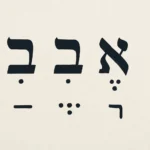
The Hebrew vowel system comprises a set of diacritic signs that attach to consonants to indicate vowel sounds. There are several categories of niqqum, including regular vowels, reduced vowels, and the shva family. Below, you’ll find a structured overview of the core vowels you are most likely to encounter in modern Hebrew, biblical Hebrew, and educational materials.
Core vowels (the most frequently used)
Pataḥ (ַ): a short “a” sound as in father in some contexts, often transliterated as a.
Kamatz (ָ): a long “a” sound in many contexts, similar to the a in father, but its exact quality can vary by environment and tradition.
Segol (ֶ): a short “e” sound as in bed.
Tzere (ֵ): a longer or clearer “e” sound, as in they or say.
Hirik (ִ): a short “i” sound similar to the i in machine.
Holam (ֹ): an “o” sound, as in go.
Two special vowels for the /u/ sound
Shuruk (וּ): the /u/ sound written with the letter vav and a dot in the middle of the letter. In practice, you hear the /u/ sound after a consonant the moment you see or pronounce the vav with its dot.
Qubbuṭ (ֻ): an alternative symbol for the /u/ sound, typically encountered in older or highly pointed texts. It represents the same /u/ vowel but is written as a separate niqqum rather than relying on the vav form.
Shva (ְ): a small horizontal sign placed under a consonant. It can be realized as shva na (a vocalized, brief “e” or a quick /e/ sound in some contexts) or as shva nach (a silent or very quick, almost negligible vowel). Shva is one of the most nuanced signs because its pronunciation depends on adjacent vowels, syllable structure, and grammatical form.
Hataf vowels: reduced vowels in Hebrew
There are three compact vowels known as hataf vowels (shortened or “reduced” vowels). They occur in specific phonological environments and are often found under certain consonants in both Biblical and modern forms. These are:
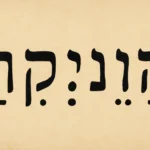
Hataf-Pataḥ (ֲ): a reduced a sound, often described as a very brief a.
Hataf-Segol (ֱ): a reduced e sound, shorter than a full Segol.
Hataf-Qamatz (ֳ): a reduced a/o sound, depending on historical phonology and context.
Hataf vowels are more common in Biblical, liturgical, and some classical segments than in everyday modern Hebrew. They add a layer of phonetic precision in scholarly editions and in certain religious readings. When you encounter hataf vowels in pointed texts, you’ll notice their concise, delicate quality compared to their full counterparts.
How vowels interact with consonants: cantillation, dagesh, and length
Vowel signs don’t stand alone. They sit on or around consonants and work in concert with several other features of Hebrew phonology:
Dagesh: a dot placed inside a consonant letter (not a vowel sign) that strengthens the pronunciation of certain letters (like doubling the consonant or distinguishing certain phonemes, e.g., bet with a dagesh is /b/; without it, /v/ in some contexts). The dagesh does not change the vowel value by itself but can interact with the overall syllabic shape of a word.
Shibboleth and cantillation: in Biblical reading and liturgical chanting, cantillation marks interact with vowels to guide both pronunciation and musical phrasing. The cantillation marks do not replace niqqum but sit alongside them to create a layered reading experience.
Syllable structure: Hebrew syllables typically follow patterns like CV, CVC, or CV-C, depending on consonant clusters and vowel choices. Vowel quantity (short vs long) influences rhythm, especially in poetry and formal reading.
Stress and rhythm: In Modern Hebrew, stress often falls on or near the last syllable of a word or word family, but there are many exceptions. Correct vowel placement and awareness of stress help with natural sounding speech and listener comprehension.
Reading strategies: how to approach Hebrew vowels effectively
For learners, developing a practical approach to vowels can dramatically improve reading speed and comprehension. Here are some proven strategies:
Start with common words: learn the most frequent niqqum patterns used in everyday words, such as shalom (שָלוֹם) and beit (בֵּית) and then expand outward to more complex forms.
Pair vowels with roots: Hebrew roots (usually three consonants) carry meaning. Connecting root patterns with typical vowel sets helps you predict pronunciations and meanings when you encounter new words.
Use transliteration as a bridge: when first learning, you can read with transliteration to build a mental map of pronunciations, then gradually rely more on niqqum or context to internalize pronunciation.
Practice with authentic texts: start with children’s books, modern news articles with niqqum, or religious texts with cantillation. Gradually reduce your reliance on vowels as you gain confidence.
Mark the words you don’t know: keep a personal glossary. Note the niqqum you encounter and look up the root and vowel pattern. This builds a long-term memory of common vowel sequences.
Below are representative examples showing how vowels change meaning and sound. These words illustrate the real-world use of niqqum in modern Hebrew. The vowels are shown in parentheses next to the consonants to illustrate how the word is pronounced. When reading in context, you’ll typically see these vowels directly on the letters:
שָלוֹם (shalom) — “peace” or “hello.” Vowels: kamatz under shin and holam over lammed.
סֵפֶר (sefer) — “book.” Vowels: tzeire under samekh and segol under peh; note that in some spellings the peh ends with a different vowel due to root structure.
כֹּתֵב (kotev) — “writing” (masculine participle). Vowels: holam under taw, segol under forse.
דוֹדִים (dudim) — “uncles” (plural, male). Vowels: holam under dalet and chirik under dalet or mem depending on form.
These examples demonstrate how the same consonants can yield different meanings with different vowels, and how the vowels guide the listener toward the intended word.
Reading tips for learners: how to practice vowels in context
To become fluent in reading Hebrew with vowels, consider these practical exercises and routines:
Daily vowel drills: pick a short passage and read it aloud with the niqqum, then re-read without vowels to test comprehension.
Character-by-character decoding: for new vocabulary, practice isolating consonants and vowels, slow down, and then gradually increase speed with confidence.
Vowel substitution exercise: take a known word and test how changing the vowel signs (e.g., swap pataḥ for kamatz, or segol for tzere) affects meaning.
Podcast or audio practice: listen to native speakers and pay attention to how vowels interact with consonants and syllable breaks. Repeat phrases aloud, matching the pronunciation and rhythm.
Dictation practice: have a partner dictate short sentences with vowels, and you write them down. Then compare with the original text to check accuracy.
Common pitfalls and mispractices (and how to avoid them)
Learning vowels can be tricky. Here are frequent issues and practical fixes:
Over-reliance on transliteration: transliterations are helpful in the early stages but can create habits that obscure exact pronunciation. Use niqqum and listen to native speech as your primary sources of pronunciation.
Confusing similar signs: some vowels look alike to beginners (for example, some signs for /e/ vs /a/ in certain fonts). Use high-contrast fonts and practice with representative words to build visual memory.
Ignoring shva nuances: shva can be silent or vocal depending on position. Practice with both silent and audible contexts, especially in Biblical Hebrew where shva can affect cantillation and meter.
Not distinguishing hataf vowels: if you only study the full vowels, you may miss reduced forms. Include hataf patterns in your study, especially when reading classical texts or poetry.
Stress misplacement: modern Hebrew pronunciation is strongly affected by syllable structure and stress. Practice with audio resources focusing on stress patterns to sound more natural.
Historical context: niqqum in Jewish tradition and modern usage
The development of niqqum is tied to the Masoretic tradition, a scholarly framework that preserved biblical texts with precise vocalization and cantillation. The Tiberian system of niqqum provides a standardized method to indicate vowels and cantillation marks. Over centuries, this system became the foundation for vowel notation in printed Bibles, prayer books, and educational materials. In modern Hebrew, however, everyday writing commonly omits niqqum, relying on context and language intuition. This dual usage—pointed and unpointed—reflects a practical balance between efficiency in everyday reading and precision in scholarly, liturgical, or language-learning settings.
In formal writing and religious contexts, readers typically rely on niqqum to guide pronunciation and interpretation. In children’s books or beginner materials, you will often see vowels to aid learning. In newspapers, magazines, and most online Hebrew texts, vowels are usually omitted, so context and lexical knowledge drive comprehension. For students and language learners, exposure to both pointed and unpointed text is essential for real-world fluency.
Practical resources for mastering Hebrew vowels
As you deepen your study, consider a mix of resources and methods that suit your learning style. The following suggestions can help you build a robust understanding of Hebrew vowels and pronunciation:
Textbooks and primers: choose books that present niqqum clearly, with abundant practice words and annotated reading passages.
Audio and video resources: look for native speakers and tutors who explain pronunciation, vowel length, and rhythm. Shadowing exercises can be particularly effective.
Dictionary tools: use Hebrew dictionaries that provide niqqum and help you connect each vowel pattern to its root and meaning.
Digital flashcards: create flashcards for common vowel signs and their sounds, with example words on the reverse side.
Language exchange and speaking practice: converse with native speakers or tutors who can correct your vocalization and help you internalize natural pronunciations.
These resources are a practical toolkit for acquiring both decoding skills (reading with vowels) and production skills (speaking with accurate vowel sounds).
Frequently asked questions about Hebrew vowels
What is the difference between pataḥ and kamatz?
Pataḥ and kamatz are both open-a/low vowels, but their usage differs by spelling conventions and phonetic environment. In many words, kamatz has a longer, more open quality, while pataḥ is shorter and more clipped. Context and historical orthography influence how each is realized in speech.
Shva can be silent (shva na) or vocal (shva na). In many modern texts, it is silent, but in Biblical readings and certain word contours, it may be pronounced as a very short vowel or as a separate syllable part of the word. Determining whether a shva is silent or vocal depends on grammatical form and cantillation patterns in the text.
Are there two ways to write the /u/ sound?
Yes. The /u/ sound can be represented by Shuruk (the vav with a dot in its center, written as וּ) or by Qubbuṭ (the separate diacritic used in other texts, represented by the symbol ֻ). Both indicate /u/ after a consonant, but their usage can vary by orthographic tradition and the specific text you encounter.
Conclusion: embracing the complete spectrum of Hebrew vowels
Vowel knowledge unlocks the ability to read with confidence, to pronounce with accuracy, and to understand the nuanced meanings encoded by Hebrew syllable structure. Whether you study the traditional Masoretic system of niqqum, engage with modern Hebrew orthography where vowels are often omitted, or explore biblical poetic forms that rely on cantillation as well as vowels, a solid foundation in niqqum will serve you well. This guide has covered the essential vowel signs, their pronunciation, and practical strategies for learning and using Hebrew vowels in everyday reading and speech. As you continue your journey, you will find that the vowels become a natural and integral part of your linguistic intuition, enriching your understanding of Hebrew literature, scripture, and modern communication alike.
If you’d like, you can practice with a printable vowel chart, a short practice passage with niqqum, and a pronunciation checklist to track your progress. Consistent practice, exposure to authentic materials, and active speaking will steadily sharpen your ability to read, comprehend, and enjoy Hebrew in all its forms.