The Hebrew writing system is a remarkable convergence of ancient origins, linguistic evolution, and modern adaptation. It is not merely a way to record sounds; it is a living script that carries religious, cultural, and scholarly significance. In this comprehensive guide, we will explore the Hebrew alphabet, its distinctive scripts, the history that shaped them, and the ways Hebrew writing functions in everyday life, liturgy, and scholarship. From the ancient Phoenician-derived consonants to the contemporary block letters used in books and screens, the journey of Hebrew writing reveals a story of continuity and change across millennia.
At its core, the Hebrew writing system is an abjad—a script that primarily records consonants, with vowels either implied or marked by optional diacritical signs. Its development, however, is anything but simple: it encompasses ancient scripts, regional varieties, religious scribal practices, and modern standardization. The major elements a reader encounters are:
The alphabet of 22 consonant letters, sometimes accompanied by seven or more additional signs in specific linguistic contexts.
Final forms (sofit letters) for certain consonants when they appear at the end of a word.
Vowel notation (niqqud) used primarily in teaching, religious texts, and poetry, and often omitted in everyday writing.
Cantillation marks (te’amim) in the Masoretic tradition, guiding careful reading of biblical passages.
Multiple scripts used in different settings, including the square script of formal writing, Rabbinic scripts, and cursive forms for handwriting.
The alphabet: letters, final forms, and pronunciation
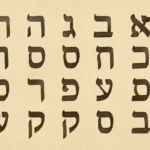
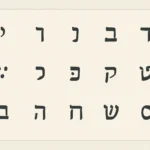
The Hebrew alphabet consists of 22 consonant letters. Each letter has a name, a grapheme, and a typical sound value, though pronunciations vary across dialects (Ashkenazi, Sephardi, Mizrahi, and Modern Hebrew). The standard way to present the alphabet today is through the square script (Ktav Ashuri), the form used in printed Hebrew in Israel and most of the Jewish world.
The 22 consonant letters
In a simple inventory, the consonants are:
Alef (א) — glottal stop or vowel placeholder
Bet (ב) — /b/ or /v/ depending on tradition
Gimel (ג) — /g/
Dalet (ד) — /d/
Hey (ה) — often a vowel carrier or /h/
Vav (ו) — /v/ or /o/ or /u/ as a vowel guide
Zayin (ז) — /z/
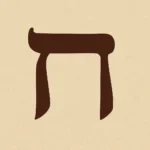
Het (ח) — /χ/ (a voiceless pharyngeal fricative in many pronunciations)
Tet (ט) — /t/
Yod (י) — /j/ or vowel marker
Kas (כ/ך) — /k/ (final form /x/ in some traditions, often /k/); final form is ך
Lamed (ל) — /l/
Mem (מ/ם) — /m/; final form is ם
Nun (נ/ן) — /n/; final form is ן
Samekh (ס) — /s/
Ayin (ע) — silent or glottal stop in some traditions
Pe (פ/ף) — /p/ or /f/; final form is ף
Tsadi (צ/ץ) — /ts/; final form is ץ
Qof (ק) — /k/ (often a more uvular /q/ sound in many dialects)
Resh (ר) — /r/
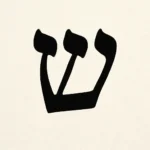
Shin/Sin (ש) — /ʃ/ or /s/ depending on dot placement
Notes on pronunciation and variation:
In Modern Hebrew, most consonant sounds align with a standard set, but vowel realization and some consonant qualities vary with the speaker and the community of origin.
The same letter can represent different sounds in different contexts; for example, bet can be /b/ or /v/, and shin vs. sin is distinguished by the dot above the shin (ש) vs. the absence of the dot (שׂ is rare but historically distinct).
Letters without an intrinsic vowel carry the burden of guiding pronunciation when vowels are not written.
Final forms
Five letters have final forms when they appear at the end of a word. These are called sofit forms and are used in standard Hebrew typography:
Kaf sofit (ך)
Mem sofit (ם)
Nun sofit (ן)
Pe sofit (ף)
Tzadi sofit (ץ)
The existence of final forms helps to visually anchor the end of a word in reading and writing, and they are a canonical part of print typography as well as handwriting conventions.
Vowels and diacritics: niqqud, cantillation, and pronunciation
The Hebrew script is primarily consonantal, but for learners and for liturgical and poetic text, vocalization is provided by a system of diacritics known as niqqud (vowel points). Additionally, in the study and chanting of the Torah, cantillation marks (te’amim) guide intonation and syntax.
The Tiberian niqqud system
The most influential vowel notation in Hebrew is the Tiberian system, developed by Masoretes in or around Tiberias between the 7th and 10th centuries CE. Key features include:
Chirik for /i/ and segol for /e/ sounds, among others
Different marks for qamatz, patach, tsere, sheva, and more
Vowel graphs positioned beneath, above, or inside the consonants, depending on the vowel and the letter
In modern print and digital Hebrew, these vowel marks are often omitted, especially in everyday writing, newspapers, signage, and most books intended for fluent readers. They are, however, essential in learners’ material, bilingual editions, poetry, and biblical study aids.
Other vowel systems and non-vocalized Hebrew
There are variations in how diacritics are used across communities and historical periods:
Tzadi and other letters may have less distinct vowel marking in certain editions aimed at fluent readers.
In some Ashkenazi pronunciation, vowel quality differs from Sephardi/Mizrahi traditions, which is reflected in diacritics or transliteration conventions.
Geographically isolated communities sometimes preserve older vowel pronunciations that diverged from the standard Modern Hebrew system.
Hebrew scripts and historical development
The form of Hebrew writing has a long and layered history. It does not begin and end with a single script; instead, it includes several stages, each reflecting cultural exchanges, religious needs, and practical writing use.
Paleo-Hebrew and the ancient roots
Long before the invention of the square script, ancient Israelites wrote in a Paleo-Hebrew style derived from the Phoenician alphabet. This script bears a striking resemblance to those early Semitic scripts and is frequently found in inscriptions from the first millennium BCE, including some in the ancient Kingdom of Judah and in the broader Levant. The shapes of the letters are similar to their Phoenician progenitors, with a more angular, sometimes pictographic appearance. While Paleo-Hebrew largely fell out of everyday use after the Babylonian exile, it left a historical imprint on later scripts and is a key clue to the evolution of Hebrew writing.
Square script (Ktav Ashuri) and Aramaic influence
The dominant form used for Hebrew today is the square script, known in full as Ktav Ashuri. This script emerged under the influence of Aramaic writing during late antiquity. It became standardized in rabbinic scribal culture and gradually supplanted the earlier Paleo-Hebrew style for most everyday writing and liturgical use. The square script is the familiar blocky, geometrically regular form seen in Hebrew Bibles, newspapers, and modern textbooks. Its adoption marks a turning point where readability, scribe precision, and typographical regularity became paramount for both print and manuscript culture.
Rashi script and other rabbinic handwriting
Beyond the square script, there are historical scribal traditions that used distinct forms for specific purposes. One famous example is Rashi script, a cursive or semi-cursive style traditionally used in commentaries and pedagogical editions to distinguish commentarial text from the main text. Rashi script is derived from the Ashuri letters but written in a highly stylized, calligraphic manner. While not used for ordinary Torah scrolls or standard print, it remains a recognizable cultural marker in some Jewish publications and educational materials.
Over the centuries, Jewish communities in different regions developed unique scribal conventions and handwriting practices. A few notable variants include:
Samaritan script is related to the Samaritan tradition rather than the mainstream Rabbinic stream, and it preserves a distinct alphabet closely connected to Paleo-Hebrew in its shapes and phonology.
Cursive Hebrew (ranked among handwriting styles) is essential for everyday correspondence, schoolwork, and note-taking, and it varies from community to community.
Regional scripts in manuscripts or print sometimes reflect Sephardic or Ashkenazi aesthetic choices—affecting letter forms, ligatures, and spacing in decorative headings.
Modern Hebrew: orthography and usage
With the revival of Hebrew as a spoken language in the late 19th and early 20th centuries, a modern orthography was developed to support contemporary communication while honoring religious and literary heritage. The result is a cohesive system used in Israel and in Jewish communities around the world, balancing tradition with practicality.
Ivrit: the living modern language
Modern Hebrew, or Ivrit, employs a standardized set of rules for spelling and pronunciation, informed by authorities like the Academy of the Hebrew Language and various linguistic committees. Characteristics include:
A strong tendency to preserve a consistent consonant-vowel framework, with vowels often inferred from context in everyday print.
Adoption of loanwords and modern vocabulary while adapting native roots to express new concepts.
Use of final forms and typographic conventions that support both online text and printed media.
Orthography: letters, vowels, and punctuation
Key orthographic features of modern Hebrew include:
Consistent use of the square script for most printed material, including newspapers, books, and digital text.
Optional niqqud in learners’ materials, dictionaries, and religious or poetry editions; largely omitted in standard prose for fluent readers.
Final forms for five letters, as noted earlier, which help delineate word boundaries and provide typographic rhythm.
Directionality: Hebrew is written and read from right to left, influencing software localization, webpage design, and user interfaces.
Printing vs handwriting
There is a meaningful distinction between printed, block-style Hebrew and the cursive script used for everyday handwriting. In formal contexts, block letters dominate, delivering legibility and standardized shapes. In personal correspondence, notes, and some schools, a cursive script (often taught as a separate handwriting system from block letters) is used to speed writing and convey a more personal tone. Some regions have distinct cursive styles that reflect local education practices and typographic preferences.
Hebrew writing includes mechanisms for representing numbers and for symbolic interpretation. Though many Hebrew texts use Arabic numerals, Hebrew letters can double as numerals in a system known as gematria, where each letter carries a numeric value. This practice is common in Jewish mysticism, biblical exegesis, and textual analysis. Key points include:
Letter-value mapping assigns 1–9 to the first nine letters, 10–90 in tens, and 100–400 in hundreds.
Combinations like alef (1) + bet (2) can express larger numbers when placed appropriately.
In secular contexts, one typically uses Arabic numerals for clarity and compatibility with international standards.
Cultural and linguistic implications of the Hebrew writing system
The Hebrew writing system is more than a tool for communication; it is a repository of Jewish history, religious practice, and national identity. Its development reflects a long arc of transmission—from ancient inscriptions to liturgical uses, from rabbinic scholarship to modern general literacy. This system also intersects with other writing traditions in the region:
The Masoretic tradition—a meticulous project to preserve vocalization, cantillation, and text integrity—shaped how Hebrew is read aloud and studied in religious contexts.
The modern revival of Hebrew as a living language, which required standardization, pedagogy, and publishing norms that could sustain daily life in a modern state.
The relationship between Hebrew script and other Jewish scripts (like Rashi or cursive), which creates layered textual ecosystems within libraries, editions, and classrooms.
Common misconceptions and clarifications
As with many ancient writing systems, there are myths and misunderstandings about Hebrew script. A few clarifications:
All Hebrew letters have equal phonetic weight in Modern Hebrew? Not exactly. Some letters have distinctions that matter for certain roots, loanwords, and dialects, and the presence or absence of niqqud can dramatically alter pronunciation.
Vowels are never written in Hebrew? In modern mainline Hebrew, vowels are often not written, but in children’s books, language-learning primers, dictionaries, and liturgical text, diacritics are widely used to indicate vowel sounds.
There is only one script for Hebrew? There are several scripts and traditions—square script for general writing, cursive for handwriting, Rashi script for commentary, and historical variants like Paleo-Hebrew and Samaritan that reflect broader historical contexts.
Resources and learning tips for exploring the Hebrew writing system
Whether you are a student of linguistics, a traveler seeking literacy, or a reader of Jewish texts, the following approaches can deepen your understanding:
Practice with diacritics using beginner-friendly texts to become comfortable with niqqud and te’amim (cantillation marks).
Compare scripts by examining printed Hebrew books, manuscripts, and cursive handwriting to understand the differences between square, Rashi, and cursive styles.
Learn the final forms early, since they appear frequently in typography and help readability in longer texts.
Study Masoretic notes if your interest lies in biblical Hebrew; the Masoretes’ vowel system and cantillation marks provide crucial phonological and syntactic cues.
Explore gematria as a cultural practice; even if not essential for daily reading, it offers a window into Jewish textual interpretation.
Practical guidance for learners and educators
For teachers and self-learners, here are practical strategies to approach the Hebrew writing system in a structured way:
Start with the 22 consonants and the five final forms to build a solid foundation in recognition and articulation.
Incorporate vowel dots gradually; begin with common vowels in everyday words, then add more complex diacritics as you advance.
Use aligned reading exercises—texts where the vowels are explicitly indicated—to link graphemes to the sounds they represent.
Practice writing in both block script and cursive script to gain fluency in reading signs, signs, and personal correspondence.
Engage with authentic texts—newspaper articles, Torah portions, modern prose—to observe how orthography behaves in diverse genres.
In sum, the Hebrew writing system is a dynamic, multi-layered framework that has evolved while preserving its core identity. Its letters encode sounds, its diacritics encode nuance, and its scripts encode history. Whether you approach Hebrew as a language, a script, or a cultural artifact, you will encounter a system that is deeply interconnected with the people who use it and with the stories they tell.