Welcome to a curated look at 25 Interesting Jewish Facts You Probably Didn’t Know. This article explores a broad range of topics—history, language, religion, culture, and modern life—each revealing new facets of a tradition that spans millennia and continues to influence global culture today. From ancient calendars and sacred texts to contemporary science and art, these facts invite curiosity, nuance, and respect for a people whose contributions are deep and diverse.
Fact 1: The Jewish calendar is a meticulous lunisolar system with a 19-year cycle
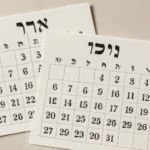
One of the most striking aspects of Judaism is its calendar, which blends lunar months with solar years to regulate the rhythm of festivals, fasts, and Sabbaths. Each month is tied to the cycle of the moon, and a full year is kept roughly aligned with the changing seasons through an intercalated leap month. In the 19-year cycle, there are seven leap years in which an extra month—Adar II—is added. This ensures that major holidays like Passover, Shavuot, and Sukkot occur in their proper seasons rather than drifting through the calendar. The leap-year pattern follows a fixed sequence: years 3, 6, 8, 11, 14, 17, and 19 are leap years.
The months follow a lunar rhythm, which means that some months have 29 days and others 30. This keeps the months in sync with the lunar phase.
The synthesis of lunar and solar cycles helps preserve the annual timing of agricultural and religious milestones in the Land of Israel, as envisioned in ancient tradition and maintained by rabbinic authorities across generations.
This calendar is not only a timetable; it is a living reflection of how Jewish communities have long maintained a structural memory of their religious life, even as they spread across continents and centuries.
Fact 2: The Dead Sea Scrolls opened a window on ancient Jewish life and scripture
Discovered in the mid-20th century near the Dead Sea, the Dead Sea Scrolls include some of the oldest known surviving copies of biblical texts and a rich assortment of sectarian writings from a Jewish community that thrived around the Second Temple period. By dating from roughly 250 BCE to AD 50, these manuscripts illuminate how ancient Jews interpreted sacred law, ritual purity, and biblical prophecy. They also show how textual variants existed in different Jewish communities of the time, underscoring the dynamic nature of scriptural transmission.
Among the most famous scrolls are copies of books from the Torah, as well as apocryphal and sectarian works that shed light on beliefs and practices not always visible in later rabbinic literature.
Scholars use the Scrolls to study language evolution, script forms, and the historical context of Jewish life under Hellenistic and Roman rule.
The Scrolls remind us that the Jewish textual tradition has always been a conversation across time, with conservation, interpretation, and innovation playing together in shaping what Jewish law and literature would become.
Fact 3: The term “Jew” traces to Judah and the ancient kingdoms
The word “Jew” entered common use in the medieval period, but its roots are much older. It derives from Judah, one of the twelve tribes of Israel and the name of the southern kingdom that survived longer after the division of the Israelite monarchy. After the destruction of the First Temple and the exile of many in 586 BCE, the identity of “Jew” increasingly referred to the people associated with Judah and with the land that would become known as Judea. Over centuries, the term evolved into the general ethnoreligious designation we use today.
In addition to geography, Jewish identity has also been shaped by language, law, custom, and faith. The narrative of exile and return, the evolution of communities in Europe, the Middle East, Africa, and the Americas, and the ongoing ties to the land of Israel have all contributed to a robust and diverse sense of who is a Jew.
Fact 4: Hebrew was revived as a living language by Eliezer Ben-Yehuda in the modern era
The revival of Hebrew as a spoken, everyday language is a remarkable linguistic and cultural achievement. In the late 19th and early 20th centuries, Eliezer Ben-Yehuda, a Lithuanian-born Jewish lexicographer, championed the revival of Hebrew from a primarily liturgical and literary language into a modern tongue used in everyday speech, education, journalism, government, and commerce. This revival paralleled and contributed to the Zionist project of building a national home for the Jewish people.
Ben-Yehuda and others compiled dictionaries, created new terms for modern concepts, and promoted Hebrew in schools and newspapers.
The successful revival required a social ecosystem—schools, publishing, and families using Hebrew at home—that turned it into a living language of daily life rather than a sacred or scholarly one alone.
Today, Hebrew is one of the two official languages of the State of Israel (alongside Arabic in certain contexts) and a symbol of Jewish culture that connects biblical texts with contemporary literature, film, science, and daily communication.
Fact 5: The Star of David is a modern symbol with roots in Jewish culture rather than an ancient emblem
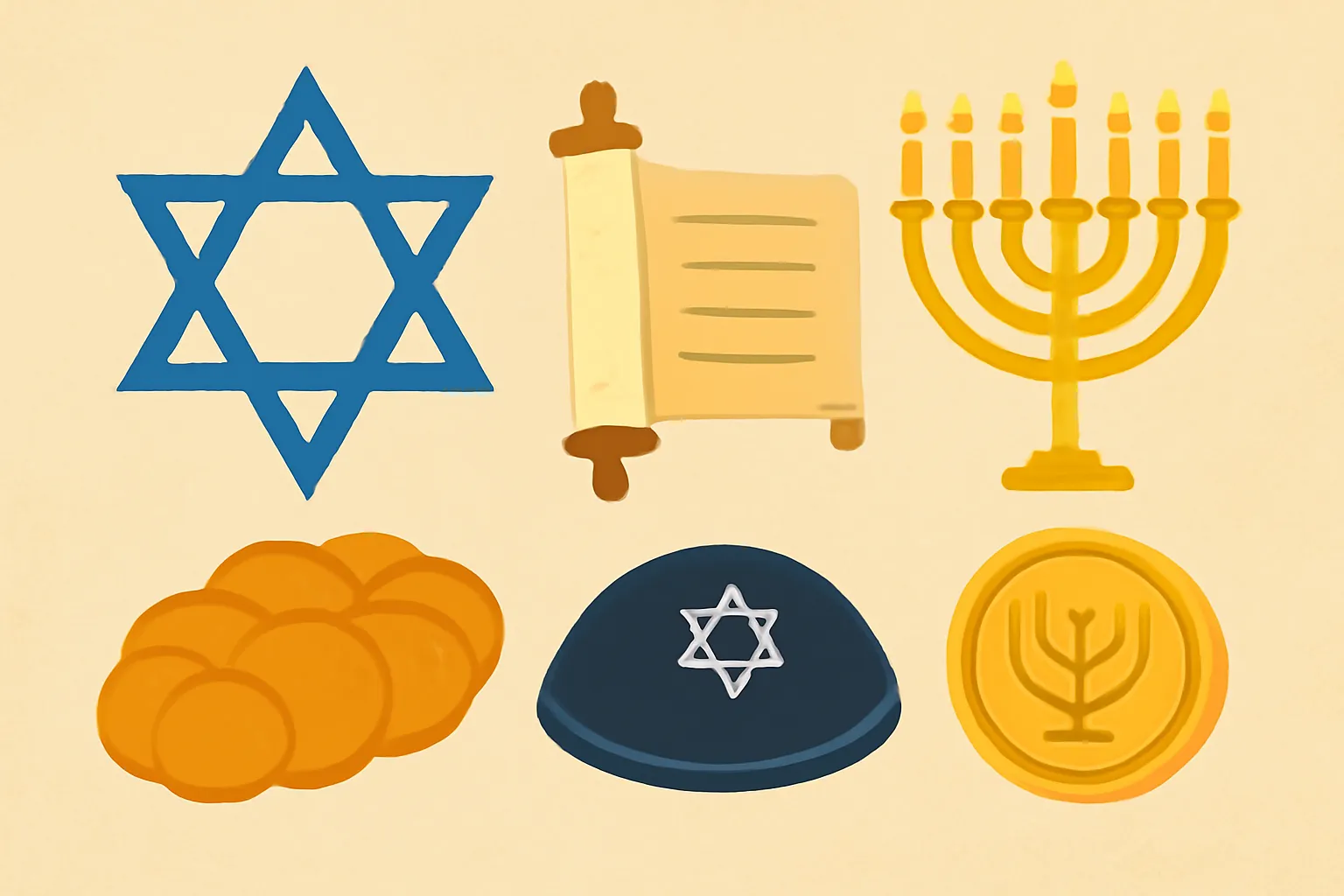
The Star of David, or Magen David, is now widely recognized as a symbol of Judaism and the State of Israel, appearing on flags, synagogues, and jewelry. However, it did not function as a universal, ancient emblem in the way some myths suggest. The six-pointed star gained popularity as a Jewish symbol in the Middle Ages and became especially prominent in modern times, notably associated with Jewish communities and Zionist iconography in the 19th and 20th centuries.
Its geometric beauty and versatility have allowed it to serve as a unifying sign for diverse Jewish traditions—from Ashkenazi to Sephardi—while not being tied to a single ritual or text. The Star of David’s journey from decorative motif to global symbol reflects the evolving self-understanding of Jewish communities across the diaspora.
Fact 6: The Kosher dietary laws weave tradition, ethics, and community life
The term kosher describes foods prepared according to Jewish dietary laws found in the Torah and elaborated in rabbinic literature. Jewish culinary practice extends beyond simply avoiding certain foods; it shapes how households eat, celebrate, and gather. Core principles include separating meat and dairy products, consuming only permitted animals, and ensuring proper slaughter and preparation.
Animals must chew the cud and have cloven hooves to be considered kosher; fish must have fins and scales; birds are prescribed by tradition, with specific species listed as permissible.
Foods are categorized as meat, dairy, or pareve (neutral). A common rule is to wait a period of time between eating meat and dairy.
Observant Jewish households harmonize these laws with modern life, finding ways to sustain both practical routines and spiritual intention. The kosher framework also fosters communal identity, market and kitchen practices, and a shared vocabulary around food.
Fact 7: Shabbat, the weekly day of rest, unfolds a rhythm of rest, family, and contemplation
The Shabbat—from Friday evening to Saturday night—constitutes a weekly anchor in Jewish life. It is observed through candle lighting, blessing over wine (the kiddush), special meals, prayer, and time set apart from weekday chores and work. The idea is to create a space for rest, community, and spiritual reflection, a moment to recalibrate priorities and honor creation.
Candle lighting times vary by location, and many families add songs, readings, or time for study as part of the evening.
Traditionally, the day includes three daily prayer services (Friday night, Saturday morning, and Saturday afternoon) in many communities, though observance varies widely.
Shabbat is a cornerstone of Jewish continuity, linking generations through ritual, language, and shared meals, and it often serves as a weekly reminder of the covenant and the dignity of rest.
Fact 8: Bar and Bat Mitzvah mark the transition to religious responsibility
A landmark moment in many Jewish communities is the Bar Mitzvah (for boys) at age 13 and the Bat Mitzvah (for girls) around age 12 or 13, depending on tradition. The term means “son/daughter of the commandment,” signaling that the individual is now responsible for observing the commandments and participating in public religious life.
In some communities, girls have celebrated Bat Mitzvah with much public ceremony in recent decades, including Torah reading and leading parts of the service.
The practice often includes study, often focused on Hebrew, Torah portion, and related commentaries, as well as family celebrations that involve the community.
Beyond a rite of passage, the Bar/Bat Mitzvah symbolizes the ongoing transfer of knowledge and tradition from one generation to the next, reinforcing the living nature of Jewish law and custom.
Fact 9: The commandment to “love your neighbor as yourself” is a central ethical cornerstone
A well-known ethical maxim in Judaism is to love your neighbor as yourself, a sentiment rooted in Leviticus 19:18. This commandment sits at the heart of Jewish moral thought and has profoundly influenced debates about social justice, individual responsibility, and communal care. It appears in rabbinic literature, where it is connected to the broader sense of human dignity and mutual responsibility.
The broader tradition expands the idea into obligations of charity (tzedakah), hospitality, and fair dealing. The ethical framework is not only about personal virtue; it is a call to shape society in ways that uplift the vulnerable and ensure justice.
Fact 10: The Ten Commandments sit at the heart of Jewish law and memory
The Ten Commandments (the Aseret HaDibrot) occupy a foundational place in Jewish self-understanding. They appear in the Torah and have been interpreted by generations of rabbis as a code of moral and civil obligations. They also anchor liturgy and the memory of the biblical covenant in Jewish consciousness.
The commandments cover worship of God, prohibitions against murder, theft, and false testimony, and the ethical treatment of one’s family and neighbors.
In study and ritual, the Ten Commandments function as a touchstone for discussions about justice, communal responsibility, and spiritual intention.
The enduring significance of these laws lies not just in their ancient text but in how communities interpret and apply them across changing circumstances and diverse cultures.
Fact 11: The Passover Seder and the Haggadah weave story, law, and ritual
Passover is observed with a special meal called the Seder, a structured sequence of readings, songs, and symbolic foods that retell the Exodus from Egypt. The Haggadah is the guide that orders the night’s rituals, questions, and reflections. The Seder is both a family memory and a public education, linking generations to a shared narrative of liberation, faith, and perseverance.
Symbolic foods on the Seder plate—matzah, bitter herbs, charoset, and others—each convey a facet of the Israelite journey from slavery to freedom.
As a ritual framework, the Seder invites questions, debate, and discussion, echoing the rabbinic tradition of using dialogue to illuminate meaning.
The Haggadah’s enduring presence across communities demonstrates Judaism’s emphasis on storytelling, memory, and ethical reflection as living practice.
Fact 12: The shofar, a ram’s horn, signals years of tradition and renewal
The shofar is a ram’s horn blown during Rosh Hashanah and at the end of Yom Kippur in some traditions. Its sound is meant to awaken conscience, remembrance, and spiritual reflection. Unlike most musical instruments, the shofar’s call is deeply ceremonial, rooted in biblical events and prophetic imagery.
The shofar is often made from a ram’s horn, though other eligible horns may be used in some communities.
In addition to Rosh Hashanah and Yom Kippur, some communities use the shofar to mark other moments of renewal or communal remembrance.
The shofar’s reverberating tones connect generations to biblical narratives while inviting personal and communal introspection—an enduring symbol of repentance, memory, and renewal.
Fact 13: The lighting and symbolism of the Menorah and the Hanukkah menorah
The classic seven-branched Menorah descended from the ancient Temple and became a powerful symbol of Jewish faith and endurance. In Hanukkah, the Hanukkah menorah (or hanukkiah) has nine branches to commemorate the miracle of oil. The difference between the two is not just aesthetic; it reflects distinct historical moments—one rooted in temple service and the other in a miracle celebrated yearly during the Festival of Lights.
The seven-branched menorah is often used as an emblem in synagogues and public spaces, symbolizing continuity with Temple-era ritual and the continuity of Jewish life.
The hanukkiah’s eight lights (plus a helper light) king the tradition of lighting each night of Hanukkah, turning celebration into a daily ritual of memory.
Together, these forms of menorah illuminate how Jewish ritual objects carry historical memory into modern practice and public identity.
Fact 14: Tzedakah (charity) and Tikkun Olam (repairing the world) shape social ethics
Jewish ethics place a strong emphasis on helping those in need through tzedakah and on pursuing broader social justice through tikkun olam, often translated as “repairing the world.” These concepts encourage personal generosity, communal responsibility, and action to improve society across economic, educational, and environmental spheres.
Charitable giving is considered a moral obligation in many communities, rather than a purely discretionary act.
In modern contexts, tikkun olam motivates advocacy, humanitarian aid, and policy work aimed at alleviating suffering and promoting justice.
The language of charity and repair reflects a historical commitment to imperfect, but ongoing, improvement—an ethic that has inspired countless individuals and organizations across the world.
Fact 15: The Talmud—a living dialogue of law, ethics, and debate
The Talmud is the central text of Rabbinic Judaism, comprising two main components: the Mishnah, a compiled code of oral law, and the Gemara, the expansive commentary and argumentation that analyzes, expands, and sometimes challenges the Mishnah. The result is a vast, living conversation about ritual practice, ethics, civil law, and theology that has shaped Jewish life for centuries.
There are separate tellings of the Talmud from Jerusalem (Yerushalmi) and from Babylon (Babylonian Talmud), with the Babylonian version becoming more influential in many communities.
Rabbis engage in dialectical reasoning, asking questions, presenting counter-arguments, and refining interpretations through debate—an intellectual tradition that has influenced other fields of study as well.
The Talmud’s dynamic style demonstrates how Jewish tradition has long valued inquiry, debate, and the refinement of practice in light of new circumstances.
Fact 16: The Hebrew alphabet is a 22-letter system with at least one key feature: cantillation and vowel marks
The Hebrew alphabet consists of 22 letters, written from right to left. Beyond consonants, Hebrew uses cantillation marks (trope) and nikkud vowel points to guide proper pronunciation and cantillation in liturgical readings and study. This combination of letters and marks encodes both linguistic and musical information that can vary across communities.
In biblical texts, vowel points help readers reconstruct correct pronunciation and chant the cantillations that accompany verses during services.
Numerical values assigned to letters (gematria) add a dimension of interpretation in which numbers illuminate textual meaning or cross-link ideas.
The Hebrew writing system is not only a tool for communication; it is a repository of tradition, liturgy, and numerical symbolism that enriches Jewish study across languages and cultures.
Fact 17: Yom Kippur and the powerful ritual of atonement
Yom Kippur, the Day of Atonement, stands as the holiest day in the Jewish year. It is observed through fasting, intensive prayer, and reflection. The liturgical centerpiece of the day is the confession of sins and supplication for forgiveness. The opening theatrical prayer, Kol Nidre, is particularly resonant for many communities as it frames the themes of repentance and renewal.
Fasting on Yom Kippur includes abstaining from food and drink for approximately 25 hours, with exceptions for health and age-related needs.
Many people spend the day in synagogue services, study, and family introspection, culminating in the close of the fast with havdalah and a sense of renewal.
Yom Kippur is a spiritual reset; it invites a communal and personal reckoning that continues to influence ethical decision-making long after the fast ends.
Fact 18: The Holocaust era is remembered as the Shoah, a catastrophe that shaped modern Jewish memory
The term Shoah—often translated as “catastrophe” or “cataclysm”—refers to the genocide of six million Jews during World War II. This period is a turning point in Jewish history, shaping collective memory, contemporary Jewish identity, and global attitudes toward human rights, memory, and vigilance against persecution.
The Holocaust profoundly influenced the establishment of the State of Israel, the organization and priorities of world Jewry, and the ways in which education about the dangers of antisemitism is conducted around the world.
In the decades after the war, survivors and communities rebuilt life, sometimes in new countries or in a newly established state, while preserving memory through museums, archives, and education.
Holocaust remembrance remains a central part of Jewish communal life, ensuring that the lessons of history inform present-day commitments to human rights and dignity.
Fact 19: The modern State of Israel emerged in 1948 after a complex history of Zionism and diplomacy
The modern political and cultural center of Jewish life, the State of Israel, declared independence on May 14, 1948, following a long history of Zionist advocacy, diaspora connection, and international diplomacy. Its founding was shaped by the 1917 Balfour Declaration, the British Mandate, the Holocaust, and postwar immigration. Since 1948, Israel has become a focal point for Jewish identity, innovation, and political debate.
Israel’s landscape includes diverse religious and secular communities, kibbutz and moshav life, and a robust science and technology sector that has a global footprint.
The country’s ongoing regional and domestic challenges intersect with issues of religion, democracy, security, and minority rights, inviting ongoing dialogue and learning.
The birth of the Israeli state is a reminder of the enduring connection many Jews feel to a homeland, a landscape of memory, language, and possibility, even as the Jewish people remain dispersed worldwide.
Fact 20: Yiddish and Ladino show the linguistic diversity of the Jewish diaspora
The Jewish world has long been multilingual. Yiddish, a fusion of German, Hebrew, Slavic languages, and others, became a common language of Ashkenazi Jews in Central and Eastern Europe. Ladino—the Judeo-Spanish language spoken by Sephardic Jews in the Mediterranean basin and beyond—contains layers of Hebrew script and unique cultural expressions.
Yiddish culture enriched theater, literature, and humor, contributing to Jewish heritage with a distinctive voice that resonated through communities large and small.
Ladino preserved Sephardic liturgy, poems, and storytelling, bridging memories of Iberian roots with experiences across the Mediterranean and the Americas.
The study of these languages reveals how Jewish identity adapts to place and time while maintaining connections to ancestral culture, ritual language, and humor.
Fact 21: Matzo, the unleavened bread, carries a powerful historical and symbolic message
Matzo is the flat, crisp bread baked quickly without leavening. It is central to Passover, recalling the haste with which the Israelites left Egypt and the absence of time for bread to rise. Matzo thus embodies memory, freedom, and simplicity, and it is used in the Seder to connect participants with their ancestors’ experience.
During Passover, chametz (leavened products) are prohibited to commemorate the unleavened bread of the Exodus.
Matzo comes in various forms—whole, cracked, or handmade—each offering a different texture and ritual nuance for families and communities.
The symbolism of matzo makes it a staple of Passover ritual but also a pedagogical tool for teaching about history, scarcity, and gratitude.
Fact 22: The kippah (yarmulke) and head coverings express piety, humility, and community norms
The small head coverings worn by many Jewish men (and sometimes by women in certain communities) are known as kippahs or yarmulkes. They symbolize reverence before God, remind wearers of accountability, and reflect communal norms about modesty and respect in sacred spaces.
Head coverings appear in various forms across communities—round, flat, velvet, knit—reflecting cultural and personal preferences as well as ritual conventions.
Some movements and individuals emphasize the kippah as a constant reminder of human responsibility, while others observe it primarily within synagogue contexts or during prayer.
The kippah’s presence in daily life shows how symbolic objects can anchor identity, spirituality, and a sense of belonging within a diverse and dynamic tradition.
Fact 23: Jews have contributed profoundly to science, literature, and the arts
Across history, individuals of Jewish heritage have made notable contributions to a wide range of disciplines. Notable scientists include Albert Einstein, whose theories reshaped physics; Jonas Salk, who developed the polio vaccine; and Rita Levi-Montalcini, a Nobel laureate whose work advanced neurobiology. In the humanities, figures such as Sigmund Freud helped shape psychology, while in literature and cinema, writers and filmmakers of Jewish origin have enriched global culture with distinctive voices and perspectives.
In the arts, Jewish composers, actors, and writers have fostered vibrant traditions—from classical music to contemporary cinema and theater.
In academia, Jewish scholars have contributed to philosophy, mathematics, computer science, and social sciences, often integrating rigorous inquiry with a sense of ethical engagement.
These examples illustrate how a community’s values—education, curiosity, and social responsibility—translate into real-world impact across generations and continents.
Fact 24: The Sabbath and holy days create a framework for community, learning, and renewal
Beyond the weekly Shabbat, Jewish life includes a calendar full of holy days that structure yearly rhythms. Holidays like Passover, Shavuot, Sukkot, Hanukkah, Purim, and others weave together ritual practice with storytelling, communal meals, and study. Each festival emphasizes different themes—freedom from oppression, gratitude for revelation at Sinai, harvest celebration, or miraculous deliverance—while maintaining a sense of continuity across communities and generations.
Festivals provide opportunities for families to gather, teach children, and reaffirm shared values through ritual objects, foods, and songs.
Many holidays include liturgical readings, special prayers, and unique customs that travelers and diasporic communities adapt to local contexts.
The calendar’s design—placing moral memory, gratitude, and hope at the center of daily life—encourages ongoing learning and an engaged, thoughtful approach to the world.
Fact 25: Jewish life today is characterized by diversity, dialogue, and resilience
In the 21st century, Jewish communities span the globe and reflect a wide spectrum of beliefs, practices, languages, and identities. From Orthodox to Reform, from secular to traditional, Jewish communities continually negotiate questions of religion, culture, and identity. This pluralism has fostered vibrant centers of learning, synagogues, museums, and organizations that engage in dialogue with other traditions, contribute to interfaith initiatives, and address contemporary issues such as social justice, technology, and climate responsibility.
Jewish life embraces both continuity with ancient practice and adaptation to modern realities, allowing for new expressions of faith and belonging.
Education, communal service, and cultural production—through film, literature, and music—continue to shape how Judaism is understood and experienced around the world.
The resilience of Jewish communities stems from a combination of memory, learning, and a sense of communal purpose that bridges ages, languages, and cultures.