Isaac, Abraham, and Jacob: A Comprehensive Guide to the Patriarchs offers a sweeping look at the three foundational figures of the biblical narrative whose lives, choices, and destinies are woven into the religious traditions of Judaism, Christianity, and Islam. The stories surrounding these men—often told in compact episodes—carry themes of faith, covenant, blessing, migration, and national founding. This guide aims to present a clear, historically anchored, and theologically meaningful portrait of each patriarch, while highlighting how their names, roles, and experiences appear in different literatures and traditions. We will consider who these figures were, how their lives unfolded, and why their legacies have shaped ethical thought, communal identity, and religious practice for millennia.
Overview of the Patriarchs: Names, Roles, and Core Themes
In the biblical narrative, the term patriarch refers to the male ancestors through whom the people of Israel are said to have descended. The triad of Abram/Abraham, Isaac (also rendered Ishaq or Yitzhak in Hebrew), and Yaakov/Jacob marks a transition from a family history of a single lineage to the formation of a nation with twelve tribes. Across sources, these figures are more than genealogical anchors; they function as models of faith in divine promises, tests of obedience, episodes of moral ambiguity, and agents through whom the divine plan for blessing the nations unfolds.
Key recurring themes include the covenant between God and humanity, the role of land and descendants in that covenant, the shaping power of messengers and dream-visions (such as the call, the visions, and the theophanies), and the complex interplay between human agency and divine sovereignty. While each patriarch’s tale has its own distinct arc—Abram’s call and relocation, Isaac’s near-sacrifice and continuation of the line, Jacob’s ascent to leadership through struggle—the common thread is the way their lives become a template for how a people enters into a relationship with the divine and with surrounding cultures.
Note on variations: in different linguistic and religious communities, these figures are known by multiple names. Abram becomes Abram in early Genesis and is renamed Abraham as the covenant deepens. Isaac’s name remains a constant trace of his parentage and blessing, but variants such as Ishaq (Arabic) and Yitzhak (Hebrew) reflect the broader religious conversation. Jacob is frequently called Yaakov or Ya’akov in Hebrew, while the Greek and Latin traditions render him as Jacob, and the later title Israel emerges as his name given by the divine encounter, later applied to the people descended from him.
Abram’s Call and Covenant: The Founding Move
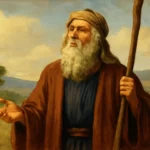
The life of the elder patriarch, known first as Abram and later as Abraham, begins in a world of shifting loyalties and uncertain loyalties among peoples. Abram is introduced as a member of a wider family migrating through Mesopotamia toward a land that God will reveal. The narrative emphasizes obedience to a divine summons rather than heroic conquest. The call is not merely a personal invitation; it carries a covenantal promise that would later shape religious imagination across centuries.
Key episodes include:
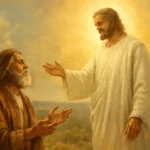
The call of Abram and the instruction to leave his homeland, his kindred, and his father’s house, to go to a land that God will show him.
The promise that his descendants would become a great nation and that all nations would be blessed through him, a formulation that frames the future in terms of a mission and a blessing, not merely a clan’s prosperity.
The change of name from Abram to Abraham, signaling a shift in status from a father of a clan to a father of nations, and the ritual of circumcision as the sign of the covenant.
The episodes surrounding Hagar and the birth of Ishmael, which highlight both human attempt to fulfill divine promises and God’s continued, patient plan for the covenant community.
Abraham’s narrative is not only about the origin of a people but also about the ethical and spiritual questions that accompany divine promises. The patriarch’s journey models trust in the face of uncertainty, a willingness to relocate, and a readiness to see beyond the immediate advantages of comfort to participate in a long-range divine purpose.
In many traditions, Abraham’s story also raises questions about leadership, hospitality, justice, and the tension between divine sovereignty and human agency. As the father of nations, he becomes a bridge figure who connects Mesopotamian heritage with the later homeland of the Canaanites, and his legacy continues to influence debates about faith and works, mercy, and righteousness.
Isaac: Continuation of the Line and the Test of Faith
Isaac, the miracle child born to Sarah in her old age, inherits the promises made to his father but receives them through a different dynamic. His name itself—often connected to the word for laughter—echoes the human response to divine grace. The narrative surrounding Isaac emphasizes continuity: he is the chosen heir who carries forward the covenant, a living bridge between the earlier patriarch and the generation that will father the twelve tribes through Jacob.
Despite advanced age for both parents, God’s promise to make Abraham’s descendants as numerous as the stars becomes a living reality in the birth of Isaac. The episode is not merely about biology; it signals a divine intention to sustain the lineage through which the blessing will proceed to all nations. Isaac is a symbol of divine faithfulness, and the narrative underscores that the continuation of the covenant depends on fidelity, not solely on human merit.
The Test at Moriah: The Sacrificial Request and Divine Provision
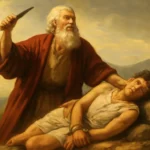
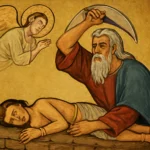
One of the central episodes in Isaac’s story is the dramatic test on Mount Moriah, sometimes described as the binding of Isaac. In this scene, the elder Abraham is asked to offer his son as a sacrifice, yet at the last moment, God provides a substitute and stops the act. This moment is often read as a test of the patriarch’s trust and a foreshadowing of later archetypes in biblical and theological literature. For the audience, the event underscores the primacy of God’s will over human intention and demonstrates God’s grace and provision in times of crisis.
Rebekah, the Heir of the Promise, and Isaac’s Blessing
Isaac’s marriage to Rebekah (also spelled Rebecca) becomes the crucial link in ensuring that the line continues through their twin sons, Esau and Jacob. The narrative emphasizes the role of parental blessing and the way birthright and blessing play into the drama of inheritance. Isaac’s apparent preference for his elder son, Esau, stands in tension with Rebekah’s and Jacob’s more cunning plan to secure the blessing for the younger son. This episode sets the stage for Jacob’s ascent and reveals how divine purposes can unfold through human strategies—sometimes imperfect, yet still directed by God toward fulfillment of the promise.
In discussions across religious traditions, Isaac’s figure is honored as the guardian of the lineage and the keeper of the legacy that makes possible the later formation of the Israelite people. The life of Yitzhak (the Hebrew form) is a bridge between Abraham’s expansive promise and Jacob’s more intricate family drama, culminating in a narrative of continuity, resilience, and faithfulness that remains central to Judeo-Christian thought.
Jacob: The Trickster, the Striver, and the Father of the Twelve
Jacob’s story is often described as a tapestry of cunning, divine encounter, personal growth, and national formation. Known for his ascent from a younger twin who grabs the heel of his brother to become a patriarch who receives the blessing and, eventually, the leadership of a burgeoning nation, Yaakov’s journey encapsulates both human frailty and divine purpose. His life is a turning point: from a single family line to a multigenerational, geographically expansive story that culminates in the creation of the twelve tribes of Israel.
Jacob’s early years are marked by a cunning plan to secure the birthright and the paternal blessing intended for Esau. The narrative presents both the moral complexity of these choices and the sense that God’s purposes persist despite human missteps. The blessing that Jacob obtains is not merely a personal gain; it signals the continuation of the divine covenant through a line that will become a nation with a distinctive calling and identity.
The Laban Episode: Family, Labor, and Leadership
Jacob’s years with his uncle Laban—settled across distant lands—are a study in family dynamics, labor, and faith. He marries Leah and Rachel, two sisters who bring different gifts and challenges into his life. The sons born to Jacob and his wives, along with their concubines, form the twelve tribes that will eventually populate the land of Canaan and define the political and religious life of the Israelite people. The narrative emphasizes how Jacob’s personal growth—from a shrewd younger son to a leader who navigates complex family politics—parallels the maturation of a people under God’s guidance.
Bethel, the Ladder, and the Name Israel
One of the most famous episodes in Jacob’s history is the dream at Bethel, often described as Jacob’s ladder reaching to heaven. In this moment, God reiterates the promises given to Abraham and Isaac, and Jacob receives the divine assurance that the land will belong to his descendants. The name change—Yaakov to Israel—marks a turning point: the man who wrestled with destiny, blessed by God, becomes the ancestral paradigm for a people whose national and spiritual identity will be defined by perseverance, faith, and the ongoing encounter with the divine. The term Israel thereby becomes both a personal name and a collective designation for the nation that emerges from this lineage.
Joseph, the Exceptional Son: The Final Phase of the Patriarchal Narrative
Though not one of the original three patriarchs, Joseph’s life is often included in the broader patrimony because his story completes the circle of the family’s trajectory. Sold into slavery by his brothers, he rises to become a powerful administrator in Egypt, ultimately ensuring the family’s survival during famine. Joseph’s patience, his ability to interpret dreams, and his moral choices in the face of temptation contribute to the overarching theme of divine sovereignty guiding human history toward the fulfillment of a covenantal plan. Jacob’s blessing of Joseph and his sons cements the role of this generation as the bridge between the ancestral promises and their eventual realization in a national future for Israel.
In the Islamic tradition, Yaqub (Jacob) is also honored as a prophet, emphasizing monotheism, righteousness, and steadfast prayer. Across traditions, the Jacob cycle is read as a meditation on family dynamics under divine oversight, the persistence of faith across generations, and the shaping of a people whose identity is inseparably tied to divine instruction and covenantal hope.
To understand the patriarchs holistically, it helps to lay out a broad timeline and identify recurring motifs that recur in their stories. The following outlines offer a structured way to reflect on the patriarchs’ lives and their impact on religious imagination and moral discourse.
Key Milestones in the Life of the Three Patriarchs
Abraham/Abraam: Called to leave his homeland; the covenant established with the sign of circumcision; the call to father a great nation with blessings to all nations; entry into the land of Canaan; the birth of Isaac as the child of the promise; the episodes with Hagar and Ishmael as part of the broader plan.
Isaac/Ishaq: The miracle child whose birth confirms the persistence of the covenant; the near-sacrifice on Mount Moriah; marriage to Rebekah, securing the line through Jacob; blessing instruction and inter-family dynamics that set the stage for the next generation.
Jacob/Yaakov: Acquisition of the birthright and blessing through cunning and perseverance; marriage to Leah and Rachel, producing the twelve tribes; the divine encounter at Bethel and the renaming as Israel; leadership development and eventual provision for the family amid famine in Egypt.
Core Concepts and How They Intersect
Covenant and promises: A recurring thread binding all three patriarchs. The divine promise to bless, multiply, and give land anchors the stories and motivates behavior across generations.
Blessing and birthright: The distinctions between blessing, birthright, and the ethical gravity of how they are obtained reveal both personal ambition and divine sovereignty at work.
Land and nationhood: The land of Canaan is not merely a geographic goal; it is the stage on which God’s promises unfold, shaping a people’s religious life and national identity.
Faith under pressure: Each patriarch faces trials that test allegiance to the divine word; their responses illuminate virtues such as trust, honesty, humility, and perseverance.
Intercultural relations: The narratives frequently depict interactions with other peoples and cultures, inviting readers to reflect on hospitality, justice, and the ethics of foreignness.
The Patriarchs in Biblical and Interfaith Perspectives
Across Judaism, Christianity, and Islam, the three patriarchs are revered in slightly different ways, but their stories are centrally linked to the idea that God engages humanity through a series of chosen individuals who carry forward a divine mission. In Judaism, these figures are anchors for the ancestral story of Israel and the people’s covenantal identity. In Christianity, the patriarchs are often read in light of Christ’s prophetic and messianic role—see how the promises to Abraham are interpreted as pointing toward universal blessing in Jesus. In Islam, Ibrahim (Abraham) and his son Ishaq (Isaac) are remembered as faithful prophets who advocated submission to the one God and as exemplars of monotheism before the emergence of a later, more formal religious law. While the theological emphases differ, the shared thread is a reverence for a faith lineage that binds generations through faithfulness, moral courage, and trust in God’s purposes.
Readers may encounter different transliterations of names across sacred texts and commentaries. Regardless of the spelling, the essential narratives retain their impact: a family line chosen to participate in a divine project that has wide-reaching implications for belief, culture, and ethics. The study of these elders is not merely antiquarian; it invites contemporary readers to reflect on faith, responsibility, and the ways in which one’s choices contribute to a larger, ongoing story.
For educators and students, the patriarchal narratives offer fertile ground for cross-disciplinary study: literary analysis of ancient storytelling, theological reflection on faith and ethics, historical inquiry into ancient Near Eastern societies, and comparative religion discussions about how different faith traditions understand prophecy, covenant, and communal identity.
Conclusion: The Enduring Relevance of the Patriarchs
Across generations, the stories of Abram/Abraham, Isaac, and Yaakov/Jacob (and the broader Jacobine legacy) illustrate how a people can emerge from humble beginnings into a global narrative that continues to shape spiritual practice, moral reflection, and cultural memory. Their lives remind readers that a single lineage can become a shared tradition through faith, fidelity, and perseverance in the face of uncertainty. Whether approached as sacred history, theological allegory, or cultural memory, the patriarchs remain a rich resource for contemplating the meaning of faithfulness, the complexity of human choices, and the ways in which divine promises unfold over time.
In teaching contexts, presenting the trio with attention to their distinct arcs—Abram’s departure and covenant, Isaac’s continuity and test, and Jacob’s transformation into Israel—helps students grasp how the biblical narrative constructs a collective memory that informs contemporary ethics and spiritual aspiration. The patriarchs’ stories are not merely ancient records; they are living sources that continue to invite readers to consider the responsibilities that come with being part of a covenant community and the hope that sustains believers through trials, confusion, and change.