Judaism has a long and nuanced tradition of thinking about what happens after death. Across centuries, geographies, and movements, Jewish thinkers have offered a spectrum of ideas—from concrete doctrines to flexible, ethically oriented interpretations. This article surveys the major concepts, the key debates, and the diverse perspectives within contemporary Judaism. It aims to provide clear definitions, historical context, and practical reflections on how beliefs about the afterlife relate to living a meaningful Jewish life today. Throughout, important terms will be highlighted to help readers recognize recurring ideas and how they connect.
Core concepts in classical Jewish thought about the afterlife
In classical Jewish literature, a few central terms recur, though they are not always used identically in every era or denomination. The most common anchors are Olam HaBa, Gan Eden, Gehinnom, Techiyat HaMetim (the resurrection of the dead), and the neshama (the soul). Below is a walking guide to what these fingerprints on Jewish thought usually signify, plus how they relate to the broader questions of fate, judgment, and reward.
Olam HaBa (the World to Come)
The phrase Olam HaBa literally means “the World to Come.” In rabbinic literature it can refer to two related ideas, sometimes overlapping and sometimes distinct in nuance:
A future, perfected era in which God’s justice and peace prevail for the righteous and the nations of the world.
The realm of afterlife experience for the soul after death, in which reward or reward-like spiritual states are perceived by the living through tradition and interpretation.
In many classical sources, Olam HaBa is tied to moral conduct in this life and to the eschatological hope for repair and harmony at the end of days. In later philosophical and mystical streams, it becomes a more concretely defined state or era that one enters after physical death, or sometimes a realization of closeness to God that transcends corporeal boundaries.
Gan Eden and Gehinnom
Two other widely discussed places in afterlife discourse are Gan Eden (the Garden of Eden) and Gehinnom (Gehenna).
Gan Eden is commonly portrayed as a place or state of spiritual reward for the righteous—a provisional home for the soul where spiritual clarity, joy, and closeness to God are experienced.
Gehinnom is often described as a place of purification or temporary judgment. In many traditional sources, Gehenna is not a place of eternal damnation but a site where the soul undergoes a process of refinement. The duration is believed to be limited, typically described as a year or less in many rabbinic texts, with some exceptions or alternative teachings depending on the source.
These concepts are not universally interpreted in the same way across all Jewish communities. Some modern Reform or Reconstructionist writers may treat Gan Eden and Gehinnom as symbolic rather than literal destinations, focusing instead on ethical consequences, memory, and the ongoing impact of a life well-lived.
Techiyat HaMetim (Resurrection of the Dead)
“Resurrection of the Dead” is Techiyat HaMetim. This doctrine features prominently in traditional rabbinic sources and has a central place in the medieval and modern theological debates about the afterlife.
In classical rabbinic literature, resurrection is often linked to divine justice and the eventual restoration of the righteous to life in a redeemed world, sometimes connected with the coming of the Messiah.
In some strands of medieval philosophy and mysticism, resurrection is a literal future event that will occur at the end of days; in others, it is explained as a metaphor for spiritual revival or the enduring memory of the righteous.
Not all Jewish movements hold a literal commitment to physical resurrection. Among contemporary Reform and some secular-influenced groups, Techiyat HaMetim may be understood as a symbol of hope, continuity, or a metaphor for moral renewal rather than a physical event.
The soul: Neshama and related concepts
A central subject in Jewish discourse about the afterlife is the neshama (the soul). In many sources, the neshama continues to exist after death in a non-corporeal, elevated form, reflecting the ongoing relationship between the person and the divine.
Some descriptions emphasize the neshama as the eternal spark that seeks closeness to God, even as the body returns to dust.
In other descriptions, the afterlife experience is framed as reunion with ancestors, rebirth into a fuller spiritual state, or integration into the cosmic order of creation.
Throughout, the neshama is associated with moral and intellectual faculties, memory, conscience, and a longing for repair (tikkun) in the world to come. Some later mystical frameworks speak of multiple levels or facets of the soul, such as the Nefesh, Ruach, and Neshama, each with its own role in the afterlife narrative. In contemporary usage, “soul” often serves as a bridge to discuss experiences of meaning, memory, and legacy beyond death.
Sheol: a biblical foundation and historical development
In the Hebrew Bible, the term Sheol appears as an underworld or grave-like domain—often depicted as a place of silence and shadow rather than explicit reward or punishment. Later Jewish thinkers expanded, revised, or reinterpreted this image in light of evolving theology:
Sheol is not uniformly conceived as a hell or as a universal prison; rather, it is an ancient and evolving concept that sometimes functions as a shadowy repository for all humans after death.
As later teachings developed, the focus shifted toward more differentiated places and states—reward, purification, and eventual reunion with God or with universal justice.
In modern discussions, Sheol’s earlier prominence is often recast as a historical stage in the development of Jewish thought about life after death, rather than a fixed doctrine. Many Jewish thinkers frame it as a background that helps explain why later ideas about the afterlife emerged with renewed clarity and complexity.
Historical developments and the diversity of perspectives
Judaism did not crystallize a single, uniform doctrine of the afterlife. Instead, it developed through scriptural interpretation, rabbinic debates, philosophical synthesis, and mystical revelation. These developments gave rise to a spectrum of perspectives that continue to influence Jewish thought today. The following overview highlights how afterlife concepts have shifted or diversified across time and denomination.
Rabbinic Judaism: Talmudic foundations and interpretive flexibility
In the period of the Talmud and the early rabbis, debates about the afterlife often center on resurrection, reward after death, and the consequences of moral action. Key themes include:
The possibility of a physical resurrection in the Messianic era or at the end of days for the righteous.
Recognition that moral life in this world has consequences that extend beyond death, shaping the ethical horizon of Jewish law (halakha) and practice.
Gan Eden and Gehinnom as ways to discuss spiritual outcomes without offering a single universal scheme.
In this era, Jewish thinkers emphasized ethical living, study, and devotion as pathways to a favorable encounter with the divine in the world to come. The result is a flexible framework in which people can hold different beliefs about afterlife according to tradition, personal conscience, and community practice.
Mystical and Kabbalistic streams
Kabbalah and Lurianic Kabbalah, in particular, add a rich metaphysical layer to afterlife thinking. Concepts such as the steps of the soul after death, reincorporation into God’s light, and the cosmic repair of shattered vessels (tikkun) refine the idea that life in this world has cosmic relevance beyond mere earthly actions.
In some Kabbalistic models, the soul traverses different realms after death before reunion with the divine source, with the possibility of reincarnation (gilgul) as a mechanism for rectification.
These teachings emphasize the sanctity of each action, including study of Torah, prayer, and acts of loving-kindness, as contributing to the repair of the universe.
For many, these teachings illuminate how the soul’s journey might unfold in stages, while for others they are viewed as symbolic representations of spiritual processes rather than literal geographies.
Medieval philosophical voices
Medieval Jewish philosophers, including Maimonides (Rambam) and Hasdai Crescas, engaged with Greek philosophical ideas about the soul, immortality, and the nature of God. Their contributions often sought to harmonize rational philosophy with Jewish revelation and tradition. Key points include:
Maimonides emphasizes the immortality of the rational soul and aligns a hope for future life with ethical perfection, obedience to God, and the love of wisdom.
Different medieval thinkers offered varying degrees of emphasis on physical resurrection, the reward structure after death, and the nature of the afterlife, reflecting broader philosophical debates of their time.
Modern movements: Reform, Conservative, Orthodox, and Reconstructionist voices
In modern times, Jewish communities have continued to reinterpret and reframe afterlife ideas in response to contemporary life, science, and ethics. The four major modern movements each offer distinct emphases:
Orthodox Judaism generally sustains traditional belief in Techiyat HaMetim, the resurrection, and a form of Olam HaBa that includes the righteous entering into a responsive, meaningful relationship with God. The specifics about Gan Eden and Gehinnom are discussed within classic sources, but there is room for diverse interpretations about duration and mechanism of purification.
Conservative Judaism affirms the core idea of a future life and the possibility of resurrection, while often allowing for a broader, more nuanced range of interpretations about the details. Emphasis is placed on ethical living in the present and on the evolving nature of Jewish belief in dialogue with modern scholarship.
Reform Judaism tends to treat afterlife discussions as symbolic or metaphoric, focusing on ethical continuity, memory, and the enduring impact of one’s life on the community. Some Reform communities may prefer language like Olam HaBa as the ongoing communal and spiritual legacy rather than a literal place or moment after death.
Reconstructionist Judaism emphasizes language about the afterlife as a human-centered, experiential, and ethical horizon. It often reframes traditional ideas as evolving with the culture and invites gradual reinterpretation of concepts like soul, resurrection, and the world to come in light of contemporary Jewish experience.
How belief about the afterlife shapes Jewish ethics and everyday life
Beliefs about the afterlife in Judaism are not merely speculative—they influence moral choices, rituals, and communal memory. Here are some practical ways in which these beliefs shape living Jewishly.
Ethical conduct here and now: The sense that actions in this life have consequences in the world to come motivates ethical behavior, justice, charity (tzedakah), and acts of loving-kindness (gemilut chasadim).
Ritual life and memory: Mourning practices, remembrance, and communal prayers connect the living with the dead and with the idea that life continues in memory and spiritual influence, even when its physical presence ends.
Hope and responsibility: The idea of a future restoration, whether in a literal resurrection or a symbolic renewal of the world, sustains hope during suffering and encourages responsible stewardship of the earth and society.
Community and intergenerational dialogue: Debates about the afterlife foster intergenerational conversation, enabling communities to articulate beliefs while remaining open to new interpretations and scientific understandings of life, death, and memory.
Death, mourning, and the afterlife in Jewish practice
Beliefs about the afterlife intertwine with death and mourning rituals. While the specific rituals vary among communities, there are common practices that reveal how Jewish life engages with mortality and the possibility of an afterlife.
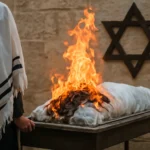
Chevra Kadisha (the holy burial society) ensures dignified burial, honoring the dead and observing ritual purity in the handling of the body.
Kaddish is recited by mourners to honor the deceased and to express faith in God amid loss; its liturgical role is often connected to the hope of divine justice and the continuity of memory beyond death.
Sephardic and Ashkenazic customs include variations in mourning stages (aninut, shiva, shloshim, and the first year in some traditions), reflecting a shared human experience of grief while underscoring communal support and remembrance.
Rituals of remembrance, such as yahrzeit (anniversary of death) commemorations and saying prayers for the dead, echo the sense that the afterlife is bound to the living through memory, moral obligation, and ongoing relationship with the divine.
Across movements, there is a shared conviction that death is not the end of memory or ethical responsibility—indeed, the living can enact the memory of the dead through acts of charity, education, and justice. This perspective offers a way to honor predecessors while continuing to participate in the work of repairing the world.
Eschatology in Jewish thought: the Messianic era and the World to Come
Jewish eschatology addresses both the long arc of history and the intimate horizon of individual life. Two interrelated strands—messianic expectation and the world to come—shape how communities imagine the future after death and the end of days.
Messiah (Mashiach) and the era of universal peace and justice. In many streams, the coming of the Messiah will inaugurate a transformative era in which techiyat ha-metim becomes a lived reality for the faithful, and the nations acknowledge the God of Israel.
Olam HaBa as ongoing hope. For some, the world to come is a future state of righteousness, wisdom, and closeness to God that emerges with the repair of creation. For others, it is a condition of the soul that transcends current physical life.
Different streams interpret these outlooks with varying confidence about their factual detail. Some Orthodox thinkers insist on the historical reliability of resurrection and a distinct afterlife; some Conservative voices keep the possibility open; Reform and Reconstructionist thinkers may emphasize ethical continuity, memory, and the universality of moral purpose without insisting on a single universal eschatology. This diversity reflects Judaism’s broader commitment to questioning, debate, and evolving understanding in the service of faith and justice.
Common misconceptions and clarifications
Because discussions of the afterlife are rich and contested, several misconceptions persist. Here are some clarifications to help distinguish tradition from stereotype:
Dread of eternal punishment is not universal in Jewish thought. While some texts discuss punishments in the afterlife, many sources emphasize purification, correction, and a limited duration of Gehenna, rather than eternal damnation.
Rejection of the afterlife is not universal. Most traditional streams maintain some form of life after death or spiritual continuity, even if the details differ.
Literal geography is not always the point. Many currents treat Gan Eden, Gehinnom, and Shol as symbolic landscapes representing states of soul, moral consequence, or divine proximity, rather than fixed physical places.
Rationalist and mystical approaches can both be authentic within Judaism. Philosophy, theology, and mysticism offer complementary ways to think about life, death, and meaning without always agreeing on every detail.
Glossary: quick reference to key terms
This glossary provides a quick reference to central terms encountered in discussions of Judaism and the afterlife. Terms are bolded in the article when used in context; here they are defined succinctly.
Olam HaBa — the World to Come, a future era or state of reward and divine closeness.
Gan Eden — the Garden of Eden, a realm or state of reward for the righteous.
Gehinnom — Gehenna, a place of purification or temporary judgment for the soul.
Techiyat HaMetim — Resurrection of the Dead, the belief in future bodily resurrection.
Neshama — the soul, a central spiritual life-force in Jewish thought.
Nefesh, Ruach — other facets of the soul found in various mystical and philosophical texts.
Mashiach — the Messiah, the anointed leader whose coming is associated with eschatological renewal.
Shol/Sheol — the ancient Hebrew concept of the underworld or the realm of the dead, foundational in biblical literature.
Variations by community: how different Jewish movements think about the afterlife
The following summaries illustrate how major Jewish movements approach afterlife questions today. They reflect a spectrum rather than rigid boundaries, acknowledging both shared heritage and distinct emphases.
Orthodox Judaism typically upholds traditional beliefs in Techiyat HaMetim and a distinct Olam HaBa. They often view Gehinnom as a temporary purification process and emphasize the continuity of the soul. The exact mechanisms and durations may vary, but the core idea of a meaningful future state remains.
Conservative Judaism accepts classic concepts such as the possibility of resurrection and a continuing sense of the afterlife, but it allows greater interpretive flexibility. The emphasis is on fidelity to tradition coupled with openness to modern scholarship and ethical living as the core of Jewish purpose.
Reform Judaism tends to interpret the afterlife through a symbolic lens, focusing on how living a life aligned with Jewish values—justice, compassion, learning—transforms the present and shapes communal memory. For many Reform communities, Olam HaBa is a philosophical or ethical horizon rather than a fixed literal state.
Reconstructionist Judaism emphasizes evolving interpretations. Discussions about the afterlife are framed as human experiences of meaning and legacy, with room to understand Gan Eden and Gehinnom as metaphors for moral consequences and spiritual growth.
Philosophical and ethical implications: how belief about the afterlife informs living
Beliefs about the afterlife influence the way people think about justice, memory, and responsibility. Several core implications commonly surface across Jewish philosophy and practice:
Justice and memory: The sense that life continues in memory and in moral memory presses communities to advocate for the vulnerable, preserve histories, and correct injustices in the present world.
Temperance and humility: The mystery surrounding the afterlife fosters humility about human knowledge, alongside gratitude for life and the opportunity to do good in the world.
Hope amid suffering: Eschatological hope, whether literal or symbolic, provides resilience during hardship, encouraging communal care, study, and acts of charity as ongoing acts of faith.
Ethical pedagogy: The afterlife conversation serves as a pedagogical tool, teaching children and adults about responsibility, the consequences of choices, and the importance of community solidarity.
The afterlife and Jewish messianism: a nuanced relationship
Messianic expectations have always intersected with ideas about the afterlife. For some, the arrival of the Messiah signals a tangible transformation in which the dead are raised and the world is perfected. For others, the Messiah represents a symbolic turning point—a moral awakening and social reform that yields longevity of memory and spiritual renewal. In practice, Jewish communities often hold a spectrum of beliefs about how the end of days intersects with individual fate.
Two recurring motifs help many readers navigate these waters:
The coming of the Messiah as a catalyst for renewed justice and peace, which supports a tangible sense of Olam HaBa as a future reality or as a lived ethical horizon.
The resurrection as a component of divine justice, optionally understood as a physical event, a spiritual reunion, or a metaphor for enduring memory and the vitality of Torah study.
Different communities articulate these motifs with varying emphasis, reflecting historical experiences, theological concerns, and the ongoing conversation between faith and reason.
How to approach the topic today: guidance for readers and learners
For readers seeking to understand Judaism’s afterlife beliefs, here are practical guidelines to approach the topic with sensitivity and clarity:
Recognize the diversity within Judaism. Do not assume a single, monolithic view about life after death—there are many legitimate interpretations across traditions.
Distinguish between literal and symbolic readings. Some communities describe a physical afterlife; others emphasize moral legacy, memory, or spiritual continuity.
Consider historical development. The concept of the afterlife has evolved from biblical times through rabbinic debates to modern philosophical and theological reflections.
Engage with primary sources where possible. The Talmud, midrash, medieval philosophical writings, and mysticism offer a spectrum of perspectives that illuminate the richness of Jewish thought.
Respect personal faith and communal practice. Individuals may hold unique beliefs that are meaningful within the context of their tradition and family history.
Conclusion: a living tradition of exploration, hope, and ethical living
Judaism’s beliefs about the afterlife prove to be less a single doctrine and more a robust conversation—one that spans scripture, law, philosophy, and mysticism. From Olam HaBa to Techiyat HaMetim, from the neshama that endures to the ritual practices that accompany death and mourning, Jewish thought offers a multilayered framework for understanding life, death, and the enduring legacy we leave behind. At its best, this tradition invites continuous exploration, invites humility in the face of mystery, and anchors hope in a shared obligation to repair the world through justice, learning, and kindness. Whether interpreted literally, symbolically, or through a blend of both, these ideas continually shape Jewish identity and practice in the modern world.
Ultimately, the Jewish conversation about the afterlife is about meaning. It asks how a life well-lived resonates beyond the grave, how memory preserves virtue, and how communities nurture justice and compassion for future generations. In that sense, Judaism’s plural approach to the afterlife is not just a set of beliefs about what comes after death; it is a practical, ethical theology that guides daily life, preserves memory, and sustains hope for a world that is increasingly just, thoughtful, and humane.