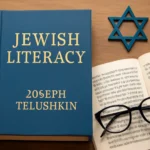
Jewish Literacy by Rabbi Joseph Telushkin: Key Teachings Explained
Jewish Literacy is a landmark guide written by Rabbi Joseph Telushkin that aims to demystify the breadth of Jewish life for readers who want to understand not just rituals, but the ideas, histories, and ethical centers that shape Jewish civilization. This article, drawing on the book’s structure and themes, explains the key teachings in a way that highlights the practical, historical, and moral stakes of being literate in Jewish culture. While Telushkin’s work covers a vast terrain, the central claim is clear: knowledge of Jewish life strengthens personal identity, community cohesion, and civic responsibility.
A short map of Jewish literacy: what the book covers
Telushkin’s project is to offer a comprehensive primer that helps readers recognize the most important people, events, and ideas that recur in Jewish life. The book is not a casual miscellany; it is a deliberate pedagogy designed to build a usable, durable literacy. The central aim is not only to know facts but to connect those facts to everyday decisions, ethical choices, and communal participation.
In broad strokes, the core contents can be grouped into several interconnected domains:
Biblical foundations and the shaping of Jewish identity through the Torah, Prophets, and Writings.
Liturgy, rituals, and prayer as living practice that encodes values and memory.
History and memory—the arc of Jewish experience across exile, persecution, and revival, including the modern state of Israel.
Ethics and values—torched by teachings on tzedakah (charity), chesed (kindness), and integrity in daily life.
Law and philosophy—how halakha (Jewish law) and rabbinic debate shape choices in ordinary and extraordinary circumstances.
Culture and language—the roles of Hebrew, Yiddish, and secular Jewish learning in sustaining a living tradition.
Telushkin emphasizes that Jewish literacy is not an antique catalog; it is a toolkit for contemporary life. The reader is invited to see how the historical memory embedded in Jewish texts informs ethical leadership, family life, and communal engagement today.
Core pillars in Telushkin’s framework
To understand Telushkin’s approach, it helps to identify the four or five major pillars that recur across chapters and essays. Each pillar is a lens through which to read Jewish history, practice, and thought.
1) The Biblical and Rabbinic bedrock
At the foundation is a sustained engagement with the Tanakh (the Hebrew Bible) and the Talmudic and Rabbinic literature. Telushkin shows how biblical narratives—from creation to exile, from covenant to prophets—offer organizing myths and moral vocabulary for later generations. He also explains how rabbinic interpretation expands and adapts these texts for new contexts. The takeaway for readers is clear: understanding the textual roots of Jewish life helps interpret present-day questions through a long historical conversation.
2) Prayer, ritual, and the rhythm of time
One of the book’s central insights is that rituals structure memory and moral attention. The Jewish calendar—with its festivals, fasts, and Sabbaths—never simply marks the year; it educates the heart. Telushkin treats prayer not as a private hobby but as a form of communal learning and ethical formation. The act of moving through liturgy, hearing ancient words, and participating in communal worship creates a living link to generations past.
For Telushkin, historical literacy—knowing key people, eras, and turning points—keeps Jewish memory alive and relevant. It also grounds a sense of community responsibility: to remember, to learn, and to pass on what matters. The narration of Jewish history—from biblical exodus to modern Zionism and diaspora communities—frames questions about belonging, justice, and resilience.
4) Ethics in everyday life
The ethics section of Jewish literacy is not abstract. It translates age-old commandments and sages’ admonitions into contemporary behavior. Telushkin repeatedly returns to practical virtues such as honesty, generosity, humility, and courageous moral speech. The practical claim is that knowing Jewish ethics improves decision-making in business, politics, family life, and public service.
5) Law, debate, and intellectual humility
Telushkin treats halakha (Jewish law) not as a rigid system but as a dynamic field of debate that invites interpretation, disagreement, and personal accountability. A literate Jew recognizes how legal reasoning, ethical prioritization, and community norms interact, often requiring difficult choices. The key teaching is that engaged study and dialogue deepen moral insight rather than close minds.
Key teachings explained: themes with practical resonance
Throughout the book, Telushkin frames each domain with distinctive takeaways. Here are some of the most impactful themes, explained with an eye toward practical application.
Knowledge as empowerment
Jewish literacy is the kind of empowerment that enables informed participation in synagogue life, Jewish education, and public discourse. Knowing core stories, laws, and rituals makes it possible to explain Jewish perspectives to others, defend Jewish values in public debates, and engage with non-Jewish neighbors in meaningful ways.
The ethics of memory
Memory is presented as a moral responsibility, not a passive recollection. Remembering the lessons of past persecutions, the experiences of diasporas, and the achievements of Jewish communities is a call to compassionate action and solidarity with the vulnerable in the present.
Prayer as a curriculum for life
Telushkin’s reading of prayer is not about ritualism alone. He shows how prayer shapes values—teaching gratitude, humility, patience, and the discipline to speak truth with sensitivity. Prayer becomes a daily practice that aligns one’s personal impulses with community ideals.
Ethical living in public spaces
Jewish literacy extends into civic life. The book argues that a well-instructed Jew will engage in justice and charity, respond to injustice, and participate in the public square with a sense of responsibility rooted in tradition. This is where the private world of the home merges with the public responsibilities of society.
Dialectics of law and mercy
Telushkin presents a nuanced view of Jewish law: it is not merely about rules, but about a rhythmic tension between letter and spirit, constraint and compassion. The practical implication is that educated readers learn to balance exacting standards with humane exceptions when needed, guided by communal norms and ethical considerations.
Practical pathways: how to cultivate Jewish literacy
In addition to describing what Jewish literacy is, Telushkin offers a practical blueprint for learning. If you are starting from scratch or seeking to deepen an existing base, consider these strategies inspired by the book’s logic.
Set a learning goal: Choose a domain to begin with—Bible, prayers, holidays, or Jewish ethics—and commit to a structured plan for several months.
Create a reading plan: Use a mix of primary texts, summaries, and accessible commentaries. The aim is to encounter both canonical passages and modern analyses that illuminate them.
Build a glossary: Maintain a living list of key terms (Tanakh, Talmud, Halakhah, Midrash, Rosh Hashanah, Yom Kippur, Shabbat, Tzedakah, Chesed, etc.) with concise explanations and cross-references.
Discuss and debate: Join study groups or online communities to talk through ideas, ask questions, and hear diverse Jewish perspectives. Dialogue is central to deep learning in Jewish literacy.
Connect text to life: For each major topic, write a brief reflection on how the material influences your decisions at home, work, or in service of others.
Engage in practice: Attend services, observe holidays, and participate in community learning. Practice converts theory into lived experience, another hallmark of Telushkin’s approach.
Use cross-disciplinary links: Connect Jewish ideas with world history, ethics, philosophy, and literature. The broader your web of connections, the more durable your literacy becomes.
Common misconceptions about Jewish literacy—and the reality
As with any ambitious project, there are misunderstandings that can hinder a reader’s engagement with Telushkin’s book. Here are some frequent misreadings and clarifications.
Misconception: Jewish literacy is only for Jews. Reality: While the book is written for Jews, its insights are frequently valuable to non-Jews who want to understand Jewish culture, ethics, and history, and who wish to engage with Jewish communities respectfully.
Misconception: It’s a static collection of facts. Reality: Telushkin treats knowledge as a living tradition that evolves with time, debates, and changing contexts.
Misconception: It’s just about holidays and prayers. Reality: The study expands into philosophy, law, history, and social ethics, linking ritual practice to moral action.
Misconception: It is a dense scholarly work with little practical relevance. Reality: The core promise is practical literacy—an ability to engage, explain, and participate in Jewish life and in public life with clarity and integrity.
Telushkin’s voice: pedagogy and accessibility
One notable feature across Jewish Literacy is Telushkin’s clear, engaging prose and his ability to summarize complex traditions without turning them into oversimplifications. The author often uses historical anecdotes, person-centered stories, and concrete examples to illuminate abstract ideas. This pedagogical approach makes the material approachable for lay readers, students, and leaders who want usable knowledge rather than mere trivia.
Equally important is Telushkin’s respect for plurality within Jewish life. He repeatedly demonstrates how different streams—Orthodox, Conservative, Reform, and secular Jewish thinkers—offer meaningful contributions to the conversation. The key lesson is that diversity within unity strengthens Jewish literacy by encouraging critical thinking, open inquiry, and respectful dialogue.
Jewish literacy in the modern world: impact and relevance
In an era of rapid cultural change, Jewish literacy serves as a compass for navigating identity, faith, and social responsibility. Telushkin argues that a literate Jew is better equipped to:
Participate with integrity in civic debates about justice, charity, and human rights.
Explain Jewish perspectives to others in a compelling, informed way.
Make ethical choices grounded in a long historical and communal memory.
Support and sustain Jewish education and communal institutions that preserve tradition while encouraging innovation.
Furthermore, literacy about Jewish life fosters interfaith and cross-cultural understanding. When non-Jewish readers engage with Jewish literacy concepts like tzedakah, sabbath, and Talmudic debate, they gain fresh lenses for evaluating their own communities and ethical commitments.
Education and community life: Telushkin’s vision for teaching
Telushkin is not only diagnosing a need for literacy; he is also proposing practical methods for teaching it. In community settings, schools, synagogues, and adult education programs, the aims include:
Creating an inventory of essential topics that every Jew should know, and then building courses around them.
Using storytelling and biography to contextualize facts within human experience—figures like prophets, sages, and modern Jewish leaders become anchors for learning.
Encouraging lifelong learning as an ethical obligation, not a one-off project, so that literacy becomes part of ongoing spiritual growth.
In this sense, Jewish literacy is a living program for personal formation and community leadership, rather than a mere catalog of data points. Telushkin’s method invites teachers and learners to build a culture of inquiry, curiosity, and responsibility.
Common questions readers ask about the book
Readers often want quick clarifications about what the book accomplishes and how to approach it. Here are several frequent inquiries with concise answers that reflect the book’s spirit.
What is the ultimate goal of Jewish literacy? To enable informed participation in Jewish life and to cultivate ethical thinking that transcends mere knowledge.
Who should read Jewish Literacy? Anyone curious about Jewish life—adults seeking cultural literacy, students exploring Jewish history, or Jewish families wanting to connect with their heritage.
Does the book advocate a specific denomination? No. It surveys a broad spectrum of Jewish thought and practice, emphasizing the value of learning across traditions.
Can the book be used in a classroom? Yes. Its structure, with accessible sections and discussion prompts, lends itself to study groups and curricula aimed at both novices and more advanced readers.
Personal takeaways: how to internalize the teachings of Jewish Literacy
Readers who engage with Telushkin’s work often report a few lasting personal shifts. Themes that recur in readers’ reflections include:
Curiosity as discipline: A commitment to continual learning about Jewish life, not just a one-time survey.
Ethical steadiness: A framework for approaching dilemmas with a balance of law, mercy, and community responsibility.
Historic consciousness: A sense that the past informs the present, and memory becomes a resource for moral action.
Communication skills: The ability to articulate Jewish perspectives in a clear, respectful way to diverse audiences.
These takeaways help integrate the core teachings of Jewish Literacy into daily living, study plans, and community leadership roles.
If you want to translate Telushkin’s key teachings into a practical study routine, here is a suggested eight-week plan inspired by the book’s architecture:
Week 1–2: Focus on the biblical foundations. Read selected portions of the Torah and a concise guide to the Prophets. Note how stories illustrate moral themes.
Week 3–4: Explore prayer and holidays. Learn the core prayers, the structure of the Jewish year, and how festivals encode memory and values.
Week 5: Delve into history and memory. Survey major epochs: biblical exodus, exile, diaspora, Enlightenment, and modern Zionism. Reflect on how memory informs responsibility.
Week 6: Study ethics and law. Examine key concepts (tzedakah, chesed, reparations, justice) and how rabbinic discourse approaches moral questions.
Week 7: Engage with culture and language. Learn basic Hebrew terms and motifs that recur in liturgy and literature.
Week 8: Synthesize by applying lessons to your life. Write a personal ethics statement or engage in a service project that embodies Jewish values.
Throughout this plan, keep a glossary, note questions for discussion, and seek opportunities to discuss with a mentor or study group. The aim is not to finish quickly but to deepen understanding and to build the habit of lifelong learning.
Conclusion: the enduring value of Jewish literacy
Jewish Literacy by Rabbi Joseph Telushkin remains a seminal resource for anyone seeking to understand the architecture of Jewish life. By outlining the essential domains—biblical roots, ritual practice, memory and history, ethical living, and legal debate—the book offers a comprehensive map for readers to navigate Judaism with confidence and curiosity. The central message is not simply to accumulate facts, but to cultivate a way of thinking and living that honors tradition while engaging the modern world with integrity. When readers grasp these key teachings, they gain more than information—they gain a spiritual and intellectual toolkit for contributing meaningfully to family, community, and society at large.
In the final analysis, the value of Telushkin’s project lies in fostering responsible literacy: literacy that empowers, dignifies, and invites ongoing dialogue. Whether you approach the book as a curious newcomer or as a seasoned participant in Jewish life, the path to understanding it offers is a path to deeper engagement with one’s own values, memory, and communal responsibilities. This long-form guide to the book’s themes is intended to help readers think with clarity about the important ideas Telushkin champions and to translate those ideas into concrete action in the world around them.