The question “Did Jacob wrestle God or an angel?” has fired the imagination of readers for centuries. In Genesis 32, a night-long struggle unfolds as Jacob encounters a mysterious being who refuses to release him until he receives a blessing. The encounter ends with a dramatic name change and a new identity for the patriarch: Israel, the one who has wrestled with God. This article offers a deep dive into the passage, exploring the textual details, a range of interpretive possibilities, and the broader theological implications. It also surveys how Jewish and Christian traditions have read the scene, and what lessons modern readers can draw from Jacob’s night of wrestling.
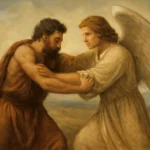
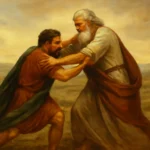
In the late chapters of Genesis, Jacob is on a tense journey back toward the land promised to his grandfather Abraham. After sending his family across the ford of the Jabbok, Jacob remains alone. It is then that a figure appears—described in the text as “a man” (אִישׁ) or, in some readings, a divine or heavenly messenger—and they engage in a fierce, at times almost martial, struggle that lasts until daybreak. The confrontation is deeply physical: the other party touches Jacob’s hip, dislocating it, yet Jacob refuses to release him until he receives a blessing. The exchange culminates in a renaming that signals a transformation in Jacob’s destiny: Jacob’s name becomes Israel, because he has battled with God and with humans and has prevailed. The night ends with Jacob naming the place Peniel, claiming, “I have seen God face to face, and yet my life is preserved.”
Two immediate features of the scene loom large for interpretation: first, the language of wrestling is highly concrete and human—Jacob is shown in a protracted, physical struggle. second, the blessing and the naming signal a theologically charged exchange: a life-altering encounter with the divine that shapes the identity of a family, and eventually a nation. These two ingredients—the wrestling motif and the blessing/renaming motif—generate a wide range of readings about who the other party in the struggle represents.
The narrative invites the reader to ask not only who is this figure? but also what kind of encounter is this? Is the event a mere face-to-face meeting with a divine being, or is it a complex mix of human agency, angelic mediation, and divine self-disclosure? And if we hear echoes of God’s voice or presence in the scene, what does that imply about the nature of revelation in early Israelite religion?
H2: Who Is the Wrestler? The Possible Identities
The text itself preserves a degree of ambiguity about the identity of the figure with whom Jacob wrestles. This has led scholars and interpreters to propose several models, each with its own strengths and tensions. The main options are:
The Wrestler Is a Divine Being or Theophany — A direct manifestation of God or a divine agent in visible or tangible form. In this reading, the encounter is a theophany, a revealing of God to human beings in a way that can be grasped within the limits of human experience. Proponents often cite the language around the blessing, the ultimate transformation of Jacob’s name, and the claim that Jacob has “seen God face to face” as cues that the encounter includes the direct presence of God. The phrase in Genesis 32:30 about seeing God “face to face” is central to this interpretation, though the precise Hebrew grammar and nuance are debated.
The Wrestler Is an Angel (or Angel of the Lord) — In Jewish, Christian, and some intertestamental traditions, a heavenly messenger or singular divine agent is the agent of the wrestling. Angels frequently appear in human form in the opening chapters of Genesis, and the pattern of an encounter, struggle, and blessing can be seen as a scripted heavenly visitation. Hosea 12:4–5 later echoes the idea of wrestling with an angel, which some readers see as a scriptural precedent for the Jacob narrative’s interpretive frame.
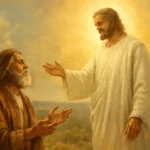
A Christophany (A Pre-Incarnate Christ) — Among some Christian commentators, the encounter is read as a pre-incarnate appearance of Christ—the Son of God manifesting in human form prior to the Incarnation. This reading treats the “man” as a visible manifestation of the divine Word or the eternal Son in human form, especially when paired with phrases such as “you have wrestled with God” and “you have prevailed.”
A Theological Personification or Symbolic Encounter — Some readers emphasize the symbolic or theological dimensions of the event. The wrestling can be understood as a dramatic way to portray Jacob’s lifelong struggle with God, with his own past, with fears, and with the path of blessing that requires a decisive renaming and a new identity. In this view, the “wrestler” is less about a single individual and more about the Israelite experience of covenant relationship with the divine.
Each reading has interpretive consequences for how we understand the rest of Genesis, the nature of divine revelation, and the way Israel’s self-understanding develops. Importantly, many readers hold that the text deliberately keeps the identity of the wrestler flexible in order to foreground the theological message rather than to pin down a single literal identity. The ambiguity itself becomes a theological instrument.
H2: Textual and Linguistic Cues: A Closer Look
A careful look at the Hebrew text illuminates why the scene has provoked such wide-ranging interpretations. Several linguistic and literary features stand out:
Designation as “מָה” (an is), not a title — The wrestling partner is labeled in the text as simply an Ish, a man. This label conveys a tangible, physical presence rather than an abstract, purely spiritual being, which leaves room for a range of possibilities (human, angelic, or divine).
The “wrestling” verb — The verb used for the struggle suggests a prolonged, forceful, and personal contest rather than a dream or a vision. The struggle is depicted as intimate and stubborn on both sides, emphasizing the stubbornness of Jacob and the determination of the other party to obtain a blessing or to test Jacob’s fidelity.
The hip injury — The moment when the other party touches Jacob’s hip and dislocates it is emblematic. It is not a symbolic blessing alone; it is a physical encounter that leaves a lasting marker in Jacob’s body. The resulting limp becomes a visible sign of the encounter and a constant reminder of the divine-human encounter shaping his life.
The blessing and the name change — The blessing is not a generic wish for prosperity; it is a transformative pronouncement: a new name, a recalibrated identity, and a new way of relating to both God and people. The name Israel can be explained as “he struggles with God” or “God prevails,” depending on how one parses the root consonants and the associated semantic range.
Peniel as a locus of divine-human encounter — The place where the encounter occurs is named Peniel, traditionally tied to the idea of God’s presence breaking into human space in a way that shapes the identity of the nation that will emerge from Jacob’s lineage.
From a linguistic perspective, the Genesis text invites readers to weigh the interplay between the human and the divine. The diction is deliberately concrete, which is part of why readers from both ancient and modern communities are drawn to this scene as a pivotal moment in the emergence of Israel’s relationship with God.
H2: Thematic Threads and Theological Implications
Several major themes emerge from this text, which have shaped both Jewish and Christian thought in different ways. Understanding these threads helps illuminate why there is not a single, straightforward answer to “did Jacob wrestle with God or with an angel?” but rather a spectrum of meaningful interpretations.
Grace through struggle — The blessing comes not as a reward for a flawless performance, but through a tense encounter that exposes Jacob’s vulnerabilities, fears, and perseverance. The blessing is a gift that arises from earnest pursuit and struggle, not from mere passive reception.
Transformation through naming — The renaming from Jacob to Israel signifies more than a personal change; it signals a covenantal identity that shapes a people’s self-understanding and destiny. Names carry freight: they encode vocation, relationship to God, and communal memory.
Divine presence in mysterious forms — Whether the wrestle is with God or an angel, the scene communicates a conviction that the divine manifests in ways that can be encountered, tested, and remembered. The boundary between the human and the divine is navigated, but not erased.
Ambiguity as a theological catalyst — The uncertainty about the wrestler’s identity invites readers to reflect on the nature of revelation itself. If God can appear as a theophany or through an angel, how should believers interpret subsequent divine appearances and promises?
Ethical and relational dimensions — The encounter is not only about theological assertions; it also reorients Jacob’s approach to relationships—his honesty, his dependence on divine blessing, and his willingness to be vulnerable before the divine presence.
In Jewish exegesis, the scene is often read through the lens of covenantal fidelity and the endurance of faith in the face of fear. In Christian interpretation, the episode can function as a typology for struggle with God that yields blessing, and, in some readings, as a prefiguration of Christological truth realized in the person of Jesus. Each tradition highlights different facets of the same ancient text, illustrating how a single scene can generate plural meanings across centuries.
Many Jewish commentators read the wrestler as a heavenly being or as a divine manifestation, without insisting on a specific identification. The emphasis tends to fall on the personal transformation of Jacob and the strengthening of the covenant people through an encounter that leaves a lasting mark—literally and figuratively. The focus is less on pinning down who wrestled and more on the ethical and spiritual implications of wrestling with God and with life’s challenges.
The Early Christian Perspective
In patristic and medieval Christian tradition, a number of voices have suggested that the wrestling scene foreshadows the encounter with Christ in the flesh. Some theologians argue that the call to “bless me” and the subsequent blessing reflect a divine prerogative to reveal grace through struggle. The idea of a Christophany—Jesus Christ appearing in human form before the Incarnation—appears most explicitly in certain Christian readings that emphasize continuity with the New Testament’s claims about the Word becoming flesh. For these interpreters, the Jacob narrative contributes to a broader conviction about the pre-existence and revelation of the divine in human history.
The Prophetic Echoes
Hosea 12:4–5 later mirrors the Jacob narrative by speaking of Jacob’s “wrestling with the angel” and of being changed by the encounter. This intertextual echo has been used to argue for a more consistent biblical pattern: God’s people engage in a struggle in faith, receive a blessing, and emerge with a new identity rooted in the relationship with God. The Hosea passage also helps bridge Jewish and Christian interpretive traditions by identifying wresting with a divine agent as a decisive moment in the Hebrew Bible’s broader theological arc.
The Linguistic and Theological Critics
Some modern scholars caution against turning the scene into a simple “God vs. angel” debate. They argue that the most important takeaway is the transformation of Jacob and the covenantal dynamics it signals. Others stress the literary function of the episode: a dramatic stratagem to illustrate the intimate, ongoing relationship between God and the patriarch, and to foreground how blessing and identity are inseparably linked to struggle, perseverance, and encounter with the divine.
H2: Practical Reflections for Readers Today
Beyond the academic or theological debates, the Jacob-peniel narrative offers several practical themes for contemporary readers who wrestle with faith, doubt, and personal transformation.
Wrestling as a form of prayer — The night vigil and struggle can be read as a powerful metaphor for prayer that is not neat or conventional. If you are grappling with a difficult question or a painful circumstance, Jacob’s persistence can encourage sustained engagement rather than quick resolution.
Blessing as invitation, not merit — The blessing comes through a divine-human exchange rather than through a simple checklist of virtues. This challenges readers to seek blessing with honesty, humility, and perseverance rather than viewing it as a reward only for flawless performance.
Identity shaped by encounter — The renaming to Israel indicates that identity is formed through divine encounter and covenantal calling. Readers today can reflect on how their own identities are shaped by moments of encounter with the sacred, and how those moments reframe their purposes and loyalties.
Injury as sign, not final defeat — Jacob’s limp is a perpetual reminder of the encounter. Physical or emotional wounds can become signposts of the ongoing relationship with God, rather than proof of abandonment or defeat.
Hope in ambiguous encounters — In a world of ambiguous, contested, or opaque divine action, the text models a posture of hopeful trust, not certainty. The blessing at the end is a gracious gift that remains meaningful regardless of how precisely one identifies the wrestled figure.
For readers who want to apply these insights, a practical practice might be a structured time of prayer or reflective storytelling in which you identify a moment of struggle, articulate the blessing you seek, and consider how your life might be renewed by a loyal encounter with the divine. The Jacob narrative reminds us that real transformation often comes after a period of wrestling that includes doubt, fear, and vulnerability.
H2: Why This Question Remains Open and Why It Matters
The declaration “you have wrestled with God and with humans and have prevailed” captures a paradox at the heart of faith: true transformation often arises through struggle, not through avoidance or denial. The question “did Jacob wrestle God or an angel?” continues to matter because it presses readers to wrestle with how God discloses the divine self to human beings. If the wrestled figure is purely a created messenger, the text emphasizes the importance of obedience to revelation mediated through sent agents. If the wrestled figure is God, the passage underlines the intimate proximity between the divine and the human, even in a moment of contest and vulnerability. If the scene is a Christophany, then it situates Christ within the oldest layers of the biblical narrative as an active participant in Israel’s history even before the Gospel accounts. Each of these paths invites readers to explore not only the identity of the wrestler but the broader pattern of revelation, blessing, and covenant life that shapes biblical faith.
Ultimately, the passage resists a single, simple label. The strongest takeaway may be this: the encounter itself is the catalyst for transformation, and its lasting effects—Jacob’s new name, his familial blessings, and the unfolding history of the people Israel—demonstrate that the divine often arrives in ways that demand faith, perseverance, and trust in God’s gracious purposes.
H2: Final Reflections: A Rich, Multi-Layered Narrative
In sum, Did Jacob wrestle God or an angel? is best answered not by a single dogmatic verdict, but by engaging the text’s layers of meaning. The scene is a dramatic convergence of human effort and divine initiative, a moment in which a man grapples with a mystery that is at once terrifying and life-affirming. Whether one leans toward a view that sees the wrestler as a divine presence, an angelic messenger, or a Christophany, the outcome remains a powerful statement about the nature of faith: struggle can yield blessing; weakness can become strength; and a name—Israel—can carry a nation’s destiny forward into history.
For readers who want to explore this further, consider meditating on the following questions: How do you respond to life’s trials when you feel the struggle is with God, with others, or with yourself? What do you ask for in blessing, and how does divine grace reframe your sense of identity and purpose? And how might the Peniel moment—your own moment of encounter—shape the way you live, forgive, and hope for a future shaped by covenant faithfulness?
As with many ancient texts, Genesis 32 invites ongoing conversation. The enduring interest in the question “did Jacob wrestle God or an angel?” testifies to Scripture’s ability to pose a question that generates faith, invites interpretation, and ultimately points readers toward the larger story of God’s faithfulness to a people and their world.