Difference Between Bat Mitzvah and Bar Mitzvah: Meaning, Rituals, and Key Differences
In Jewish life, the rites of passage surrounding adulthood are marked by two related, but distinct, ceremonies: the bat mitzvah and the bar mitzvah. Although both events celebrate a young person reaching a new level of religious responsibility, they are not identical. The difference between bat mitzvah and bar mitzvah hinges on language, gender, timing, ritual practice, and the norms of the community or denomination in which the occasion takes place. This article explores the meaning, rituals, and key contrasts between these two milestones, offering a broad, informative look that acknowledges diversity across traditions while clarifying common elements shared by many Jewish communities.
Meaning and Etymology: What Do the Terms Signify?
The roots of the terms are straightforward in Hebrew, yet their implications have evolved over centuries. The bar mitzvah is formed from bar, meaning «son,» and mitzvah, meaning «commandment» or «mitzvah.» The phrase literally translates to «son of the commandment.» The bat mitzvah uses bat, meaning «daughter,» with the same second element, yielding «daughter of the commandment.»
In classical rabbinic law, the concept of a responsible adult who is obligated in the commandments appears differently for males and females. For many centuries, the male act of becoming obligated in the commandments was publicly recognized through the bar mitzvah ceremony, while the status of a girl (bat mitzvah) did not carry the same formal, liturgical acknowledgment in all communities. Over time, diverse Jewish movements reinterpreted and expanded the practice to include girls as full participants in sacred obligations. Today, the meaning of the two terms in practice often emphasizes the same spiritual and communal milestones, while honoring the gendered naming that reflects traditional language.
Historical Development: How the Practices Emerged
The emergence of the bar mitzvah as a recognized milestone has deep historical roots. Historically, the concept of a boy becoming responsible for observing the commandments is tied to the age when a male child would be held accountable for religious duties in the community. This public recognition grew more formal in medieval and early modern Jewish life, with varying customs by region and sect.
The bat mitzvah, by contrast, became a more visible and widely practiced ceremony in the 20th century as Jewish education for girls expanded and communities embraced gender-inclusive approaches to ritual life. In many Reform and Conservative settings, bat mitzvah celebrations became routine, featuring a Torah portion, a haftarah reading, and leadership roles in services. In Orthodox communities, bat mitzvah observance has developed differently, often focusing on a substantial study of Jewish texts, speaking parts, and community acknowledgment, while remaining within the framework of traditional gendered practice. This historical arc is central to understanding the difference between bat mitzvah and bar mitzvah in different communities.
A key practical distinction in many settings is the age at which the celebration occurs. The classic ages are:
Bar mitzvah: typically at age 13.
Bat mitzvah: typically at age 12 for girls, though this can vary by community.
In some Reform, Reconstructionist, and many Conservative communities, the bat mitzvah age rhythm can be flexible or aligned with school curricula, sometimes emphasizing a parallel schedule to the bar mitzvah for girls at 12 or 13. In other settings, especially within certain Orthodox congregations, the bat mitzvah may occur closer to the 12th birthday or shortly after, depending on educational readiness and rabbinic guidance.
The timing is not merely a calendar fact. It reflects a shift from a private, family-centered rite to a public ritual that involves the entire community. The sense of readiness—material knowledge about the Hebrew text, the ability to participate in leading parts of the service, and the maturity to accept new religious duties—often guides the exact date.
Rituals and Public Observances: What Happens During the Ceremony?
The core idea in both bat mitzvah and bar mitzvah is that a child has attained a level of religious maturity sufficient to participate in the commandments in a public, communal setting. While the exact ritual elements vary by tradition, there are several common features:
Torah portion reading or presentation: The person may read a portion of the Torah aloud, often at a Sabbath or holiday service.
Aliyah to the Torah: The newly recognized adult is traditionally called up for an aliyah, a formal blessing over the Torah. In some communities, this is a central symbolic act, while in others it may be one of several honors the celebrant receives.
Haftarah recitation: In many settings, the celebrant reads a haftarah—an additional reading from the Prophets—either as part of the service or in a consolidated program with Torah portions.
Dvar Torah or speech: The individual often delivers a short talk or essay interpreting the weekly portion or offering reflections on Jewish values, history, or personal responsibility.
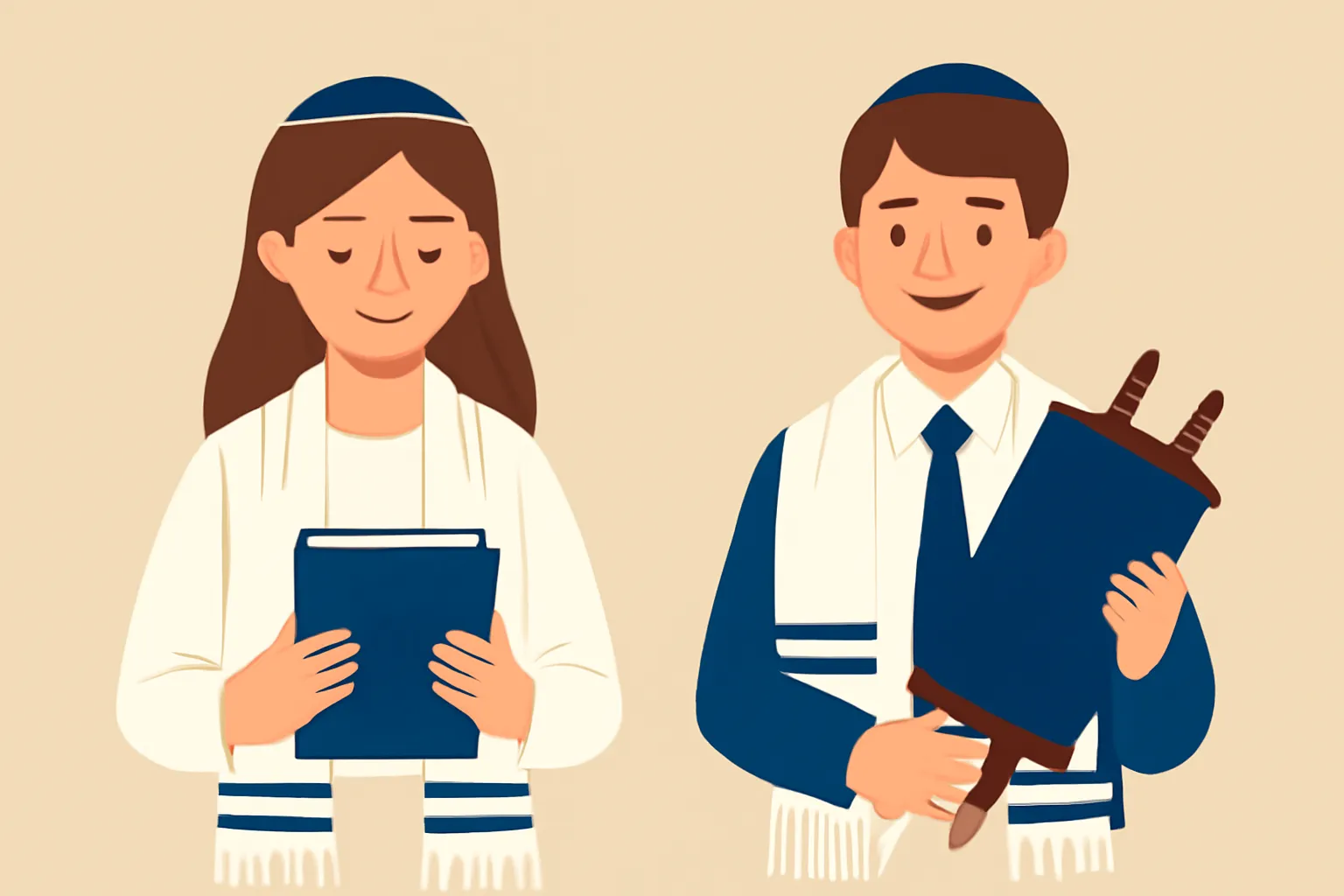
Tallit and tefillin: In many communities, the celebrant wears a tallit (prayer shawl) for the first time in the service or marks the occasion with the tallit. The wearing of tefillin by girls varies: it is customary in many Orthodox settings for boys to begin tefillin on the day of their bar mitzvah, while girls may not wear tefillin in Orthodox services; in Conservative and Reform communities, tefillin for girls is widely accepted and practiced.
Leadership roles: The celebrant often takes on leadership tasks, such as leading certain prayers, reading blessings, or guiding portions of the service, depending on the denomination’s norms.
The practical details of what the ceremony includes differ significantly. In a bar mitzvah within Orthodox communities, the emphasis is often on fulfilling traditional obligations and demonstrating mastery of liturgy and text, including the ability to chant the Torah portion with cantillation and lead prayers. In many Reform or Conservative communities, the bat mitzvah experience may be broader, incorporating more inclusive practices such as equal participation in Torah and haftarah, women’s aliyot, and a broader array of service leadership roles.
Key Ritual Variations by Denomination
Orthodox communities tend to emphasize adherence to traditional gender roles and ritual boundaries. The bar mitzvah is a standard in many such communities, while the bat mitzvah is practiced with varying levels of public ritual; some Orthodox synagogues celebrate with education and a speech, but with more limited ritual like Torah reading for girls than for boys.
Conservative and Reform communities often present a more egalitarian approach. Bat mitzvahs commonly include a Torah portion, haftarah, dvar Torah, and public leadership roles similar to those of bar mitzvahs for boys, reflecting a principle of equal religious adulthood for all genders.
Reconstructionist and other liberal movements typically emphasize inclusive participation, with the bat mitzvah coordinating a full service, and the bar mitzvah and bat mitzvah alike sharing similar ceremonial structures, emphasizing community, learning, and elevation to adult responsibility.
Rituals, Preparation, and Education: How Do Families Prepare?
Preparing for either milestone typically involves a period of study and practice, with the length and focus of preparation shaped by community expectations and the individual’s background. In all cases, the process is as important as the ceremony itself, serving as a bridge between childhood religious education and adult religious participation.
Text study: The preparatory period usually includes studying Hebrew, learning the Torah portion or haftarah chant, and understanding the blessings accompanying the readings.
Service participation: The student practices leading prayers, blessings, and possibly portions of the service under the supervision of a rabbi or cantor.
Speech preparation: A dvar Torah or speech is often crafted, reflecting the student’s insights and personal connection to Jewish values.
Community involvement: Family and community members are typically involved in rehearsals, tutoring sessions, and the logistical planning of the ceremony and reception.
The preparation period helps to normalize the idea that the young person is taking on adult religious responsibilities. Some families also emphasize charitable giving or community service as part of the maturation process, linking the concept of mitzvot to practical, real-world actions.
Social and Religious Significance: What Do These Milestones Mean?
The difference between bat mitzvah and bar mitzvah is not only linguistic or ritual; it also touches on the social and spiritual roles of young Jews within their communities. For many families, the event marks a formal inclusion of the child into the religious community’s covenant, with responsibilities and privileges that come with adulthood. It is a time for families to reflect on Jewish identity, education, and ongoing participation in Jewish communal life.
In some communities, the bat mitzvah is a sign of broader changes in gender equality within Jewish worship. In others, it is integrated with traditional expectations. In all cases, the emphasis is on nurturing a sustained relationship with Jewish learning, ritual life, and ethical obligations.
Differences by Denomination: A Closer Look
To better understand the practical divergences, it helps to summarize how major denominations typically approach the two milestones.
Orthodox Practices
The bar mitzvah celebration is a public recognition of a boy reaching the age of mitzvot, often featuring a Torah reading and the associated liturgical honors.
The bat mitzvah in many Orthodox communities emphasizes learning and personal development, with a focus on guidance, speech, and community acknowledgment, while full Torah reading by the bat mitzvah may not be customary in all congregations.
Tallit use may be common for both genders in some Orthodox areas, but tefillin is traditionally for men at the bar mitzvah and less common for girls, depending on local custom and rabbinic guidance.
Conservative Practices
Both bar mitzvah and bat mitzvah are typically celebrated with a Torah portion and a haftarah, including reading, cantillation, and public participation.
Many Conservative synagogues publicly recognize the bat mitzvah with equal ceremonial weight, including aliyot and leadership roles in the service.
Girls may wear tefillin in some synagogues, and the bat mitzvah may read from Torah with an aliyah and haftarah in a manner similar to the bar mitzvah.
Reform and Reconstructionist Practices
The bat mitzvah is a standard and fully integrated rite of adulthood, often including a Torah portion, haftarah, dvar Torah, and broad leadership roles within a egalitarian service.
Both rites are framed within a liberal framework that emphasizes inclusive practice, gender equality, and modern interpretations of Jewish law and ethics.
Key Differences at a Glance: A Quick Comparison
For readers seeking a concise summary, consider the following high-level distinctions that often appear in discussions about the difference between bat mitzvah and bar mitzvah:
Gender: Bar mitzvah refers to a boy; bat mitzvah refers to a girl. This gendered naming reflects traditional Hebrew terms.
Age: Bar mitzvah is usually at age 13; bat mitzvah is usually at age 12, though variations exist by community and movement.
Ritual emphasis: The bar mitzvah has historically been a strong liturgical and Torah-reading milestone; the bat mitzvah, especially in liberal movements, often matches the bar mitzvah in form and ritual weight, while in some Orthodox communities it features education and public acknowledgment with varying ritual boundaries.
Denominational practice: Denominational norms strongly influence how each milestone is celebrated, including the use of tallit, tefillin, aliyot, and the scope of leadership roles for the celebrant.
There are several frequently asked questions and misperceptions regarding these milestones. Here are a few to consider:
Myth: Bat mitzvah is a lesser event than bar mitzvah. Clarification: The significance and form of the ceremony vary by tradition, but in many communities, the bat mitzvah is equally meaningful, especially where gender equality is central to worship.
Myth: Only boys read from the Torah. Clarification: In many liberal communities, girls also read from the Torah or have equivalent liturgical responsibilities during their bat mitzvah.
Myth: Bat mitzvah and bar mitzvah always occur at the same age. Clarification: Ages can differ by community; educational readiness and rabbinic guidance also influence timing.
Practical Guidance for Families and Communities
If you are planning or preparing for a bat mitzvah or bar mitzvah, consider these practical suggestions to ensure a meaningful experience:
Consult your rabbi or teacher: Get clear guidance on what is expected in your congregation, including ritual participation, Hebrew literacy requirements, and ceremonial roles.
Set realistic learning goals: Create a study plan that fits the student’s schedule and learning pace, with milestones for Hebrew proficiency, cantillation, and service participation.
Involve the whole family: Ritual preparation is a family affair—engage parents, siblings, and extended family in rehearsals, planning, and the celebration.
Consider the broader meaning: Use the milestone to reflect on Jewish values, community responsibility, and the student’s growing sense of identity within the Jewish people.
Regardless of denomination, the core objective is to celebrate a turning point: the entry into a more active role in Jewish learning and worship, and a commitment to continue growing in knowledge, practice, and communal life.
Glossary of Key Terms
To help readers navigate discussions about the difference between bat mitzvah and bar mitzvah, here is a brief glossary of terms commonly used in these contexts:
Mitzvah: A commandment or good deed in Jewish law.
Aliyah: A blessing recited when being called up to the Torah; gaining the honor of reading is a central ritual for many celebrants.
Torah portion: A specific section of the Five Books of Moses read during the weekly service.
Haftarah: A reading from the Prophets following the Torah portion.
Dvar Torah: A short speech or essay interpreting a portion of the Torah or related themes.
Tallit: A prayer shawl worn during morning services, traditionally by adult men in Orthodox practice, and by many women in Conservative, Reform, and other liberal communities.
Tefillin: Small leather boxes with scriptural passages tied to the arm and head, worn by adult men in traditional Orthodox practice; usage by women varies by community and movement.
Conclusion: Embracing a Shared Moment of Growth
The differences between bat mitzvah and bar mitzvah reflect a rich tapestry of Jewish practice, history, and interpretation. While the language and ritual specifics may vary—from the extent of Torah reading to the presence of tefillin or the inclusion of an aliyah—the underlying purpose remains consistent: to recognize a young person’s entry into greater participation in Jewish life, study, and service. Whether you are exploring the topic from a strictly traditional bar mitzvah vs bat mitzvah lens or from a modern, egalitarian perspective, the milestones share a common aim: to mark a moment of responsibility, learning, and community belonging that can inspire lifelong engagement with Jewish tradition.
By examining the difference between bat mitzvah and bar mitzvah across ages, rituals, and denominations, readers can appreciate how Jewish communities honor growth while honoring enduring values such as study, prayer, charity, and communal responsibility. The conversation about these milestones continues to evolve, reflecting broader conversations within Jewish life about gender, education, and the nature of religious adulthood.