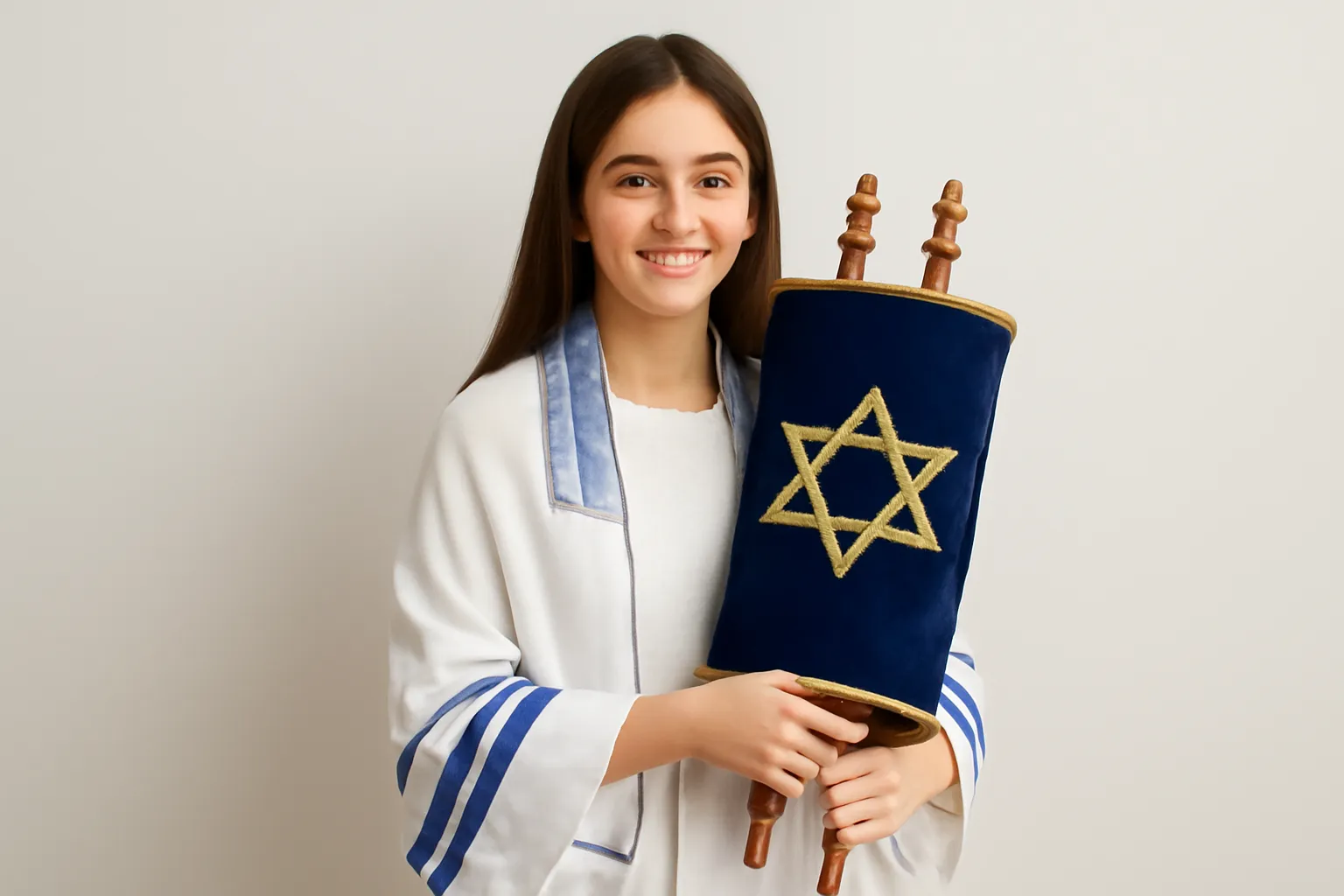
Understanding the milestone: what does the question “age for bat mitzvah” really ask?
The question “How old does a girl have to be to become a bat mitzvah?” sits at the intersection of ritual tradition, religious law, and community practice. In broad terms, the standard age for a bat mitzvah is twelve years old, measured according to the Hebrew calendar. This age marks when a girl becomes formally responsible for many of the commandments and parts of Jewish worship that involve congregational participation. However, as with many Jewish practices, the details can vary by community, movement, and interpretation.
In this article we will explore not only the core age, but also how that age is calculated, how it is observed in different Jewish traditions, and what families can expect as they prepare for a bat mitzvah. We’ll cover questions about timing, ceremony content, and the broader meaning of this rite of passage. By the end, you’ll have a clearer sense of the age for bat mitzvah and the many ways communities celebrate it.
The standard age: twelve years old
The conventional answer to how old a girl must be for a bat mitzvah is twelve years old. In most communities, a girl who has reached her twelfth birthday in the Hebrew calendar becomes eligible to participate fully in certain mitzvot and is recognized as a bat mitzvah in community life. This is often framed as:
Age 12 as the moment at which a girl becomes obligated in many positive commandments in Jewish law.
The designation bat mitzvah signaling a transition from childhood to a more active role in synagogue worship and Jewish learning.
It is important to note that the exact ritual and level of public participation can vary. In some communities, the formal elements (like reading from the Torah or giving a d’var Torah) may be included; in others, the emphasis is on a ceremonial milestone and a celebration with family and friends rather than a full Torah service.
How the age is calculated: the Hebrew calendar vs. the secular date
A central fact behind the question of age is that Jewish age is counted in the Hebrew calendar, not the secular Gregorian calendar. When people say a girl is “12,” they usually mean she has lived through twelve full years since her birth, and she is now in her twelfth year of life in the Hebrew sense.
There are a few practical details families encounter:
Exact date of the bat mitzvah is typically set on the girl’s Hebrew birth date or a nearby date when the synagogue schedule allows, bearing in mind whether the date falls on Shabbat or a festival.
If the Hebrew date lands on Shabbat (the Sabbath) or a major Jewish festival, many communities choose to celebrate on the preceding Friday night or the following Sunday or weekday, depending on custom.
Some families opt for a Friday evening or Saturday morning service with the bat mitzvah portion read aloud, while others schedule the ceremony on a Sunday to accommodate guest attendance.
The result is that, while the baseline age is twelve, the actual date of the ceremony can be adjusted for practical and communal reasons. The key idea remains: the girl’s passage into adulthood in the religious sense is anchored to the 12th year of life in the Hebrew calendar, not merely to the date she turns twelve on the secular calendar.
Variations by movement and community practice
Orthodox perspectives
In the Orthodox world, the bat mitzvah milestone has historically developed later than the same milestone for boys. While a girl’s 12th year is widely recognized as the point at which she becomes liable for many positive commandments, the public ritual role a girl may take in synagogue varies by community.
In many Modern Orthodox communities, it is common to celebrate a bat mitzvah with a meaningful ceremony and sometimes with a Torah-related component, though the exact form of participation (such as being called up to read from the Torah) may not be identical to the boy’s bar mitzvah. Some Orthodox synagogues welcome a girl to give a d’var Torah, lead certain prayers, or participate in parts of the service; others may keep the ceremony more private or classroom-based.
For families in traditionally observant circles, the emphasis is often on education, community involvement, and a respectful honoring of the girl’s achievement, rather than a public ritual that mirrors a bar mitzvah. Regardless, the underlying principle remains: the girl’s obligations begin at twelve, and the celebration is designed to be in harmony with local practice and synagogue policy.
Conservative, Reform, and other movements
In Conservative Judaism, which embraces a halachic framework but encourages broad inclusion, the bat mitzvah is usually a public, ritualized event. Girls commonly read from the Torah and take part in the service in ways comparable to boys at bar mitzvah, with a formal aliyah and a d’var Torah.
In Reform Judaism and Reconstructionist communities, the bat mitzvah is almost universally celebrated as a full public ritual. A girl typically reads from the Torah, leads prayers, and delivers a speech (d’var Torah). These communities emphasize gender equality in ritual participation, so the age of twelve is treated as a standard landmark in a young person’s Jewish education and spiritual development.
Across these movements, the common thread is that a bat mitzvah marks a transition into greater Jewish responsibility and public involvement, even though the style and scope of the ceremony may differ.
Learning goals tied to the milestone
Preparation for a bat mitzvah usually includes a combination of Jewish education, Hebrew literacy, study of Torah portions, and an exploration of the meaning of mitzvot. The exact curriculum varies, but common components include:
Study of the Torah portion (parashah) that the girl will read.
Understanding the haftarah (prophetic portion) associated with the weekly Torah reading, if included.
Developing a d’var Torah—a personal talk interpreting the Torah portion for the audience.
Learning the prayers and the basic aliyah l’Torah structure if the family’s synagogue allows a public Torah reading.
Participation in community service or a project that connects Jewish values to real-life action.
A thoughtful preparation plan helps the girl feel confident and engaged, transforming the day from a party into a meaningful educational and spiritual milestone.
Date selection and calendar considerations
Choosing the date for the bat mitzvah involves both religious and logistical considerations. Families may weigh factors such as:
Proximity to school commitments and family travel plans.
Availability of the synagogue’s services and clergy.
The girl’s Hebrew name and birth date alignment with the calendar.
Potential conflicts with other major Jewish holidays or community events.
Some families also consider a weekend schedule to maximize guest attendance, while others keep the ceremony closer to the girl’s secular birthday. The key is to plan in a way that preserves the sacredness of the day while respecting family needs.
Elements commonly included in the ceremony
A typical bat mitzvah ceremony might include a combination of the following elements, though exact components vary by tradition:
Torah reading or an aliya to the Torah, often with a teacher or family member guiding the girl.
Haftarah reading or a related biblical reading (in some communities, this is omitted or modified).
D’var Torah—the girl’s spoken portion interpreting the readings for the congregation.
Prayer leadership or partial leadership of services, depending on community norms.
A celebratory reception or party that honors the new status and marks the family’s joy.
A special speech or blessing from parents, grandparents, or a mentor in the girl’s life.
The bat mitzvah age represents more than a single day in the calendar. It is often described as:
A moment when a girl becomes more deeply responsible for mitzvot (commandments) in daily life and Jewish worship.
Evidence of Jewish education bearing fruit as a student applies learning in real-world settings.
A public reaffirmation of identity and belonging within the Jewish community.
An opportunity for families to engage in meaningful conversations about values, tradition, and modern life.
Many families find that the journey toward the bat mitzvah strengthens relationships, expands the girl’s sense of agency, and deepens her connection to Jewish practice and community.
While twelve years old is the traditional entry point for most girls, some people pursue an adult bat mitzvah later in life. An adult bat mitzvah can be a powerful way to continue Jewish learning, deepen ritual participation, or respond to a desire to connect more fully with community life.
An adult bat mitzvah often involves a structured learning plan with a teacher or tutor, and it may culminate in a personal or small-group ceremony. The content can include Hebrew literacy, Torah and haftarah study, and the preparation of a d’var Torah suited to the learner’s experiences and interests.
The concept of a bat mitzvah as a formal rite of passage for girls gained momentum in the 20th century. While the practice of marking a boy’s bar mitzvah (at age 13) has ancient roots, the corresponding ceremony for girls evolved as Jewish communities grappled with questions of gender, education, and inclusion. In the late 19th and early 20th centuries, reform movements and evolving egalitarian attitudes led to broader recognition of girls’ spiritual and communal responsibilities. Over time, many non-Orthodox communities adopted a formal bat mitzvah celebration as a standard milestone, while Orthodox groups often integrated the milestone within broader educational programs and synagogue guidelines.
If you’re preparing for a bat mitzvah, here are practical steps that can help ensure the day is both joyful and meaningful:
Clarify expectations with the synagogue and clergy regarding what is permitted for a girl to read or lead in the service.
Choose a date that works with family schedules and the local calendar (Shabbat and festivals included).
Develop a learning plan that balances Hebrew study, Torah portion analysis, and prayer proficiency.
Involve mentors—parents, grandparents, teachers, or community members—in a supportive role to help the girl grow in confidence.
Plan a post-ceremony celebration that respects tradition while allowing personal expression, such as a d’var Torah reflection or a shareable family moment.
Q: Is the bat mitzvah age the same in all Jewish communities?
In most Jewish communities, the age of twelve is the standard for a bat mitzvah, but the way the celebration happens can vary. Orthodox, Conservative, Reform, and Reconstructionist communities may differ in ritual details, scheduling, and the level of public Torah involvement. The underlying principle—recognizing a girl’s entry into a more active Jewish role at about the twelfth year of life—is widely shared, but the expression of that milestone is diverse.
Q: How is the date determined if the birthday falls on Shabbat or a festival?
If the girl’s Hebrew birth date aligns with a Shabbat or major festival, communities sometimes move the celebration to the nearest available day that allows for the desired level of participation. Choices include a Friday night service, a Sunday ceremony, or a different weekday, depending on synagogue policy and family preference. The intention is to honor the sanctity of the day while enabling the girl to participate meaningfully.
Q: Can a girl have a bat mitzvah even if she does not yet read Hebrew fluently?
Yes. Many programs adapt to the learner’s pace. A girl may begin by participating in the service in other meaningful ways, deliver a d’var Torah in English, or study the portion with transliterations and translations. The emphasis is on learning, growth, and engagement rather than flawless mastery on the exact day.
Q: What about girls who were not raised Jewish from birth or who convert later in life?
For girls who convert to Judaism, the timing and celebration can be personalized. In most communities, a bat mitzvah is meaningful when the individual reaches the age and demonstrates the Jewish learning and commitment to participate in community life. The year of conversion and the decision to pursue a bat mitzvah as an adult can become a powerful part of a person’s Jewish journey.
Q: Is there a difference between a “bat mitzvah” and simply becoming part of the community as a Jew?
A bat mitzvah is a recognized rite of passage that formalizes the girl’s role in Jewish ritual life. For many families, the day is as much about community acknowledgement and education as about ceremony. It is a milestone that accompanies ongoing spiritual growth, further study, and continued participation in Jewish life.
The age for bat mitzvah—generally twelve years old according to the Hebrew calendar—is a well-established threshold across many Jewish communities. Yet the richness of this milestone comes from how it is studied, celebrated, and integrated into daily life. Whether a family’s practice emphasizes Torah learning, public ritual, or a intimate family gathering, the moment marks a transition: a girl stepping into a broader circle of Jewish responsibility, voice, and leadership, while continuing to grow within a warm, supportive community.
Bat mitzvah means “daughter of the commandment,” and represents a person’s growing role in Jewish religious life.
The standard age for bat mitzvah is twelve years old, counted in the Hebrew calendar.
Ceremony formats vary by community, movement, and synagogue policy, with Torah reading, d’var Torah, and leadership of prayers as possible components.
Planning should consider learning goals, calendar constraints, and the girl’s own readiness and comfort.
There is room for adult bat mitzvah as a post-12 option for ongoing education and spiritual growth.
In summary, when people ask “How old does a girl have to be to become a bat mitzvah?” the concise answer is twelve, but the story behind that age—its calculation, its ceremonial forms, and its personal significance—varies widely. The best guidance comes from the girl’s family, her teachers, and the synagogue leadership, all working together to honor the tradition while supporting the individual’s growth. The result is a meaningful, lasting moment in a girl’s Jewish life that can inspire learning, community connection, and a sense of belonging that continues to unfold in the years ahead.