Jewish Tzitzit: An Overview of the Tzitzit Ritual, Meaning, and Halacha
The tzitzit (also spelled tzitzis), the ritual fringes attached to a four-cornered garment, sit at the intersection of symbolism, law, and daily practice in Jewish life. This comprehensive guide explores what tzitzit are, why they matter, how they are prepared and worn, and the halachic (Jewish legal) framework that governs their use. We will discuss variations across communities, the historical debate about tekhelet (the blue thread), and practical considerations for those who wear tzitzit today—whether in a tallit katan for everyday use, a tallit gadol during prayer, or in various modern expressions of the mitzvah.
Foundational Questions: What are tzitzit and why do they exist?
At its core, tzitzit are ritual fringes commanded in the Torah to be attached to the corners of a four-cornered garment. The purpose of this commandment is both reminder and obedience: to remember the commandments and to live in a way that distinguishes Jewish life from surrounding norms. The practice is described as a sign and a reminder so that future generations will recall the duties of the Lord and keep them.
Biblical basis: The mitzvah is grounded in the biblical text of Numbers 15:37–41, which instructs the Israelites to place fringes on the corners of their garments and to use a blue thread among the white threads as a distinguishing mark.
Additional source: The command appears again in Deuteronomy 22:12, reinforcing the obligation for the community to adopt this sign across generations.
Purpose and meaning: The tzitzit design creates a continual physical and visual link to the divine commandments, serving as a daily, tangible reminder to observe the laws and to embody a life of holiness in ordinary clothing.
Ritual Structure and Design of the Tzitzit
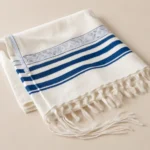
A standard tzitzit consists of four corners on a garment. Each corner receives a set of fringes fashioned in a prescribed way, with a distinctive pattern and a ceremonial knotting that binds the threads together.
Three core elements of the tzitzit assembly
Strings and wraps: The tzitzit strings are attached near the corner and prepared with a sequence of winds, creating a visible, organized fringe.
Knot pattern: A traditional knot pattern anchors the fringe, symbolizing unity and adherence to halacha. Most sources describe a standard set of knots to be tied on each corner.
Tekhelet and white strands: Historically, a blue dye—called tekhelet—was included in one of the threads among the many white threads. The blue thread serves as a special marker within the group of tzitzit.
Typical construction and numbers used in the traditional practice
The most widely taught method uses a set of four strings attached to each corner, folded in half to create eight hanging strands. The tradition also describes a knotting sequence and a series of windings along the length of the strings. In common practice, this is often summarized as “three knots and seven windings” in the main knot, with the individual strings forming the eight visible threads when unfolded. The exact ritual pattern can vary by community, but the essential elements—an attachment to a four-cornered garment, the presence of fringes, and a commemorative bonding to the commandments—remain constant.
Materials, Garments, and Practical Requirements
Garb and materials for tzitzit must meet certain requirements to satisfy halacha. The garment should be intended to be worn as a four-cornered item, not a cloak or coat that is too large to be considered an ordinary piece of clothing. Traditionally, tzitzit are attached to a garment made of wool or flax from which the fringes emerge. The white threads are typically made of the same material as the garment, ensuring a cohesive appearance.
Four corners: The robe or garment must have exactly four corners so that each corner can bear a set of tzitzit.
White threads: The majority of tzitzit are white, which helps maintain a uniform, clean look and aligns with long-standing customs.
Blue thread (tekhelet): In traditional practice, at least one of the threads in a corner is dyed blue with tekhelet. The color serves as a signal of distinction and a reminder of divine commandments.
Individual wearing: The obligation is generally to men in classical halachic sources; many communities also encourage women to participate in wearing tzitzit in modern practice, depending on their own halakhic authorities and community norms.
Who wears tzitzit and when
Daily wear: In many Orthodox and traditional communities, a tallit katan (a small garment worn under clothes with tzitzit) is worn daily, typically from a certain age, to fulfill the mitzvah of tzitzit throughout the day.
Prayer and ritual time: A tallit gadol (a larger prayer shawl) is worn during morning prayers, especially on weekdays and Shabbat when certain liturgical elements are recited.
Gender and inclusivity: Contemporary communities vary. Some follow traditional male-only traditions, while others enable women to wear tzitzit and even tallitot privately or in public synagogue settings, depending on halachic guidance and communal norms.
Tekhelet: The Blue Thread and Its Meaning in Halacha
The blue thread, tekhelet, has been a central topic in the history and practice of tzitzit. Tekhelet is not merely a color; it is a symbol with deep theological and historical meaning, representing the sea, sky, and divine presence. The debate about tekhelet’s source and its use has persisted for centuries and continues to influence modern practice and interpretation.
The historical and textual basis for tekhelet
Biblical mandate: The instruction to include a tekhelet thread is rooted in the Torah and has been discussed as a special command among the various fringes attached to the garment.
Talmudic discussion: The Talmud addresses the mitzvah of tekhelet and the reasons for its inclusion, as well as the complexity of identifying the proper dye source.
Symbolic significance: Tekhelet has been associated with spiritual themes and the concept of looking upward toward the heavens, reminding wearers of the divine order.
Contemporary debates and positions
Identification of the dye: Historically, the tekhelet dye is linked to a sea creature called the chilazon. For centuries, scholars and rabbis have debated the precise species, the method of extraction, and the dyeing process.
Modern practice: In some communities, tekhelet is reaffirmed as essential, and dyed threads are included in tzitzit today. In others, the tradition continues with white tzitzit alone, or with tekhelet used symbolically rather than literally.
Halachic guidance: Rabbinic authorities differ on the requirement and feasibility of tekhelet. Some hold that tekhelet remains a mitzvah based on the text and tradition, while others permit or recommend white tzitzit if tekhelet cannot be reliably identified today.
Practical implications for communities
Custom and community standards: People seeking to observe a thorough practice should consult a local rabbi or authority to determine whether to include tekhelet and which dye source to use.
Quality and dye sources: For those who choose tekhelet, careful sourcing and authentic dye processes are important to maintain the legitimacy of the practice within their community.
Halachic Considerations: How Tzitzit Are Implemented in Daily Life
The legal framework surrounding tzitzit covers observance, intention, and ritual conduct. The laws have been developed by rabbinic authorities across generations and differ in their emphasis depending on tradition (Ashkenazi, Sephardi, Mizrahi) and modern Jewish movements (Orthodox, Conservative, Reform, Reconstructionist).
Key halachic concepts related to tzitzit
Oraita vs. derabbanan: The commandment of tzitzit is generally considered a biblical obligation (oraita) in traditional texts, though certain aspects may be subject to rabbinic interpretation or practical constraints.
Color and dye: The question of tekhelet’s presence affects the visual significance of the tzitzit and can influence whether a garment’s tzitzit meet the full traditional requirement in some communities.
Eligibility of garments: Not every four-cornered garment automatically qualifies; there are halachic questions about size, use, and intention. A garment worn exclusively inside clothing may differ in halachic status from an outer garment used for prayer.
Practical guidance for today’s wearers
Showfulness and tzitzit: To fulfill the mitzvah with intent, many wearers recite the blessing associated with donning tzitzit when putting on a tallit or tzitzit-bearing garment.
Maintenance: Tzitzit fringe care matters—careful washing, avoiding damage to threads, and ensuring the tzitzit remains intact is important for sustaining the mitzvah.
Gender inclusivity: Many communities have expanded tzitzit practice to include women, with guidance from local halachic authorities and community standards.
Different Jewish Traditions: Ashkenazi, Sephardi, and Beyond
Jewish law has been interpreted and applied in varied ways across communities. The practice of tzitzit reflects these differences, from the color of the tekhelet to whether to wear a tallit katan daily or a tallit gadol only for prayer.
Common variations and their meanings
Ashkenazi practice: In many Ashkenazi communities, tzitzit are worn with standard patterns of prayer and daily life, with tekhelet used according to their rabbinic authority’s guidance.
Sephardi and Mizrahi traditions: Sephardi and Mizrahi communities often follow their own hakhamim and decisors regarding tekhelet, garment selection, and the frequency of wearing tzitzit.
Gender roles: In egalitarian communities across the spectrum, tzitzit are not restricted by gender, and women may participate fully in wearing tzitzit when this aligns with local halachic guidance.
Modern movements: Reform and Conservative communities may emphasize symbolic meaning and personal conscience in wearing tzitzit, with varying levels of ritual framing.
Common Questions and Practical FAQs
What is the essential purpose of tzitzit?
To remind the wearer to observe the commandments and to visibly connect daily life with a life of sanctity and obedience to God.
Is tekhelet required today?
This is a topic of ongoing halachic debate. Some communities insist on tekhelet as essential, others permit white tzitzit if tekhelet cannot be reliably identified or implemented today.
Who should wear tzitzit?
Traditionally, male adults were the primary obligated group, but many communities today encourage and empower women and other members of the family to participate in tzitzit observance, subject to their local halachic guidance.
Can tzitzit be attached to any four-cornered garment?
Only garments intended to be worn as clothing with four corners qualify. Garments with different shapes, sizes, or intended uses may not meet the formal criteria.
How should tzitzit be maintained?
Regular inspection of the threads, careful washing, and proper storage help ensure that tzitzit remain intact and compliant with ritual requirements.
Historical Context and Cultural Significance
The mitzvah of tzitzit has traveled through generations, evolving with language, culture, and technology. In various eras, Jews have kept the tradition alive by adapting to available materials, dye sources, and community standards, while maintaining the fundamental sense of connection to the divine commandment.
Ancient practice: Early authorities describe tzitzit as a way to mark identity and maintain awareness of the covenant with God.
Medieval and early modern debates: Rabbinic scholars debated the production of tekhelet, dye techniques, and how to interpret commandments in changing times.
Modern revival: In the modern era, there has been renewed interest in tekhelet and a broader approach to tzitzit, including inclusion in daily dress and spiritual practice beyond synagogue settings.
Conclusion: Living with Tzitzit in the 21st Century
The tzitzit remain a powerful symbol of Jewish identity and a practical reminder of covenantal obligations. Whether one follows the strict traditional pattern with tekhelet, or chooses a simplified form with white tzitzit, the essence of the mitzvah is the daily connection between life and law, between ordinary clothing and extraordinary spiritual purpose. As communities differ in emphasis and interpretation, the ongoing dialogue about tzitzit reflects the broader conversation within Judaism about how to live faithfully in a changing world while remaining anchored in heritage and law.
For anyone exploring tzitzit—whether as a curious learner, a practicing observer, or someone seeking to understand the diverse expressions within Jewish life—it’s valuable to consult local rabbinic authorities, study the foundational texts, and engage with the history and meaning behind this enduring mitzvah. The journey through tzitzit is not merely about threads and knots; it is about the way everyday clothing becomes a canvas for faith, memory, and divine companionship.
In short, tzitzit serve as a tangible link to Jewish law and spirituality, a sign of Jewish living, and a reminder of the obligations that guide daily choices. Whether described as a ritual fringe, a ceremonial thread, or a symbol of covenant, tzitzit invite wearers to elevate ordinary attire into an ongoing conversation with tradition and meaning.