Introduction to the afterlife in Judaism: an overview of beliefs, texts, and traditions
The question of what happens after death is not a single, fixed doctrine in Judaism. Judaism’s afterlife concepts span a spectrum of ideas that have evolved over centuries, from the biblical era through rabbinic debates and into mystical and modern interpretations. In many discussions, readers encounter phrases like Olam HaBa (the World to Come), Gan Eden (Garden of Eden), and Gehinnom (a place of purification). Yet even within the same tradition, what these terms mean, how they relate to the living, and how they influence ritual life can differ markedly. This article surveys the major beliefs about the afterlife in Judaism, the textual foundations for those beliefs, and the ways communities have preserved, debated, and practiced ideas about life beyond death.
Core concepts in Jewish eschatology and post-mortem thought
Olam HaBa and the World to Come
One of the central ideas encountered when discussing Judaism and the afterlife is Olam HaBa, often translated as the World to Come. This term appears in various forms in rabbinic literature and is sometimes understood as a future era of universal peace and justice. In Jewish thought, there are two complementary notions commonly called Olam HaBa:
Olam HaBa shel ha-olam ha-ba (the World to Come in this life—an era following the messianic age, when the dead may be resurrected and a perfected society is established).
Olam HaBa shel afterlife (the eternal spiritual realm after death for the righteous, sometimes described as the soul’s continuing experience beyond bodily life).
In many rabbinic passages, the World to Come is closely linked with justice, study, and righteousness. The exact nature of this world—whether it is a physical realm, a spiritual state, or both—varies among sources. For some, it is a future, global culmination in which all people recognize God; for others, it denotes a more individual or intimate continuation of the divine presence after death.
When you encounter the phrase the World to Come in Jewish writings, keep in mind that it can refer to more than one phenomenon: a future, messianic era on earth, a transitional period after death, or a lasting spiritual state for the soul. This plurality of meanings is a hallmark of life after death in Judaism as a field of study rather than a single doctrinal line.
Gan Eden: the heavenly reward and the soul’s resting place
Another foundational term is Gan Eden, commonly translated as the Garden of Eden. In rabbinic literature, Gan Eden is described as a paradisiacal abode for the righteous—a place where the nishamot (souls) experience closeness to God. Over time, Gan Eden came to symbolize not only a future state after death but also a qualitative reward for virtue in this life. Some sources describe Gan Eden as a place of joy, study, and spiritual fulfillment, while others emphasize proximity to divine light and wisdom.
In discussions of the afterlife in Judaism, Gan Eden often appears in tandem with Gehinnom to illustrate complementary destinations or processes for souls. It is important to note that in many traditional treatments, Gan Eden is paired with moral and ethical conduct in life as a prerequisite for entry, and it is not universally presented as an eternal reward without other possibilities for the soul’s journey.
Gehinnom: purification, accountability, and the limits of punishment
Another persistent concept in Jewish eschatology is Gehinnom, a term borrowed from the valley of Hinom outside ancient Jerusalem. In rabbinic thought, Gehinnom functions less as a place of eternal damnation and more as a process of purification or accountability for the soul. Classic sources often describe it as a temporary state in which the soul is refined or purged of impurities, typically for a limited period (frequently described as up to twelve months, though this is not a universal rule). The exact experience of Gehinnom is described in various ways, reflecting different theological orientations—some emphasize mercy, others discipline, and some emphasize the notion that no soul is beyond repair.
For many Jewish scholars and communities, Gehinnom and Gan Eden are two sides of a single post-mortem journey: a path of moral consequence in which the righteous ascend to broader spiritual awareness, while the less-than-perfect, in some understandings, are purified before entering the World to Come. Across traditions, Gershwin-like questions persist: how long does Gehinnom last? Is there a chance of return or repeated cycles of purification? The rabbinic texts do not converge on one micro-detail, but they do converge on a larger moral architecture: actions in life influence the afterlife, and mercy, repentance, and righteousness play decisive roles.
Techiyat HaMetim: the resurrection of the dead
A foundational biblical and rabbinic idea is Techiyat HaMetim, the resurrection of the dead. This concept is often linked to the Messianic Age and to the ultimate fulfillment of God’s promises. In the Talmud and later rabbinic texts, the resurrection is discussed as a future event in which the bodies of the righteous will be restored and will stand in the presence of the Creator. The exact timing and manner of this resurrection are debated, and different communities have held a variety of interpretations—from a literal bodily resurrection to a more spiritual restoration of life or a reanimation of the idea of life after death.
Resurrection is frequently presented in the context of the eschatological framework: at the end of days, the dead will arise, foundations of divine justice will be rectified, and a new era of peace will begin. While some rabbinic passages present techiyat ha-metim as an article of faith, others treat it as an interpretive or symbolic possibility, reflecting diverse theological tendencies within Judaism. The broad consensus across streams is that a future resurrection remains an integral part of the belief system, even if details remain contested.
Nishamot, souls, and the nature of consciousness after death
In Jewish thought, the nishamah (soul) is a central term for discussing life after death. The soul is commonly described as the religious, intellectual, and emotional essence that transcends physical life. Post-mortem beliefs often describe the soul as continuing to exist in a state of closeness to God, contemplation, or purification, depending on merit and actions in life. Other related terms include ruach (spirit) and nefesh (psychic life, vitality). The exact experiences attributed to the soul after death vary by source, but the underlying idea—life after death as the ongoing state of the soul—remains consistent in many traditional discussions.
In mystical and philosophical streams, the afterlife is sometimes described as a continuum: the soul leaves the body at death, ascends to a higher spiritual realm, and, depending on merit, may undergo further stages of purification, elevation, or reunion with divine light. The diversity of expressions reflects a broader Jewish openness to different ways of imagining consciousness beyond physical life.
Texts that shape Jewish understandings of life after death
Tanakh and early biblical echoes
References to life after death in the Tanakh are comparatively sparse and often ambiguous. Nevertheless, several passages are widely discussed in subsequent centuries as the seeds of later post-mortem theology. For example, the Book of Daniel contains a reference to a future resurrection of the dead (Daniel 12:2), which has been interpreted to support the idea of bodily or spiritual life after death at the world’s end. Other books allude to the existence of Sheol, the realm of the dead, in ways that later Jewish writers reinterpreted as a stage within the broader afterlife framework. Across genres, the biblical data provide a canvas on which later rabbis painted more explicit ideas about Gan Eden, Gehinnom, and resurrection.
Rabbinic literature: Talmud and Midrash
In the period of the rabbinic scholars, post-biblical discussions about the afterlife become more systematic. The Talmud contains debates about the nature of reward and punishment after death, the meaning of the World to Come, and the possibility of resurrection. Key themes include:
The moral economy of the afterlife: merit, repentance, and charity as determinants of a favorable post-mortem state.
The temporary nature of Gehinnom for most souls: purification rather than eternal punishment, with some exceptions for certain kinds of sinners.
The universality of the afterlife: sages discuss rewards for righteous Gentiles and Jews alike, while fate and divine judgment remain ultimately in God’s hands.
Many rabbinic passages present a dynamic view of the afterlife that intertwines with present ethical duties: studying Torah, performing commandments, and engaging in acts of justice all influence the soul’s afterlife journey.
Kabbalistic and post-kabbalistic traditions
In Jewish mysticism, especially Kabbalah, the afterlife is described in intricate, symbolic terms. The Gilgul (reincarnation of souls) concept appears in medieval and later mystical writings, proposing that souls may undergo multiple earthly lives to repair spiritual fragments or rectify past misdeeds. Lurianic Kabbalah elaborates on how souls ascend through spiritual realms, reconfigure divine emanations (sefirot), and participate in cosmic repair. These strands add an additional layer to the spectrum of beliefs about life after death, emphasizing spiritual ascent, purification, and ongoing divine relationship beyond death.
Because mystical literature uses symbolic imagery, it is often treated as a distinct stream within Judaism. Yet even it remains part of the broader conversation about afterlife concepts in Jewish thought and demonstrates how Jewish traditions have sought to articulate the unseen and the infinite in diverse ways.
Traditions, rituals, and practices related to life after death
Funeral practices and mourning as a bridge between life and the afterlife
Across Jewish communities, burial customs, mourning practices, and memorial rituals reflect a deep engagement with the question of life after death. Common elements include:
Chevra Kadisha (the holy burial society) ensuring respectful, prompt, and traditional handling of the deceased.
The period of shivah (seven days) of intensive mourning, followed by shloshim (thirty days), during which family members reflect on the loss and continue daily life with adjustments.
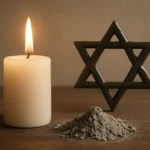
Yahrzeit memorial recitations in memory of the deceased on the anniversary of death, often accompanied by light a candle and study of Torah in the deceased’s memory.
These practices are not merely social rituals; they are a spiritual bridge connecting the beloved in life with the ongoing presence of the divine in the world and the memory of the community. In many traditions, the act of remembering the dead and learning Torah in their memory is connected to the belief that the souls of the departed benefit from acts of tzedakah (charity) and study.
Prayers and liturgy associated with the afterlife
Several prayers touch on themes of mercy, peace, and the sanctification of God’s name in relation to the dead. Notable examples include:
El Maleh Rachamim, a memorial prayer asking for God’s compassion on the souls of the departed.
Kaddish, the mourner’s prayer that sanctifies God’s name; while it is recited for the dead, it is actually a declaration of faith that God’s sovereignty endures and life continues for the living.
Yiskor, commemorating the dead with prayers and readings during certain holidays and on specific memorial days.
These prayers reflect a persistent tension in Jewish tradition: the desire to comfort the bereaved while maintaining a sense of hope for a post-mortem reality that aligns with divine justice and mercy.
Teaching, memory, and the ethical dimension of life after death
In many Jewish communities, the afterlife is approached less as a set of fixed endpoints and more as a framework for ethical action in the present. The idea that one’s deeds impact one’s ultimate fate often accompanies an emphasis on mitzvot (commandments), study, charity, and acts of loving-kindness as ways to shape one’s legacy and influence the soul’s journey. Across streams, mainstream teachings encourage living a meaningful life that aligns with divine will, while leaving open the possibility of a future post-mortem reality shaped by those actions.
Different denominational perspectives on life after death
Orthodox Judaism: continuity of traditional beliefs
In Orthodox Judaism, beliefs about the afterlife tend to be more explicit and rooted in classical sources. The ideas of the resurrection of the dead (techiyat ha-metim), the eternal presence of the soul, and the moral accountability after death are often presented as integral to faith and practice. The afterlife is understood in conjunction with observance of the Torah, ethical conduct, and the hope for a future era of divine revelation and messianic restoration.
Conservative Judaism: a balance of tradition and modern interpretation
Conservative theologians and rabbis typically affirm traditional concepts like Olam HaBa and Techiyat HaMetim while encouraging thoughtful engagement with modern questions. The approach tends to harmonize reverence for established sources with openness to interpretive diversity, recognizing that the description of the afterlife may be metaphorical in some texts and literal in others.
Reform and Reconstructionist perspectives: symbolic and ethical emphases
Many Reform and Reconstructionist thinkers treat the afterlife as less of a doctrinal certainty and more of a symbolic or ethical framework. They may emphasize the legacy one leaves behind, the memory of generations, and the ongoing impact of one’s life through tikkun olam (repairing the world) and communal memory. For some, Gan Eden and Gehinnom are dynamic metaphors for moral influence and personal growth rather than literal destinations after death.
Hasidic and mystically inclined communities
Within Hasidic and other mystical circles, post-mortem beliefs often embrace a richly symbolic and experiential language. Concepts like gilgul (reincarnation) and the ascent of the soul through heavenly realms are commonly discussed in sermons and writings. In these communities, the afterlife can be seen as a personal journey of spiritual refinement, guided by the study of Torah, devotion, and communal prayer.
Contemporary questions and ongoing conversations
Is there an afterlife in Judaism?
Many Jewish thinkers affirm that belief in life after death remains a meaningful component of the tradition, even if precise details are debated. Others describe the afterlife as a matter of faith in God’s justice, the continuity of the soul, and the ethical memory of the living, rather than a precisely defined physical state. The common thread across centuries is not a uniform doctrine but a shared conviction that life continues in some form beyond death and that human choices in this world have significance beyond the grave.
How do modern Jews relate to the afterlife in daily life?
In contemporary practice, many Jews orient their beliefs about the afterlife toward living a meaningful, ethically responsible life. They may view the World to Come as a future hope tied to justice and peace, or they may emphasize the ongoing influence of memory, family, and community. Rituals surrounding death, remembrance, and study—together with ethical living and social responsibility—constitute a practical approach to the question of life after death that remains accessible to people across different levels of traditional observance.
What do philosophical or secular Jewish perspectives contribute?
Some secular or humanistic Jewish voices reinterpret afterlife questions through the lens of memory, culture, and human legacy. They may describe the World to Come as a metaphor for the enduring impact of a person’s life on family, community, and society. In this view, the afterlife is less about metaphysical destinations and more about the ways a person’s actions shape the world beyond their lifetime.
Putting the afterlife in Judaism into perspective: key takeaways
Judaism presents a spectrum of post-mortem ideas, not a single, fixed doctrine. Beliefs about the afterlife incorporate elements of reward, purification, remembrance, and resurrection, with emphasis varying by community and era.
Gan Eden and Gehinnom are often described as two connected aspects of the afterlife: a place of reward and a process of purification, rather than eternal damnation in most mainstream sources.
The World to Come (Olam HaBa) can refer to a future era on earth, a post-mmortem spiritual realm, or an eschatological state following the resurrection of the dead, depending on the text.
The idea of Techiyat HaMetim (resurrection) highlights a hope that the righteous will be physically or spiritually restored in a future Messianic context, though interpretations differ widely.
In addition to classical sources, Kabbalah introduces mystical concepts such as gilgul and complex soul journeys, expanding the imagination of life after death beyond literal boundaries.
For readers exploring afterlife in Judaism, the wealth of texts and traditions invites a nuanced understanding. Rather than a single path, there is a map of possibilities that reflects centuries of debate, devotion, and interpretation. The enduring interest in life after death—across Orthodox, Conservative, Reform, and Hasidic communities—speaks to Judaism’s broader aim: to illuminate how human beings live with memory, responsibility, and faith in the face of mortality.
Further resources and pathways for study
If you are interested in exploring the afterlife in Judaism more deeply, consider the following starting points and approaches:
Read primary texts in translation to hear how biblical, rabbinic, and mystical voices frame the afterlife in their own words.
Engage with commentaries from multiple streams to understand how different communities interpret Olam HaBa, Gan Eden, and Gehinnom.
Attend lectures or classes on Jewish eschatology and mysticism to hear how scholars interpret concepts like Techiyat HaMetim and gilgul.
Explore how modern Jewish thinkers describe life after death in the context of ethics, memory, and social responsibility.
Conclusion: a living conversation about the afterlife in Judaism
Judaism’s discourse on the afterlife—whether framed as the World to Come, Gan Eden, or Gehinnom, or through the lens of resurrection and soul journey—is dynamic and multifaceted. It reflects a long conversation about the meaning of life, the nature of justice, and the possibility of continuity beyond death. For many Jews, the most important takeaway is not a single verdict about what happens after we die, but a set of commitments that shape how one lives: ethical action, study, compassion for others, and care for the living and the dead alike. By approaching these topics with openness to competing viewpoints and respect for tradition, readers can gain a deeper appreciation for life after death in Judaism as an enduring, evolving conversation—one that invites personal contemplation as well as communal reflection.