Overview: Florence’s Jewish Quarter and its enduring memory
Nestled in the Florence’s Jewish Quarter, a historic district at the heart of one of Italy’s most beloved cities, visitors encounter a neighborhood that is at once intimate and monumental. This is not merely a place to scan plaques and stare at old walls; it is a living area where centuries of community life, faith, commerce, and culture left tangible traces in the streets, courtyards, and small museums. The Florence Jewish Quarter – also called the Ghetto of Florence in historical terms – tells a story of resilience, adaptation, and the continual interaction between a Jewish community and the Florentine milieu that has shaped Italian art, scholarship, and daily life.
For travelers seeking a deeper understanding of Florence beyond the Duomo, the Florentine Jewish Quarter provides a focused window into a distinctive facet of the city’s past. It is a neighborhood where synagogues, museums, and well-preserved lanes sit side by side with busy cafés, artisan shops, and traditional Florentine cuisine. In this article, you will explore Florence’s Jewish Quarter in depth—from its historical roots and architectural textures to top sights, practical tips, and ideas for a meaningful visit.
History and evolution: From medieval life to a modern cultural hub
The story of the Ghetto of Florence begins long before the term was coined as a specific residential zone. In medieval and Renaissance Florence, Jewish communities lived in various quarters around the city, but official measures and legal restrictions gradually concentrated Jewish residents into a defined area during the late Renaissance and early modern period. The emergence of a distinct neighborhood reflected not only religious and social norms but also the practical needs of a community that maintained synagogues, schools, kitchens, and shops within close proximity.
A turning point in the history of the Florence’s Jewish Quarter came with the late 16th and 17th centuries when the medici and subsequent rulers implemented policies that organized the Jewish population into a dedicated quarter. This arrangement persisted for centuries and helped preserve a dense, human-scale urban fabric in which architecture, street names, and courtyards still whisper about old life. In the 19th and early 20th centuries, as civil rights expanded and society modernized, the quarter began to transform again: synagogues were rebuilt or renovated to meet new needs, Jewish education and culture flourished, and the neighborhood became a place where the arts and daily life enriched one another.
The 20th century brought upheaval and challenge, as Europe faced upheavals that affected Jewish communities everywhere. Yet the Florence Jewish Quarter endured and recovered, evolving into a place where memory and modern living converge. Today, the district serves both as a reminder of the past and a dynamic center for Jewish life, cultural events, and historical education. For scholars and visitors alike, the area offers a compact, readable case study of how a minority community maintained its identity while contributing to the broader Florentine and Italian context.
Top sights in the Florence Jewish Quarter: sites that illuminate history and everyday life
The Great Synagogue of Florence and its precincts
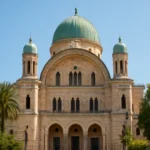
The centerpiece of the Florence’s Jewish Quarter is the main place of worship, known as the Great Synagogue of Florence (often referred to in Italian as the Tempio Maggiore di Firenze). This building is not only a locus for religious life but also an architectural statement. Its façade and interior design reflect the international stylistic currents that characterized synagogue architecture in the late 19th and early 20th centuries, combining elements that evoke memory, continuity, and dignity.
A visit to the Great Synagogue of Florence offers more than a spiritual experience. Inside, you can often encounter displays of Jewish liturgical objects, Torah scrolls, and items of daily religious life, all arranged to convey the continuity of traditions across generations. If you have the chance to join a guided tour, you’ll gain insights into motifs, ritual life, and the way space is used for prayer, study, and community gatherings.
The Jewish Museum of Florence: a curated window into a living culture
Adjacent to or part of the synagogue complex, the Jewish Museum of Florence preserves artifacts that illuminate the history, arts, and daily rituals of the Florentine Jewish community. Exhibits often span ceremonial objects, religious manuscripts, local crafts, and archival materials that reveal how Jews in Florence sustained their identity through centuries of change.
The museum is a superb resource for families, students, and curious travelers who want context for what they see on the streets and in the courtyards. It also frequently hosts temporary exhibitions, educational programs, and cultural events that bring renewed vitality to the quarter and connect past and present in accessible ways.
Historic lanes, courtyards, and commemorative plaques
The Florence Jewish Quarter is also defined by its physical texture—the narrow lanes, the stone arches, and the small courtyards that survived centuries of urban change. A walk through these old streets allows visitors to trace the layout of the historic ghetto, observe how the built environment shaped everyday life, and read plaques that memorialize key events and figures from Jewish Florentine history.
Along the way, you’ll encounter lines of shops, bakeries, and small businesses that historically served the community and today welcome curious visitors who want to understand the daily rhythm of life in the quarter. The combination of architecture and memory makes a stroll through these lanes a rich, immersive experience.
Symbolic spots: markers of memory and continuity
Beyond the grand synagogue and the museum, the quarter contains smaller markers and sites that symbolize continuity and memory. Memorial plaques offer succinct histories of events, while preserved door panels, stairwells, and street names provide a tactile sense of how the community once lived. These memorial markers invite reflection on resilience, faith, and the enduring role of place in communal identity.
Cultural spaces and intimate gatherings
The Florence Jewish Quarter also nurtures cultural life through informal gatherings, lectures, and seasonal celebrations that draw participants from both local and visiting communities. In this sense, the quarter functions as a living museum—where history is not only read but experienced through music, storytelling, seminars, and shared meals that connect people across generations.
Architecture and urban fabric: how the quarter’s form tells its story
The architectural character of the Ghetto of Florence is a testament to long-standing urban planning practices and the adaptive reuse of historical spaces. The streets are narrow, the elevations modest, and the stone façades carry the patina of centuries. This urban texture creates a sense of human scale that invites slow exploration, a counterpoint to the grand public spaces that Florentines also treasure.
The Florentine Jewish Quarter demonstrates how architecture can embody memory. Buildings that once housed shops, kitchens, and study rooms now serve as galleries, museums, or quiet spaces for reflection. The courtyards often reveal hidden gardens or quiet corners where the community could gather away from the bustle of the city streets. The synthesis of private and public spaces in this district reflects a long tradition of communal life.
When you study the Firenze’s Jewish Quarter architecture, you’ll notice the interplay of light and stone, the way doorways frame intimate interior spaces, and the way corners turn into gathering places. It is precisely this intimate urban choreography that helps explain why the quarter remains a vibrant destination rather than simply a preserved relic.
Cultural experiences: beyond the historical narrative
A journey through the Florence’s Jewish Quarter offers opportunities to engage with living culture. Museums tell a story, yes, but so do current community events, religious ceremonies, and culinary traditions. By exploring these aspects, visitors gain a well-rounded understanding of how a historically significant community continues to contribute to the broader Florentine tapestry.
In addition to permanent exhibits, the quarter often hosts short-term showcases of Jewish art and music. You may encounter readings of Hebrew poetry, concerts of traditional Jewish music, or exhibitions that pair historical documents with contemporary interpretations. Even a casual stroll can turn into a serendipitous encounter with a local artist or a small-scale recital in a courtyard or gallery space.
Languages, education, and family learning
The presence of the Jewish Museum of Florence and related educational programs makes the Florence Jewish Quarter a natural setting for families and school groups. Interactive tours, kid-friendly exhibitions, and multilingual guides help learners of all ages connect with complex histories in approachable ways.
Gastronomy and the social life of the neighborhood
Food often serves as a bridge across cultures, and in the Florentine Jewish Quarter, you can discover delicacies and snack spots that reflect a blend of culinary traditions. Local bakeries, cafés, and markets offer tastes that complement a day of sightseeing—whether it’s a coffee break, a pastry, or a wholesome lunch after a morning of exploring historic sites.
Visiting tips: how to make the most of your experience
When to visit and how to pace your day
The best approach to exploring the Florence Jewish Quarter is to dedicate a half-day or a full day, depending on your pace and curiosity. Spring and autumn provide comfortable weather for walking through the Quarter’s lanes, while winter visits can feel intimate and quiet. If you are planning to visit the Ghetto of Florence in combination with the city’s world-renowned museums, consider starting in the morning and continuing with a leisurely lunch in a nearby trattoria before returning to the historic streets for an afternoon stroll.
When approaching places of worship, respect the local customs. For the Great Synagogue of Florence, modest dress is appropriate: shoulders and knees covered for both men and women, and hats removed indoors as a sign of respect. Photography may be restricted inside certain areas, so look for posted rules or ask staff for permission. Silence and courtesy are appreciated, especially during services or study.
Guided tours and independent exploration
Guided tours can enrich your understanding of the Florence’s Jewish Quarter by providing context for architectural details, historical events, and the people behind the plaques. If you prefer self-guided discovery, you can use a map or a reputable guidebook to connect the sites with short, informative captions. In either case, a slow, thoughtful pace will let you notice the small details—the inscriptions, the architectural motifs, and the interplay of light on old stone.
Safety, etiquette, and respect
The Quarter, like any historic district, is safe for visitors and best enjoyed on foot. However, it is also a place of worship and memory, so treat spaces with care. Refrain from loud conversations in sacred spaces, do not touch artifacts that are on display, and be mindful of private residences or courtyards that are not open to the public. If you are unsure about a particular space, ask staff or passersby for guidance.
Practical information: planning your visit to Florence’s Jewish Quarter
Getting there and getting around
The Florence Jewish Quarter sits in the city center, within easy walking distance of major Florentine landmarks. Because the most immersive experience happens on foot, plan to park or drop off elsewhere and explore on foot. If you arrive by public transport, bus routes and tram connections into the central area are well integrated with the city’s historic core.
Hours, tickets, and accessibility
Opening hours for the Great Synagogue of Florence and the Jewish Museum of Florence can vary by season and special events. It is wise to check official sources ahead of time and consider purchasing tickets online to secure a time slot. Accessibility varies by site; if you require step-free access or other accommodations, contact the venues in advance to confirm available options.
Comfortable walking shoes are essential for navigating Florence’s old streets and uneven stone surfaces. A light layer for religious sites is helpful, as interiors can be cool even when the day is warm. Bring a small notebook or a digital device if you’d like to take notes or capture memories, but avoid flash photography inside sensitive spaces unless explicitly permitted.
Nearby experiences: complementary routes and day trips
The Florence Jewish Quarter is best appreciated as part of the broader Florentine experience. A short walk or tram ride can connect you to many of the city’s iconic sights, including the cathedral precincts, street markets, and the Arno riverside. From the quarter, you can easily reach art-filled neighborhoods, gardens, and palaces that showcase Florence’s Renaissance brilliance alongside its multicultural history.
Visit the Duomo complex and climb or gaze at the cathedral’s exterior; the surrounding streets reveal layers of Florentine life shaped by centuries of trade and culture.
Cross the Ponte Vecchio for views of the river and the city’s skyline, and explore the Oltrarno neighborhood, known for crafts and traditional Florentine eateries.
Explore the Boboli Gardens and the Pitti Palace to experience Florence’s aristocratic history alongside public life in the same day.
Take a walking route that links the quarter to nearby museums with medieval or Renaissance art collections for a well-rounded cultural day.
Itinerary ideas: a suggested plan to experience the quarter deeply
Morning introduction to the Great Synagogue of Florence, followed by a visit to the Jewish Museum of Florence to set the historical context.
Midday stroll through the historic lanes, reading commemorative plaques and observing how the street pattern reflects historical life.
Lunch break at a local café featuring Florentine specialties, with a nod to the district’s multicultural culinary influences.
Afternoon guided tour or self-guided exploration of additional courtyards and smaller religious spaces linked to the quarter’s past.
Evening walk near the Arno or a sunset view from a nearby vantage point, reflecting on how memory and modern life intersect in Florence’s Jewish Quarter.
Variations on the theme: naming and framing the neighborhood
Throughout literature and travel writing, you may encounter several variants to refer to this area. You’ll see Florence’s Jewish Quarter, the Florentine Jewish Quarter, Firenze’s Ghetto (the Italian term for the historic quarter), the Ghetto of Florence, and the Florence Jewish District. Each phrasing highlights a slightly different emphasis—some on cultural heritage, others on urban form or historical governance. Across these variations, the core idea remains: a compact, living memory district that invites respectful, curious exploration.
What makes a visit meaningful: thoughtful tips for travelers
Plan with respect: acknowledge that this is not only a tourist site but also a living space where people practice faith and study.
Combine learning and immersion: pair a museum visit with a walk through the quarter’s lanes to connect objects with places.
Seek out reputable guides or vetted resources to deepen your understanding of long-standing Jewish traditions in Florence.
Share constructive questions with staff at synagogues or museums; local guides can provide nuanced perspectives on historical events and contemporary life.
Conclusion: why the Florence Jewish Quarter matters to travelers
The Florence Jewish Quarter is not merely a destination for historical curiosity. It is a living testament to continuity and change, a place where the layers of memory accumulate in stone, art, and everyday practice. By visiting the Ghetto of Florence, travelers gain an intimate sense of how Jewish life has adapted within a broader Florentine culture that has influenced art, science, and governance for centuries. Whether you approach it as a historian, a curious tourist, a student of religion, or someone seeking meaningful travel experiences, the quarter offers a rich, thoughtful journey through time that remains relevant in the present.
In sum, a trip through the Florence’s Jewish Quarter invites you to connect with the city’s layered past and its ongoing present. It is an opportunity to walk through history, to observe how memory is embedded in streets and spaces, and to recognize how diverse communities contributed to the vitality and character of Florence as a global city.