Four Species Sukkot: An Introduction to Etrog, Lulav, Hadassim, Aravot
The annual festival of Sukkot centers on a mitzvah that unites ritual practice with seasonal symbolism: the Arba Minim, known in English as the four species. This quartet—Etrog, Lulav, Hadassim, and Aravot—is gathered, prepared, and used in a distinctive waving ceremony during the festival. Across communities and generations, the four species are seen not only as sacred objects but as tangible vehicles of faith, memory, and agricultural heritage. In this guide, we explore each member of the quartet, how these plants are selected and prepared, the symbolism embedded in their use, and the practicalities of incorporating the four species into Sukkot observance.
What are the four species?
The Arba Minim comprises four distinct botanical elements, each with its own character and purpose within the Sukkot tradition:
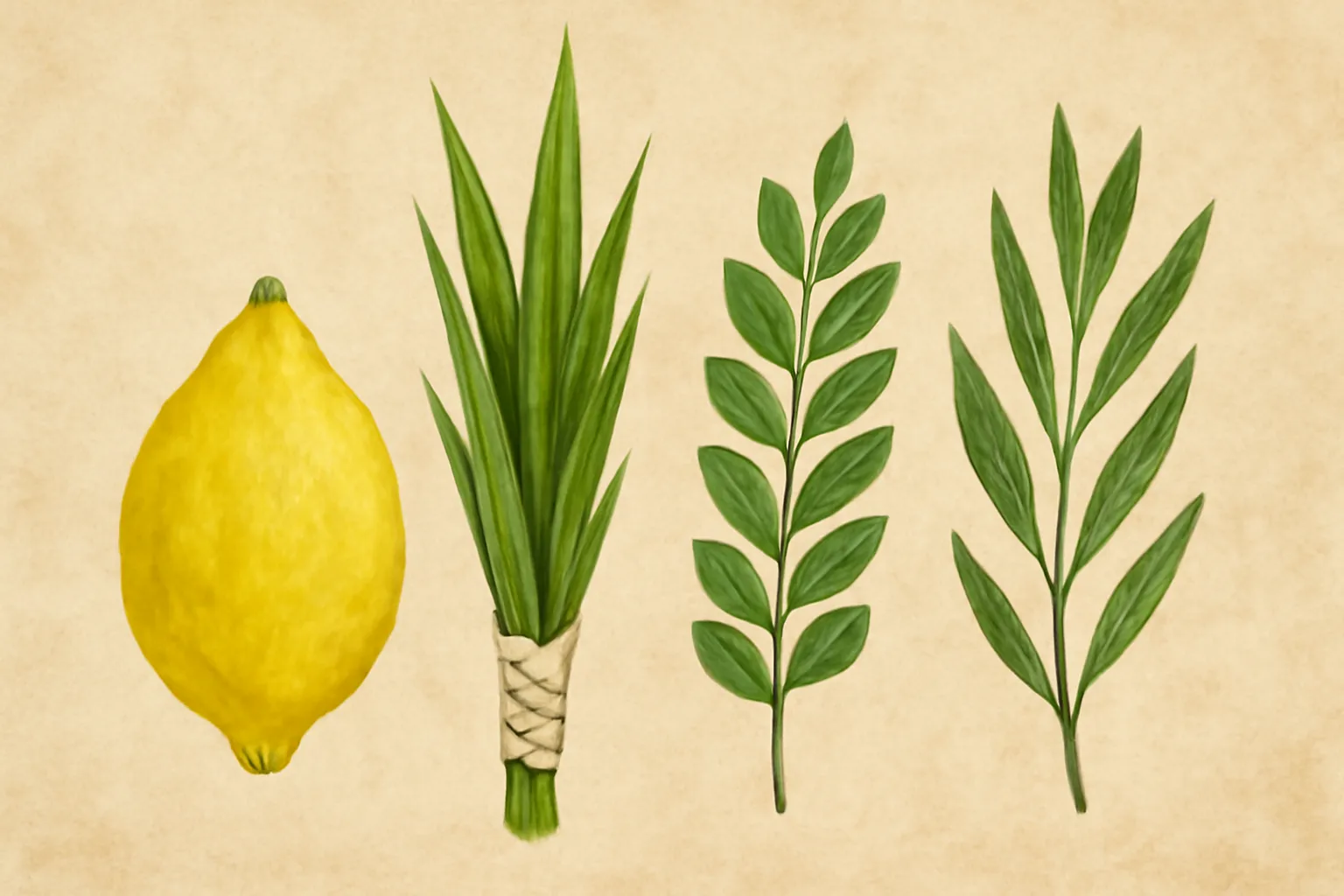
Etrog — a citron fruit with a thick rind and fragrant flesh. The Etrog is held separately from the other three species, but it is an integral part of the ritual. In many communities, the Etrog is blessed and inspected for beauty and fullness, as its appearance is thought to reflect purity and wholeness.
Lulav — the palm frond, typically from a date palm. The Lulav serves as the central support for the other two plant categories that accompany it in a bound arrangement. The Lulav’s straight, sturdy form stands in contrast to the textures of the other species.
Hadassim — the myrtle branches, usually three to four single stems with narrow leaves, arranged in a small bundle. The Hadassim contribute fragrance and greenery, and they are traditionally taller than the Aravot when tied together with the Lulav.
Aravot — the willow branches, typically two long, slender withered stems. The Aravot add a distinctive texture and are known for their flexible, curling leaves. In many customs, the Aravot are bound alongside the Hadassim and attach to the Lulav’s center.
The symbolism behind each species
Each member of the four species is traditionally linked to a different kind of person or attribute, forming a composite message about unity and diversity within the community. The Etrog represents the beauty and ethical perfection of a person who possesses both the inner qualities of Torah study and the outward mitzvah of keeping the commandments. The Lulav stands for the spine and strength of the assembled community—the backbone of faith. The Hadassim, with their fragrance and beauty, symbolize those who act with wisdom and compassion, guided by moral intent. The Aravot, the humble willows, invite humility and repentance, reminding worshippers of their dependence on God’s mercy.
Beyond personal symbolism, the pairing of leafy branches with a fragrant fruit conveys a message about how different communities and individuals contribute to a cohesive spiritual life. The four species together form a unified organism; when held in the hand and waved, they symbolize the strength, sweetness, beauty, and humility required for a healthy religious life.
Historical and rabbinic context
The Four Species carry a long history in Jewish liturgy and practice. The Talmud discusses the mitzvah of performing the Hakafa with the four species as part of the Sukkot celebration, explaining the actions of blessing, blessing recitation, and the repeated waving in six directions. The tradition emphasizes the agricultural roots of Sukkot—the harvest festival—and the mitzvah’s role in thanking God for crops, rain, and provision. Over centuries, rabbinic authorities refined details about how each species must look, how they should be bound, and the ritual’s timing during the holiday.
Across generations and geographies, communities have preserved a shared framework for the four species while adapting to local climates, cultivars, and customs. Some groups emphasize certain aesthetic standards or binding methods, while others keep a simpler approach. The essential aim—honoring the festival by recognizing the diversity of nature and the unity of the Jewish people—remains constant.
How the four species are used during Sukkot
The practical use of the four species centers on the daily ritual waving, or Hakafa, performed during the Sukkot days. The Etrog is held in a separate hand, while the Lulav is bound with Hadassim and Aravot and held together in the other hand. The combined ensemble is raised and waved in six directions—east, south, west, north, up, and down—to symbolize God’s dominion over all directions and over all creation.
Typical ritual steps and practices
Inspection and blessing — Prior to the first day of Sukkot, the Etrog is inspected for signs of blemish, mold, or decay. In many communities, the Etrog is pronounced with a blessing in the presence of a religious authority and during the ritual blessing of the Four Species.
Binding and arrangement — The bound trio of Hadassim and Aravot is placed around the Lulav, forming a bundle that completes the ensemble. The binding methods vary slightly between communities but generally involve a string or ribbon that secures the branches to the Lulav.
Waving in six directions — During the cantillation or communal recitation, participants raise the bundle and wave it in each of the six directions while reciting the blessing and prayers. This ritual gesture expresses omnipresence and gratitude.
Occasional breaks for prayer and song — In many synagogues and homes, the waving is interspersed with psalms, hymns, and short prayers. The cadence may vary by tradition, but the core act remains the same: a public offering of thanks using the four species.
Practical considerations: choosing and handling the Etrog
The Etrog stands apart from the other three species in practice and symbolism. Choosing a quality Etrog is often a careful ritual in itself, because the fruit’s appearance is thought to reflect spiritual and ethical integrity. While some communities emphasize purely aesthetic attributes, others speak of a deeper connection between the Etrog’s condition and its suitability for ritual use.
What to look for when selecting an Etrog
Shape and size — A well-formed Etrog should have a uniform shape, a full rind, and minimal bulges or flat areas. A smooth, intact surface is preferred, but slight variation is common and not disqualifying.
Rind quality — The rind should be intact, with no significant cracks, holes, or signs of rot. A glossy rind may indicate freshness, while a dull or dry rind warrants closer inspection.
Parting and aroma — The Etrog’s fragrance is a hallmark of its quality; a pleasant, citrusy aroma is desirable. However, scent is not the only measure—visual inspection and knowledge of provenance matter as well.
Spine and seeds — Some traditions prefer Etrog with a robust central spine and a reasonable number of seeds. Extremely seedless varieties should be examined for dryness or other defects.
Beyond appearance, sourcing an Etrog can involve community or family guidance. In certain communities, Etrogim come from specific regional varieties or growers known for meeting defined standards. The Etrog’s origin, cultivation practice, and storage history are all part of the larger educational narrative surrounding the Four Species.
Care and storage of the Etrog
Protection from damage — Etrog should be handled gently to avoid bruising. A mild, non-metallic support or container may help protect the fruit from accidental bruises during transport.
Humidity and temperature — Etrog fruits are best kept in a cool, dry place away from direct sunlight to preserve fragrance and texture. Some communities refrigerate or cellar Etrog to maintain quality, while others avoid refrigeration to prevent condensation damage.
Preservation of the rind’s integrity — Avoid applying oils or substances that could alter or stain the rind. Natural appearance is valued highly for ceremonial use.
Choosing and preparing the Lulav, Hadassim, and Aravot
The Lulav and its companions, the Hadassim and Aravot, form a cohesive bundle that accompanies the Etrog in the ritual. Collectively, these elements are shaped, tied, and prepared to meet the ceremonial requirements of Sukkot.
Guidelines for selecting the Lulav
Length and firmness — A good Lulav should be straight and sturdy, with a length appropriate to the holder’s stature. It should not be excessively brittle or fragile.
Color and fragrance — A healthy Lulav has a green, fresh appearance with a pleasant, resinous scent. Avoid malodors that may indicate spoilage.
Leaf condition — The fronds should be intact and not torn. Missing or damaged segments may affect the bundle’s integrity during waving.
The Hadassim and Aravot: sensory and symbolic considerations
Fragrance and texture — Hadassim contribute a fragrant, leafy aroma and a smooth, curved leaf profile, while Aravot provide slender, flexible stems with a distinct texture. The combination enriches both sight and scent during the ceremony.
Quantity and arrangement — In many customs, three Hadassim are bound with one Aravah to pair with the Lulav. The arrangement is balanced to ensure the bundle sits comfortably in the hand and is easy to wave.
Binding practices and variations
The binding of the Hadassim and Aravot around the Lulav is a central practical step. There are several traditional methods, and regional customs influence exact practice:
Simple binding — A basic cord or string ties the Hadassim and Aravot to the Lulav near the center, keeping the bundle secure during the waving ritual.
Decorative bindings — Some communities use decorative wrappers or ribbons that incorporate colors or symbols meaningful to the family or congregation, while maintaining the ritual’s requirements.
Hadasim-to-Aravot ratio — The usual approach is to place the Hadassim outermost in front of the Aravot, with careful alignment so the bundle forms a visually harmonious stack around the Lulav.
Customs and variations across communities
Across the Jewish world, there are varied approaches to the Four Species: which bindings are preferred, how the waving is performed, and even differences in which days the ritual is emphasized. These variations reflect historical developments, local flora, and theological emphasis, yet all share a common goal: to celebrate Sukkot through a multisensory expression of gratitude for the harvest, nature, and communal unity.
Ashkenazi versus Sephardi traditions
Ashkenazi practice — In many Ashkenazi communities, the four species are gathered with a specific emphasis on standard forms of binding and waving. The Etrog is often chosen for its beauty, while careful inspection is performed to ensure the fruit is blemish-free. The Lulav is bound with Hadassim and Aravot in a prescribed manner, and the blessing accompanying the waving is a central moment of the service.
Sephardi and Mizrahi practice — Sephardic and Mizrahi communities may have distinct customs for the specific binding style or the cadence of waving, reflecting regional horticultural variations and longstanding liturgical traditions. Some groups may use different varieties of Hadassim or Aravot that thrive in their climates, yet the underlying ritual remains faithful to its scriptural and rabbinic roots.
Waving and the six directions
The ceremonial waving is often described as moving the bundle through six directions, symbolizing God’s sovereignty over all directions in the world. The directions typically include east, south, west, north, up, and down. In some communities, additional movements or sequences are incorporated into the Hakafa, accompanied by prayers or psalms. The aim remains consistent: to acknowledge divine presence in every locale and aspect of life.
Practical tips for beginners and new participants
If you are new to the Four Species, a few practical tips can help you participate with confidence and reverence. While particular customs may vary by community, the following guidance captures common sense and ceremonial respect.
Learn the sequence — Familiarize yourself with the basic order of holding the Etrog separate from the Lulav bundle, then practice the six-direction waving with a teacher or experienced participant. Repetition helps in performing the ritual smoothly.
Inspect and prepare early — Allow time to inspect the Etrog for blemishes, prepare the Lulav bundle, and ensure Hadassim and Aravot are neatly bound. Preparing in advance reduces last-minute stress during services.
Respectful handling — Treat all elements of the Four Species with care. They are regarded as sacred objects, and handling should reflect reverence for the ritual and the community’s tradition.
Adapt to your congregation’s practice — If your synagogue or family has a specific binding style or waving sequence, follow local guidance. The shared objective is to engage meaningfully with the festival’s symbolism.
Educational and cultural significance
The Four Species are more than ritual tools; they are teaching devices that connect Jewish people to agriculture, nature, and history. In many classrooms, families, and community centers, these elements are used to discuss the harvest cycle, plant biology, and the seasons. The Etrog’s fragrance invites discussion about sensory experiences and memory, while the Lulav’s sturdy form fosters conversations about resilience and the collective strength of a community. The trees’ branches—Hadassim and Aravot—open conversations about fragrance, beauty, humility, and the humility that some scholars connect with the festival’s themes of repentance and renewal.
Educational activities related to the four species
Hands-on demonstrations of binding methods with safe, labeled materials to illustrate how a bundle is formed.
Botany-focused sessions that examine citrus fruits, palm fronds, myrtle leaves, and willow branches, along with their ecological roles and agricultural cultivation.
Life-style discussions about community unity—how distinct groups contribute to a single ceremonial action.
Frequently asked questions about the four species
Can the Etrog be substituted with another fruit?
Traditionally, the Etrog is a citron variety with a specific fragrance and rind texture. Substitutions are not customary within standard law, and most communities maintain the Etrog as the dedicated fruit for the ceremony.
What happens if a branch is damaged or a leaf falls off?
For the purposes of the ritual, minor damage to the Hadassim or Aravot is usually allowed, depending on community rules. The key is the integrity and aroma of the set, but the exact cutoff for disqualification varies by authority and local practice.
Is the Lulav always bound with Hadassim and Aravot?
Binding is a common practice in many traditions, but some communities may use the Lulav in a different arrangement or hold the Hadassim and Aravot separately. The essential concept is the unity of the four species in the ritual.
Do all days of Sukkot involve the Four Species?
In many communities, theFour Species are used throughout all days of Sukkot, including Chol Hamoed, with some day-specific variations. In others, certain days emphasize different aspects of the ceremony. Check your local customs for precise practice.
Concluding reflections: four integrated themes of Sukkot
The practice of the Four Species embodies several intertwined themes that enrich the festival’s spiritual and cultural texture. First, the idea of unity—diverse parts, when joined together, create a stronger, more meaningful whole. Second, gratitude for the harvest and natural abundance—Sukkot is a harvest festival, and the four species connect worshippers to the earth’s gifts and cycles. Third, humility and repentance—especially embodied by the willow, which invites contemplation of one’s flaws and the mercy that sustains the community. Fourth, perpetual renewed commitment to tradition—passing down binding techniques, ceremonial roles, and ethical reflections across generations keeps the festival alive and relevant.
Glossary of bold terms and phrases
Arba Minim — the four species collectively.
Etrog — citron fruit used in the ceremony.
Lulav — palm frond used in the ceremony.
Hadassim — myrtle branches used in the ceremony.
Aravot — willow branches used in the ceremony.
Hakafa — the waving ritual performed with the four species.
Sukkot — the festival of booths, during which the Four Species are used.
Further reading and resources
For readers who wish to deepen their understanding of the Four Species, many communities offer study sessions, workshops, and guided demonstrations during Sukkot. Options range from traditional rabbinic texts to modern educational materials that explore botany, symbolism, and the cultural dimensions of the Arba Minim. Whether you approach the topic from a religious, historical, agricultural, or educational perspective, the four species offer a rich doorway into the multisensory experience of Sukkot.
In summary: embracing diversity within unity
The Four Species Sukkot practice invites participants to embrace diversity while acknowledging the shared purpose of community life. By cultivating beauty, strength, fragrance, and humility, and by binding these qualities into a single ceremonial bundle, Jewish communities around the world celebrate both the bounty of the land and the resilience of communal bonds. Through careful selection, respectful handling, and thoughtful participation, the Arba Minim become more than ritual props; they become living teachables—embodying the festival’s message that together, people of different backgrounds and perspectives can create a stronger, more beautiful whole.