Understanding the value of a free Hebrew calendar: printable Jewish holidays & download
In communities around the world, families and organizations rely on a reliable free Hebrew calendar to plan celebrations, study sessions, and community events. A calendar that is both printable and downloadable can be used offline, shared in classrooms, posted on bulletin boards, or added to group calendars for synagogues and schools. This article explores what a freely available Hebrew calendar offers, how it is designed, and how to choose and use a calendar that serves your needs for tracking Jewish holidays, Shabbat, fast days, and seasonal observances.
The idea behind a free Hebrew calendar resource is to provide accessible, accurate, and adaptable tools for planning. Whether you want a printable calendar for a family wall, a download for your computer or phone, or a classroom-ready handout for students learning about Jewish time, there are options suited to different formats and languages. In this article, you will learn about the structure of the Hebrew calendar, the kinds of information commonly included in downloadable calendars, and practical tips for using these tools to stay organized throughout the year.
The Hebrew calendar explained (lunisolar structure and year cycles)
The Hebrew calendar is a traditional lunisolar system, meaning it combines lunar months with a solar correction to keep holidays aligned with the seasons. A full explanation helps users understand why holiday dates shift year to year in the Gregorian calendar and why a reliable free Jewish calendar download must implement rules for leap years and month lengths.
The calendar uses 12 months in common years and 13 months in leap years. The leap year pattern follows a 19-year cycle, with leap years occurring in years 3, 6, 8, 11, 14, 17, and 19 of the cycle.
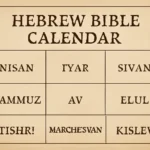
Months are named in Hebrew and include Nisan, Iyar, Sivan, Tammuz, Av, Elul, Tishrei, Cheshvan, Kislev, Tevet, Shevat, and Adar (with Adar II in leap years).
Holidays in the calendar are anchored to the Hebrew calendar dates, not to fixed Gregorian dates, which is why a free Hebrew calendar download must provide a year-specific mapping from Hebrew dates to Gregorian dates.
When you encounter a free Hebrew calendar resource, expect it to include both the structure of the months and the marking of key observances, such as Rosh Hashanah, Yom Kippur, Sukkot, Hanukkah, Purim, Passover (Pesach), and Shavuot, as well as fast days and special Sabbaths. A well-designed printable calendar will also differentiate between public holidays, fasts, and Torah portions where appropriate.
Why a printable calendar is helpful for families, schools, and communities
A printable Jewish calendar offers several practical benefits that digital-only solutions cannot always guarantee. For example, it supports planning without relying on internet access, creates a tangible reference for classrooms, and serves as a shared resource in communal spaces.
Offline accessibility: Printouts or PDFs can be accessed without devices or connectivity.
Group coordination: A wall calendar or handout helps multiple people coordinate holiday observance, school recess, and synagogue programs.
Educational value: Visual learners can grasp how holidays relate to the Hebrew months and seasons.
Versatility in formats: From one-page yearly calendars to detailed monthly spreads, you can choose a layout that fits your space and needs.
Whether you call it a free Hebrew calendar download or a printable Hebrew holiday calendar, the core aim is the same: to support accurate scheduling and meaningful celebration. This makes the resource valuable for family trip planning, school curricula, and community program calendars.
What you typically get in a free Hebrew calendar package
A comprehensive, accessible calendar package tends to include a consistent set of elements. Here are the components you can expect from a high-quality free Hebrew calendar offering:
Yearly layout: A full-year view with each month clearly labeled in Hebrew and often English translations.
Hebrew dates and Gregorian equivalents: The calendar maps Hebrew date entries to their corresponding Gregorian dates for the year.
Major Jewish holidays: Marked and named holidays such as Rosh Hashanah, Yom Kippur, Sukkot, Simchat Torah, Hanukkah, Purim, Passover, and Shavuot.
Fast days and special Sabbaths: Observances such as Tisha B’Av, the Fast of Gedaliah, and other seasonal fasts or Shabbatot
Shabbat and candle-lighting indicators: Optional icons or color-coding to highlight Shabbat start times where included.
Educational notes: Short explanations or parashah (Torah portion) references for weekly planning and study prompts.
Format variety: Printable PDFs, image PNGs for quick sharing, and sometimes editable formats like DOCX or Google Sheets templates.
Language options: English-Hebrew bilingual versions or purely Hebrew versions to fit different audiences.
Notes area: A space for personal events, family birthdays, or school events.
When you choose a downloadable Hebrew calendar, consider which elements are most useful for your context. Some users prioritise bilingual labeling for teaching, while others want a minimal layout focused strictly on dates and holiday names.
Formats and variants: PDF, image, and editable templates
There is no single universal format for a free Hebrew calendar. Different users prefer different file types, depending on how they plan to print, distribute, or customize the calendar.
PDF calendars: Ideal for printing with consistent layout across devices. They preserve fonts and formatting, making a clean, ready-to-print option.
Image calendars (PNG/JPG): Useful for sharing in emails or social media, or for quick previews on screens.
Editable templates (DOCX, Google Sheets, Excel): Best for those who want to customize dates, add notes, or adjust the layout for personal or educational needs.
SVG or vector formats: Helpful for high-quality printing at large sizes or for professional publishers who want to modify the design without losing clarity.
When evaluating a free Hebrew calendar download, check the available formats and ensure you can open and edit the file with software you already use. If you need to share the calendar with a team, an editable format can be a big convenience.
How to choose a reliable free Hebrew calendar resource
With many options available online, selecting a trustworthy free Hebrew calendar package can be challenging. Consider the following criteria to ensure the calendar you download is accurate and user-friendly:
Accuracy: The calendar should correctly reflect the Hebrew leap year rules and month lengths for the target year.
Clarity of layout: Clear month headers, legible typography, and intuitive color-coding or symbols for holidays and fast days.
Language clarity: If you need bilingual labels, ensure the English and Hebrew names are accurate and easy to understand.
License and usage terms: Look for calendars that are free to use for personal and educational purposes and understand any attribution requirements.
Format compatibility: Confirm that the file formats suit your printing setup and editing needs.
Source credibility: Prefer calendars produced by reputable community organizations, educational institutions, or well-known publishers within Jewish communities.
It’s also helpful to read user reviews or a brief description from the publisher about how dates were calculated and tested. A well-documented calendar is more trustworthy for planning important events and holidays.
Using a printable calendar to track Jewish holidays and observances
Once you have a downloadable Hebrew calendar, you can tailor it to your rhythm of life. The following practical steps can help you maximize its usefulness:
Print a high-quality copy and place it where all family members or participants can see it, such as a kitchen wall or classroom bulletin board.
Annotate key dates with personal reminders, such as family meals, community events, or school assignments that coincide with holidays.
Highlight upcoming holidays several weeks in advance to enable voluntary preparations, like baking challah or purchasing holiday supplies.
Cross-check the calendar with your local community announcements for any date-specific events that extend beyond religious observances, such as school vacations or public commemorations.
Use the editable version to adapt the calendar to your school’s curriculum or congregation’s schedule, including Torah portions for weekly study.
For households and classrooms, a printable calendar with holiday names in both Hebrew and English often fosters a richer understanding of time and tradition. It can also serve as a gentle entry point for children learning about the calendar, holidays, and associated customs.
The major Jewish holidays and how they appear in a free calendar
A well-crafted free Hebrew calendar will mark the major holidays and may provide quick notes about the nature of the observances. Here are the principal holidays you are likely to see highlighted, along with a brief description of their importance and typical timing within the year. Subsections below offer quick context for each holiday.
The Jewish New Year, traditionally observed with reflection, prayer, and festive meals. In most calendars, Rosh Hashanah marks the first of Tishrei and begins a period of introspection that culminates in Yom Kippur. A good calendar will indicate both days of Rosh Hashanah and mention related customs such as the blowing of the shofar.
Yom Kippur
Yom Kippur is the Day of Atonement, a solemn fast day devoted to repentance, prayer, and atonement. It usually occurs around the 10th day of Tishrei. On a calendar, you’ll often see a strong highlight or a dedicated marker for this holy day, sometimes with a note about fasting guidelines.
Sukkot
Sukkot is the Feast of Tabernacles, a major festival that spans several days starting on 15 Tishrei. Many calendars will show Sukkot with symbols such as a sukkah, lulav, and etrog, and may include the Simchat Torah sub-festival at the end of the week.
Shemini Atzeret and Simchat Torah
These closely connected holidays occur in succession at the end of Sukkot. Shemini Atzeret is observed on 22 Tishrei, followed by Simchat Torah, a day celebrating the conclusion and restarting of the Torah reading cycle. A calendar might group these days or show them as two distinct markers in close proximity.
Hanukkah
Hanukkah is an eight-day festival known for lighting the menorah and recounting the miracle of oil. A printable calendar typically marks the first and last day of Hanukkah and may offer a note about candle-lighting times on evenings of the holiday.
Tu BiShvat
Tu BiShvat, the New Year for the Trees, is a minor festival that is often included in calendars with a short description of its agricultural and environmental significance.
Purim
Purim is a festive holiday commemorating the saving of the Jews in ancient Persia, marked by reading Megillah, feasting, and charity. In calendars, Purim’s date shifts within Adar and is sometimes highlighted with celebratory symbols.
Pesach (Passover)
Passover spans seven or eight days (depending on tradition) and celebrates liberation from slavery. A calendar will typically mark the eve of Passover (Erev Pesach) and the days of the festival, with notes about major restrictions and seasonal customs such as the seder.
Shavuot
Shavuot occurs near the conclusion of the Omer counting and commemorates the giving of the Torah at Sinai. Calendars may indicate the two-day festival in the diaspora or a single-day observance in Israel, along with notes about dairy foods and Torah study.
Tisha B’Av
Tisha B’Av is a fast day that memorializes various tragedies in Jewish history. It is typically observed on the 9th of Av and is marked on calendars with fasting guidelines and reflective notes.
Special features you might find in a free Hebrew calendar package
Depending on the publisher and the intended audience, a free calendar may offer extra elements that enhance learning and planning. Consider these possible features when evaluating a calendar download:
Parsha/Weekly Torah portion pointers: Some calendars include the weekly Torah portion (parsha) alongside the date, helping students connect time with study themes.
Moon phases: Since the Hebrew calendar is lunisolar, a calendar might display moon phases to illustrate how the months align with the lunar cycle.
Hebrew transliterations: For learners not fluent in Hebrew, transliterated month and holiday names can aid pronunciation and understanding.
Public holidays and school breaks: In addition to religious observances, calendars often include school holidays or community events to help families coordinate schedules.
Color-coding: A common feature to differentiate holidays, fast days, and ordinary days visually, improving readability and quick scanning.
Notes fields: Spaces to add personal reminders, family milestones, or community events.
Printer-friendly tips: making the most of your printable calendar
To ensure that your printable Hebrew calendar looks good when you print it, consider a few practical tips that enhance readability and durability:
Choose the right paper: Use sturdy paper or card stock for a wall calendar or a standard sheet for a desk calendar.
Print at actual size: Avoid scaling options that can distort the layout; printing at 100% ensures dates align correctly.
Use color strategically: If your calendar uses color-coding, print in color or select a high-contrast black-and-white version that preserves readability.
Laminate for longevity: Lamination can protect the calendar on a wall or in a classroom setting, increasing its lifespan through multiple years of use.
Combine formats: Keep a yearly printable version for planning and a monthly printable for more detailed planning; you can print both from the same source if available in multiple formats.
Where to find reliable free Hebrew calendars: sources and best practices
For anyone seeking a free Hebrew calendar download, there are several dependable avenues, including community organizations, educational publishers, and open-source projects. When you choose a source, consider licensing, accuracy, and the level of customization offered.
Jewish community centers and synagogues: Many synagogues offer weekly or annual calendars in printable formats as part of their outreach and education programs.
Educational institutions: Jewish schools and yeshivas sometimes publish calendars that align with their curricula and prayer books.
Nonprofit organizations: Philanthropic or cultural organizations often provide calendars along with essays about holidays and customs.
Open-source and community repositories: Platforms hosting editable templates encourage collaboration and customization, useful for classrooms and small communities.
Publisher pages: Reputable publishers may offer a free sample calendar or a limited edition download to showcase design and layout.
Regardless of the source, it is wise to verify the date accuracy for the intended year, especially when using lease-limited or annual download calendars. If you need a calendar for a specific year, confirm that the file corresponds to that year and includes leap-year adjustments for Adar I/II when relevant.
How to customize a free Hebrew calendar for your needs
One of the advantages of downloadable calendars is the ease with which you can tailor them to your audience. Here are practical customization ideas for different contexts:
Families: Add birthdays, anniversaries, and family events; note candle lighting times or Shabbat start/end times if your calendar format includes them.
Schools: Include class schedules, holidays from the academic calendar, and Torah study themes tied to the weekly Parsha.
Synagogues and community centers: Mark program dates, fundraising events, and special services in addition to holidays.
Messianic or cultural education: Some calendars integrate additional notes about customs, foods, and songs associated with holidays.
If you are using an editable downloadable calendar, you can adapt fonts, colors, and spacing to suit your brand or classroom aesthetic, making the resource even more effective for your audience.
Ethical and licensing considerations for free Hebrew calendars
As you download and reuse a free Hebrew calendar, it’s important to observe licensing terms and attribution requirements, if any. Some calendars are released under permissive licenses that allow for personal and commercial reuse, while others may require you to credit the author or prohibit redistribution in modified forms.
Read the license: Look for statements about reuse rights, modification allowances, and whether commercial use is permitted.
Give credit where due: If required, include a note or attribution line in your printed or digital version.
Preserve accuracy: If you adjust or customize the calendar, ensure that you do not alter the core holiday dates in a way that could mislead users.
A responsible approach to licensing helps ensure that free Hebrew calendar ecosystems stay vibrant and trustworthy for communities around the world.
A brief guide to creating your own free Hebrew calendar (if you want to publish one)
If you have the time and the need, you can contribute to the ecosystem by publishing your own free Hebrew calendar that others can download. Here is a short guide to get started:
Decide on your target audience and the formats you will offer (PDF, editable template, image files, etc.).
Verify the Hebrew leap year rules and ensure accurate mappings to Gregorian dates for the year you publish.
Choose a clear layout and accessible fonts; consider bilingual labels if your audience includes non-Hebrew readers.
Provide documentation about the calendar’s conventions (color codes, symbols, and any notes about parsha references).
Publish with an open license if you want broad reuse, and include a short guide on how others can adapt your calendar for their needs.
Contributing a well-constructed, freely available calendar helps educators, families, and congregations plan with confidence, reinforcing the shared practice of timekeeping in Jewish culture.
Conclusion: embracing accessible tools for Jewish time and tradition
A free Hebrew calendar that is printable and downloadable serves as a practical bridge between tradition and daily life. It supports accurate planning of Jewish holidays, fast days, and weekly observances, while also offering room for personal notes, educational notes, and school or community scheduling. By choosing reliable sources, understanding the calendar’s lunisolar framework, and leveraging editable formats when needed, families and communities can enhance their ability to observe and reflect on time in a meaningful way.
Whether you’re preparing a classroom activity, organizing a synagogue calendar for the year, or simply keeping a family planner on the kitchen wall, a well-designed free Hebrew calendar can be a dependable resource. As you explore different free Hebrew calendar options, look for clarity, accuracy, and flexibility, and you’ll find a tool that helps you celebrate the rhythms of the Jewish year with intention and joy.