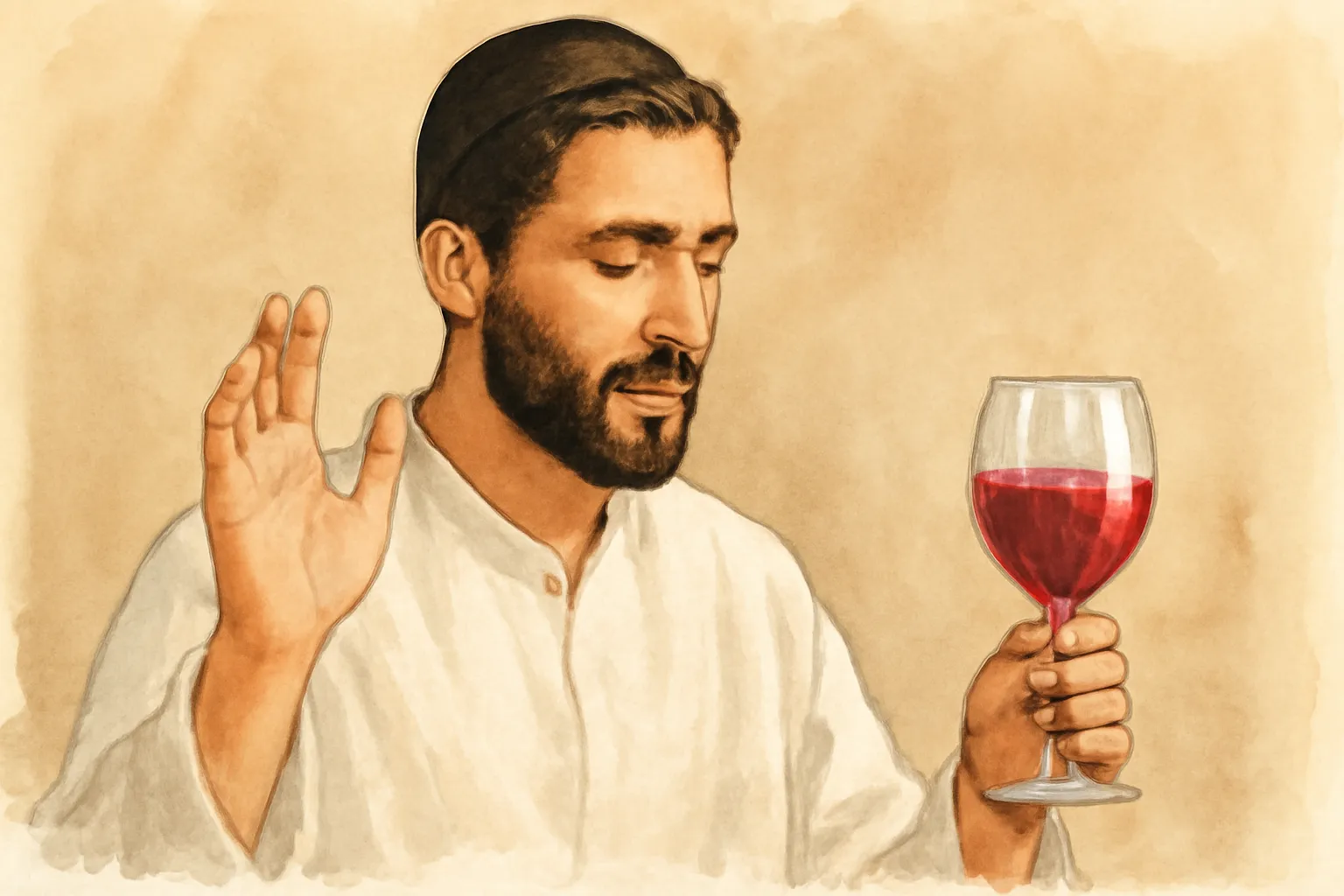
The Hebrew wine blessing is a compact, centuries-old formula that sanctifies a cup of wine or grape juice in Jewish ritual. Also known as a berakhah on the fruit of the vine, it appears most often in the ceremonies surrounding Kiddush on Shabbat and holidays, as well as in other rites such as Havdalah and celebratory toasts. This article surveys the meaning of the blessing, traces its history, and explains how to bless wine in practice, including variations and modern adaptations.
What is the Hebrew wine blessing? Meaning and purpose
At its core, the Hebrew wine blessing recognizes God as the source of life and sweetness and marks wine as a symbol of joy and sanctity. The blessing, in its most common form, is a short statement of praise and gratitude that precedes the drinking of wine in a ritual context. The standard wording in transliteration is: Baruch Atah Adonai Eloheinu Melech HaOlam Borei Pri HaGafen. In Hebrew letters, that is: ברוך אתה ה’ אלוהינו מלך העולם בורא פרי הגפן.
Key ideas embedded in the blessing include:
Acknowledge God as sovereign over creation: Eloheinu Melech HaOlam.
Celebrate the fruit of the vine as a calendar-worthy sign of joy: Pri HaGafen (the fruit of the grape).
Blessing precedes consumption and both signals a transition—from ordinary time to sacred time in rituals like Kiddush.
Although the essential form is fixed, you will encounter variations of the Hebrew wine blessing in different communities and languages. Some traditions spell the transliteration slightly differently (for example, ha-gefen vs. ha-gafen), and some readers see minor stylistic differences in capitalization or punctuation. The underlying intention remains the same: to distinguish wine as a vehicle of sanctity and communal joy.
Historical roots: Where did the blessing come from?
The practice of blessing the fruits of the vine sits within a long chain of Jewish berakhot—blessings recited over daily activities and natural phenomena. The Talmud and Mishna discuss blessings on foods and drinks in a systematic way, laying the groundwork for the standardized formula we know today. While the exact moment when the first blessing on wine was formulated is not recorded in a single text, the tradition is firmly anchored in the rabbinic period and was later codified in medieval law codes.
Origins in biblical and early rabbinic imagery
Wine has held ritual and symbolic significance in the Hebrew Bible and in Second Temple-era practices. Grapes and wine feature in sacrifices, offerings, and celebratory meals. Over time, the rabbinic sages developed a vocabulary of blessings that could be recited before eating or drinking in ordinary and sacred contexts. The shift from wine as a mere staple in ceremonial meals to a formal blessing on wine reflects a broader shift in Judaism toward sanctifying time and actions through blessings (berakhot).
Codification and standardization in the medieval period
By the medieval era, Jewish legal literature began to articulate a consistent structure for blessings over foods and drinks. The Shulchan Aruch and contemporaries—often with commentaries by the Rosh, the Rema, and others—present a codified framework for who may recite blessings, when they are recited, and in what order. The wine blessing is among the most enduring and widely used berakhot, for it accompanies one of Judaism’s most central rituals: the sanctification of Shabbat and festivals through Kiddush.
In a sense, the history of the Hebrew wine blessing mirrors the broader Jewish practice of sanctifying daily life. From the temple-era symbolism of wine to the rabbinic emphasis on blessing over ordinary moments, the practice invites people to pause, acknowledge, and express gratitude to God for the gifts of creation.
In practice: how to bless wine in Jewish ritual
Blessing wine, whether as a stand-alone act or as part of a larger rite, follows a cadence that combines intention, recitation, and, often, communal participation. The steps vary by occasion (Shabbat, festival, Havdalah, or a special blessing at the table), but the core elements remain consistent: prepare the wine, recite the blessing, and then proceed with the ritual action (for example, Kiddush or Havdalah).
General steps you’ll encounter
Prepare the cup: Use a dedicated cup for the blessing, and pour a modest amount of wine or grape juice.
Set intention (kavanah): Focus your mind on the purpose of the moment—sanctification, gratitude, and communal joy.
Recite the blessing on the wine: Baruch Atah Adonai Eloheinu Melech HaOlam Borei Pri HaGafen.
Proceed with the ritual: Depending on the occasion, follow with the appropriate blessing text (Kiddush, Havdalah, or other ritual formula) and then partake of the wine.
Because different communities observe slightly different sequences, you may encounter variations. The essential structure—blessing the fruit of the vine as a recognition of divine creation and as a prelude to sanctified time—remains constant.
When the blessing is used: examples by occasion
Kiddush on Shabbat: The wine blessing is recited as part of the Kiddush ceremony that sanctifies the beginning of Shabbat or a festival. After the blessing, a short blessing for sanctification of the day is recited, and the wine is consumed or passed to others.
Havdalah: At the end of Shabbat, wine is used once again to separate holy time from ordinary time. The blessing Baruch Atah Adonai on the wine is recited, followed by the blessing over the spice and the candle—each element marking transition and memory.
Mealtime blessings: In some traditions, the blessing on wine precedes or accompanies festive meals, especially on holidays when wine signals festivity and gratitude.
Toasts, celebrations, and modern usage
Beyond ritual liturgy, the Hebrew wine blessing often appears in social settings—weddings, bar/bat mitzvahs, or family milestones—where a toast with wine is a sign of joy and communal unity. In contemporary practice, grape juice is frequently substituted for wine, particularly for children or where wine is not appropriate for dietary reasons. In such cases, the blessing remains the same, but the beverage chosen reflects the needs and values of the participants. The blessing is about the sacred act of elevating an everyday moment into a gesture of gratitude and connection.
Blessings over wine in different Jewish rituals
Kiddush: sanctifying Shabbat and holidays
Kiddush is the central ritual that sanctifies Shabbat, Yom Tov, and other holy days. A typical Kiddush involves two main components: the wine blessing and the Kiddush blessing. In many communities, the wine blessing is recited first, affirming gratitude for the fruit of the vine, and then the Kiddush blessing proclaims the sanctity of the day. The cup of wine is often waved or touched as a physical reminder of the communal bond and the shared meal to follow.
At Havdalah, a blessing over the wine accompanies the other ritual elements—a braided candle and spices—to mark the separation between sacred time and the ordinary weekday. The wine blessing, Baruch Atah Adonai Eloheinu Melech HaOlam Borei Pri HaGeFen, anchors the moment in gratitude for creation, while the rest of Havdalah draws together senses and memory as the new week begins.
Special occasions: blessings linked to joy
On weddings, brit milah, and other joyous events, wine often accompanies celebratory rituals and toasts. The same blessing on the wine underpins these moments, turning a private toast into a shared act of gratitude. In modern life, many couples recite the wine blessing together as a sign of unity and shared purpose, while others invite guests to recite or respond with a traditional liturgical phrase or song.
Variations and semantic breadth: different ways to refer to the blessing
To capture the semantic breadth of this practice, you’ll encounter several terms and phrases that point to the same core act. Here are some common variations you may see in texts, liturgy books, or everyday speech:
Berakhah on the fruit of the vine (barakhah al pri ha-gefen): a descriptive, neutral way to name the blessing without repeating the exact wording.
Borei Pri HaGafen (the blessing itself, sometimes transliterated with or without a space or dash): the core phrase in the blessing’s language.
Borei Pri HaGeffen or Baruch Atah Adonai Eloheinu Melech HaOlam Borei Pri HaGafen: the full, formal form most commonly used in the liturgy.
Berakha Yayin or Berakhah LeKiddush when referring to the broader category of blessings that involve wine in liturgical contexts.
In English-language prayer books and community literature, you’ll also see transliterations that reflect different traditions (Ashkenazi, Sephardi, or Mizrahi pronunciation). The essential idea remains identical: a blessing offered to God over the wine that sanctifies the moment and signals joy and gratitude.
Modern use and adaptation: inclusivity and accessibility
As Jewish practice continues to adapt to contemporary life, the Hebrew wine blessing has found applications beyond traditional liturgy. Some notable trends include:
Non-alcoholic options: For participants who do not drink alcohol, grape juice is widely used, and the blessing is recited over the juice with the same wording: Baruch Atah Adonai Eloheinu Melech HaOlam Borei Pri HaGafen. The blessing’s meaning remains unchanged even though the corporeal symbol (wine vs. juice) differs.
Interfaith and inclusive settings: In family or community events that draw participants from diverse backgrounds, the wine blessing can serve as a bridge, emphasizing shared values of gratitude and sanctification without pressuring anyone to drink alcohol.
Educational contexts: Synagogues, schools, and Jewish museums often teach the blessing as part of a broader curriculum on ritual life, Hebrew language, and the arts of blessing. Learners explore the linguistic components, the ritual practices, and the historical development of the blessing.
Cuisine and hospitality: In culinary experiences that explore Jewish ritual foods, the wine blessing can accompany tastings, demonstrating how tradition shapes hospitality and the rituals around meals.
Despite these adaptations, the core gist remains unchanged: the blessing acknowledges God’s gift of the vine, signals a moment of sanctity or joy, and connects participants to a long lineage of Jewish ritual practice.
Common questions and myths about the Hebrew wine blessing
Is the blessing said before or after drinking?
The standard practice is to recite the blessing on the wine before drinking during communal rituals like Kiddush, Havdalah, or other blessings. After the wine blessing, you may recite the accompanying liturgical text for the occasion (such as the Kiddush blessing) and then drink. However, local customs differ, so you should follow your community’s practice or the guidance of your rabbi.
Can grape juice substitute for wine?
Yes. In many communities, grape juice is an acceptable substitute when wine is not appropriate for health, dietary, or age-related reasons. The blessing text remains the same and is recited over the grape juice, preserving the ritual’s meaning while accommodating circumstances.
There are several blessings that reference wine in various contexts (for example, blessings for special occasions or celebrations). The most common and widely used is Borei Pri HaGafen. Other contexts use variations that emphasize sanctification of time (Kiddush) or the transition between sacred and secular time (Havdalah), but the fundamental concept—gratitude for the fruit of the vine—remains constant.
Key terms and phrases to know
Berakhah (blessing): a prayerful formula of gratitude or praise recited before or after performing a commandment or consuming certain foods or drinks.
Pri HaGafen (fruit of the vine): the biblical and rabbinic category that covers grapes and wine.
Borei Pri HaGeFen (the blessing on the fruit of the vine): the canonical wording of the wine blessing.
Kiddush (sanctification): the ritual blessing and proclamation that sanctifies Shabbat and holidays, typically accompanied by wine.
Havdalah (separation): the ceremony marking the end of Shabbat, in which wine, spices, and a candle play central roles.
Kavanah (intention): the mental focus and purpose behind performing a religious act, including the wine blessing.
Understanding these terms helps in following the liturgical and ethical logic of the blessing and in appreciating how the Hebrew wine blessing ties into broader Jewish concepts of gratitude, sanctification, and community.
Conclusion: what the Hebrew wine blessing teaches us
The Hebrew wine blessing is more than a liturgical phrase. It is a concise, powerful reminder of human gratitude, the dignity of ritual time, and the idea that everyday substances—like the grape—can become vessels for sacred memory. In Jewish life, wine is not merely a beverage; it is a symbol of joy, covenant, and communal identity. By reciting Borei Pri HaGafen and engaging with the related rituals—Kiddush, Havdalah, and celebratory toasts—individuals participate in a centuries-long tradition that connects them to their ancestors and to each other. Whether you are preparing a Shabbat table, a festival meal, or a personal moment of gratitude, the wine blessing offers a deliberate, meaningful way to mark time, gratitude, and joy.