Birkat Kohanim Hebrew: Meaning, Pronunciation and Significance
The Birkat Kohanim, often called the Priestly Blessing, stands as one of the most emblematic benedictions in Jewish liturgy. In Hebrew, it is the blessing that the Kohanim (the Priests, descendants of Aaron) recite over the congregation. This blessing is not only a set of words; it is a centuries-old ritual that embodies covenantal hope, communal unity, and a tangible sense of divine presence during worship. In this article, we will explore its meaning, its pronunciation, and its significance within Jewish tradition, with attention to historical context, liturgical practice, and modern variations.
What is Birkat Kohanim?
The Birkat Kohanim is a three-verse blessing found in the biblical book of Numbers 6:24-26. In many communities, it is recited by the Kohanim during specific prayer services, normally on Shabbat, Jewish holidays, and certain festive occasions. The blessing is distinct in that it is conveyed not by a single rabbi or cantor but by members of the priestly line who physically raise their hands in a ceremonial gesture as they utter the blessing. This ritual act reinforces the sense that the words carry a special, almost covenantal blessing for the entire congregation.
The purpose of the Birkat Kohanim goes beyond mere words of good fortune. It is understood as a channel for God’s protective favor, guidance, and peace to descend upon the people. The three verses, taken together, articulate three linked ideas: blessing, divine presence or «countenance,» and peace. For this reason, the blessing is often described as a living expression of the divine promise that God will watch over the community and bestow wholeness and harmony.
In practice, the blessing is a moment of communal focus. The priests gather, the congregation pauses, and a cadence of recitation unfolds that many people experience as a rare opportunity for a direct, palpable sense of spiritual connection within the rhythm of the service.
Text and Pronunciation
The traditional Hebrew text of the Birkat Kohanim is drawn from Numbers 6:24–26. In most standard liturgical prints, it appears as three phrases delivered in sequence. For readers and worshippers, understanding both the language and the cadence can deepen the sense of meaning embedded in the words.
Note: In printed editions and in many congregations, the three verses are separated for clarity, and some prints place the words with a slightly different punctuation or line-breaks. The essential message—“May the LORD bless you and keep you; May the LORD make His countenance shine upon you and be gracious to you; May the LORD lift up His countenance upon you and give you peace”—remains the same.
For those learning the pronunciation of the Birkat Kohanim, a helpful guide is to focus on the cadence and the vowels that appear in the common liturgical style. A representative transliteration is:
Yevarekha (יברכך) begins with a soft “ye” and a strong final “kha.”
Adonai (אדני) is traditionally pronounced with reverent substitution in many communities; some say Hashem instead in casual speech, but in the blessing itself, Adonai is often used in liturgical contexts.
V’yishm’kha (וְיִשְמְךָ) has a soft aspirated “v” followed by the ש and a final long “a” sound.
Ya’er (יַאֵּר) contains the long “a” and the soft “r” at the end of the first syllable.
Panav (פָּנָיו) emphasizes the long “a” vowels in the second syllable and the final “av” sound.
Elekhā (אֵלֶיךָ) is a two-syllable sequence with a clear glottal stop after the initial aleph in transliteration, though the Hebrew letter is not pronounced as a glottal stop by most speakers; the emphasis falls on the second syllable.
Shalom (שָׁלוֹם) ends with the long “o” sound and a soft final “m.”
Chant and cantillation
In traditional practice, the Birkat Kohanim is recited with a distinct cantillation and a measured, stately cadence. The trope (cantillation marks) guide the congregation through the three phrases with deliberate pauses, allowing the words to resonate. The cadence varies by tradition—Ashkenazi, Sephardi, Mizrahi, and other communities each have their own musical styling—yet the underlying sequence remains consistent: blessing, countenance, peace.
Meaning behind the three verses
The Birkat Kohanim is built on three linked promises, each anchored in the divine attributes of blessing, presence, and peace.
First blessing: “May the LORD bless you and keep you.” This line—often the most remembered—emphasizes material, spiritual, and communal well-being. The aim is not only personal prosperity but protection and fidelity within the covenantal relationship with God. The verb bless (בָּרַךְ) signals a gracious endowment, while keep (Shamar) speaks to preservation, security, and fidelity in the face of life’s risks.
Second blessing: “May the LORD make His face shine upon you and be gracious to you.” This phrase evokes God’s radiant graciousness and favor. The imagery of God’s face shining upon someone signals closeness and blessing that come from intimate attention, warmth, and benevolence. The addition of grace (חֶסֶד or חֶסִים) in some textual understandings underscores the generosity that rests at the heart of the covenant relationship, even in times of judgment or challenge.
Third blessing: “May the LORD lift up His countenance upon you and give you peace.” A final, expansive wish for shalom (peace) completes the blessing. Here, “the countenance” is a poetic way to describe God’s presence and attentive care, translated as blessing, guidance, and a sense of settled harmony in one’s life and in the community.
Across generations, Birkat Kohanim has been understood as a communal inflection of trust in divine graciousness. The text’s economy—three compact lines—belies a depth that scholars and lay readers alike continue to explore: the idea that blessing is not only about fortune but about the alignment of one’s life with a gracious, protective, and peaceful divine plan.
Historical and liturgical context
The blessing is rooted in a biblical command, and its annual or weekly public recitation connects contemporary worship with ancient priestly function. Several key points help frame its place in Jewish history and practice.
Origins in the Torah
The Birkat Kohanim derives from Numbers 6:24–26, where God’s instruction to Moses describes a threefold blessing to be pronounced over the people by the Kohanim. In the biblical account, the Priests played a central role in mediating divine blessing during liturgical rites and in the temple. The text’s language—addressed to the people as a whole—signals a communal conduit of grace through the Priestly Office.
Connection to the Temple and Mishnah
In the era of the Temple in Jerusalem, the Priests performed several services daily, and the Nesi’im (princes) and priestly families carried out ritual duties, including pronouncing blessings. The Mishnah and Talmud preserve discussions about the conditions under which the Kohanim publicly bless the congregation, including the behavior expected of the Kohanim and the manner of their blessing. The Talmudic sources emphasize that the blessing should be uttered with reverence, and the Priests should maintain proper decorum while performing the rite.
After the destruction of the Second Temple, Jewish communities adapted the practice for synagogue settings. The Birkat Kohanim was maintained as a central, ceremonial moment in many congregations, especially within Ashkenazic and Sephardic rites. Today, the practice continues in many Orthodox and some Conservative communities, while other streams of Judaism (notably many Reform congregations) may observe alternative forms of blessing or celebrate the moment in different ways.
Practice and ritual: how Birkat Kohanim is performed
Who recites?
In traditional contexts, the Kohanim who are eligible to bless are male descendants of the priestly line. The practice is guided by community custom and rabbinic rulings; in many Ashkenazi communities, only men who are known to be priests participate in the blessing. Some contemporary communities, especially within segments of Reform and Conservative Judaism, may modify the practice according to communal norms or gender-inclusive policies.
When is it done?
The Birkat Kohanim is most commonly observed on Shabbat and Jewish holidays in traditional settings. Some communities also include it on daily Shabbat פרקי or during certain festival days. In some places, it is offered during the Shacharit service, particularly when a designated kohen is present. The exact schedule can vary by synagogue, denomination, and local tradition.
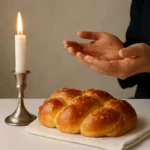
A distinctive feature of the Birkat Kohanim is the classic raised-hand gesture. The Kohanim extend their hands, typically with each hand forming a gesture that allows the blessing to “flow” toward the congregation. The posture and arrangement of the hands have become a recognizable symbol in Jewish art and liturgical practice. The ritual gesture accompanies the spoken blessing, underscoring the belief that the act of blessing is a conduit for divine grace.
The atmosphere and pauses
The recitation is often delivered with measured pauses between the lines, allowing the congregation to absorb each blessing as it unfolds. In many communities, the lector or the leading Kohanim will pause briefly after each line, creating a rhythm that helps the assembly internalize the words and reflect on their meanings.
The role of the congregation
For the faithful, the Birkat Kohanim is not only a moment of receiving blessings but also a time to renew one’s sense of communal belonging. The blessing embodies a mutual covenant: God’s grace to the people, and the people’s gratitude and trust in God’s ongoing care.
Significance across communities and denominations
The Birkat Kohanim is widely regarded as a quintessential expression of Jewish communal life. Its significance can be understood through several angles: theological, liturgical, and cultural.
Theological significance
The Birkat Kohanim is a formal, public articulation of God’s blessing. It embodies the conviction that divine grace is not a private privilege but a communal gift that reaches each individual through the leadership and intercession of the priestly line. The blessing reframes personal supplication into a collective moment of gratitude and hope, where the community’s well-being is addressed in unison.
Liturgical significance
In the structure of the synagogue service, the Birkat Kohanim marks a ceremonial peak that refreshes the sense of spiritual nourishment for the congregation. Its cadence, ritual posture, and public recitation contribute to a shared liturgical memory—an enduring feature of Jewish communal worship.
Cultural and educational significance
The Birkat Kohanim has inspired a broad body of study and artistic expression. In art, music, and literature, the threefold blessing has been rendered in countless ways, reflecting the diversity of Jewish experience across geographies and eras. For learners, the blessing offers a focused lens through which to study biblical language, cantillation, and the interpretive traditions that accompany rabbinic exegesis about divine presence, blessing, and peace.
Jewish communities around the world have developed subtle and not-so-subtle variations in how the Birkat Kohanim is practiced and presented. These differences reflect long-standing liturgical customs, the influence of local cantors, and contemporary conversations about inclusive practice.
Ashkenazi vs. Sephardi/Mizrahi renditions
In Ashkenazi communities, the Birkat Kohanim is typically performed with a well-established melodic line and a precise ritual that emphasizes the continuity of the priestly tradition. Sephardi and Mizrahi communities often adapt the cantillation to align with their own liturgical tunes and vocal timbres, sometimes integrating regional musical motifs. Although the melodies differ, the core text and the sequence of the blessing generally remain consistent.
Gender and inclusion debates
Debates about gender and inclusion have led some communities to reconsider who may participate in the Birkat Kohanim. While traditionally restricted to male Kohanim, certain congregations within Reform, Conservative, and some Reconstructionist circles have explored inclusive approaches, such as extending the opportunity to bless to additional participants or reimagining the moment in ways that reflect contemporary values. Each community’s policy is shaped by its rabbinic authority, congregational culture, and the sensibilities of its members.
Variants in phrasing and tradition
Beyond standard forms, some groups incorporate liturgical supplements or clarifications—for example, directing the congregation to respond with appropriate reverence, or adding a brief invocation before the blessing. Another pattern is to hold a moment of quiet after each line to allow personal reflection. These variations, while meaningful to their communities, do not alter the essential message of blessing, presence, and peace that the Birkat Kohanim conveys.
Tips for learners and worshippers
Whether you are a student of Jewish liturgy or a worshipper preparing to participate in or observe the Birkat Kohanim, a few practical pointers can enhance understanding and participation.
Learn the meaning first: Understanding what each line conveys—blessing, divine presence, and peace—deepens engagement beyond rote repetition.
Practice pronunciation: If you plan to recite along with the Kohanim, practice the transliteration and Hebrew with a teacher or a reliable audio resource. Focus on the cadence and the stress patterns of the words.
Respect the moment: The Birkat Kohanim is a moment of communal blessing. Maintain a posture of reverence, listen attentively, and avoid unnecessary conversation during the recitation.
Attend a diverse practice: If you have access, listen to multiple communities—Ashkenazi, Sephardi, Mizrahi—to experience the variety of musical and choreographic expressions while keeping the central text intact.
Explore the beauty of the tradition: The three verses represent a triad of divine generosity, presence, and peace. Reflect on how these themes appear in your own life and community commitments.
Further reading and study resources
For readers who wish to explore more deeply, consider:
Commentaries on Numbers 6:24–26 that discuss priestly blessings and their interpretive history
Texts and recordings of cantillation patterns used in diverse Jewish traditions
Rabbinic discussions about the eligibility and responsibilities of Kohanim during public blessings
Conclusion
The Birkat Kohanim embodies a timeless interaction between divine blessing and human community. Its meaning sits at the intersection of spiritual aspiration, communal identity, and ritual artistry. Through the pronunciation of its three lines and the ritual gesture of the Kohanim, generations have experienced the blessing as a living conduit of grace and peace. Whether approached as a textual study, a liturgical practice, or a cultural phenomenon, the Priestly Blessing remains a powerful reminder of the covenantal bond between God, the priestly lineage, and the people.
As you continue to encounter Birkat Kohanim in Jewish worship—whether in a synagogue, a study hall, or a cultural event—may the blessing’s threefold message—blessing and protection;divine presence and grace;peace and harmony—stay with you and your community, resonating through time as a core expression of faith, gratitude, and hope.