Welcome to a comprehensive guide on Jewish Shabbat times London, covering the local schedule, how to read sunset and nightfall data, and practical tips for visitors and residents alike. Whether you are tracing the Shabbat candle-lighting times, planning Friday night meals, or trying to align travel plans with a respectful observance, this article explains how the city’s latitude, time zones, and diverse customs shape the weekly rhythm of Shabbat in the British capital. London is home to a rich tapestry of Jewish communities, from insular Orthodox circles to progressive synagogues, and the resulting Shabbat timings reflect both halachic (religious) norms and local tradition. This guide uses a broad lens—often called Shabbat times London or London Shabbat schedule—to help you understand how the day begins, how long it lasts, and where to find reliable data for your specific week.
Understanding Shabbat Times in London: A City-Wide Perspective
In the Jewish calendar, Shabbat begins just before sunset on Friday night and ends after nightfall on Saturday. In London and across much of the diaspora, the practical markers used by most communities are candle lighting before Shabbat starts, kiddush or Friday meals, havdalah at the end of Shabbat, and the calculation of sunset and tzait hakochavim (nightfall or when three stars are visible) for ending Shabbat. The exact moment when Shabbat starts and ends can vary by community tradition (Ashkenazi, Sephardi, Yemenite, Chabad, and others), and it also shifts with the season because sunset times and the onset of night fall depend on the date and the city’s latitude.
London sits in the GMT time zone for part of the year and switches to British Summer Time (BST) in the spring and fall, which means that Shabbat times London are intrinsically linked to the daylight schedule. In practical terms, you should expect that candle lighting times move earlier as winter approaches and later as summer wanes, while end-of-Shabbat times (tzeit hakochavim or havdalah) move later in the year due to the same daylight shift. The result is a weekly cycle whose opening and closing moments are closely tied to the sun’s position above the horizon and to communal customs you choose to follow.
For newcomers, a helpful shorthand is that most households will plan to light candles about 18 minutes before sunset in many Ashkenazi communities, though some follow 20 minutes or other local conventions. Likewise, many London communities conclude Shabbat approximately 40–72 minutes after sunset, depending on the season and halachic approach. These ranges are general guidelines; always verify your local times with a trusted source, especially when travel or work schedules hinge on precise moments.
How Local Shabbat Times Are Calculated
The calculation of the Shabbat schedule is a blend of astronomical data, halachic rules, and communal convention. Here are the core components that drive the Shabbat schedule in London:
candle lighting and Shabbat start
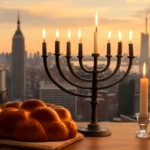
Candle lighting marks the formal beginning of Shabbat for many households. The timing is traditionally set to occur before sunset, giving a small window for Kabbalat Shabbat and a peaceful transition from weekday to holy time. In practice, many synagogues publish a warning time (for those who observe stricter measures) and a standard time that is commonly adhered to by families and individuals in the community. The exact minutes before sunset can vary by community and by the guidance of a local rabbi or synagogue, but the concept remains consistent: light before Shabbat begins, ushering in the Friday night service, Kiddush, and a family meal.
In London’s Jewish life, you will frequently see announcements like “Candle lighting at 7:12 pm” or “Shabbat begins at 7:27 pm” for a particular Friday. These times highlight two important ideas: first, the times are date-specific and location-specific; second, there is a strong sense of communal coordination so that families can greet Shabbat together even if they live at some distance from their synagogue.
Shabbat end: Havdalah and tzait hakochavim
Shabbat does not simply end when Shabbat candles are blown out; it is formally concluded with havdalah, the ceremony that marks separation from the holy day and a return to weekday life. In most communities, the end of Shabbat is tied to nightfall, or when three stars are visible (tzait hakochavim). Because London experiences dramatic seasonal daylight changes, the time of nightfall shifts markedly through the year. In winter, Havdalah may be observed earlier in the evening, while in summer it may occur quite late, sometimes after 10:30 pm or even later depending on how late the stars appear.
For those relying on Shabbat times London data for planning, it’s important to understand whether your source uses “nightfall” in the sense of the astronomical marker (three stars) or an adjusted measure that many communities consider practical (such as a fixed minutes after sunset). Some secular calendars and even certain apps provide a single “end of Shabbat” time, while others require you to check for tzait hakochavim in a given week and neighborhood. In essence, the practice is flexible enough to accommodate diverse customs while remaining anchored in the core idea: Shabbat ends when the night begins and the stars come out, signaling a return to ordinary time.
Sources and Tools for Local Shabbat Times in London
Because Shabbat timing is date-specific and community-specific, most London Jews rely on a mix of sources to confirm times for a given week. Here are common options, explained so you can choose the one that best fits your plans:
Local synagogue calendars and shul bulletins: Many London synagogues publish weekly calendars that include candle lighting, Shabbat start, and Havdalah times. If you attend a specific community (Orthodox, Haredi, Modern Orthodox, Conservative, or Reform), the synagogue’s published times will reflect its minhag (custom).
Chabad-Lubavitch London resources: Chabad houses in London often provide straightforward Shabbat times, as well as guidance for visitors and newcomers. They typically publish times for Friday candle lighting and Saturday end times across their regional campuses, with a focus on hospitality and inclusivity.
Jewish community websites and calendars: Several national and local Jewish calendars aggregate Shabbat times for major cities, including London. These sources compile sunset data, seasonal adjustments, and, in some cases, recommended time margins for candle lighting and Havdalah.
Zmanim calculators and astronomical data: Online zmanim tools (often used by Shabbat observers) let you input London, date, and preferred tradition (Ashkenazi, Sephardi, or custom). They return precise times for shabbat candle lighting, sunset, tzait hakochavim, and Havdalah. These calculators are especially useful for travelers who need up-to-the-minute data.
Local community apps and newsletters: Some neighbourhoods in London publish weekly emails or apps with Shabbat times tailored to specific boroughs or streets, a useful feature when commutes and family schedules depend on exact times.
When researching “Shabbat times London,” it’s wise to triangulate at least two independent sources to ensure accuracy for a given week, especially during times of edge-of-season adjustments or when daylight saving transitions occur. This habit reduces the risk of misalignment with a family or community practice and respects the diversity of Jewish Shabbat times London across communities.
Regional Variations Within London: How the City Shapes Shabbat Timing
London is a sprawling metropolis with many distinct Jewish communities. While the core halachic concepts are shared, the practical Shabbat times can differ from neighborhood to neighborhood. Here is a broad map of how Shabbat times might vary, not as rigid rules but as a guide to expectations in different parts of the city:
Central London and the West End
In central districts, candle lighting times are often aligned with large synagogues and community centers that host Friday evening services. Because these areas tend to experience some of the city’s latest Friday traffic patterns, times may be published to accommodate large crowds and shuttle logistics. End-of-Shabbat times here can be slightly later on certain weeks when the night is longer (summer) or when the community observes a later Havdalah tradition due to crowd sizes and public transit schedules.
North London and the Enfield-Edgware corridor
This region hosts one of the largest clusters of Orthodox Jewish life in Europe. You will frequently encounter a strong adherence to traditional candle lighting times and Havdalah after a strict nightfall marker. Community calendars here often emphasize a crisp boundary between Shabbat and weekday life, and the published times may reflect a preference for standard, well-publicized windows that families can rely on for Friday night meals and Saturday synagogues.
South London and the Streatham–Nunhead belt
In southern districts, there is often a vibrant mix of communities with differing traditions—Ashkenazi and Sephardi, as well as.
Chabad houses and independent kehillot (communities) contribute to a lively, inclusive approach to Shabbat timings. In these areas, you may see more flexible time recommendations, with emphasis on being ready for Shabbat by candle lighting while still respecting personal practice. Havdalah times can vary more than in stricter neighborhoods, especially when diverse populations share the same local synagogue complex.
East London and the Jewish East End
East London communities historically include a significant number of Sephardi, Mizrahi, and liberal congregations. The Shabbat schedule here can reflect a broader spectrum of candle lighting practices and Havdalah rituals. Some synagogues publish multiple timing options to accommodate families with different preferences, such as earlier candle lighting for children or a later Havdalah for late-evening services.
In practice, any London neighborhood’s Shabbat times are shaped by a combination of astronomical data, local tradition, and the specific synagogue or community center you attend. If you plan to visit or move, consult the calendar of the particular congregation you intend to visit and compare with a city-wide resource to avoid surprises.
Practical Guide for Visitors, Students, and New Residents
Navigating Shabbat times London as a newcomer or visitor can be straightforward with a few practical steps. Here is a concise guide to planning your Friday and Saturday around Shabbat, with emphasis on respectful observance and enjoyable experience:
Identify your preferred tradition. Do you follow Ashkenazi, Sephardi, or another tradition? This choice will influence candle lighting and Havdalah timing. If you are unsure, ask a local rabbi or the staff at your accommodation’s closest synagogue.
Check the exact date-specific times. On any given Friday, London times will differ from week to week because of seasonal sunset changes. Always refer to the local synagogue calendar or a reputable zmanim calculator for the precise candle lighting and end of Shabbat times for your location.
Plan travel and meals accordingly. If you are visiting friends or staying in a hotel, align your Friday evening arrival with the Shabbat start, ensuring you arrive in time for candles and services. For Saturday, plan around Shabbat end to attend Havdalah and share a meal with hosts or community members who observe the end of Shabbat.
Be mindful of transit and public events. London’s public transport schedule on Friday evenings may be adjusted around Shabbat times, and some services require pre-booking. If you are attending a specific synagogue, verify whether candles lighting is at the synagogue or at home, and whether there is a communal Kiddush after services.
Respect local customs and dress codes. London’s diverse Jewish life includes a range of modesty expectations. If you are unsure, observe the local community, ask questions politely, and follow the lead of the synagogue’s staff or ushers.
For students and travelers alike, a practical tip is to keep a small pocket card or a phone note with your chosen Shabbat times London source and the date, so you can quickly confirm candle lighting and Havdalah moments without interrupting a meal or service. If you plan to attend more than one synagogue during a visit, note the differences in practice among communities to be respectful and inclusive.
Tools and Apps to Plan Your Shabbat in London
Today’s digital tools can make planning Shabbat times London a breeze. Here are popular categories and examples of resources you might use, along with best-practice tips for engaging with them:
Online zmanim calculators: Enter “London” and the date to obtain precise times for candle lighting, sunset, and end-of-Shabbat. Some calculators let you select tradition (Ashkenazi vs Sephardi) to tailor the results.
Synagogue calendars: Subscribe to weekly emails from your chosen synagogue or community center to receive accurate times and any Friday night service changes.
City-wide Jewish calendars: Broad calendars that cover multiple neighborhoods in London offer a cross-check against your local synagogue’s times, ensuring you have a second source.
Mobile apps: Many apps aggregate Shabbat times, prayer times, and holiday calendars, sometimes with notifications and reminders for candle lighting and Havdalah.
Weather and daylight apps: While not a replacement for halachic data, weather apps showing sunset times can help you anticipate the later Shabbat end during summer months.
When using these tools, consider the following best practices: verify the date, confirm the neighborhood or borough, and cross-check with at least one additional source to ensure consistency. If you are in a shared living environment, coordinate your times with housemates or hosts to maintain harmony and avoid confusion during the week’s transition into Shabbat or back into everyday time.
Common Questions About Shabbat Times in London
To address frequent curiosities, here are concise answers to questions that often arise about Shabbat times London:
Why do Shabbat times vary week to week? Because candle lighting is tied to sunset, and the end of Shabbat is linked to nightfall. The sun’s behavior changes with the seasons, so times shift accordingly.
Do all communities light candles at the same moment? No. Each community and family may choose a specific margin before sunset for candle lighting, and some follow stricter or looser practices based on their tradition.
Is Havdalah always after sunset? Not necessarily. Havdalah is typically performed after Shabbat ends, which is when nightfall begins or when three stars are visible. Some communities perform Havdalah a bit after the end of Shabbat in order to accommodate late-running services or personal preference.
What sources are best for visitors? Start with the synagogue you plan to attend or visit (their calendar is the most authoritative for their community). Then check a reputable zmanim calculator for the city and date, and cross-check with a second source if possible.
Historical and Cultural Context: The Significance of Shabbat in London
Shabbat has long been a cornerstone of Jewish life in London, shaping not just religious practice but also social, cultural, and educational institutions. The city’s long-standing synagogues, yeshivot, schools, and organizations create a dynamic Shabbat experience that reflects a spectrum of interpretations—from traditional to progressive. The way Shabbat times London are observed often mirrors these broader cultural currents, with some communities emphasizing stringent adherence to traditional timings and others prioritizing inclusive, accessible experiences that welcome newcomers and interfaith families.
In practice, this means that when you inquire about candle lighting times or Havdalah in London, you are not simply learning a number; you are engaging with a living tradition that blends halachic precision with local hospitality. For visitors who want to participate in communal meals, services, and study, London offers a welcoming landscape where Shabbat can be observed with depth, warmth, and a sense of shared purpose, regardless of the neighborhood.
Conclusion: Navigating Jewish Shabbat Times London with Confidence
Whether you describe your aim as Jewish Shabbat times London, London Shabbat schedule, or simply Shabbat times in the city, the essential elements are clear. You need accurate, date-specific data for candle lighting, Shabbat start, sunset, and Havdalah, plus an understanding of the local custom you intend to follow. London’s diverse communities offer a rich network of timing practices, but they all converge on the same spiritual rhythm: a sanctified anticipation on Friday evening, a tranquil, study-filled Saturday, and a gracious closing with Havdalah as the city shifts back into weekday life.
By using reliable sources, respecting local customs, and planning with practical tools, you can experience a harmonious Shabbat in London—whether you are a resident, a student, or a visitor. The local schedule you observe is more than a timetable; it is a bridge between tradition and daily life, a way to join a long-standing community and share in the cadence of weekly rest that has sustained generations. In short, mastering the art of reading Shabbat times London can enrich your experience of the city and deepen your connection to Jewish time itself.
If you would like, I can tailor this guide to a specific London borough or to a particular community (e.g., Orthodox Ashkenazi, Sephardi, Reform) and provide sample times for a chosen week, based on your location and tradition. Just tell me which neighborhood you’re interested in and whether you prefer candle lighting to occur 18 or 20 minutes before sunset, and I’ll generate a customized example that aligns with your needs.