Calculate Hebrew Birthday: A Quick Guide to Jewish Birthdates is a handy resource for anyone who wants to understand how their personal date of birth appears in the sacred Hebrew calendar. In many Jewish communities, one’s birthday is celebrated not just according to the Gregorian calendar but also according to the lunar-solar cycle that governs Jewish timekeeping. This article walks you through the basics, practical steps, and common questions involved in calculating a Hebrew birthday, translating a Gregorian birthdate into a Hebrew date, and mapping that date across future years.
Understanding the concept: what is a Hebrew birthday?
A Hebrew birthday, sometimes called a Jewish birthdate, is the annual recurrence of the day and month of one’s birth in the Hebrew calendar. Unlike the Gregorian calendar, the Hebrew calendar is lunisolar and features leap years and month-length variations. Your birth date in Hebrew is typically expressed as a day and month in a given Hebrew year (for example, 15 Tishrei 5784). Each year, that same Hebrew date corresponds to a different Gregorian date, and the date shifts within the civil calendar. For many families, celebrating a birthday in Hebrew terms adds a meaningful layer to the anniversary of birth.
Key concepts you should know before calculating
To accurately determine Hebrew birthdates, you need to understand a few core ideas about the calendar used by Jewish communities. The following overview keeps the explanation practical and focused on how the math and the tradition interact in everyday life.
Months and leaps in the Hebrew calendar
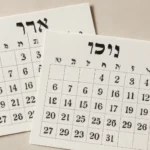
The Hebrew calendar uses a fixed set of months that run through a 19-year cycle. The common months are: Nisan, Iyar, Sivan, Tammuz, Av, Elul, Tishrei, Cheshvan, Kislev, Tevet, Shevat, and Adar.
In leap years, an extra month, Adar II, is inserted after Adar I, so there are 13 months in that year. This means the same Hebrew date may appear to occur in a different Gregorian window depending on whether the birth year was a leap year or not.
The length of the months can vary in some years (for example Kislev sometimes has 29 or 30 days), which is another factor that can affect conversions.
Year types and leap years
The Hebrew calendar follows a 19-year cycle with 7 leap years. Leap years occur in years 3, 6, 8, 11, 14, 17, and 19 of the cycle.
Because of the cycles, the same Hebrew date can drift in the Gregorian calendar year after year until you align again with the calendar cycle. This is why your Hebrew birthday can land on different Gregorian dates over time.
Many people find it helpful to think of the Hebrew date as a fixed annual marker in a shifting civil calendar. The conversion is deterministic, but it depends on the year being a leap year or not.
How to quickly calculate your Hebrew birthday
There are two practical pathways to finding your Hebrew birthdate: (1) use a reliable conversion tool to translate your Gregorian birthdate into the Hebrew calendar, and (2) learn the basics of how to map that date to future years. The quick guide below emphasizes ease and accuracy, so you can know your Hebrew birthday without getting lost in the arithmetic.
Step-by-step quick guide
Identify your Gregorian birth date (day, month, year). Keep this in a safe note for reference.
Consider the time zone. The Jewish calendar day begins at sunset. If you were born very near a sunset boundary in your local time, your Hebrew birthdate might correspond to the previous or next Hebrew day depending on how birth time is recorded and interpreted.
Use a trusted Hebrew calendar converter (see Tools and resources below). Enter your Gregorian date and time zone, and the tool will output your Hebrew date (for example, 2 Iyyar 5750).
Record your Hebrew birthday in your personal records with the associated Hebrew year that appears in the converter’s output. This is the date you would celebrate each year, subject to local customs.
Double-check edge cases such as births that fall on days that exist in some leap-year configurations but not in others (for example dates tied to Adar I in leap years). When in doubt, verify with a second converter or consult a community rabbi or calendar authority.
To illustrate, here is a practical example (illustrative only): suppose you were born on April 12, 1992 in a given time zone. You would use a converter to translate that Gregorian date to its Hebrew equivalent, which might be something like 15 Nisan 5752 (this is an example; exact results depend on the specific calendar rules and time zone). Your Hebrew birthday then becomes the 15th day of Nisan in every Hebrew year, translating to a different Gregorian date each year. In terms of planning, you can use a converter each year to determine the upcoming Gregorian date for your Hebrew birthday, or rely on a tool that projects the next few years for you.
Manual understanding: what happens under the hood?
For those who enjoy a deeper dive, a basic grasp of the underlying mechanism helps you calculate Hebrew birthdays with greater confidence, even when you are not online. The core ideas are the lunisolar structure, the 19-year cycle of leap years, and a standard set of rules for when the year starts and how months align. While a full, independent calculation is lengthy, here are the major themes you should know:
The Hebrew year begins with Rosh Hashanah, typically in September or October on the Gregorian calendar, and is determined by astronomical calculations of the Molad (the mean lunar conjunction) and other calendar rules.
Because the Molad and the calendar rules are intricate, most people rely on established algorithms or conversion tools to obtain a precise Hebrew date from a Gregorian birthday.
Why leap years matter for a birthday
In leap years, the presence of Adar II means that some dates shift relative to non-leap years. For instance, some people born on dates around Adar I or Adar II might notice their Gregorian birthday appears on a different span of days across years due to the added month.
When planning a celebration, many people pick a consistent date in the Julian (Gregorian) calendar for convenience, or they celebrate on the exact Hebrew date every year if they prefer the traditional calendar alignment.
Edge cases you might encounter
As you determine Hebrew birthdates, you may encounter a few special situations. Being aware of these will save confusion later, especially if your birth date intersects with leap-year complications or unusual month lengths.
February 29 births and calendar quirks
People born on February 29 in the Gregorian calendar pose a frequent question: what is their Hebrew birthday in years when February 29 does not exist? The Jewish calendar does not have a February 29. When you convert your Gregorian birth date, the Hebrew date remains fixed relative to your birthday, but the corresponding Gregorian date will be February 28 in common years and March 1 in leap years, depending on the year and the time zone. Most people with February 29 birthdays simply celebrate on February 28 or March 1 in non-leap years according to family tradition. In contrast, the Hebrew date you receive from the converter remains consistent; you celebrate your Jewish anniversary on that Hebrew day each year, regardless of the Gregorian calendar’s quirks.
Dates tied to Adar I in leap years
In a leap year, the months Adar I and Adar II exist separately. A birthdate that falls on a date like Adar I (the earlier Adar) may require special attention when translating to non-leap years, where there is only Adar (often called Adar II in common usage after the leap year). If your Hebrew birthday lands on a date that corresponds to Adar I, you’ll generally still celebrate on the same Hebrew day in all years, but the Gregorian equivalent will move according to whether the year is leap or not. In practical terms: you rely on the Hebrew date itself for yearly celebrations, and the Gregorian date changes with the calendar year.
Practical tips for tracking and celebrating Hebrew birthdays
Whether you are curious about your own Hebrew birthdate or helping someone else calculate theirs, these practical tips can help you stay organized and respectful of tradition.
Keep a dual-calendar record that stores both the Gregorian date and the Hebrew date for birth anniversaries. This makes it easy to plan celebrations in advance and to cross-check dates if you are coordinating with family members in different locales.
Set reminders in both calendars—one reminder for the upcoming Hebrew date in the Hebrew calendar, and another for the corresponding Gregorian date. This reduces the risk of missing the anniversary due to shifting dates year to year.
Ask the celebrant about preferences. Some people prefer to celebrate on the exact Hebrew date each year, while others opt for a Gregorian-date celebration for convenience. It’s customary in many circles to acknowledge the birthday on both dates if possible.
Be mindful of sunset rules. Remember that the Jewish day begins at sunset, so if a birth time is near sunset, ask whether the birth time should anchor the Hebrew date to the previous day or the next day in the Hebrew calendar.
Tools and resources for calculating Hebrew birthdays
In the digital age, several reliable tools help you calculate Hebrew birthdays quickly and accurately. Here are some widely used resources that you can trust for conversions, planning, and learning more about the Jewish calendar:
Hebcal (hebcal.com) — A comprehensive online Hebrew calendar that offers conversions, holiday information, and Hebrew date calculations. It’s a favorite among many who need quick, dependable results for birthdays and anniversaries.
Chabad.org Jewish Calendar — This resource provides a user-friendly Hebrew calendar with date conversions and educational notes about each month, holiday, and drift in the calendar year.
Online Hebrew calendar converters — Numerous independent online converters can translate Gregorian dates to Hebrew dates and vice versa. Look for converters that allow you to specify time zone, since that can affect the exact Hebrew date near sunset.
Jewish date calculators in apps — Mobile apps often include date-conversion features, reminders, and notifications that can be synchronized with your contacts’ birthdays in Hebrew and Gregorian formats.
How to use Hebrew birthdays in planning and community life
Beyond personal reflection, calculating Hebrew birthdates can enrich family rituals and community calendars. Here are ideas on how to incorporate Hebrew dates into daily life:
Family traditions: Base family celebration plans on the Hebrew date and designate a separate Gregorian celebration for those who find it easier to gather on weekends or holidays.
Educational moments: Use your birthday as an occasion to teach children about the Hebrew calendar, the concept of leap years, and the way months like Adar II come and go in different years.
Community events: If you’re involved in a synagogue or community center, consider coordinating birthday recognition in newsletters or calendar inserts on the Hebrew date rather than the Gregorian date alone.
Personal journaling: Track a short note each year about what was special on your birthday in both calendars; this can become a meaningful archival habit.
Common questions about calculating Hebrew birthdays
If you’re new to the topic, you may have several questions about calculating Hebrew birthdays. Here are some frequent inquiries and concise answers to help you navigate the process with confidence.
Q: Do I celebrate on the exact Hebrew date every year?
A: Most people do. Celebrating on the exact Hebrew date of birth aligns with the traditional rhythm of the calendar. However, for practical reasons, some may choose to celebrate on the nearest Gregorian weekend or on a date that is convenient for family gatherings. The choice is personal and often shaped by family customs.
Q: What if my Gregorian birthday crosses a leap year or a calendar shift?
A: That is precisely why the Hebrew date can feel like a moving target in the Gregorian calendar. The Hebrew birthday remains anchored to the Hebrew date; the corresponding Gregorian date shifts. By keeping a converter handy or a saved record of your Hebrew birthdate, you can easily determine the upcoming Gregorian dates for your next several birthdays.
A: Reputable converters used by Hebcal and Chabad.org rely on established calendar rules and astronomical data to deliver accurate results. They account for time zones and the sunset-based day boundary. It’s wise to verify critical dates with a second source if you are planning a major event or if your birthday’s timing is near sunset.
Calculating your Hebrew birthday is not merely a mathematical exercise; it’s a chance to connect with a centuries-old tradition that views time from a sacred perspective. The process blends practical dating skills with cultural and family meaning. By converting your Gregorian birthday to the Hebrew calendar, you gain a second date to remember, celebrate, and reflect upon each year. Whether you rely on online tools for precision, or you enjoy the challenge of learning how the months, leap years, and sunset rules all fit together, the result is a richer sense of your own birthday and how it sits within both calendars.
In short, to calculate Hebrew birthdays you need a date in the Gregorian calendar, an understanding that the Hebrew calendar is lunisolar with leap years, and a reliable converter or calculation method to translate your date. With those elements in place, you’ll be able to determine your birth date in Hebrew accurately and plan celebrations that honor both your personal biology and your cultural heritage. May your journey through Jewish birthdates be informative, meaningful, and full of joyful anniversaries.