The Chai symbol is one of the most recognizable emblems in Jewish culture and Hebrew language communities around the world. Composed of two Hebrew letters, ח (ḥet) and י (yod), the word chai literally means “life.” Far beyond a simple word, the chai symbol has grown into a powerful icon—carried in jewelry, inscribed on mezuzahs, tattoos, and decorative art—that embodies vitality, blessing, and continuity. In this article, we explore the meaning, history, and linguistic context of the chai symbol, with attention to its variations in the Hebrew language and its cultural resonance across civilizations and generations.
What is the Chai Symbol?
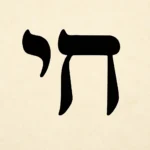
The Chai symbol is not a single letter but a stylized combination of two Hebrew letters: ח (chet) and י (yod). In everyday writing, these letters form the word chai (חי), which appears in Bible translations, liturgy, and modern Hebrew prose. Yet in art, jewelry, and decorative scripts, the two letters are often rendered in a way that emphasizes their shapes, almost turning the word into a small emblem or sigil. This emblematic rendering is common in Jewish communities as a visible token of life and blessing. It is important to recognize that the symbol is rooted in the language itself—an ordinary word that has taken on extraordinary meaning through culture, ritual, and memory.
Key ideas to keep in mind about the chai symbol include:
Life as the central meaning: chai is widely understood as “life” and is associated with vitality, longevity, and well-being.
Numerical signification: the letters ח (8) and י (10) add up to 18, which has special significance in Jewish tradition.
Public and intimate symbolism: chai appears in both public ritual contexts and personal expressions of blessing.
Linguistic Roots: The Hebrew Letters Chet and Yod
To understand the chai symbol, it helps to know about its two component letters and how each contributes to meaning in Hebrew. Below are brief overviews of chet and yod, followed by notes on how they function in the combined form.
The Letter Chet (ח)
Chet is the eighth letter of the Hebrew alphabet. In modern Israeli Hebrew, its pronunciation is typically a voiceless uvular fricative or fricative approximated by the sound in the Scottish English “loch.” In some transliterations you may see it written as ḥ to indicate the hard, aspirated sound, especially in scholarly contexts. The shape of ח resembles a doorway or enclosed space in many medieval scripts, which has contributed to its association with limits, thresholds, and in some traditions, life itself as a doorway between the physical and the spiritual realm. In the word chai, chet functions as the first consonant and one half of a small, compact word that carries immense meaning.
As a semantic unit, ḥai (life) is intimately tied to Hebrew roots that express living, existing, and vitality. In biblical and post-biblical Hebrew, the root חי appears frequently in contexts describing living beings, life processes, and the idea of being alive. The letter chet thus becomes more than a letter—it is a sign that life is witnessed, counted, and valued.
The Letter Yod (י)
Yod is the tenth letter of the Hebrew alphabet and the smallest in physical size among the standard block shapes used in printed Hebrew. It often marks the start or end of syllables and is a common component in many Hebrew words. In the chai symbol, the second letter yod completes the term chai, completing the concept of life. Because yod also appears frequently as a prefix or suffix in Hebrew morphology, it carries the impression of a small but essential marker—similar to a seed or a spark—that enables a larger life to exist and flourish.
In gematria, the numerical value of yod is 10, which adds to the total value of chai to give the traditional numeric sum of 18.
In Jewish numerology, or gematria, letters carry numeric values. The two letters in chai contribute distinct values that together convey a layered meaning. Understanding these numbers helps reveal why chai is celebrated as a symbol of life and blessing in many Jewish communities.
Ches (8) and Yod (10): The sum of 8 (cheit) and 10 (yod) gives 18, a number that has become closely associated with life, long life, and good fortune in Jewish culture.
18 as life: Because chai equals 18, giving or gifting in multiples of 18 (like 18 talents, 18 gifts, or a bracelet with “chai” motifs) is often interpreted as wishing life and blessings twice over.
Symbolic resonance beyond numerology: The number 18 appears in Jewish liturgy and practice in ways that reflect gratitude, longevity, and communal well-wishing, reinforcing the chai symbol’s cultural weight.
When people wear or display the chai emblem, they frequently invoke the idea that life itself is precious and that its duration should be honored, celebrated, and shared with others. The interplay of eight and ten in the gematria of chai thus becomes a compact theological-aesthetic statement: life as a gift that deserves attention, protection, and joy.
Historical Development and Cultural Adoption
The chai symbol as a formal emblem did not emerge as a single ancient artifact but rather developed through a confluence of linguistic use, religious practice, and decorative tradition. Several factors shape its history:
Linguistic foundation: Because chai is a common Hebrew word meaning life, it naturally became a focal point in inscriptions, blessings, and everyday speech. The symbol’s meaning is reinforced whenever the word appears in prose or liturgy.
Religious and cultural symbolism: In Jewish liturgical culture, life is a central blessing to request and celebrate. The chai symbol serves as a tactile reminder of life’s value and of communal hope for vitality.
Migration and diaspora: As Jewish communities spread around the world, the chai motif traveled with them. It appeared in art, jewelry, and personal talismans as a portable sign of identity, memory, and resilience.
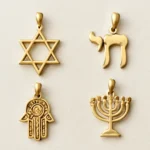
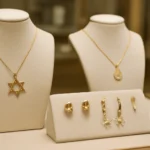
Modern jewelry and design: In the 20th and 21st centuries, the chai symbol became ubiquitous in jewelry—necklaces, rings, bracelets, and earrings. Designers popularized stylized forms that can be worn as everyday adornment or as ceremonial keepsakes.
It is important to note that while the chai symbol has become a modern icon, the underlying linguistic and spiritual associations are ancient. The word chai appears in biblical and post-biblical Hebrew, and its semantic field—life, vitality, living integrity—permeates Jewish thought and practice. The symbol, then, represents a bridge between language, belief, and material culture.
In addition to jewelry, the chai motif often appears in mezuzah cases, wall hangings, and decorative items in synagogues and homes. In these contexts, the symbol’s meaning is both personal and communal: a pledge to honor life within the family, the community, and the world at large.
Chai in Hebrew Language and Jewish Thought
The significance of the chai symbol is deeply tied to its place in the Hebrew language and in Jewish thought. The word חי is used in a wide range of expressions, including famous phrases such as L’chaim—a toast meaning “to life.” This phrase captures a communal aspiration for health, happiness, and endurance, and it often accompanies celebrations, weddings, and festive gatherings. The chai motif thus becomes a shorthand for this broader ethos.
Narratives about life in Hebrew literature—whether in poetry, storytelling, or religious prose—often rely on the imagery of living beings and ongoing existence. The chai symbol resonates with such narratives because it embodies the most essential human wish: to continue living, to thrive in family and faith, and to pass blessings to future generations. For this reason, many people choose chai-themed objects not only as decorative tokens but as daily reminders of responsibility to safeguard life, nurture growth, and cultivate hope.
From a linguistic perspective, the combination of chet and yod in the word chai is a compact demonstration of Hebrew morphology: a short word built from two essential sounds that together carry a powerful semantic weight. In typographic design and calligraphy, artisans often experiment with the proportional balance between the letters, producing a mark that is both legible and aesthetically evocative. In such designs, the chai sign becomes a visual language of life, linking written Hebrew with lived experience.
Variations and Contexts: How the Chai Symbol Is Used
The chai symbol exists in multiple forms and in a range of contexts. Understanding these variations helps illuminate how language, faith, and art intersect in everyday life. Here are several notable variations and contexts.
Single chai glyphs: The most common representation is simply the two-letter word chai written in regular or stylized Hebrew script, with the letters ח and י connected or juxtaposed in a compact arrangement.
Double chai motif: Some designs feature two chai characters side by side or interwoven, often interpreted as “two lives” or “double life.” This variant is popular in jewelry and decorative pieces meant to symbolize family bonds or mutual blessing.
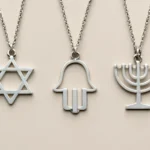
Chai with other symbols: The chai emblem is sometimes paired with other motifs—such as the Star of David, the menorah, Tree of Life, or a heart—to convey a shared message of faith, heritage, and vitality.
Calligraphic and stylized forms: In artistic calligraphy, the letters may be elongated, curved, or integrated into an abstract shape. Such forms emphasize movement and energy, mirroring the idea of life in motion.
Typography variations: In digital typography and printed texts, chai appears in various fonts—from traditional Hebrew square script to modern sans-serif styles—yet its meaning remains intact.
Educational contexts: In Hebrew language teaching, the word chai is often used as a simple vocabulary item to introduce learners to the two-letter combination, gematria, and religious culture.
These variations reveal how a single linguistic unit can travel across media and meanings—from a semantic word to a potent visual emblem that communicates life, hope, and continuity across generations.
Chai Across Cultures: Global Reception and Adaptation
As Jewish communities dispersed across continents, the chai symbol encountered diverse cultural aesthetics and artisanal traditions. In this global journey, the symbol has acquired nuanced meanings while maintaining its core message of life and blessing.
Diaspora aesthetics: In North America, Europe, and Africa, chai-themed jewelry has been embraced by many people as a sign of Jewish identity, as well as a thoughtful gift for births, weddings, and anniversaries.
Israeli design: In Israel, designers frequently incorporate chai into contemporary pieces that blend local craft traditions with modern fashion. The symbol thus functions as both heritage memory and current style.
Non-Jewish interpretations: Some non-Jewish designers and collectors adopt the chai motif for its universal connotations of life and resilience, recognizing the symbol’s simplicity and universality even outside its original religious context.
Despite regional stylistic differences, the core idea remains resonant: life is something to be cherished, protected, and celebrated in community. The chai symbol, therefore, acts as a multicultural ambassador for a shared human hope—living with purpose, health, and connection.
In educational settings, the chai symbol is sometimes used as an entry point to discuss Hebrew language, Jewish history, and the concept of to life, l’chaim, as a cultural practice that extends beyond ritual to daily living.
For students and readers new to Hebrew, the chai symbol can be both a linguistic landmark and a cultural sign. Here are some practical notes for learners and educators:
Transliteration: Common transliterations of חי include chai or hai. Some scholarly works preserve the indicative ḥai to reflect its phonetic origins with a diacritic under the ḥ (chet).
Pronunciation: In modern Hebrew, chet is typically pronounced as a voiceless velar fricative ([χ] or [x]), similar to the “ch” in the Scottish word “loch,” while yod is a consonant with the value of a light “y” sound.
Translation nuances: While the direct translation is “life,” the word also appears in phrases like chai and l’chaim (to life), blending the concept of vitality with communal celebration.
Educational exercises: Teachers can use the chai motif to introduce gematria, script styles, and cultural contexts—discussing how a simple two-letter combination can carry moral and spiritual weight.
As a teaching tool, the symbol helps learners connect language with lived culture. The word chai becomes a doorway to explore Biblical Hebrew roots, the evolution of the language, and how script shapes meaning in real-world artifacts (from mezuzahs to necklaces to digital fonts).
Practical Considerations: Reading and Interpreting the Chai Symbol
For researchers, designers, and casual readers alike, there are practical guidelines for interpreting and using the chai symbol thoughtfully:
Context matters: In a religious setting, chai may be read as a blessing or reminder of life in covenant with God; in a secular context, it can symbolize universal gratitude for life itself.
Respectful use: When adopting the symbol in fashion or branding, be mindful of its sacred associations and avoid trivialization or appropriation.
Combining with other symbols: When chai is paired with other motifs, consider how the combined message reflects both life and the additional emblem (for example, life and learning, life and family, life and healing).
Preservation of script: In academic work or careful reproductions, preserve the correct letter shapes (ח and י) and the two-letter continuity to maintain fidelity to the original word.
In sum, the chai symbol invites viewers to engage with a simple word that carries a sweeping arc of meaning—from everyday language to sacred blessing, from local tradition to global artistry.
Conclusion: The Enduring Light of the Chai Symbol
In many ways, the chai symbol is a compact capsule of Jewish language, faith, and culture. Its two letters—chet and yod—carry a life-affirming message that transcends time and place. The gematria underpinning the symbol—uniting 8 and 10 to yield 18—gives additional layers of meaning, linking language, number, and blessing in a single emblem.
Whether you encounter the symbol in a necklace carried by a friend, a tatoo that an individual chooses to mark a life milestone, or a decorative motif in a synagogue, the chai emblem invites reflection on what it means to be alive, connected, and part of a continuing story. Its resilience across cultures, languages, and artistic expressions testifies to a universal human hope: to celebrate life, protect it, and pass it on with care and joy.
For students of Hebrew and for curious readers of world cultures, the chai symbol offers a gateway to greater understanding. It shows how a modest two-letter word can serve as a powerful bridge between language and life, a reminder that the words we write and the symbols we wear are never only signs; they are living expressions of human hope.