This article surveys the Jewish people worldwide with attention to
demographics, history, and culture. It traces where Jewish communities are concentrated,
how they identify themselves, and how their rich traditions adapt to local contexts
while preserving core elements of faith, language, and communal life. Because the
Jewish world is diverse and evolving, the discussion uses a range of terms—global Jewish
community, diaspora, Jewish populations, and Jewish communities across the globe—to reflect different ways people
describe their shared heritage.
The Jewish people worldwide form a minority that spans six continents and
dozens of nations. Most scholars estimate a total population of roughly 14 to 15 million
people who identify as Jewish by ancestry, culture, or faith. A large majority reside in
two places with distinctive demographic profiles: the State of Israel, which has a majority
Jewish population, and the United States, which hosts the largest Jewish community outside
Israel. Beyond these two hubs, there are established communities in Europe, Latin America, Africa,
and smaller but historically significant groups in Asia and Oceania.
It is important to note that numbers around the world vary depending on how definition is used: counts may include people who identify as Jewish by religion,
by ancestry, or by self-identification. Some surveys emphasize halachic criteria, others focus on
cultural affiliation. Because of these differences, regional estimates are best understood as
ranges that reflect both demographic trends and shifting definitions of Jewish identity.
Regional distributions
North America
The United States hosts the largest Jewish population outside of Israel, with estimates commonly placed
in the range of roughly 5.7 to 6.5 million individuals. In many contexts, American
Jews are a powerful force in politics, philanthropy, and culture, while also navigating debates
over religious pluralism, intermarriage, and secular identity. Canada, by comparison, is home to
about 0.4 to 0.6 million Jews, with strong urban concentrations in cities such as Toronto
and Montreal and smaller communities across the country.
Across North America, diaspora life often centers on synagogues, Jewish community centers,
day schools, supplementing religious life with robust secular education and cultural programming.
In many communities, there is a lively exchange between traditional practice and modern
social norms, reflected in Jewish day schools, university programs, and support networks that
connect families across generations.
Europe
Europe hosts a historically deep and diverse global Jewish community, with major
populations in the United Kingdom, France, Germany, Russia, Ukraine, and Spain, among others. The
European Jewish population is typically estimated in the low to mid millions when counting all
self-identified Jews, with numbers varying by country and by how Jewish identity is defined.
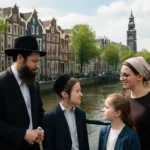
The European landscape includes vibrant urban Jewish cultures — from traditional yeshivas and religious
communities to secular and cultural hubs. In recent decades, migration and demographic changes have
shaped the community in complex ways: aging populations in some countries, growing younger communities in others,
and renewed attention to Holocaust memory, anti-Semitism, and the defense of minority rights.
Israel
The State of Israel is home to the majority of the world’s Jewish population, with numbers commonly
cited around 7.0 to 7.6 million Jews. Israel’s population is deeply intertwined with
history, religion, and national identity, making it a central reference point for many Jewish people
worldwide. In Israel, language, education, and cultural life intertwine with state institutions and
diverse communities drawn from across the diaspora.
Within Israel, Jewish life is dynamic and multifaceted. While religious observance varies across sectors,
traditional rituals and calendar events—such as Shabbat, Passover, and Hanukkah—are interwoven with
a modern, high-tech economy, vibrant arts, and a pluralistic public sphere. The relationship between
religion and state is a defining feature of Israeli society, with ongoing debates about civil rights,
religious pluralism, and the boundaries of public life.
Latin America and the Caribbean
In the Americas south of the United States, the global Jewish community has a long and
varied history. Argentina, Brazil, Mexico, Chile, and Colombia are among the countries with the largest
Jewish populations in the region. Argentina and Brazil together account for a substantial portion of the
Jewish population in Latin America, with communities sustained by synagogues, schools, cultural centers,
and philanthropic networks.
Across this region, Jewish life often blends religious tradition with local cultural practices. In many
places, Jewish schools and organizations collaborate with broader civil society to promote education,
social services, and interfaith dialogue. The memory of the Holocaust remains a critical reference point
for education and commemoration, while contemporary Jewish life emphasizes engagement with global Jewish
culture as well as local languages and customs.
Africa
Africa’s Jewish communities are smaller in number but historically significant. South Africa,
with its long-standing and organized Jewish community, hosts tens of thousands of Jews, and other African
nations have smaller yet enduring groups linked to historical migrations and recent ties to Israel and
global Jewish networks. Ethiopia preserves a historic and unique lineage within Judaism through Beta
Israel traditions, which have played a central role in debates about Jewish status, identity, and the
complexities of religious law across borders.
Across the African continent, diasporic ties to the broader Jewish world are often expressed through
educational programs, exchange initiatives, and participation in international Jewish organizations. The
continent’s Jewish communities face distinct challenges, including economic disparities and security concerns,
but also contribute to a diverse global tapestry of practice, language, and ritual.
Asia-Pacific
In Asia and the Pacific, Jewish communities exist in places such as India, Turkey, and
several Southeast Asian countries, as well as in Australia and New Zealand. India has a long-standing
history of Jewish communities, including groups with distinct traditions like the Bene Israel and Cochin
Jews, each contributing unique liturgical practices and cultural expressions. Australia hosts a sizable and
well-organized Jewish population, with a robust system of synagogues, schools, and cultural life.
In many parts of Asia and Oceania, the Jewish presence is closely connected to broader regional and
global Jewish networks. The internet age and international travel have made it easier for small
communities to participate in global Jewish life, exchange scholars and artists, and access educational
resources. While the population numbers in Asia outside Israel are smaller relative to North America and Europe,
their historical and cultural richness adds to the global mosaic of Jewish identities.
Culture and identity
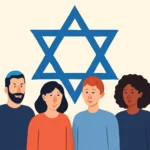
The global Jewish community is not monolithic. It comprises a spectrum of cultures,
languages, religious practices, and secular identities. Core elements—such as shared memories of
survival, ritual calendars, and a language tradition that has adapted to many lands—bind diverse
communities together while allowing for distinctive regional flavors.
Language, tradition, and communication
Language is a central thread in Jewish culture. The Hebrew language is the liturgical
language of the Jewish people worldwide and serves as the national language of Israel.
In many communities, Hebrew is also taught in schools and used in daily life, media, and literature.
Beyond Hebrew, various diaspora languages have developed within Jewish life:
Yiddish, a historic vernacular of Ashkenazi Jews, enriched theater, literature, music, and humor.
Ladino, language of Sephardic and Mizrahi communities in the Iberian diaspora, blending Spanish,
Hebrew, and local influences.
Judeo-Arabic, Judeo-Persian, and other Judeo- languages used in communities across North Africa, the Middle East,
and Central Asia.
Local languages paired with Jewish education, urban media, and religious life—illustrating how global Judaism
adapts to place and time.
The maintenance and revival of these languages—especially Hebrew—are often tied to schooling, religious life,
and cultural programs, highlighting how language sustains memory and identity across generations.
Religiosity, denominational life, and practice
The Jewish world spans a wide spectrum of religious expression. Within Orthodox communities,
observance tends to emphasize strict adherence to traditional halachic norms, ritual purity laws, and a formalized
ritual calendar. In Conservative and Reform circles, interpretation of Jewish law can be
more flexible, with emphasis on ethics, social justice, and adapting practices to contemporary life.
In recent decades, Reconstructionist and other liberal movements have expanded opportunities for inclusion
of women in leadership, recognition of LGBTQ+ Jews, and a broader approach to Jewish law and philosophy. A substantial
share of the global Jewish community also identifies as secular or culturally Jewish, placing emphasis
on heritage, history, and shared values rather than ritual observance alone.
Arts, literature, and media
Jewish culture has a rich artistic footprint. Yiddish theatre and cinema, Hebrew poetry and modern Hebrew literature, and the
revival of Jewish publishing contribute to a vibrant cultural landscape. The diaspora nourishes a wide variety of artistic
expressions—from memoirs and historical novels to music, film, and visual arts that explore memory, identity, and the
everyday experiences of the global Jewish community.
Jewish journalism and media—ranging from community newspapers to national outlets—play a role in informing, debating, and
shaping public life. Across the world, cultural institutions such as museums, libraries, and archives preserve collections
on Jewish history, religious life, and the arts, helping to educate younger generations about both shared origins and local
adaptations.
Education, memory, and philanthropy
Education has historically been a cornerstone of Jewish continuity. Many families prioritize
Jewish schooling, including day schools, yeshivas (traditional religious schools), and high-level Jewish studies programs.
In the diaspora, universities and research centers offer programs in Jewish studies, history, languages, and religious
philosophy, reinforcing intellectual life within the community.
Memory plays a central role across generations. Holocaust education, survivor testimonies, and memorial ceremonies are
widespread elements of global Jewish culture. Philanthropy and communal funding support a wide range of
initiatives—from social services and elder care to refugee support, scholarship funds, and cultural programming.
Customs, holidays, and family life
Jewish observance follows a calendar that weaves sacred time with agricultural roots, family rituals, and communal life.
Major holidays mark the year and provide occasions for learning, gathering, and reflection. Across communities, core
customs are adapted to local climates, languages, and social norms while remaining rooted in shared heritage.
Calendar and ritual rhythm
Shabbat, observed weekly from Friday evening to Saturday evening, centers rest, prayer, and family meals.
Passover (Pesach) celebrates liberation and freedom with Seder rituals and the removal of chametz (leavened bread).
Rosh Hashanah and Yom Kippur mark the Jewish new year and Day of Atonement, emphasizing repentance and renewal.
Sukkot and Shavuot complete the pilgrimage festival cycle with tabernacles and received laws.
Hanukkah commemorates rededication and miracles, often celebrated with lights, gifts, and family gatherings.
In addition to these major seasons, other holidays and fast days punctuate the year, each carrying its own
meaning in different communities—some emphasizing memory, others social justice, family cohesion, or acts of charity.
Family life, lifecycle events, and rituals
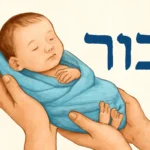
Family forms a central axis of Jewish culture in many places. Lifecycle events such as baptisms (brit milah for boys,
brit bat for girls in some communities), weddings, and bar/bat mitzvah ceremonies link individuals to a larger
story of continuity. Jewish homes often include ritual objects like mezuzahs on doorposts, menorahs for Hanukkah, and
mezuzot in many rooms. Meals during or around holidays frequently feature symbolic foods that reflect historical
narratives and cultural memory.
Across the global Jewish community, family life also reflects broader social currents:
interfaith partnerships, immigration experiences, and urban life shape how traditions are taught to children and how
elders are cared for. Given the diaspora’s breadth, many households blend local customs with Jewish ritual practice,
producing a living, evolving tapestry of practice and belief.
Interfaith relations and global impact
Jewish communities interact with their wider societies in diverse ways, ranging from traditional community
engagement to contemporary civic leadership. The phrase tikkun olam—often translated as “repair the world”—
captures a guiding impulse in many Jewish communities to participate in social justice, humanitarian aid, and ethical
advocacy. This ethic translates into involvement in education, health, refugee assistance, and interfaith dialogue.
Across continents, institutions linked to the global Jewish community collaborate with religious groups,
secular organizations, and government bodies to promote pluralism, protect minority rights, and respond to crises.
In some regions, Jewish communities actively support interfaith initiatives that emphasize shared values, while in other
contexts they defend Jewish rights and security in environments where discrimination or hostility may arise.
Challenges and resilience
The global Jewish community faces a range of challenges that reflect both historical trauma and contemporary
politics. Antisemitism, including hate speech, vandalism, and violence, remains a persistent concern in many parts of the
world. Combating prejudice requires education, proactive safety measures, and robust community advocacy.
Assimilation pressures, intermarriage, and shifting religious appetites present ongoing questions about continuity and
belonging. In response, many communities invest in young adult programming, matchmaking, and culturally relevant
programming that highlights Jewish history, language, and tradition while embracing inclusive approaches to identity.
Economic disparities, migration patterns, and geopolitical tensions can influence where communities concentrate and how
they interact with broader society. Yet across the globe, continuity often relies on intergenerational learning,
vibrant communal life, and the nourishment of a shared memory that connects distant communities to a common heritage.
Conclusion
The story of the Jewish people worldwide is a story of continuity and transformation. From the ancient
communities of Europe, the dynamic centers of North America, and the modern state that anchors a majority of the
diaspora in the Middle East, to the thriving communities in Africa, Asia, and Oceania, Jewish life demonstrates
remarkable adaptability without losing essential elements of ritual, language, ethics, and memory. The global
Jewish community remains diverse in practice and belief, yet united by shared histories, a commitment to learning,
and a long-standing tradition of resilience in the face of challenge.
As the world changes, so too does the tapestry of Jewish identity across borders. The ongoing work of
education, cultural exchange, interfaith dialogue, and social action continues to shape how generations connect to
their roots while contributing to the broader stories of science, art, philanthropy, and human rights. In this sense,
the global Jewish community grows not only through numbers but through the vitality of its ideas,
its languages, and its enduring commitment to family, learning, and justice.