Overview: Toledo’s Jewish Quarter and its enduring heritage
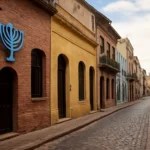
Nestled in the historic heart of Toledo, the Judería de Toledo—commonly referred to in English as the Jewish Quarter Toledo—is a living corridor of memory, architecture, and culture. This neighborhood, sometimes called La Judería or the Toledo Jewish Quarter, preserves a medieval landscape where narrow lanes wind past whitewashed facades, small courtyards, and centuries-old stones that have seen three religions share the same streets. While the city as a whole bears the imprint of Christian, Muslim, and Jewish civilizations, the Toledo’s Jewish Quarter stands out as a compact testament to the historical convivencia, a term often used to describe the period of relative coexistence among adherents of Judaism, Islam, and Christianity in medieval Iberia.
If you are planning a visit or simply want to deepen your understanding of Toledo’s Jewish heritage, this guide will walk you through the quarter’s origins, its most significant sites, and the experiences that make the Toledo Jewish quarter a cornerstone of Spanish and Jewish history. The neighborhood’s remains, including the celebrated synagogue-turned-churches and the Sephardic collection housed within them, illustrate how memory is kept alive through architecture, art, and public storytelling. In this article, we explore the Jewish quarter Toledo as a living museum, a neighborhood to wander, and a site of ongoing cultural dialogue.
Historical background: origins and evolution of the Judería in Toledo
The Toledo Jewish quarter grew up within a city that was, for centuries, a crossroads of civilizations. From the early medieval period, when Toledo became a major center under Islamic rule, to its later Christian reconquest, Jewish communities established themselves as vibrant participants in urban life. The Toledo Jewish quarter is not a single monument but a mosaic of streets, synagogues, and communal spaces that survived and adapted through centuries of change.
Origins in the broader context of medieval Spain
In the early Middle Ages, Toledo was renowned for its scholarly, commercial, and religious activity. The Jewish community contributed to the city’s economic vitality and intellectual aura. The quarter’s layout—tight alleyways, stepped ramps, and small courtyards—reflects a practical adaptation to the hillside terrain of Toledo and the need to integrate into a city already layered with mosques, churches, and palaces. The Toledo Jewish quarter thus emerged as a distinct neighborhood within the medieval city, where Jewish life had space for study, worship, and daily commerce.
Convivencia, exchange, and spiritual life
A term often invoked to describe the era is convivencia, the notion of peaceful coexistence among Muslims, Christians, and Jews. While this concept has its critics and nuances, it captures the spirit that allowed the Toledo Jewish Quarter to function as a center of learning, language, and debate. In the quarter, Hebrew scholars, Muslim poets, and Christian physicians could interact, translate, and circulate ideas. The city’s historic libraries, manuscript culture, and artisan workshops thrived in part because of this exchange.
Medieval legacy and the turning point
The 13th and 14th centuries are often described as a high point for Toledo’s Jewish quarter, with the construction of notable synagogues and the accumulation of Hebrew and Andalusian cultural artifacts. The subsequent centuries, including the period of the Catholic Monarchs and the expulsion edict of 1492, reshaped the community, leading to changes in religious practice, property ownership, and urban space. Yet the physical footprint of the Judería toledana survives in the form of landmark buildings, street plans, and cultural memory that continue to attract scholars, students, pilgrims, and curious travelers.
From presence to preservation
Today, the Jewish Quarter in Toledo is not only a place to observe monuments but a living narrative. Institutions such as the Sephardic Museum are embedded in the quarter’s landmarks, linking material culture with broader historical contexts. Visitors learn about the Sephardic heritage, the Hebrew language, and the story of Jewish scholars who contributed to Toledo’s reputation as a center of learning in the medieval world.
Key landmarks and repositories in the Jewish Quarter Toledo
The Toledo Jewish Quarter hosts a small but powerful set of sites that together illuminate religious life, artistic expression, and the daily rhythms of a historic community. The two most prominent surviving synagogues—one now a church, the other hosting a museum—anchor the quarter’s cultural map.
Sinagoga del Tránsito and the Sephardic Museum
Among the most important buildings in the Toledo Jewish Quarter is the Sinagoga del Tránsito, erected in the 14th century as a place of worship and study for Toledo’s Jewish community. Its architecture blends Mudéjar plasterwork with a restrained, elegant interior, producing a sense of spiritual gravity that echoes across the centuries. The synagogue today houses the Sephardic Museum, a rich collection of Hebrew manuscripts, printed books, liturgical objects, and everyday items that reveal the life, learning, and diaspora of Jewish communities from Iberia to the wider world.
Architectural style: Mudéjar influence, with decorative plasterwork and geometric motifs.
Collections: Hebrew manuscripts, early printed works, ritual objects, and genealogical materials.
Interpretive focus: the Sephardic diaspora and the cultural bridges between Toledo, the Iberian Peninsula, and the Mediterranean world.
Santa María la Blanca: a synagogue-turned-church
Another centerpiece in the Judería toledana is Santa María la Blanca, a building originally constructed as a synagogue in the 13th or 14th century and subsequently converted into a Christian church. Its status as a former synagogue gives visitors a tangible link to the daily and ceremonial life of the Toledo Jewish quarter, and its architectural details—arched ceilings, illuminated galleries, and a quiet atmosphere—provide a contemplative sense of history.
Other vestiges and interpretive spaces
In addition to these two major monuments, the Toledo Jewish quarter preserves smaller signs of Jewish presence. You may encounter old courtyards, staircases, and signage that recalls the names of streets once used by the Jewish community. Some sites are accessible only through guided tours, which help decode the layers of history embedded in walls, balconies, and street corners. Museums and interpretive centers close to the quarter help frame the story with context—from medieval science and philosophy to the practical aspects of everyday life in a city that welcomed diverse traditions.
Urban spaces and visualization of the past
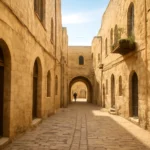
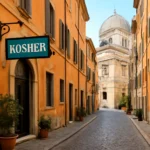
The quarter’s urban fabric—narrow lanes, stone arches, and gentle slopes—offers more than aesthetics. It provides a physical reminder of how communities lived in close quarters, how shops and houses were organized, and how people moved through a city that had to defend itself yet still opened doors to travelers, merchants, and scholars. A walk through the Toledo Jewish Quarter is thus an exercise in spatial history as much as it is a cultural journey.
Architectural characteristics and urban design in the Jewish Quarter
The built environment of the Toledo Jewish Quarter reflects centuries of modification, adaptation, and preservation. The interplay between Islamic, Jewish, and Christian architectural vocabularies produces a unique architectural language that is evident in religious spaces as well as residential areas.
Mudéjar influence and decorative arts
A defining feature of the quarter is the Mudéjar influence—an art style born from the convivencia era when Muslims, Christians, and Jews shared techniques and motifs. You’ll notice intricate plasterwork, horseshoe arches, and wooden ceilings with delicate geometries. These elements reveal a cross-cultural dialogue that shaped Toledo’s architectural identity, and they help visitors understand how the Toledo Jewish Quarter integrated into the broader urban fabric of medieval Spain.
Materiality and urban form
The neighborhood’s materials—stone, whitewashed walls, clay tile, and timber—create a light-filled, cool environment ideal for the hot Toledo days. The layout favors compact, pedestrian-only streets that encourage wandering and discovery. This sense of intimate space—further intensified by staircases and late-afternoon shadows—helps visitors grasp how daily life functioned in a city where mobility and accessibility were shaped by topography and defense needs.
Architectural continuity and change over time
While some sites in the Judería toledana have been adapted for secular or religious purposes across centuries, others have retained their reverence and original function as far as possible. The physical continuity of the quarter—through preservation of walls, doorways, and courtyards—offers a tactile sense of continuity with the past, while modern interpretations provide educational framing for contemporary audiences.
Cultural experiences: learning and engaging with the Jewish Quarter
A visit to the Toledo Jewish Quarter invites more than sightseeing. It invites learning, reflection, and dialogue. Here are some of the most meaningful ways to engage with the quarter’s history and culture.
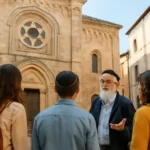
Guided tours and thematic routes
Many local guides offer thematic itineraries that focus on the Judería Toledo as a narrative of religion, science, and daily life. Guided experiences often combine the story of the synagogues with the broader political and intellectual life of medieval Toledo. Topics may include:
Interfaith exchange and linguistic heritage, including debates on translation and knowledge transmission.
Sephardic culture, manuscripts, and the diaspora’s global reach.
Architectural evolution, from medieval synagogues to 20th-century museological spaces.
Visits to the Sephardic Museum and related centers
The Sephardic Museum within Sinagoga del Tránsito provides an immersive look at Jewish life in Iberia and the broader diaspora. Exhibits often feature:
Hebrew inscriptions and liturgical objects
Illustrated scrolls and manuscripts
Historical documents detailing the movement of Jewish families across the Mediterranean
Educational programs and cultural events
The Toledo Jewish Quarter hosts lectures, school visits, and cultural events that illuminate the intersection of religion, philosophy, and art. These programs are valuable for families, students, and researchers seeking to understand how Toledan Jewish life contributed to a shared cultural heritage.
Practical travel tips for exploring the Jewish Quarter in Toledo
If you plan a visit focused on Toledo’s Jewish Quarter, a few practical tips can help you maximize your experience.
Suggested itineraries and pacing
A typical Toledo Jewish Quarter itinerary combines two to three hours of walking with time for optional museum visits. If you want a deeper dive, consider pairing a guided tour with a separate stop at the Sephardic Museum. For a more relaxed day, allocate a longer afternoon to enjoy the views from nearby vantage points and to savor local cuisine in neighborhood cafes.
What to look for when you walk the streets
While wandering the Judería de Toledo, pay attention to:
Stone gates and the profile of arched doorways that mark transitional spaces between streets and courtyards.
Tiles and inscriptions in decorative panels that reveal historical links to Jewish communities.
Street names and placards that reference long-standing religious and cultural practices.
Practical considerations for visitors
The Toledo Jewish Quarter is a pedestrian zone with uneven pavements and stairs. Wear comfortable footwear, bring a light jacket for cooler evenings, and check the opening hours for institutions such as the Sephardic Museum or any special curatorial tours. If you’re traveling with children or accessibility needs, plan in advance and consider private or small-group tours that can adapt to your pace.
Preservation, memory, and the modern significance of the Jewish Quarter
The Judería de Toledo remains a central axis of Toledo’s identity as a UNESCO World Heritage site. Preservation efforts aim to balance the integrity of ancient structures with the needs of a contemporary city that welcomes millions of visitors each year. The quarter’s synagogues, plazas, and houses serve not only as historical reminders but as active spaces for education, research, and cross-cultural dialogue.
Heritage management and community engagement
Community stakeholders—local historians, cultural associations, religious groups, and municipal authorities—work together to conserve monuments and promote responsible tourism. Preservation strategies emphasize sensitive restoration, archival documentation, and interpretive storytelling that respects Jewish memory while highlighting Toledo’s multi-faith legacy.
Sephardic culture in a global context
The narrative of the Sephardic heritage in the Toledo Jewish Quarter resonates beyond Spain. The diaspora of Iberian Jews spread across North Africa, the Middle East, and Europe, carrying with them languages, culinary traditions, music, and scholarly pursuits. By exploring the Toledo Jewish Quarter, visitors encounter a microcosm of this global story—how a local community contributed to world histories of science, philosophy, and art.
Educational impact and scholarly interest
For researchers and students, the quarter offers rich sources for studies in history, religious studies, architecture, and translation studies. The preserved spaces, manuscripts, and artifacts invite interdisciplinary exploration—from medieval Hebrew scribal practices to the diffusion of Iberian philosophical ideas through translations and exchanges that occurred in Toledo and its environs.
Conclusion: why the Jewish Quarter Toledo remains indispensable
The Toledo Jewish Quarter stands as a testament to a complex, layered past. It is not merely a tourist path but a living archive that invites reflection on coexistence, memory, and the enduring value of cultural diversity. The La Judería of Toledo embodies a historical narrative in which streets bear witness to centuries of learning, debate, and exchange. In exploring this quarter—whether you are tracing the steps of medieval scholars, or simply admiring the beauty of an ancient city—visitors encounter a powerful reminder: that the past, when studied with care and openness, can illuminate the present and guide future generations.
For anyone seeking a deeper connection to Toledo’s Jewish heritage, the Toledo Jewish Quarter offers an accessible, richly informative route into Iberian history. It is a place where the memory of synagogues, scholars, and families continues to enrich the city’s cultural landscape. Whether you call it the Toledo Jewish Quarter, La Judería, or the Judería de Toledo, this neighborhood remains a vital, living part of Toledo’s identity—an essential stop for anyone exploring the crossroads of faith, learning, and human connection.