Illustration Moses Burning Bush: A Guide for Artists
The moment when Moses encounters the burning bush is one of the most enduring images in religious art and storytelling. For artists, creating an illustration of the burning bush scene presents a rich opportunity to explore light, symbolism, and narrative in a single frame. In this guide, you’ll find practical techniques, historical context, and creative strategies for developing a compelling illustration of Moses and the burning bush. Whether you are working in traditional media or digital studios, this article aims to help you craft a piece that is accurate, expressive, and visually engaging.
Understanding the Source Material
Before you pick up a brush or stylus, ground your approach in the core elements of the story. The encounter of Moses with the burning bush is not merely a dramatic spectacle; it is a moment of divine communication, mission, and transformation. The bush is described as burning, yet not consumed, a paradox that has fascinated artists for centuries.
When you plan an illustration of the burning bush depiction, consider the following thematic anchors:
Divine presence and revelation: how the fire serves as a conduit for a higher voice.
Call to action and vision: Moses’s reaction—fear, awe, questions, and obedience.
Nature and miracle juxtaposed with a humble traveler: a human figure amid miraculous signs.
Symbolism of the bush, the flame, the ground, and the voice—each element with layered meaning.
Different artists approach this subject with varying degrees of realism, symbolism, and narrative focus. You might create a Moses burning bush illustration that leans toward a classical, painterly style, or you might opt for a contemporary, graphic, or minimalist interpretation. The variations you choose will influence your composition, color choices, and rendering techniques.
Conceptual Development: Variations in Mood and Style
One of the strengths of this topic is the flexibility of mood. A single scene can convey reverence, urgency, confusion, or resolve. Here are several avenues to explore as you plan your piece:
Iconic, Reverent, and Classical Approaches
In a traditional rendering, you may emphasize the antiquity of the story—timeless robes, staff, sandals, and a landscape that echoes Sinai or Midian. The burning bush can be depicted with a luminous glow that bathes Moses in warm light, while the surroundings remain subdued to focus attention on the central moment.
Modern, Graphic, and Stylized Interpretations
For a contemporary audience, you might push the design toward graphic clarity: strong silhouettes, bold contrasts, and simplified shapes. The flame can be stylized as an abstract or geometric form, retaining the symbol without sacrificing readability at smaller scales.
Symbolic and Abstract Variants
Some artists emphasize the paradox—fire that does not consume—through metaphorical imagery: a delicate interplay of light and smoke, or a bush that appears to glow with inner energy. In such burning bush depictions, the goal is to evoke meaning beyond a literal depiction.
Historical and Cultural Context Variants
Consider era-specific influences: Renaissance-style lighting and sfumato, Japanese ink wash aesthetics, or Indigenous-inspired color palettes. Each approach invites a unique palette, line quality, and texture treatment while remaining faithful to the core moment.
The key is to map your intended mood to your materials and techniques. Whether you call it illustration of Moses and the burning bush or Moses burning bush image, your choices about lighting, composition, and texture will guide the viewer’s emotional and intellectual response.
A strong composition helps your audience read the narrative instantly. Here are practical guidelines to structure your burning bush illustration effectively:
Focal point: The burning bush and Moses should be the visual priorities. Use contrast, value, and color to draw the eye to the central moment.
Hierarchy of elements: Place the bush slightly above eye level to convey a moment of revelation, with Moses positioned to lead the viewer’s gaze toward the flame.
Rule of thirds (or a balanced alternative): Position the bush on one vertical third line and Moses on the opposite third, creating a dynamic but harmonious composition.
Line and gesture: Use the staff, the lines of Moses’s robe, and the branch form to guide the viewer’s eye toward the flame.
Negative space and surrounding environment: The space around the main figures can convey hush, awe, or scale, reinforcing the sense of a sacred moment.
When you sketch your illustration of Moses burning bush, consider creating several thumbnail layouts to test composition before committing to a final piece. This is a practical way to explore how the viewpoint (close-up vs. full figure vs. landscape) affects storytelling.
Gesture, Scale, and Perspective
Decide how you want Moses to appear in relation to the bush. A towering figure can emphasize authority, while a more intimate scale invites empathy. Perspective choices—low angle for grandeur or eye-level for immediacy—change how the scene feels:
Low-angle perspective can make the burning bush seem monumental and otherworldly.
Eye-level or slightly elevated viewpoints offer relatability and clarity in a narrative frame.
Foreshortening of Moses’s arm or staff can add dynamism to the moment of encounter.
Color Theory and Lighting
The color palette and lighting choices in your Moses burning bush illustration will determine mood and readability. The scene inherently contains a strong light source (the flame), which creates dramatic contrasts and opportunities for color harmony.
Warmth vs. coolness: The primary light from the bush tends to be warm—yellows, oranges, and ambers. Balance this warmth with cooler shadows in the environment to enhance depth.
Color temperature: The flame’s color should vary—bright white-yellow core, surrounding orange and red, with subtle blue fringes at the edge of intense heat to suggest radiance and energy.
Value structure: Establish a strong value contrast between the blaze and Moses’s figure. Consider a three-value scheme (light, midtone, shadow) to keep the scene legible at different sizes.
Color symbolism: Use color to reinforce themes—golden tones for divine illumination, deep greens or browns for wilderness, and cool backdrops to emphasize heat and proximity to the flame.
For a burning bush depiction in color, you might experiment with a limited palette to avoid overwhelming the viewer. A controlled palette helps maintain readability in print, web, or mobile formats.
Atmosphere and Light Effects
Light emanating from the bush should interact with the characters and environment. Consider:
Soft glow on Moses’s face and robe, with edges catching the flame’s light.
Flickering shadows on the ground and nearby rocks or vegetation to convey movement and life.
Translucency and refraction in the leaves of the bush, suggesting the heat’s intensity.
Materials and Mediums: Traditional and Digital Paths
There is no single right way to render a burning bush scene. Your choices should align with your goals, whether you aim for realism, stylization, or narrative clarity. Below is a survey of common materials used to illustrate illustration Moses burning bush in both traditional and digital workflows.
Traditional Media
Pencil and graphite: Ideal for thumbnails, detailed studies, and subtle value work before adding color.
Ink and brush: For crisp linework, high-contrast drawings, and graphic interpretations.
Watercolor: Great for luminous glazes, soft edge transitions, and a sense of atmosphere around the flame.
Acrylics or oils: For tactile texture, rich color depths, and slow layering to build glow.
Gouache: Combines opacity with reworkability, useful for midtone halftones and highlights.
Paper type considerations: cold-pressed or hot-pressed watercolor paper, illustration board, or canvas panels depending on the medium.
Digital Media
Procreate or Clip Studio Paint: Fast sketching, expressive brushes, and easy experimentation with lighting and color.
Photoshop: Excellent for photo-realistic textures, detailed lighting, and professional compositing.
Blender or other 3D tools: Helpful for studies of perspective, lighting, and rendering confidence before 2D execution.
Brush strategies: use soft airbrushes for glow, textured brushes for bark and foliage, and hard-edged brushes for crisp lines in the figures.
Practical Studio Tips
Always start with a thumbnail sketch to test composition, hierarchy, and the relative scale of the burning bush against Moses.
Develop a value study before color to ensure that the piece reads well in grayscale, which is especially important for publication or prints.
Keep a separate color study sheet to experiment with color temperature, saturation, and glow intensity for the flame.
Maintain a consistent light source logic: how the flame lights Moses and how shadows fall on his surroundings.
Step-by-Step Process: From Idea to Finished Illustration
Below is a practical workflow you can adapt for creating a compelling illustration of Moses burning bush. It emphasizes planning, iterative exploration, and final rendering.
Research and reference: Read the source material, study historical depictions, and collect references for Moses’s attire, the staff, the shrub, and the landscape. Compile a mood board with a range of interpretations.
Thumbnailed explorations: Create 6–12 quick thumbnails exploring different compositions, perspectives, and focal points. Mark your preferences for later refinement.
Value study: Transfer your chosen thumbnails to grayscale to check contrast, readability, and depth without color distraction.
Color and lighting study: Do small swatches or a digital color pass to test a few palette options, emphasizing how the flame influences surroundings.
Rough composition in full scale: Build a larger study that includes Moses, the burning bush, surrounding terrain, and any additional figures or symbols you plan to include.
Final rendering: Execute the final piece in your chosen medium. Layer textures, refine edges, and adjust glow and reflections for consistency.
Review and revise: Step back, view at various sizes, and solicit feedback. Make targeted adjustments to composition, color balance, and legibility.
If you work with a team or style guide, ensure your final piece aligns with the intended narrative and branding. For a Moses burning bush illustration intended for a book or magazine, precise margins, typography space, and printing considerations must be accounted for early in the process.
Rendering the Burning Bush: Specific Techniques
The burning bush in this scene is more than a passive flame; it is a living symbol. Here are techniques to render the bush, the flame, and the surrounding atmosphere convincingly.
The Bush: Texture, Form, and Life
Start with the silhouette and structure of the shrub. Consider a combination of thorny or leafy branches that convey resilience and a sense of age. Use a mix of warm and cool greens, with occasional yellow-green highlights where the light touches the leaves. The burning bush can be shown with:
Subtle flickers of light across the leaves to imply heat and motion.
A core glow near the stem, suggesting the heart of the flame emanating through the plant matter.
Translucent leaves with softened edges where the light diffuses.
The Flame: Energy and Belief
The flame is not merely a source of light; it is a symbol of encounter and mission. Rendering the flame effectively involves:
Creating a bright core using warm whites and yellows, then layering oranges and reds outward.
Introducing subtle cool tones at the flame’s edge to suggest heat gradients and atmospheric scattering.
Using a soft, pulsing glow around the flame, with occasional sparks to convey dynamic energy.
Moses and the Human Figure: Presence and Interaction
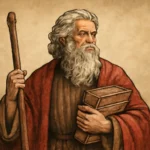
Moses’s posture, gaze, and gesture communicate his reaction to the divine encounter. Consider:
Facial expression that conveys awe, humility, or surprise without losing dignity.
Gesture of the hand or staff that signals receptivity or hesitation.
Clothing and accessories that reflect historical accuracy while serving the composition’s balance and readability.
Environment and Ground Plane
The setting should feel ancient and arid, yet inviting for the viewer to linger. Techniques to suggest environment include:
Desert flora and rock textures rendered with warm browns and ochres, softened by the flame’s glow.
Ground shadows that anchor Moses and the bush without stealing focus from the flame.
Atmospheric haze or dust particles illuminated by the fire to enhance mood.
Typography, Captioning, and Textual Context
Depending on your project, you may include captions or short quotes alongside your burning bush illustration. If you add text, ensure it complements the artwork rather than competes with it. Practical tips:
Use a legible, restrained typeface and place text away from the brightest areas of the flame to avoid legibility issues.
Keep captions concise: a single sentence that anchors the viewer’s understanding without repeating the obvious.
Consider typographic color that harmonizes with your color palette—neutral grays or a color pulled from the flame for cohesion.
Ethical and Cultural Considerations in Depicting Sacred Themes
When handling religious narratives, sensitivity and respect are essential. An effective illustration of Moses burning bush should honor the source material while allowing contemporary audiences to engage meaningfully. Here are guidelines to keep in mind:
Avoid caricature or stereotypes and strive for authentic representation of figures, attire, and setting.
Be mindful of different traditions and interpretations within communities that revere this story.
Provide context through your visual language—what is shown should invite curiosity and understanding rather than misrepresentation.
Be clear about your intent: educational, devotional, or artistic exploration, and tailor visuals accordingly.
By foregrounding respect and accuracy, your Moses burning bush image can be a powerful teaching tool as well as a compelling work of art.
To illustrate the diversity of possible outcomes, here are three representative approaches to the illustration Moses burning bush that artists have used in different contexts.
Case Study A: Renaissance-Influenced, High-Detail Render
This approach emphasizes anatomical precision, intricate fabric folds, and a carefully modeled light source. The flame radiates a soft, golden glow that bathes Moses in warm tones, with a gradual falloff into cooler shadows. The background landscape is rendered with careful perspective, reminiscent of classical biblical paintings.
Case Study B: Contemporary Minimalist Interpretation
Here the composition favors bold silhouettes and a graphic treatment. The bush might be simplified to a luminous silhouette with minimal internal detail, while Moses appears as a strong, stylized figure. The color palette is restricted, and the flame is a decisive, high-contrast element that anchors the piece.
Case Study C: Educational or Children’s-Book Style
This variant uses softer lines, approachable proportions, and friendly color choices. The emphasis is on readability and story-telling clarity. The burning bush remains a central symbol, but the surrounding environment is simplified to reduce visual noise for younger readers.
These cases illustrate how the same subject can be adapted for different audiences, formats, and purposes. The underlying principles of composition, lighting, and symbolism apply across styles, and your personal voice will emerge through the choices you make in each area.
Common Pitfalls and How to Avoid Them
Even experienced artists encounter challenges when illustrating a scene as iconic as the burning bush. Here are frequent missteps and practical remedies:
Overfussiness: Too many details around the flame can distract from the focal moment. Remedy: simplify surrounding textures and keep the flame as the strongest visual element.
Flat lighting: Relying on uniform illumination flattens depth. Remedy: use value contrasts and glow to create dimensionality.
Inaccurate attire: Historical clothing errors pull viewers out of the scene. Remedy: research period-appropriate garments or clearly stylize while maintaining plausibility.
Inconsistent scale: If the bush and Moses are not proportionate, the composition reads as off. Remedy: establish scale early in the thumbnail stage and test repeatedly.
Ignored symbolism: The burning bush should convey more than light. Remedy: think about what the flame represents (calling, presence, mission) and weave that into the composition through pose, gesture, and surrounding cues.
Resources and Further Reading
To deepen your understanding and expand your toolkit for illustrating the scene of illustration Moses burning bush, consider the following types of resources:
Art history references on biblical illustrations and fire depiction across cultures.
Oil and watercolor technique tutorials for handling glow and reflective light.
Digital painting courses focusing on lighting and atmospheric perspective.
Storyboarding and thumbnail exercises for narrative clarity in complex scenes.
While this list is not exhaustive, it provides a starting point for artists who want to grow their skills in rendering the burning bush scene with confidence and nuance.
Conclusion: Crafting a Meaningful Moses Burning Bush Illustration
Creating a successful illustration of Moses burning bush requires balancing reverent content with artistic expression. By combining rigorous study of the source material with thoughtful composition, deliberate color and lighting choices, and clear technical execution, you can produce an image that communicates the moment of divine encounter as clearly as it does emotionally. Whether your aim is a museum-quality painting, a publication-ready illustration, or a personal exploration of narrative light, the principles outlined in this guide will support you in developing a piece that resonates with viewers across contexts.