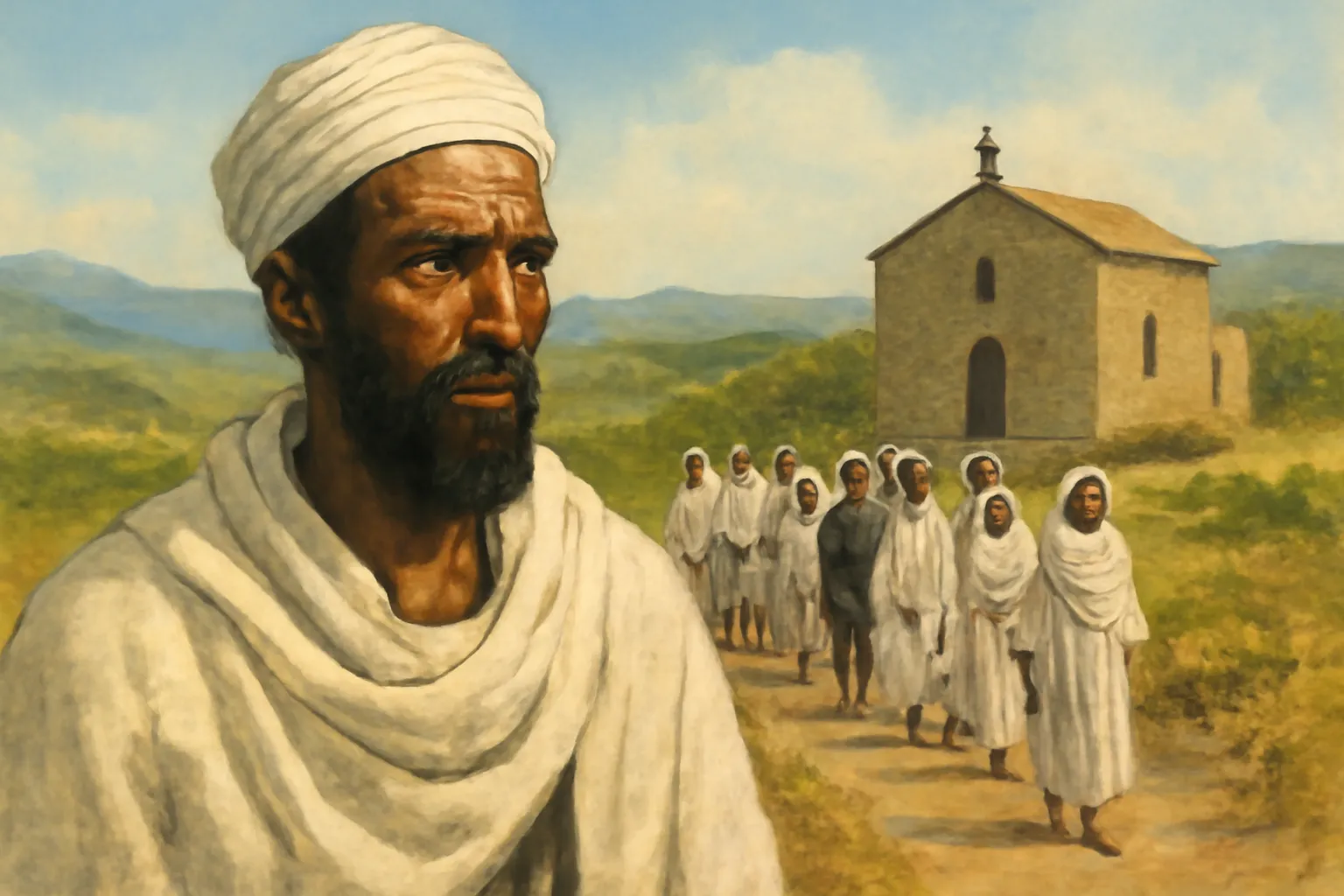
This article provides an in‑depth look at the Beta Israel history, tracing the origins of the Ethiopian Jewish community, its journey through migration and diaspora, and its current status within Israel and the global Jewish world. The narrative highlights how the Beta Israel identity evolved over centuries, how language, ritual, and social organization sustained a distinct form of Judaism in the Ethiopian highlands, and how modern political and humanitarian events shaped its destiny. While scholars debate certain elements of the origins, the continuity of lived practice, liturgy, and community memory remains a central thread in the story of Ethiopian Jews and their place in the broader history of Judaism in Africa and the Middle East.
The question of the origins of the Beta Israel has long captivated historians, theologians, and those studying Jewish diaspora communities. Unlike many other Jewish communities whose origins are clearly linked to a single ancient locale, the Ethiopian Jewish community presents a more complex tapestry woven from legends, archival traces, and long‑standing religious practice. In the absence of a single written account from the community itself dated to the first millennium BCE, researchers examine a combination of religious customs, geographic settlement patterns, linguistic evidence, and cross‑cultural exchanges with neighboring empires.
Legends, traditions, and the spectrum of theories
Ancient Israelite roots: One line of traditional belief holds that the Beta Israel descend from ancient Israelites who settled in the Horn of Africa after the biblical era. This perspective is reinforced in Ethiopian religious narratives and in the long devotion to Hebrew scriptures that persisted in many Ethiopian Jewish communities.
Aksumite era connections: Another influential theory situates the community within the historical reach of the Aksumite Empire (roughly 1st to 7th centuries CE), a powerful Christian state that interacted with Red Sea trade routes and with Jewish communities in the region. Proponents argue that Jewish practices and synagogal life may have coexisted within a broader religious landscape during this period.
Medieval and post‑medieval exchange: There is evidence of continued contact—through trade, travel, and scholarship—with Jewish communities in Yemen and other parts of the Muslim world. Some scholars suggest that Ethiopian Jewish practice absorbed or adapted features from nearby Jewish diasporas while maintaining distinctive Ethiopian elements.
Conversion and isolation: A further theory emphasizes a distinct religious evolution within Ethiopia, in which local groups gradually charted a path toward Rabbinic Judaism through long processes of study, ritual reform, and leadership by traditional scribes and priests. In this view, the Beta Israel are not simply outsiders adopting Judaism but a longstanding community that preserved a unique form of Jewish faith.
The historical record is complicated by a paucity of contemporary Ethiopian manuscripts that describe the community in the early centuries. Yet what remains clear is a durable ethnoreligious identity built around an Ethiopian Hebrew liturgy, synagogue life, and a priestly class that served as custodians of ritual knowledge. Throughout the medieval and early modern periods, Beta Israel communities maintained a recognizable set of practices that distinguished them from both Christian Ethiopians and Muslim communities nearby, while nonetheless existing within a broader Ethiopian-speaking cultural sphere.
Religious Life, Liturgy, and Social Organization
The Beta Israel developed distinctive religious structures and rituals, many of which preserved an older heritage of Jewish law and ritual with Ethiopian adaptations. Their liturgy, heavy with Ge’ez liturgical language and scriptural readings, reflects a unique synthesis of tradition and local expression. The community’s leadership typically centered on clergy known as qessim (priests) and scholars who guided ritual life, education, and communal governance.
Torah observance: The Beta Israel kept a reverent approach to Torah reading and interpretation, emphasizing the Mosaic law as it applied in a diasporic setting.
Hebrew and Ge’ez bilingual practice: While Hebrew served as the sacred language of prayer and scripture, Ge’ez—the liturgical and literary tongue of Ethiopia—carried the weight of daily religious life, education, and community correspondence.
Priestly leadership: The qessim led rituals, presided over calendrical cycles, and handled matters of ritual purity and observance, reinforcing a sense of continuity with ancient priestly traditions.
In addition to formal worship, the Beta Israel maintained a strong tradition of interpretation and scholarship, often transmitted through generations by family lines and scholarly houses. The social fabric of the community hinged on endogamy, mutual aid, and a collective memory that stressed perseverance, fidelity to tradition, and a careful balance between Ethiopian cultural identity and Jewish religious commitments.
Geography and Community Life in Ethiopia
The geographic heartland of the Beta Israel often focused on northern and central Ethiopian highland cities such as Gondar and Axum, but communities also spread throughout other regions including Amhara, Gondar, and Tigray. The highland environment, with its distinct climate, agriculture, and social organization, helped sustain a set of practices that evolved separately from coastal and Yemeni Jewish communities. In this sense, the Ethiopian Jewish community maintained a distinctive cultural ecology—one shaped by climate, language (Ge’ez and local Ethiopian dialects), and the rhythms of agrarian life.
Cultural and linguistic features
Liturgy in Ge’ez and Hebrew scriptural readings
Geography of worship—synagogues built in traditional Ethiopian architectural styles or in more modest settings adapted to local resources
Calendrical life—observance of Sabbath, dietary laws in line with Jewish dietary practice, and holy days that woven together biblical commandments with Ethiopian ritual nuance
Socially, the Beta Israel communities organized around extended families and local associations that took responsibility for education, charity, and mutual aid. Education emphasized literacy in Hebrew and Ge’ez, as well as instruction in religious law and practice. The community’s identity was marked by a deep sense of survival and continuity—an ethos developed under varying political authorities, from medieval Ethiopian rulers to modern nation‑state governance.
Migration, Persecution, and the Early Modern Diaspora
The modern history of the Beta Israel begins to converge with global events in the late 19th and 20th centuries. The rise of modern nation‑states in Africa, changing religious tolerance, and humanitarian crises created conditions that would eventually lead to mass migration. The perception of Ethiopian Jews abroad—along with advocacy from Jewish organizations and sympathetic governments—paved the way for international efforts to facilitate resolute aliyah to Israel and other destinations.
Persecution and upheaval in 20th‑century Ethiopia
The modernization and secularization of Ethiopian governance, particularly under the 1974 Derg regime, created social tensions and economic hardship for many minority groups, including the Beta Israel.
Famine, political instability, and civil strife intensified the pressure on Jewish communities, who often faced discrimination or were targeted as a vulnerable minority.
The combination of internal dislocation and international humanitarian concern led to intense advocacy for safe passage to Israel.
The combination of these pressures culminated in dramatic airlift operations to bring members of the Ethiopian Jewish community to Israel. The first of these major airlifts occurred in the 1980s and 1990s, and they remain emblematic of the global recognition of the Beta Israel as a Jewish people with legitimate ties to the land of Israel and to Jewish history.
Mass Migration: The Operations and the Israeli Connection
The story of Ethiopian Jewish migration to Israel is best understood through the two landmark rescue operations that brought tens of thousands of people to safety and citizenship in a short span of time. These events are central to the modern history of Beta Israel migration and have had lasting political, social, and cultural implications for both communities.
Operation Moses (1984)
Operated under the cover of darkness to evacuate Ethiopian Jews during a period of conflict and famine that threatened the community in the Tigray and Wollo regions.
Transport, international coordination, and the rapid relocation to Israel marked a turning point in the global recognition of Beta Israel as an integral part of the Jewish people.
Operation Solomon (1991)
Carried out with extraordinary speed, this operation airlifted over 14,000 Ethiopians in several days from the capital region to Israel, signifying a dramatic and almost unprecedented mass migration for a community in a non‑Arab region of Africa.
The operation highlighted international humanitarian responsibility and the logistical challenges of integrating a large immigrant community into a new homeland.
In addition to these dramatic airlifts, later migrations and asylum applications continued to bring Ethiopian Jewish families to Israel. The Beta Israel diaspora expanded beyond Israel, establishing communities in North America and Europe, where they contributed to the broader narrative of Jewish diversity and resilience. The process of integration included education, language acquisition, and the negotiation of cultural identity in a society with competing pressures to preserve traditional practice while embracing modern Israeli life.
Settlement in Israel and the Ethiopian Jewish Community Today
Since arriving in Israel, the Beta Israel have formed a vibrant and evolving segment of the national story. The community’s experience reflects both the triumphs and the challenges of immigration, adaptation, and social integration. Important themes in this era include the preservation of religious practice, the impact of education and language on upward mobility, and the development of leadership that bridges generations and fosters a shared sense of belonging.
Religious status, practice, and adaptation
Religious pluralism and Judaism in Israel: The question of halachic status—whether the Beta Israel practice Judaism according to Rabbinic law—has been central, shaping the community’s legal and social experiences in Israel. Over time, the community has integrated Rabbinic interpretations while maintaining customary practices that reflect its Ethiopian heritage.
Liturgy and religious education: In Israeli society, Ethiopian Jews often maintain familiar liturgical elements—Hebrew prayers alongside Ge’ez‑influenced melodies and ritual phrasing—while participating in local yeshivas and religious schools to learn modern Hebrew and broader Jewish law.
Community institutions: Ethiopian Jewish organizations, synagogues, and community centers have become focal points for social support, youth mentorship, and cultural continuity, helping preserve the distinctive voice of the Beta Israel.
Beyond religious life, the Ethiopian Jewish community in Israel has contributed to the social and cultural richness of the country. They have engaged in politics, education, military service, business, and the arts, shaping a narrative of resilience and opportunity. Still, the community has faced and continues to face challenges—economic disparities, issues of identity and assimilation, and the complexities of navigating a homeland that is both welcoming and demanding of assimilation. The dialogue about the Beta Israel experience in a modern state remains an ongoing conversation among scholars, policymakers, and community leaders.
Contemporary Scholarship and the Question of Origins
The academic study of the Beta Israel history spans archaeology, linguistics, religious studies, and anthropology. Researchers seek to understand not only the origins but also how the community maintained its distinctive identity across centuries of Ethiopian life, social upheavals, and selective contact with outside Jewish communities. The debate about whether the Ethiopian Jewish community descended from ancient Israelites or developed a unique, Ethiopianized form of Judaism continues to be a central conversation in scholarly circles.
Numismatic and documentary evidence that may illuminate trade networks and migrations that intersect Jewish and Ethiopian history.
Linguistic analysis of Ge’ez, Hebrew loanwords, and religious terminology to understand how Ethiopian liturgy adapted to local languages.
Religious practice and continuity—how Ethiopian Jews preserved Bible-based rituals while also integrating Ethiopian customs and governance structures.
The academic conversation also covers the political and ethical dimensions of migration: how international humanitarian responses, refugee status, and the politics of nation‑building intersected with religious identity. In this sense, the history of the Beta Israel is not merely a tale of origin and migration; it is a story about how a community defines itself in relation to homeland, faith, and the broader human family.
Identity, Memory, and the Future of the Ethiopian Jewish Community
The memory of the Beta Israel remains a powerful force, shaping how Ethiopian Jews see themselves and how others perceive them within the Jewish world. Memory is not static; it evolves as new generations reinterpret stories, celebrate festivals, and engage in intergenerational dialogue about values, tradition, and belonging. As the community continues to navigate life in Israel, as well as diaspora communities around the world, questions of language preservation, education, and leadership development remain central to ensuring that their unique heritage endures.
Intergenerational transfer and cultural continuity
Education and language: Programs that maintain both Hebrew literacy for religious life and Ge’ez or Amharic for cultural memory help families pass on a multi‑layered sense of identity.
Cultural expression: Music, dance, storytelling, and culinary traditions act as living conveyors of history, enabling younger generations to connect with their ancestry in meaningful ways.
Community leadership: A new generation of leaders engages in interfaith dialogue, social services, and political participation, building bridges within Israeli society and between the Beta Israel and other Jewish and non‑Jewish communities.
The Beta Israel history is therefore a composite narrative: one of ancient testimonies, enduring ritual life, episodes of dramatic migration, and ongoing adaptation to new social environments. It emphasizes the resilience of a people who maintained a distinct religious identity while negotiating the complexities of imperial, national, and global political landscapes. In the larger panorama of Jewish history, the Ethiopian Jewish community represents a vital thread—one that highlights the wide geographic and cultural range of Judaism, and the ways in which faith communities become part of the fabric of national life through perseverance, learning, and mutual aid.
Conclusion: The Living Story of Beta Israel
The story of the Beta Israel is a living narrative that continues to unfold in the present day. It is a history of origin debates and shared traditions, of migration for survival and citizenship, and of ongoing cultural creation within a global Jewish community. While scholars will continue to examine the layers of evidence surrounding their formative centuries, the lived experience of this community—the practice of faith, the defense of identity, and the commitment to education and service—stands as a testament to a people who kept faith with their ancestors while embracing the possibilities of the modern world. The history of the Ethiopian Jewish community is not merely a chapter in a distant past; it remains a dynamic, evolving, and essential part of the story of Judaism as a global faith and a historical experience.