Chagall Windows Jerusalem — A Complete Guide to the Marc Chagall Murals
Across the landscape of modern sacred art, few commissions bridge art and faith as gracefully as the Chagall Windows Jerusalem cycle. Created by the renowned Marc Chagall in the early 1960s, this monumental set of stained-glass panels graces the synagogue of the Hadassah Medical Center in Jerusalem. The windows are not only a remarkable technical achievement; they are also a narrative corpus that speaks to biblical memory, Jewish life, and the hope of a people. This guide aims to illuminate the origins, language, symbolism, and visiting experience of the Jerusalem chagall windows, while offering practical insights for readers who want to understand and engage with this key work of modern religious art.
Overview: what makes the Jerusalem Chagall windows distinctive
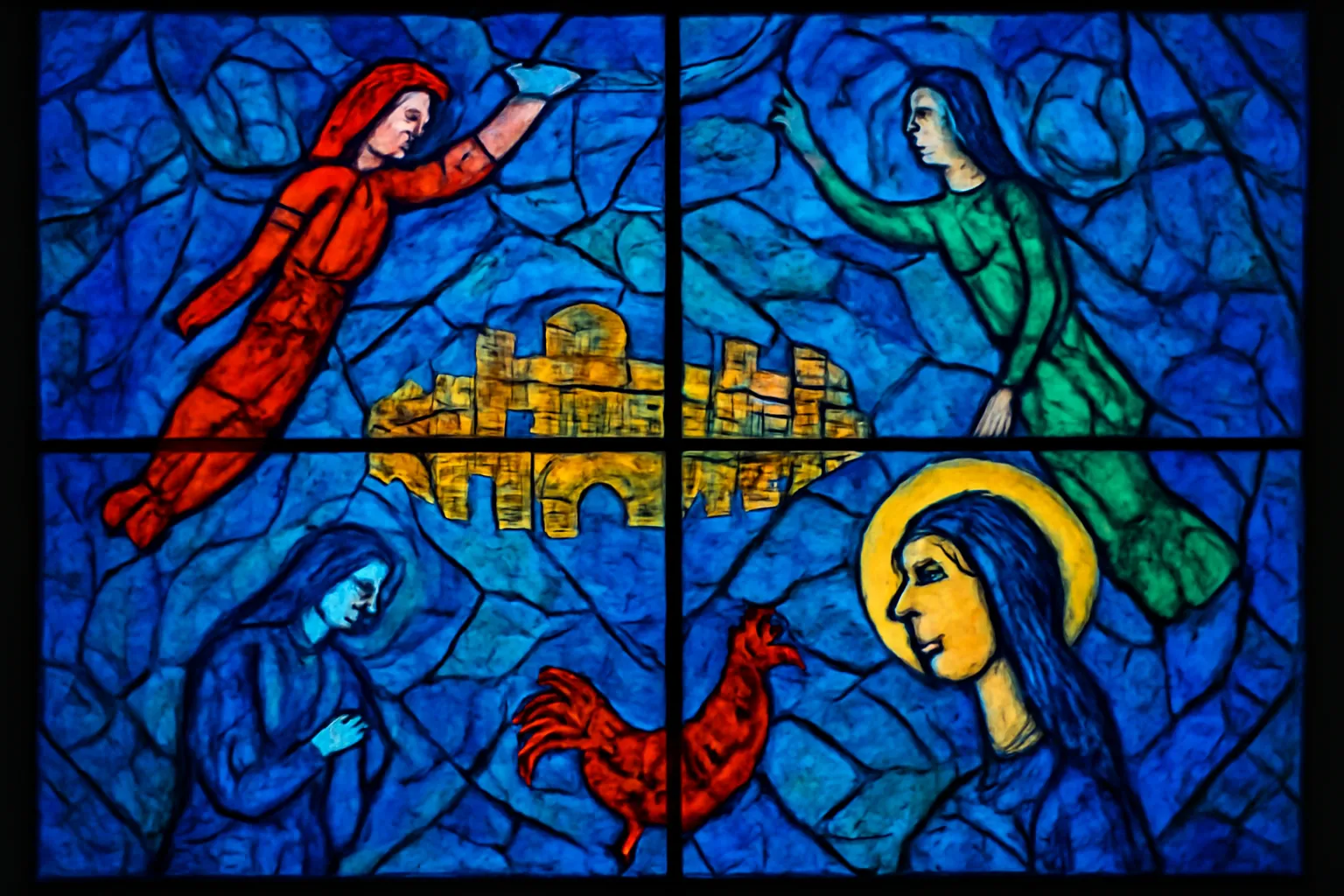
The Chagall Windows Jerusalem form a complete cycle of stained glass that fills a sacred interior with light, color, and dreamlike imagery. In contrast to the more pictorial, narrative windows found in some churches, Chagall’s approach blends biblical storytelling with his lifelong themes of memory, exile, community, and divine presence. The windows—often described collectively as a “cycle” or a suite of twelve large panels—wrap around the synagogue space, inviting viewers to follow a visual journey as light shifts with the day.
Key features that define this work include:
Scale and scope: one of the largest single-cycle windows created by Chagall for a public or religious commission.
Technique: masterful use of stained glass to create luminous color-fields, with Chagall’s characteristic luminous outlines and floating figures.
Thematic breadth: biblical narratives, prophetic voices, and reflections on Jerusalem and Jewish life are interwoven into a unified vision.
Context: conceived for a modern institution—Hadassah Medical Center—to symbolize healing, memory, and continuity of Jewish culture in postwar Jerusalem.
For students of art history, the Jerusalem windows offer a compelling case study in how a single artist can anchor a secular institution with spiritual resonance, while also expanding the formal vocabulary of stained glass in the 20th century. For visitors and readers, they embody a dialogue between light, space, and narrative that remains accessible across generations.
Origins and commission
To understand the Chagall Windows Jerusalem, it helps to situate them within the broader story of the Hadassah Medical Center and its place in Israeli and Jewish life. The commission emerged in a period of reconstruction and renewal after the mid-20th century conflicts, as Jerusalem’s institutions sought to symbolize resilience and cultural continuity. The project brought together a modern medical center, international donors, and a towering artist whose work already bridged East and West, tradition and modernity.
What prompted the project
Chagall’s invitation to design a cycle of stained glass for the Jerusalem campus was motivated by several concurrent aims:
To equip the synagogue with art that could inspire contemplation and communal memory amid the trauma and renewal of a young nation.
To commission a work by a living master whose art already carried universal spiritual and humanist resonances.
To create a visual language that could be appreciated by multilingual visitors, patients, staff, and pilgrims who came to Jerusalem for both medical and spiritual reasons.
While the Jerusalem Windows emerged from a specific institutional setting, Chagall’s global reputation and his lifelong engagement with Jewish myth and liturgy gave the project a universal dimension. The result is a cycle that feels intimate in its spiritual intent yet expansive in its allusions to biblical history, Jewish ritual, and the endurance of memory.
Design, technique, and visual language
Marc Chagall’s approach to stained glass is renowned for combining painterly technique with architectural scale. In the Chagall Windows Jerusalem, this approach translates into a dynamic interplay between color, light, and metaphor. The windows harness natural light to transform the interior atmosphere, so the same space can look radically different at dawn, noon, or dusk.
Chagall worked with craftspeople who translated his designs into stained glass, enamel, and leading that would endure the test of time. The process involved:
Sketching and color studies that defined a palette heavy in blues, golds, reds, and luminous greens.
Layered glass pieces assembled with lead cames to create porous, shimmering surfaces.
Nonlinear forms and flowing, almost lyrical figuration that echoes Chagall’s painting technique.
The result is a suite of panels that glow at different intensities depending on the light conditions inside the synagogue. This aspect—light as a partner to form—is central to the Windows’ effect: they do not merely depict scenes; they illuminate spiritual and historical ideas.
Color, composition, and mood
The Jerusalem windows are notable for their bold color contrasts and the artist’s signature blending of earthly and celestial motifs. The color field often acts as a narrative agent, with:
Vast blues that evoke the sky and eternity.
Warm golds and ambers that signify sanctity, memory, and harvest.
Reds and violets that carry dramatic energy, passion, and prophecy.
In terms of composition, the windows feature a choreography of figures—prophetic voices, biblical characters, and everyday life—placed in a way that invites the eye to glide from one register to another. The decorative rhythm resembles a tapestry more than a single painting, yet the emotional logic remains cohesive: courage, faith, and the ongoing conversation between heaven and earth.
Thematic scope: a cycle of biblical memory
The Chagall Windows Jerusalem do not present a single narrative but an integrated cycle that moves across themes and eras. Below are core interpretive strands that scholars and visitors frequently explore when engaging with the windows.
Creation, origins, and humanity
One recurring thread in the cycle is a meditation on the beginnings—how Genesis stories anchor humanity in memory, responsibility, and possibility. The windows invite viewers to contemplate the creative act, the human capacity for wonder, and the moral dimension of being a people with a shared ancestry.
Exodus, covenant, and liberation
The Exodus narrative—freedom won through endurance—speaks to collective memory and identity. In the Jerusalem windows, this theme is reflected in images that evoke journey, covenant, and the continuing quest for a homeland grounded in justice and memory. The cycle frames liberation not only as historical fact but as a living ethical ideal.
Prophets, wisdom, and the arts
Chagall often foregrounds prophetic voices and the wisdom literature of the Hebrew Bible. The windows can be read as a chorus of prophetic calls—calls to righteousness, compassion, and vision. The integration of artistic and intellectual life—symbolic of wisdom and creativity—speaks to a broader Jewish cultural ideal: that art, law, and ritual sustain the community together.
Jerusalem, land, and longing
At the center of the cycle is the city and land of Israel. The Jerusalem windows are not simply illustrations of biblical episodes; they are meditations on Jerusalem as a spiritual center, a place of pilgrimage, memory, and ongoing political and existential significance. The city appears as both sacred geography and human stage, where history and faith converge in daily life.
Ritual life, daily memory, and community
Beyond grand narratives, the windows celebrate daily life—rituals, harvest, sabbath rhythms, and communal gatherings. This emphasis grounds the sacred in ordinary moments, underscoring the idea that spiritual life is carried by a community’s regular practices and shared memory.
Hope, renewal, and redemption
Ultimately, the Jerusalem chagall windows project a hopeful trajectory. They are about continuity and renewal—an artistic testament to resilience, healing, and the belief in a future shaped by memory and faith.
Visiting the Chagall Windows in Jerusalem: practical guidance
If you are planning a visit to see the Chagall Windows Jerusalem, here are practical notes to help you prepare and maximize your experience.
Where to find the windows
The twelve panels adorn the synagogue interior of the Hadassah Medical Center in Jerusalem. The campus is most commonly associated with the Mount Scopus area, though there is a long-standing connection between Hadassah’s campuses and the city’s medical and academic life. When you arrive, you will be entering a site that blends medical facility, research center, and sacred space—the windows serve as a spiritual counterpoint to scientific work.
Access to the synagogue and its windows is typically aligned with the hospital’s public hours and security policies. For the most accurate and current information, check with the Hadassah public information desk or the hospital’s visitor office before you go. If you are organizing a private tour, contact the hospital’s public affairs office to arrange a guided visit, especially if you want to see the windows with a knowledgeable guide who can explain the imagery and history.
Guided tours and educational programs
Institutional tours often include brief presentations about the art collection and architectural context of the Hadassah campus.
University or museum partners may offer lectures or discussion sessions that place the Chagall windows within broader discussions of modern religious art and Jewish heritage.
Ask about accessibility options, especially if you require assistance or want a version of the tour that emphasizes visual description and interpretation.
Photography and viewing considerations
Photographic policies can vary, particularly in hospital spaces. In many cases, it is allowed to take photographs from designated viewing areas, while flash or tripods may be restricted in some sections for patient safety and privacy. If you are conducting an organized study or a press visit, obtain written permission in advance. When viewing the windows, take your time to observe how the light changes their appearance—this is a central aspect of the experience.
What to bring and how to observe
Bring a notebook or device for notes if you want to document motifs, color usage, or symbolic elements that resonate with you.
Consider a short, reflective approach: note how the windows make you feel and what narratives or themes emerge as you move around the space.
Be mindful of sacred space etiquette in the synagogue—silence or low conversation may be appreciated, especially during prayer times.
Conservation, restoration, and the care of the windows
Like all major modern glass cycles, the Chagall Windows Jerusalem require ongoing care to preserve their color, clarity, and structural integrity. Glass art faces challenges from sunlight, temperature fluctuations, humidity, and the aging of lead cames. Conservation efforts typically focus on:
Cleaning and stabilization of glass panels to prevent corrosion and to maintain visual acuity.
Repair or replacement of damaged lead came and supporting frames to ensure structural stability.
Protection measures against ultraviolet light, which can fade pigments over time, while preserving the luminous effect that defines Chagall’s approach to glass.
Documentation of the original materials and techniques to guide future restoration and to preserve the work’s historical integrity.
Preservation of the Jerusalem windows is not merely a technical matter; it is a cultural responsibility, ensuring that future generations can experience the same emotional and symbolic power that contemporary viewers feel today. The conservation process is typically undertaken with input from art historians, conservators specializing in stained glass, and representatives of the institution hosting the work.
Art-historical context: Chagall in Jerusalem and beyond
Marc Chagall’s stained-glass oeuvre occupies a distinctive place in 20th-century art. The Jerusalem windows belong to a broader arc in which Chagall fused Biblical themes with modernist aesthetics, creating interfaces between the sacred and the secular. This cycle in Israel sits alongside his other monumental windows in European churches and cathedrals, where he translated scriptural narratives into color, light, and memory.
Several features mark the Jerusalem project within Chagall’s career:
Integration with architecture: the windows are designed to work with the synagogue’s geometry, letting light animate the interior architecture.
Narrative layering: rather than illustrating a single tale, the cycle layers multiple biblical motifs to evoke a collective memory and a spiritual dialogue.
Iconic imagery and symbols: the artist’s familiar motifs—floating figures, birds, creatures, and celestial light—reappear in new configurations, offering both familiarity and novelty for viewers.
Cross-cultural resonance: the windows speak to Jewish communities worldwide while inviting a universal audience to contemplate themes of healing, faith, and memory.
Comparisons: how the Jerusalem windows relate to Chagall’s other stained-glass works
Chagall created several acclaimed stained-glass cycles around Europe and beyond, including the windows in Metz Cathedral and the Blue Church in Tel Aviv. The Jerusalem windows share core concerns with these projects—spirituality rendered through color, dreamlike symbolism, and a belief in art as a vehicle for memory and hope—but they also exhibit distinctive qualities:
Context: while Metz Cathedral belongs to a European medieval-sacral setting, the Jerusalem cycle sits inside a modern hospital cum spiritual space, blending healing and worship.
Scale and ambiance: the Hadassah windows are designed for an interior that must accommodate patients, staff, and visitors, which influences their rhythm and legibility from multiple vantage points.
Symbolic balance: the Jerusalem set maintains a balance between biblical narrative and Zionist memory, reflecting a late-modern synthesis specific to its time and place.
For readers familiar with Chagall’s church windows elsewhere, the Jerusalem cycle stands as a local but monumental extension of his ongoing meditation on faith, memory, and color as a form of language.
Interpreting the windows: keys to seeing more deeply
Appreciating the Chagall Windows Jerusalem involves more than spotting vivid colors or noble portraits. It invites readers to engage with a layered visual language that marries personal memory with collective identity. Here are interpretive guidelines that scholars and visitors often use:
Look for recurring motifs—birds, stars, and human figures—that signal connection to biblical stories and to the idea of the soul in motion.
Notice how light changes the mood: daytime sun, early morning haze, or evening glow can alter the panel’s impact and highlight different color harmonies.
Consider the relationship between scene and space: how the window acts as a doorway—both literal and symbolic—into a broader narrative about healing, memory, and hope.
Reflect on the juxtaposition of the mundane and the sacred: scenes of daily life coexist with prophetic and heavenly imagery, suggesting that spirituality is woven into everyday experience.
Context matters: the windows were conceived for a hospital environment; their message includes themes of care, healing, and communal resilience.
Frequently asked questions about the Chagall Windows Jerusalem
Are the Chagall Windows in Jerusalem accessible to the public?
Yes, as part of the Hadassah Medical Center campus, the windows are accessible to visitors and patients. For the most accurate information on hours, tours, and access, contact the hospital’s public relations office and inquire about synagogue visiting policies.
What scale are the windows, and how many panels are there?
The Jerusalem cycle comprises multiple large stained-glass panels arranged around the interior of the synagogue. The windows form a twelve-part cycle that reads as a continuous visual narration when experienced in person.
What themes do the windows emphasize?
The cycle weaves together biblical creation, liberation, prophetic voices, and the spiritual geography of Jerusalem, with emphasis on memory, healing, and the poetic intersection of faith and daily life.
Can I visit to study the windows for academic purposes?
Absolutely. If you are a researcher or student, you can coordinate with the Hadassah center to arrange a supervised visit. Given the dual nature of the site as a medical center, advance planning is recommended to ensure access to the appropriate spaces and interpreters if needed.
How do these windows compare with other Chagall glass works?
The Jerusalem windows share the painterly, dreamlike quality of Chagall’s other stained-glass cycles, but they are distinctive in their hospital context, their integration with modern Jewish memory, and their role as a public art commission in a contemporary religious setting.
Conclusion: why the Chagall Windows Jerusalem endure as a cultural and spiritual landmark
The Chagall Windows Jerusalem occupy a rare intersection where art, faith, and daily life converge. They are not merely decorative; they are a sustained meditation on the human condition—on creation, exile, memory, healing, and hope. As people walk through the Hadassah Medical Center, they encounter light that seems to carry stories across generations. The windows invite contemplation, dialogue, and a sense of shared history, making the cycle a vital component of Jerusalem’s cultural fabric.
For scholars, visitors, and casual readers alike, the Jerusalem chagall windows offer a compelling case study in how modern art can be both universal and deeply rooted in a place and people. They demonstrate how a contemporary artist can enter a sacred space with a future-facing vision while honoring ancient liturgy and memory. In this sense, the Marc Chagall murals in Jerusalem remain a luminous centerpiece of Jewish art and a beacon for those who seek beauty and meaning in public spaces.
Whether you approach them as an art historian analyzing technique, as a religious studies student considering biblical motifs, or as a traveler seeking a meaningful cultural stop, the Chagall Windows Jerusalem reward patient looking, reflective observation. They are not simply windows; they are a whispered, stained-glass sermon about resilience, memory, and the power of light to carry human stories across time.