The phrase Easter Jewish Holiday is not a standard way to name any single holiday in Jewish or Christian calendars. However, it captures an important reality: in many years, the Jewish holiday of Passover (Pesach) and Easter—the Christian festival remembering the resurrection of Jesus—occur close to one another on the springtime calendar. This article uses the concept of the Easter–Passover overlap as a lens to understand both traditions, their distinctive rites, and how modern communities navigate them when they coincide or sit nearby. Below you will find a thorough exploration of traditions, history, and contemporary celebrations, with careful attention to accuracy, nuance, and educational value.
Understanding the overlap: Easter, Passover, and the springtime calendar
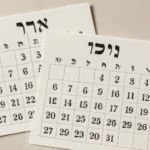
To grasp why an Easter Jewish Holiday overlap may arise, it helps to know how each holiday is determined. Passover (Hebrew: Pesach) is anchored to the Hebrew calendar, beginning on the 15th of the month of Nisan. It commemorates the Exodus from Egypt and is fundamentally a festival of freedom, narrative, and ritual food. The length of Passover varies by tradition: seven days in Israel and eight days in many Diaspora communities, with special Shabbat-like prayers and purification practices during the early days and the closing days. The central ritual is the Seder, a structured meal that retells the Exodus story with symbolic foods, prayers, and a sequence known as the order (seder refers to “order”).
Easter is a Christian festival tied to the resurrection of Jesus. Its date is determined by a different system: it follows the Sunday after the first full moon that occurs on or after the vernal equinox (a convention used in the Christian ecclesiastical calendar). This means Easter can fall anywhere from late March to late April. The interplay of lunar and solar calendars often brings Easter into close proximity with Passover, and in some years the two holidays align on the same day or within a few days.
Because of these calendar mechanics, scholars, educators, and theologians sometimes discuss the overlap of Easter and Passover as a meaningful cultural moment—one that invites reflection on shared themes (liberation, renewal, remembrance), historical interactions, and how Jewish and Christian communities live with and around one another in shared places and times. In the following sections, we’ll separate the historical origins from contemporary practice, while consistently noting where crossovers occur and where distinct traditions remain firm.
Historical roots: how Passover and Easter developed side by side
Origins of Passover
Passover is one of the oldest and most central Jewish pilgrim festivals. The biblical narratives describe God delivering the Israelites from slavery in Egypt, culminating in the Exodus, the parting of the Red Sea, and the final journey toward nationhood in the land of Israel. The name Pesach comes from the Hebrew root meaning “to pass over,” referring to the angel of death passing over the houses of the Israelites during the tenth plague. The festival emphasizes collective memory, ritual meal, and ethical reflection on freedom, deliverance, and the duties of justice and hospitality.
As a ritual framework, Passover is anchored in the Haggadah, the liturgical text that guides the Seder. The Haggadah brings the Exodus narrative to life for participants—especially children—through storytelling, questions, symbolic foods, and songs. Central symbols include matzah (unleavened bread), maror (bitter herbs), charoset (a sweet mixture of fruit and nuts), and afikomen (a piece of matzah set aside and later found by the children). The ritual meal is punctuated by the drinking of four cups of wine, each signifying an aspect of redemption.
Origins of Easter
Easter emerged in the early Christian centuries as a celebration of the resurrection. Its exact origins are debated among scholars, with different traditions tracing the holiday to the Jewish Passover frame or to pre-existing spring festival customs. The earliest Christians interpreted Jesus’ crucifixion and resurrection in light of the Passover story, and some communities historically observed the Jewish festival of Passover while others developed a separate calendrical system for computing Easter. The term Pascha is still used in many languages and in several Christian denominations; it emphasizes the essential Christian belief in resurrection rather than the historical Exodus narrative.
Over time, the Christian church formalized the dating of Easter, leading to a distinct holiday that sometimes aligns with Passover and sometimes departs from it. The distinction between observing a Passover component in a Christian context and adhering to the Jewish Passover has been a point of theological discussion, cultural exchange, and, at times, tension in various eras of interfaith relations.
Interactions through history
Historically, Jewish and Christian communities lived in proximity and often in interaction within the same regions. The overlap of dates occasionally fostered dialogue and mutual curiosity, but it could also lead to misunderstandings or conflict. In early centuries, some Christian groups kept the two calendars aligned, while others separated their observances. By the late medieval period and into modern times, most Christian churches followed standardized Easter dates that do not depend on the Jewish calendar, while Jewish communities continued to observe Passover on the fixed Hebrew calendar. In modern times, the situation is more nuanced: in some years the calendars align closely, creating a shared seasonal mood around liberation, family gatherings, and communal meals; in other years, the holidays unfold at a respectful distance from one another.
Traditions and ritual life: the Passover Seder and Easter customs compared
The Passover Seder: structure, symbolism, and learning
The Seder is the heart of Passover for many Jews. It is a ritual meal with a prescribed order, celebrated in homes and community spaces. The Seder is designed as a pedagogical ritual—a structured way to tell the story of the Exodus, engage participants of all ages, and infuse meaning into daily life with ancient symbols. Key elements include:
Kadesh — the sanctification of the first cup of wine and the opening blessing.
Urchatz — the ritual washing of hands without a blessing, signaling purification.
Karpas — dipping greens (usually parsley) into salt water to recall the tears of the enslaved.
Yachatz — breaking the middle matzah and hiding the afikomen.
Maggid — the storytelling portion, where the Exodus narrative is recited, including the Four Questions posed by the youngest participant.
Rachtzah and Motzi Matzah — washing and blessing the bread; eating matzah to recall the haste of the Israelites’ departure.
Maror and Charoset — symbolic tastes of bitterness and sweetness, representing hardship and hope.
Korech — a sandwich of matzah with maror and charoset.
Shulchan Orech — the festive meal itself, a time for family and friends to gather.
Tzafun — the tasting of the afikomen, completing the ritual narrative.
Barech and Hallel — blessings after the meal and songs of praise; some communities add concluding prayers and a closing blessing, Nirtzah.
In addition to the formal order, the Seder plate holds symbolic foods with instructive meanings:
Matzah — unleavened bread, reminding participants of the haste with which the Israelites left Egypt.
Maror — bitter herbs, symbolizing the bitterness of oppression.
Charoset — a sweet mix of fruit, nuts, and wine, representing the mortar used by enslaved people.
Karpas — greens dipped in salt water, symbolizing spring and tears.
Zeroa — a roasted bone (or a symbolic bone) signifying the Passover sacrifice historically offered in the Temple, now observed symbolically.
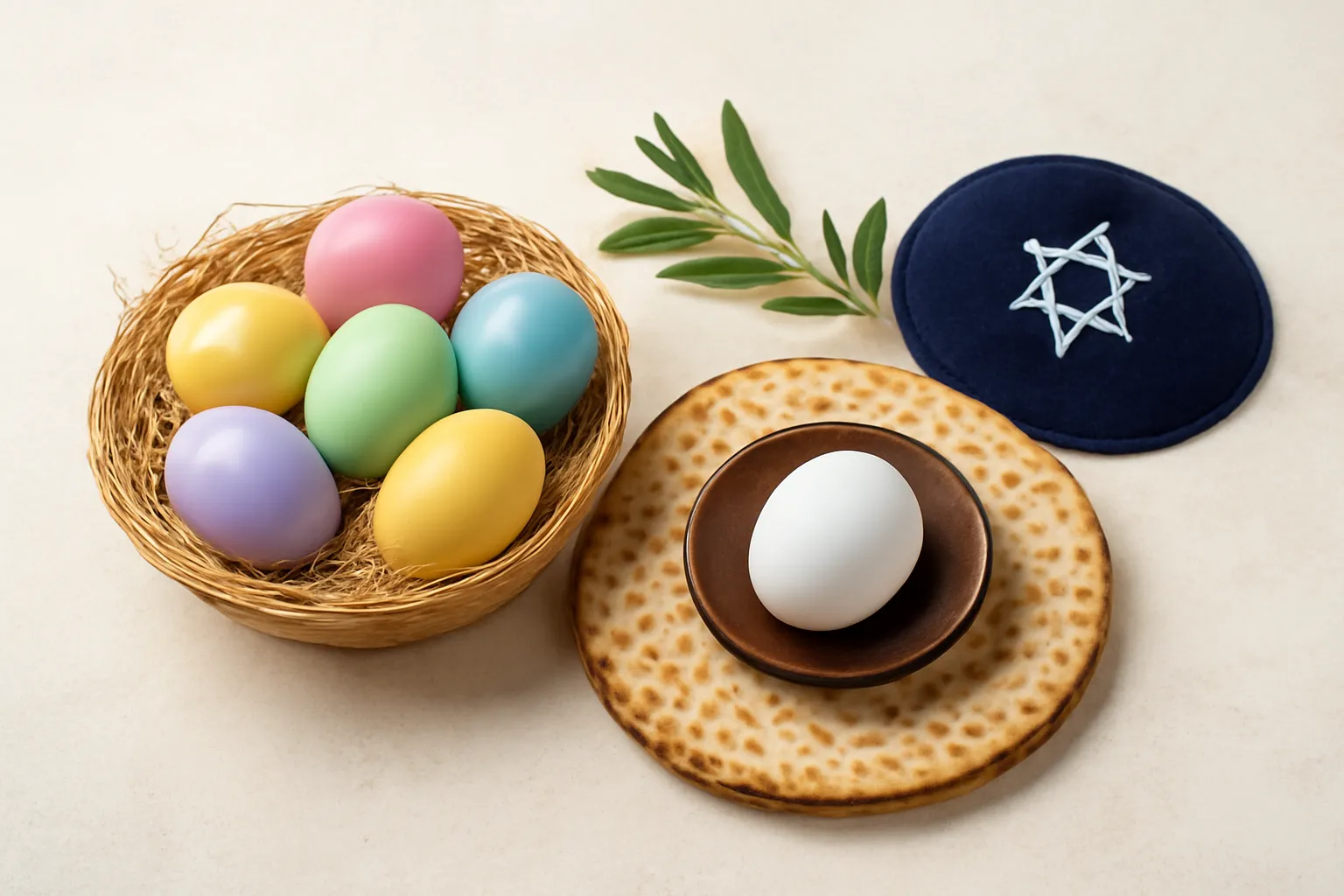
Beitzah — a roasted egg representing renewal and the cycle of life.
Passover also emphasizes the removal of chametz, the leavened products that symbolize excess and arrogance. A series of preparations precedes the Seder, including a thorough house search for chametz (bedsides and corners) and the formal destruction of remaining chametz. The bedikat chametz and biur chametz rituals mark a clear distinction between a season of restriction and a season of freedom.
Key Easter customs in communities around the world
In Christian communities, Easter carries a different but sometimes overlapping cultural mood to Passover. Common Easter customs include:
Easter Sunday services featuring sermons about resurrection, salvation, and renewal.
Holy Week observing Maundy Thursday and Good Friday rituals in many churches.
Easter eggs and egg hunts, symbols of new life and rebirth.
Easter lilies and other seasonal floral decorations in houses of worship and homes.
Special foods such as hot cross buns and festive meals that celebrate community and faith.
When the Easter season overlaps with Passover, families and communities sometimes coordinate their calendars or share meals in interfaith households. The Easter Jewish Holiday overlap isn’t a formal designation, but it can inspire thoughtful conversations about shared values like freedom, memory, and hope. In modern practice, many Jewish families observe Passover in ways that respect the timing of Easter in nearby communities, while preserving distinct rituals and meanings rooted in Jewish law and history.
Modern celebrations: how communities respond to the overlap and to each holiday today
Observance patterns in Israel and the Jewish diaspora
In Israel, Passover is a national festival with rituals that blend family life, religious observance, and public culture. The first two days of Passover in the diaspora typically create a cultural frame around a spring season that often overlaps with Easter in Western countries. The modern approach to Passover in Israel often emphasizes:
Chametz removal in homes and public spaces, with communal campaigns encouraging participation, especially for families with children.
Community Seder events that bring together people from different backgrounds in a shared experience of memory and gratitude.
kosher for Passover foods in markets and restaurants, with labeling and educational signage to help observers adhere to dietary laws during the festival.
In the Jewish diaspora, especially in Europe and North America, Passover can take on a wide range of expressions. Some communities emphasize traditional liturgy, others focus on family-centered gatherings, and many schools, synagogues, and cultural centers host public Seders to educate both Jews and non-Jews about the holiday’s history and values. The duration of observance—whether seven or eight days—varies by tradition, and in places with >two-day Yom Tov on the first days, the Seder and related practices can unfold across multiple evenings.
Interfaith families and educational outreach
One of the most visible modern developments related to the Easter–Passover calendar is the growing presence of interfaith families choosing to mark both holidays. In these households, a deliberate approach can help:
Respect the distinct theological meanings of Easter and Passover while sharing family meals and gatherings.
Offer a child-friendly introduction to Pesach and the Seder, using age-appropriate explanations and activities.
Involve guests from diverse backgrounds in the Seder rituals, perhaps adapting parts of the order to be inclusive and educational for non-Jewish attendees.
Educational programs, museum exhibitions, and synagogues often develop resources that describe both holidays in parallel and highlight shared themes such as liberation, memory, and renewal. These efforts contribute to broader understanding and respectful dialogue across communities.
Contemporary Jewish communities and global awareness
Today’s Easter Jewish Holiday overlap is often seen as a moment for cultural exchange rather than conflict. In university towns and multicultural urban centers, students participate in cross-faith events, panels, and interfaith seders that explore how Passover and Easter speak to universal human concerns—freedom from oppression, the search for identity, and the renewal of family bonds. In many places, Jewish chefs and home cooks share Passover recipes with a broader audience, while churches present educational seminars that describe the historical roots of Easter and its relationship to the broader springtime religious calendar.
Educational insights: learning objectives for readers and learners
What to know about the religious distinctiveness of each holiday
The most important distinction to recognize is that Passover and Easter belong to different faith traditions with distinct theological frames. Passover is a ritual commemorating the deliverance of the Israelites from slavery, grounded in Jewish law and liturgy, and centered around the Seder and the family meal. Easter is a Christian celebration of the resurrection of Jesus, anchored in Christian theology and liturgical practices in churches. Understanding these differences helps prevent conflating the two holidays, while appreciating how they have historically intersected and influenced one another.
Key parallels worth noting
Despite their differences, several themes recur across both holidays:
Freedom and salvation as central themes that drive narrative and ritual.
Family and memory as focal points of gathering, storytelling, and transmission of tradition.
Ritual meals and symbolic foods that encode values and historical memory.
Education of the young through questions, stories, and participatory rituals.
Reading lists and resources for deeper study
For readers who want to explore more deeply, consider these categories of resources:
Haggadahs and Passover guides that include commentaries for families, educators, and diverse communities.
Historical studies on early Christianity and Judaism, focusing on the development of Easter and Pesach in late antiquity and the medieval period.
Interfaith literature that examines how Jewish and Christian communities engage with one another around springtime festivals.
Notes on calendar systems explaining how the Hebrew calendar differs from the Christian ecclesiastical calendar and from the Gregorian solar calendar.
Frequently asked questions about the Easter–Passover overlap
Is there a true “Easter Jewish Holiday”?
No. There is not a standalone Jewish holiday officially named the Easter Jewish Holiday. The phrase is used here to discuss the intersection of two distinct seasonal celebrations—Passover (Pesach) and Easter—that sometimes occur in the same spring window. The correct terms are Passover and Easter, each with its own religious and cultural significance.
What happens when Easter and Passover happen on the same week?
When dates align, families—especially those who observe both traditions—may arrange activities that honor each holiday. Jewish communities keep the Purposes of Passover in view, while Christian communities observe Easter practices. Interfaith households may host combined or parallel events, with careful attention to the meanings of both holidays and the needs of guests and participants.
Are there official guidelines about observing both holidays?
There are no universal official guidelines because practices vary widely by denomination, culture, and personal tradition. In Jewish education, the emphasis is often on the Seder’s ritual and the pedagogical goals for children, while in Christian settings the focus is on the resurrection narrative and communal worship. In interfaith contexts, families may create personalized guidelines that honor both sides respectfully, with attention to religious observance requirements such as dietary laws in Passover and liturgical practices in Easter.
Conclusion: toward respectful understanding of two connected, distinct springtime holidays
To speak of the Easter Jewish Holiday overlap is to acknowledge a nuanced cultural and historical space where two spring celebrations with different theological aims sometimes share time, space, and human interest. The Jewish festival of Passover remains a deeply rooted ritual of memory, liberation, and family life, anchored by the Seder and its symbolic foods. The Christian festival of Easter represents a central moment of faith-centered celebration of resurrection in churches and Christian households. When the two calendars intersect, they invite reflection on common themes—freedom, gratitude, and renewal—while also modeling how communities preserve distinct identities within a broader shared landscape.
For readers, the lessons of this overlap are practical as well as historical: learn the differences between the two holidays, appreciate their shared values, and recognize how modern families navigate tradition in diverse contexts. Whether you are part of a Jewish home preparing a Passover Seder, a Christian congregation preparing an Easter service, or an interfaith family seeking to honor both, you can approach the season with curiosity, respect, and a willingness to learn from one another. The result is a richer understanding of how human communities remember the past, live in the present, and hope for a future defined by dignity, freedom, and renewal.