Introduction: Florence’s Great Synagogue as a Historic Landmark
The Great Synagogue of Florence stands as one of the city’s most enduring symbols of cultural pluralism and religious life. Known in Italian as the Tempio Israelitico di Firenze or, less formally, the Grande Sinagoga di Firenze, this monumental building anchors the city’s Jewish heritage within the broader story of Florence’s art, scholarship, and daily life. For visitors, it is not merely an architectural landmark but a window into centuries of community resilience, negotiation, and renewal.
In Florence, a city famous for its Renaissance legacies, the Florence Great Synagogue offers a different kind of eloquence: a living testament to faith, learning, and cultural exchange. Whether you come as a student of architecture, a history enthusiast, or a curious traveler, the synagogue and its surroundings invite a careful, reflective exploration of a community that has helped shape the city as we know it today.
Origins and Historical Context
The Jewish presence in Florence stretches back many centuries, threading through the city’s marketplaces, scholarly circles, and neighborhoods. Like many Italian cities, Florence’s Jewish community faced periods of legal restrictions, residency requirements, and social limitation, yet persisted and contributed to Florentine life in meaningful ways. The great synagogue of Florence emerged in a period when many communities sought visible, dignified spaces of worship and study that could serve as both spiritual centers and community hubs.
The decision to erect a grand house of prayer in Florence reflected broader currents of emancipation and modernization that swept across parts of Europe in the late 19th and early 20th centuries. The building that visitors see today—often described in guidebooks and academic writing as a salient example of its era—was conceived as a place where tradition and modernity could meet. Its creation symbolized a renewed sense of belonging and an explicit cultural self-expression in stone, tile, and ornament.
The Grande Sinagoga is thus not only a religious sanctuary but also a statement about the place of Jews within a changing Italian nation. The site has witnessed ceremonies, holidays, and daily prayers for generations, and it continues to be a site of education and dialogue for both the Jewish community in Florence and the city at large.
Architectural Design: Exterior and Interior Voices
Architecture plays a powerful role in how visitors experience sacred space. The Florence Great Synagogue is frequently discussed in terms of its design language, materials, and spatial organization. While the exact stylistic vocabulary can vary in descriptions, the structure commonly sits within a tradition of synagogues built in the late 19th and early 20th centuries that blended historicist aesthetics with distinctive regional touches. Expect a prominent exterior that announces the building’s presence in the urban fabric, and an interior that emphasizes light, proportion, and decorative artistry.
Exterior Features
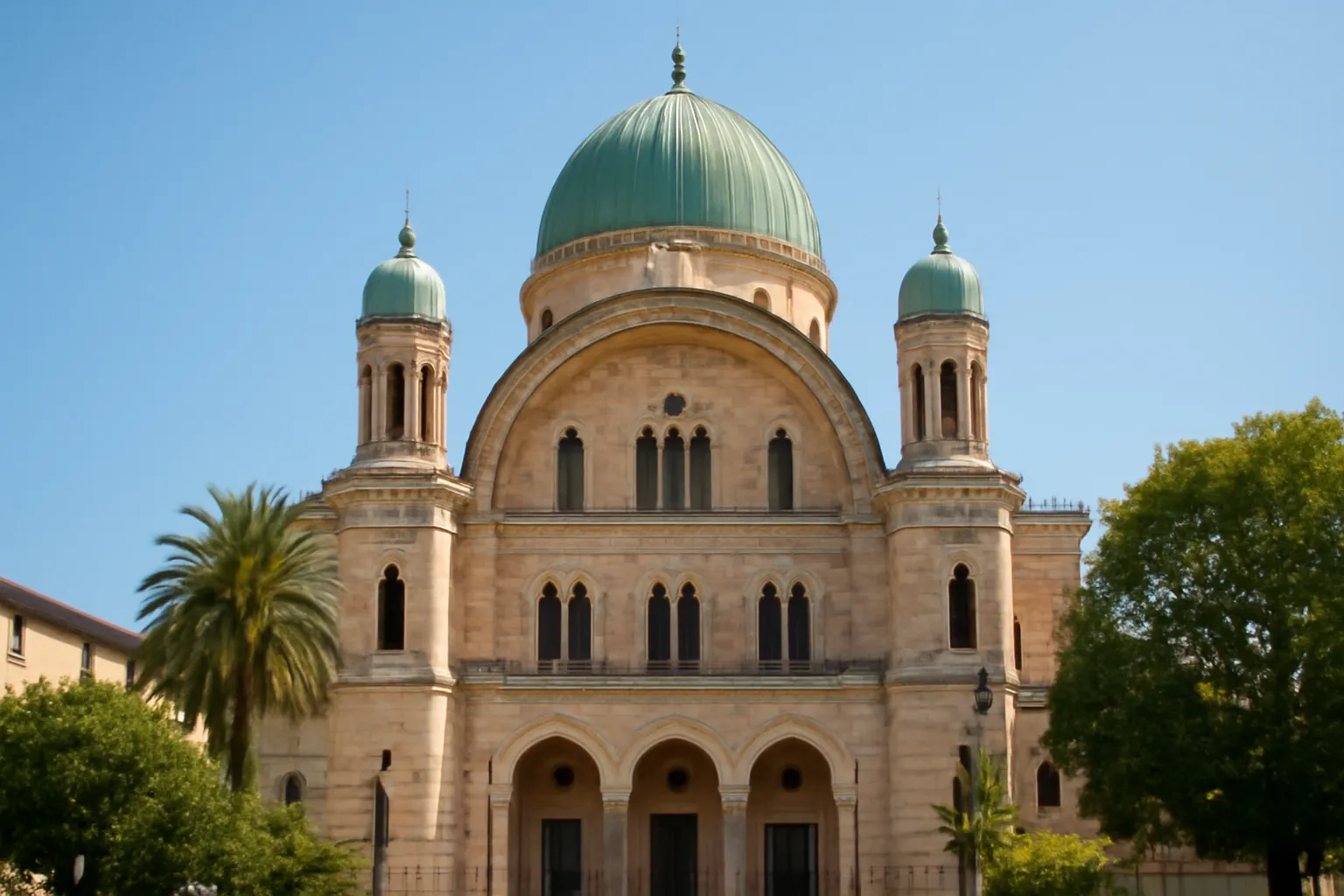
The exterior of the Tempio Israelitico di Firenze typically presents a robust, dignified silhouette that blends traditional forms with contemporary craft. Visitors often notice:
Ornate arches and arcades that frame the entry and emphasize vertical rhythm.
Domed or vaulted elements that give the building a distinctive skyline profile.
Stone or stucco detailing that reflects the local material sensibilities and the era’s architectural vocabulary.
The thoughtful exterior design serves as a prelude to the interior’s more intimate and devotional atmosphere.
Interior Aesthetics and Spatial Organization
Inside, the space often centers on a grand prayer hall arranged to accommodate the congregational life of the community. While individual decorative choices may differ by restoration cycles or interpretation, certain elements are widely associated with Florentine sacred spaces of this type:
Bimah (reading platform) positioned to enable communal participation in liturgy.
Torah ark or an ornate repository for sacred scrolls, serving as the focal point of the sanctuary.
Light and color schemes that create an atmosphere of reverence and warmth.
Geometric and vegetal motifs in plasterwork, wood, or tile that reflect a regional interpretation of traditional Jewish decorative languages.
Gallery seating along the sides or upper levels to accommodate families and, in some cases, women’s seating in line with historical practice.
The interior spaces are carefully lit to emphasize sacred objects and to foster a sense of contemplation. Even for a casual visitor, the atmosphere communicates a continuity of tradition across generations.
The Interior Experience: What to Look For
As you move through the interior of the Great Synagogue of Florence, several features tend to stand out for visitors who wish to understand both liturgical life and architectural craft:
Torah Ark and Bimah: The central table and shelving where scrolls are kept, and the focal point for reading during services.
Columns and arcades: Structural elements that define the hall’s rhythm and create a sense of procession.
Stained glass or decorative windows that filter light and add color to the sanctuary’s interior space.
Calligraphic inscriptions or decorative inscriptions in Hebrew or other scripts, reflecting liturgical and educational traditions.
Visitors are often drawn to the way light interacts with these elements—glints of color on marble surfaces, the play of shadows across carved wood, and the quiet dignity that pervades the rooms. If you are visiting during a service, you may experience a different rhythm of movement and sound, which can deepen your understanding of how space shapes religious practice.
Around the Great Synagogue: The Ghetto and the City Context
The Florence Great Synagogue sits within a broader urban and historical landscape that includes areas traditionally associated with Florence’s Jewish life. The historic center contains a concentration of landmarks, markets, and neighborhoods where Jewish residents historically lived, traded, studied, and worshiped. While the city has transformed over the centuries, the memory of a Jewish quarter—known to many visitors as Florence’s historic Jewish quarter or ghetto—is still felt in the streets’ layout, in the proximity of synagogues to civic spaces, and in the continual recognition of Jewish cultural contributions to Florentine life.
As you walk in the vicinity, you may encounter informational plaques, small museums, and educational panels that provide context on the community’s history, the architecture of the synagogue, and the broader story of Jewish life in Tuscany. The integration of these elements helps visitors situate the Great Synagogue within a continuum of faith, learning, and civic engagement.
Educational Programs, Exhibits, and the Jewish Cultural Landscape
Beyond worship and prayer, the Florentine synagogue complex is frequently involved in educational programming designed for both locals and visitors. In many cases, there is an emphasis on:
Guided tours in multiple languages that explain the building’s history, architecture, and ritual function.
Temporary exhibitions that explore Jewish life in Florence, broader Italian Jewish history, and the relationship between Jewish culture and the arts in Tuscany.
Public lectures and seminars that bring together scholars, clergy, and educators to discuss topics ranging from medieval Jewish life to modern interfaith dialogue.
Archival resources and libraries that support research into local history, genealogy, and religious practice.
The combination of a living place of worship with an educational mission makes the Great Synagogue a dynamic center for learning. If you are a student, teacher, or lifelong learner, you may find opportunities to engage with exhibits, programs, and tours that enrich your understanding of the city’s Jewish past and present.
What You Can Expect on a Visit to the Museum or Archives
While not every day features a formal museum exhibit, many visitors encounter displays that illuminate the daily life of Florentine Jews, traditional rituals, and the city’s role in wider historical currents. Materials can include:
Photographs and documents from past generations that tell personal and communal stories.
Objects of ritual significance and explanations of their uses and meanings.
Educational panels presenting historical milestones, key figures, and milestones in the struggle for rights and recognition.
If you are researching family history or local history, consider asking about access to catalogs or archives. Staff and volunteers often provide directions on how to locate relevant materials and how best to interpret them in their historical context.
Visiting: Practical Tips for the Modern Traveler
For travelers planning a visit to the Florence Great Synagogue, practical planning can enhance the experience. Here are tips drawn from common visitor experiences and best practices observed by guides and community staff:
Hours and access: Opening times vary by season and by whether services are scheduled. It is advisable to verify current hours and whether guided tours are available on the day of your visit. In many cases, visits are coordinated with the local Jewish community or associated museums.
Booking a guided tour: If possible, book a guided tour in advance. A knowledgeable guide can illuminate architectural details, liturgical elements, and historical context you might otherwise miss.
Dress code and respect: When entering a house of worship, dress modestly and behave respectfully. Remove hats when required, speak softly, and refrain from loud photography during services.
Photography policy: Policies vary; some spaces permit photography without flash, while others restrict photography altogether, especially within worship areas. Always ask permission before taking pictures inside sanctuaries.
Accessibility: Check accessibility options if you have mobility needs. Some areas may be accessible, while others—such as certain balconies or ceremonial spaces—could have stairs or limited access.
Respect for ongoing services: If a service is in progress, observe from designated areas and avoid interrupting worshippers. It’s common courtesy to wait until a break in the rite or until a guide invites questions after the service.
Practical Planning: Getting There and Around
Florence is a compact city with excellent public transport and a walkable historic center. The Great Synagogue of Florence is typically reachable by a short walk from major sights and from central transport hubs. When planning your day:
Public transit: Local buses connect central Florence to the synagogue’s vicinity. If you are staying near the historic center, walking is often the easiest way to reach it.
Neighborhood context: The building sits in a historic district rich with museums, markets, and architectural landmarks. Plan extra time to explore the surrounding streets, which often reveal layers of Florentine urban history.
Nearby sights to pair with your visit: Consider pairing your synagogue visit with a stroll to the Cathedral, Uffizi Gallery, Ponte Vecchio, or the Bargello. These are among the city’s most celebrated spaces, and they provide a broader sense of Florence’s architectural and artistic milieu.
A Suggested Visitor Itinerary
A well-planned visit to the Great Synagogue of Florence can be integrated into a half-day or full-day itinerary. Here is a sample plan to help you make the most of your time:
Morning introduction: Begin with a guided tour that covers the building’s exterior, its architectural vocabulary, and a broad overview of the Jewish community’s history in Florence.
Interior discovery: Spend time in the sanctuary area, observing the layout of the bimah and Torah ark, and absorbing the interplay of light and material that characterizes the space.
Educational stop: Visit any museum or archival displays associated with the complex, paying special attention to panels that explain local history and ritual life.
Neighborhood walk: Take a stroll through the surrounding streets to encounter the broader context of the historic Jewish quarter and its relationships to Florence’s civic life.
Lunch and reflection: End with a meal in a nearby trattoria or café, reflecting on how the day’s discoveries relate to broader themes in European Jewish history and Italian culture.
A Note on Name Variations and Semantic Breadth
In English-language writing about this Florentine landmark, you will encounter multiple ways to refer to the building and its community. To increase semantic breadth and assist with cross-referencing, consider these variations:
Great Synagogue of Florence
Florence Great Synagogue
Sinagoga di Firenze (Italian name for the Florence synagogue)
Tempio Israelitico di Firenze (official Italian designation)
Grande Sinagoga di Firenze (literary/guidebook reference)
Florence’s historic Jewish landmark (descriptor used in itineraries)
This approach helps ensure that readers from different linguistic backgrounds find the information they need and recognize the same meaningful site, regardless of the exact wording used.
For Researchers and Students: Deeper Dives and References
If you are researching the Great Synagogue of Florence for academic purposes, or if you are preparing a student excursion, you will want to consult a combination of primary sources, museum catalogs, and scholarly works. Some starting points include:
Architectural journals and survey reports that analyze late 19th–century synagogue design in Italy and the broader Mediterranean world.
Local historical archives and municipal records that document the building’s construction, funding, and consecration ceremonies.
Community oral histories and interview collections that illuminate daily life within Florence’s Jewish community across generations.
When pursuing deeper study, remember to frame your questions around how a religious building interacts with urban space, public memory, and interfaith dialogue. The Florence Great Synagogue is not only a place of worship but also a site where cultural exchange, education, and memory converge.
Respect, Etiquette, and Responsible Tourism
Visiting a sacred site such as the Florence Great Synagogue requires thoughtful conduct. Respect for worship practices, the sanctity of space, and the local community is essential. A few guidelines can help:
Observe posted rules and obey staff directions, especially during prayer times.
Avoid loud conversations or photographing people without consent when inside holy spaces.
Dress modestly—shoulders and knees covered—and remove hats where appropriate.
If you are part of a group, arrive on time for scheduled tours to avoid disrupting other visitors or worshippers.
Closing Thoughts: The Great Synagogue as a Living Link to Florence’s Past and Present
The Great Synagogue of Florence remains a vital thread in the city’s rich tapestry of religious, cultural, and artistic life. Its walls contain echoes of centuries of prayer, learning, and community, and its presence in Florence reminds both locals and travelers that the city has long welcomed diverse voices into its public square. For those who come to Florence seeking beauty, history, and insight, the Florentine synagogue offers a thoughtful, rewarding encounter with a community’s memory and its ongoing conversation with the present.
Appendix: Quick Reference for Visitors
Name variants: Great Synagogue of Florence, Florence Great Synagogue, Sinagoga di Firenze, Tempio Israelitico di Firenze, Grande Sinagoga di Firenze.
Official terms: Tempio Israelitico di Firenze (Italian), Grande Sinagoga (informal Italian shorthand).