Hebrew transcription is a practical bridge between scripts, sounds, and audiences. Whether you are a linguist cataloging
a corpus, a traveler trying to pronounce street signs with confidence, a student learning Modern Hebrew, or a librarian
standardizing catalog entries, the task of rendering Hebrew text into the Latin alphabet involves choices. These
choices are not merely cosmetic; they affect accessibility, searchability, and the perceived authenticity of names and
terms. This article offers a comprehensive overview of Hebrew transcription, covering
transliteration systems, pronunciation guidance, vowel notation, dialectal variation, and a toolkit of practical resources you can use in classrooms, offices, and editorial workflows.
What is Hebrew transcription?
In brief, transcription is the practice of representing the sounds of a language with the symbols of
another writing system. In the case of Hebrew, most discussions center on transliteration (the mapping of Hebrew letters and graphemes to Latin letters) and transcription (the rendering of actual sounds, which may be approximated by phonemic or phonetic
notation). Hebrew transcription is used for several purposes:
Publishing and indexing, where Latin scripts must convey Hebrew terms to readers who do not read Hebrew.
Language teaching, where learners need a consistent way to pronounce unfamiliar Hebrew words.
Academic research, where scholars adopt a standardized system to compare forms across corpora.
Navigation and reference tools, such as dictionaries, gazetteers, and bibliographies.
It is important to remember that transliteration systems differ in how they treat consonants, vowels,
stress, syllable boundaries, and special Hebrew features such as niqqudot (vowel points) and dagesh (a dot inside certain consonants indicating a stronger or changed sound). Because no single system captures every nuance of
Hebrew phonology or every dialect, it is common to use more than one approach depending on the context. This
article emphasizes clarity, comparability, and semantic breadth by presenting multiple systems and
practical guidelines.
Understanding Hebrew script and its phonology
A solid transcription begins with basic knowledge of the Hebrew script and its phonology. Hebrew uses 22 consonants
and a set of vowel signs, known as niqqudot, that can be written or omitted. In everyday Modern Hebrew, vowels
are frequently inferred from context rather than explicitly marked, which is one reason why multiple transliteration
schemes exist.
Alphabet and key features
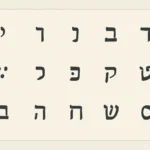
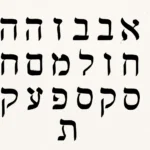
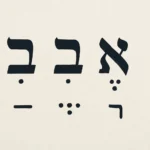
Consonants: The core set includes letters such as aleph (א), bet (ב), gimel (ג), dalet (ד), hei (ה), vav (ו), zayin (ז), ḥet (ח), and tav (ת), among others.
Final forms: Five letters have special final forms used at the end of words: kaf sofit (ך), mem sofit (ם), nun sofit (ן), pe sofit (ף), and tsadi sofit (ץ).
Vowels: In unpointed texts, vowels are not written. When niqqudot are present, they appear as a system of dots and diacritics over and under the consonants, indicating sounds such as a, e, i, o, u.
Dagesh: A dot placed inside some letters (notably bet, kaf, pe, bet, dalet) that can indicate a stronger sound or, historically, a doubled consonant. Its presence or absence can influence transliteration choices (for example, bet with dagesh is /b/, without it can be /v/ in Modern Hebrew pronunciation).
Aleph, Ayin: These letters can function as glottal stops or be largely silent in many forms of transcription, depending on the system and the word.
Vowels and niqqudot
Niqqudot provide a precise vowel representation but are not always used in print. When niqqudot are used in teaching materials or
dictionaries, you can map them to Latin vowels in systematic ways. Common mappings include:
Kamatz (ָ) → a or sometimes o depending on the word and system
Segol (ֶ) → e
Tzere (ֵ) → e or ei depending on context
Cholam (וֹ) → o or o with a preceding w in some schemes
Cholam haser (ְָו) → often o with a v or nothing
Quasi-vowels: Some transliteration systems leave vowels out entirely (especially in unpointed text) and rely on the reader’s knowledge of pronunciation.
Transliteration systems
There are several widely used transliteration systems for Hebrew. Each has its strengths and typical use cases.
Some are more academic and precise, while others prioritize simplicity for learners or practical searchability in
catalogs. Here, we outline several prominent systems and highlight their distinctive features.
1) Academic and library-oriented systems
ALA-LC Romanization (Library of Congress / American Library Association):
Designed for library cataloging, this system emphasizes consistent mapping of Hebrew to Latin
characters and is widely used in English-language libraries. It often preserves important diacritic cues and is well-suited for indices and search—especially in scholarly contexts. Examples: בָּרוּך → «Bārukh» (depending on chosen diacritics).
Academy of the Hebrew Language conventions:
The body that determines standard modern Hebrew usage provides recommendations for transliteration that reflect contemporary
pronunciation. This system tends to be pragmatic for editors, publishers, and educators who want to reproduce Hebrew terms for a broad audience.
2) Geopolitical and geographic transliteration
BGN/PCGN (Board on Geographic Names / Permanent Committee on Geographical Names):
This system is used primarily for place names and geographic terms. It often favors phonetic rendering that aligns with English readers’
expectations, which can differ from academic conventions. For example, ירושלים is commonly rendered as Yerushalayim in many BGN/PCGN-adherent contexts.
3) ISO and international standards
ISO transliteration systems:
ISO standards for Hebrew transliteration emphasize interoperability across languages and databases. They are designed to be machine-friendly and
stable over time, with consistent mappings for consonants and vowels. Expect a more conservative rendering that supports data exchange and linguistic research.
4) Practical, learner-friendly schemes
Phonemic vs phonetic transcription:
Some schemes aim for phonemic fidelity, representing the underlying sounds characters convey in the language, while others attempt a more detailed phonetic script that captures all phonetic variation (as in phonetic transcriptions with IPA-like marks). In many learner materials, a simplified approach such as sh/t for ש and sh for שׁ is common.
Diacritic-free notation:
For everyday use, many publishers omit vowels entirely and keep consonantal spellings only. This makes the text easier to typeset but can hinder pronunciation for beginners.
Pronunciation guidance is essential when you want to move from transliteration to actual
speaking. Modern Hebrew has a relatively stable pronunciation standard, but accents and dialects still matter in
practice.
Modern Hebrew vs. dialectal variation
Modern Israeli Hebrew is the basis for most contemporary transliteration and pronunciation guides. It emphasizes a pronunciation that is accessible to a broad audience, including speakers of other languages.
Ashkenazi, Sephardi, and Mizrahi influences can alter the way certain vowels and consonants are articulated. For example, the letter ח is commonly pronounced as kh (a velar fricative) by many speakers, but in some dialects or in certain transliteration schemes, it may be approximated as ḥ or simply x.
Shin vs. Sin:
The letter ש has two-dot diacritic variants (shin with שׁ and sin with שׂ) that historically indicated two different sounds: sh and s. In modern Israeli pronunciation, shin is typically sh, while sin is s. Transliterations reflect this distinction as sh vs s.
Vowel simplification:
In unpointed texts, vowels are inferred. In teaching materials, you may see transliterations that represent vowels with simple a, e, i, o, u vowels or with more elaborate systems that use ā, ē, ī, ō, ū to mark distinctive lengths or allophones.
Common transliteration challenges and how to handle them
When you work with Hebrew text, several tricky issues frequently arise. Here are common problems and practical
strategies to address them.
1) Aleph and Ayin
In many transliteration schemes, aleph (א) and ayin (ע) are either silent or represented with an apostrophe or glottal stop marker. Choose a convention (for example, ’ or no mark) and apply it consistently across a document.
In transliteration, aleph and ayin can be visually misleading for readers who expect a phonetic cue. If you must indicate a glottal stop for linguistic analysis, use a standardized symbol such as ’ or ʔ in a phonetic transcription, but keep in mind this is not always reflected in everyday speech.
2) Bet, Vet, and the dagesh
The letter bet can sound like b or v depending on the presence of the dagesh. In Modern Hebrew, the distinction is + b vs v in most contexts. A transliteration that is too rigid about the dagesh may mislead readers who hear the v sound in everyday speech.
Decide whether your system will reflect a phonemic rendering (b or v as needed) or a palaeographic note that marks a potential glottal stop. The latter is more specialized and may be unwieldy for general audiences.
Final forms can complicate automatic text processing because a word ending in kaf sofit may be transliterated the same as non-final kaf, or it might be distinguished in some schemes as k vs kh. Consistency is key. If you choose to distinguish, document your rule clearly.
In many practical contexts, final letters retain the same transliteration as their standard forms (e.g., ך → k, ם → m, ן → n, ף → p/f, ץ → tz).
4) Vowels in unpointed text
When niqqudot are not present, readers rely on knowledge of word patterns and context. If you need to convey precise pronunciation, add a vowel guide at the top or bottom of a document, or provide a glossary section with phonemic spellings.
For learners, consider supplying a pronunciation key that shows the standard Modern Hebrew vowels and typical approximations in English letters.
Practical tools and resources for Hebrew transcription
The best practice is to combine rules with reliable tools and reference materials. Below is a toolbox you can adapt to
different needs—academic research, editorial projects, language learning, or publishing workflows.
Online transcoding and transliteration tools
Online transliterators that convert Hebrew script to Latin letters using specific systems (ALA-LC, ISO, or other standards). Use these for quick drafts, but always review for system consistency.
Phonetic transcription apps that generate IPA (International Phonetic Alphabet) strings from Hebrew inputs. IPA provides a precise phonetic record, useful for linguistics and language teaching.
Dictionary-backed tools:
Many online dictionaries include transliterations alongside Hebrew entries. Use them as cross-checks for common terms and proper nouns.
Style guides and standards
Academy of the Hebrew Language style guides and official recommendations for transliteration, especially for contemporary usage and media.
ALA-LC Romanization Tables for Hebrew, preferred in library catalogs and bibliographic records. They provide a stable, interoperable framework for indexing and discovery.
ISO transliteration standards for cross-language data exchange. They’re particularly valuable in multilingual databases and academic corpora.
Hebrew fonts that render diacritics cleanly, especially when niqqudot are used. Ensure your publishing platform supports combining marks and RTL text well.
Hebrew keyboard layouts on your device to ease transliteration work. Some people prefer layouts that map common Latin sequences (sh, ch, tz, etc.) to Hebrew letters.
Variant spellings and transliteration conventions: a practical guide
A robust transcription project often involves choosing several conventions and applying them consistently. Here are practical
patterns you can adopt, along with examples, to cover a wide range of use cases.
Representative mappings across common systems
שלום (shalom): Modern transliterations commonly render this as shalom or shalom with slight variation for diacritic-guided readers. In strict IPA, it would be /ʃaˈlom/.
ירושלים (Yerushalayim): Typical renderings include Yerushalayim (Yerushalayim) in many systems, with pronunciation approximations /jɛruʃaˈlajim/ or /jəruˈʃalaˌjim/ depending on the source.
תורה (Torah): Common transliterations use Torah (or Toˈrah in some phoneme-based schemes).
בן (ben): Often transliterated as ben or ban depending on the system and whether the vav or bet is read as /b/ or /v/ in context.
באלה (Baal-? not a standard form—example of name forms): In many schemes, b or ba. The key is to document chosen consonant mappings for proper nouns.
חלק (kha・lek): In transliteration, some schemes render the ḥ or kh for ח, capturing a harsh guttural fricative. Others might render ḥ to distinguish it from kaf.
Choosing a primary system for a project
For library catalogs and scholarly corpora, adopt ALA-LC or ISO to maximize interoperability and discoverability.
For editorial projects aimed at a general audience, a modern Hebrew-oriented transcription (e.g., Yerushalayim, Shalom) paired with a pronunciation guide is often the most reader-friendly approach.
For geographic naming or global-facing maps, rely on BGN/PCGN or ISO conventions, and provide a cross-reference table showing alternative spellings.
Dialectal considerations and their effect on transcription
While Modern Hebrew provides a standard pronunciation for most readers, dialectal variation remains a reality in speech.
When your work targets multilingual readers, consider adding notes that address potential alternate pronunciations. For example:
Ashkenazi, Sephardi, and Mizrahi influences may affect vowel quality and certain consonants (like ח and צ).
Some speakers produce a pharyngealized or velar variant of ח in informal speech, which would be approximated as kh or ḥ in careful notation.
Foreign names and loanwords often preserve the pronunciation from other languages, which may diverge from the local Hebrew norm. It is common to retain original phonology for proper nouns while providing a local transliteration in parentheses.
A practical workflow for transliterating Hebrew text
If you are responsible for a project that involves translating Hebrew into Latin script, here is a practical, repeatable workflow you can follow.
Define the target audience: Decide whether you are writing for scholars, general readers, travelers, or librarians. This choice will guide your choice of system and the level of phonetic detail.
Select a primary transliteration standard: Choose a system (ALA-LC, ISO, BGN/PCGN, etc.) and document it in a style guide for the project. Provide a short glossary of terms and a mapping table for readers.
Decide on vowel notation: Will you include niqqudot for clarity, use a simple vowel scheme (a, e, i, o, u), or omit vowels entirely for readability? If niqqudot are used, ensure consistent placement and diacritic handling.
Handle special letters: Establish rules for aleph, ayin, dagesh, cholam, and other features that often require system-specific choices.
Apply a consistent scheme: Use the chosen standard across all documents. If you must diverge for a particular term (e.g., a well-known proper name), annotate with a note or a cross-reference.
Review for accuracy and readability: Have a second reader check the transliterations against the Hebrew text and the intended audience’s expectations. Check for consistency in capitalization, hyphenation, and punctuation.
Provide supplementary materials: Include a pronunciation guide, a glossary, and a reference list of the most common transliterations used within the project. Consider cross-referencing to the original Hebrew and to IPA where precision matters.
Examples: translating Hebrew phrases into multiple transliteration styles
To illustrate how a single Hebrew phrase can be rendered in different schemes, consider these samples built around the word
שָׁלוֹם, meaning «peace» or «hello/goodbye» in many contexts.
Shalom in common modern usage (unpointed with minimal diacritics in everyday writing) — widely understood by English readers.
Shālōm in a transliteration system emphasizing vowel fidelity with macrons to indicate long vowels.
Shalom in a simple, unvoweled form for casual use, such as headlines or signage where vowels are not shown.
Shalóm in a hypothetical diacritic-driven system that marks vowel stress through accent marks (educational use only).
Practical tips for publishers, editors, and educators
If you publish Hebrew transliterations regularly, these practical tips can save time and improve quality.
Consistency is king: Pick one primary system per project and apply it everywhere. If you need to diverge for an exception, document the rule.
Provide a legend: Include a short glossary that maps Hebrew letters, diacritics, and their Latin equivalents. A one-page legend helps readers quickly interpret transliterations.
Be explicit about vowels: If your audience cannot read niqqudot, consider including a pronunciation guide or an audio version to supplement the text.
Be mindful of diacritics and RTL text: Ensure your publishing platform correctly handles right-to-left scripts and diacritic marks so that readers see the transliteration clearly and the Hebrew text remains legible.
Test cross-language search: If your project involves indexing, test that the chosen transliteration yields reliable search results for users who input either Hebrew or Latin spellings.
Accommodate multiple dialects: When relevant, provide alternative renderings for dialectal pronunciations or offer a note about regional variations.
Common questions about Hebrew transcription
Here are answers to some frequent inquiries that educators, editors, and students often ask.
Is transliteration reversible? In most cases, a careful transliteration scheme is designed to be reversible; however, because vowels in Hebrew are not always written and because several Hebrew letters share similar sounds in certain contexts, a direct back-translation to the exact Hebrew spelling might not be unique. Always treat transliteration as a guide rather than a perfect one-to-one map.
Should I transliterate proper names differently? For proper names, many publishers opt for a standard form that readers can easily recognize (e.g., Yerushalayim for Jerusalem). If your project targets academic readers, you might also provide an alternative form in a footnote.
When should niqqudot be used? If you’re teaching Hebrew phonology, or if the text includes homographs that require disambiguation, niqqudot are valuable. For general publishing, you may omit niqqudot but include a pronunciation guide.
What about non-Hebrew words written in Hebrew script? Transliterating loanwords or Hebrew-adopted terms should follow the chosen system and, when possible, a glossary entry that explains pronunciation in the target language.
Conclusion
Hebrew transcription is a nuanced and practical discipline that serves as a bridge between languages, readers, and cultures. By understanding the main transliteration systems, appreciating how pronunciation changes with dialect and context, and adopting a clear workflow supported by reliable tools, you can render Hebrew text into Latin script with both accuracy and readability. The goal is not to erase the sound or the cultural texture of the original language, but to make it accessible—without sacrificing clarity, consistency, or scholarly rigor.