The tradition of lighting candles before Shabbat is a time-honored ritual for many Jewish families. In contemporary homes, electric Shabbat candles offer an accessible, low-maintenance way to preserve the beauty and symbolism of the ritual while embracing modern technology. This article explores the world of electric Sabbath candles, or electric Shabbat lights, and explains how these products combine safety, style, and practicality. Whether you are curious about the history, evaluating models for your home, or seeking guidance on best practices, this guide provides a thorough, informative overview that respects tradition while recognizing today’s options in lighting.
Why choose electric Shabbat candles? A look at purpose and benefits
Across communities, many households choose electric Shabbat candles for a variety of reasons. Some are motivated by safety concerns, others by convenience, and many are drawn to the aesthetic flexibility that modern designs offer. Here are some core reasons people opt for electric alternatives or supplements to traditional wax candles:
Safety and peace of mind: No open flame means a reduced risk of accidental burns, wax spills, or unattended flames—especially important in homes with children, pets, or dense furnishings.
Convenience and consistency: With built-in timers, dimming, and remote controls, you can prepare the lighting before Shabbat begins or automate the glow for a serene candlelit atmosphere without manual lighting at the last minute.
Durability and long-term value: LED designs and replaceable components can last for years, reducing ongoing maintenance compared with disposable wax candles.
Accessibility: For households with mobility or vision considerations, electric candle sets can offer easier handling, brighter illumination, and customizable brightness levels.
Aesthetic versatility: From classic two-candle arrangements to elaborate candelabras, electronic Shabbat lights come in a wide range of styles, colors, and finishes to suit any decor.
Despite these advantages, it’s important to understand the differences between electric Shabbat candles and traditional wax candles—and how to use them in a way that respects local practice and communal norms. This article outlines those distinctions and offers practical guidance for selecting and using electric versions that fit your values and lifestyle.
Historical context: from wax to electricity and back to intention
Traditionally, Shabbat candles are a pair of real candles placed on the menorah or on a designated ritual table to bring light into the home as the Sabbath begins. The transition to electric lighting did not replace the symbolic significance; rather, it introduced a new set of tools that preserve the ritual’s meaning while addressing modern safety standards and living environments. Early electric candles focused on a faithful flame-like appearance and simple on/off operation. Today’s electric Shabbat lights often incorporate authentic flame simulations, smart features, and varied power sources, reflecting ongoing innovation in both design and technology.
When evaluating these products, it can be helpful to consider three dimensions: how well the design imitates a real flame, how reliably it can be controlled, and how its electrical components align with safety standards. A well-chosen electronic Shabbat candle set should harmonize tradition with today’s expectations for energy efficiency, user-friendliness, and durability.
Types and features of modern electric Shabbat candles
LED vs incandescent flame effects: what to expect
The vast majority of contemporary electric Sabbath candles use LED technology. LEDs offer advantages in longevity, energy efficiency, and low heat output compared with traditional incandescent candles. Within LED options, you’ll encounter a spectrum of flame effects:
Flickering flame that resembles a real candle glow, with subtle movement and warmth.
Steady flame for a minimalist, modern look or for spaces where flicker might be distracting.
Adjustable flicker levels to tailor the ambiance to the room and the occasion.
Some models still offer an incandescent-like glow (less common in new designs), but LED versions dominate the market due to their safety and efficiency. When choosing, consider which flame effect best complements your decor and whether you want a soft, intimate glow or a brighter, more luminous presence on the table.
Power options: battery-operated, plug-in, and rechargeable
Electric Shabbat candle sets come with several power options, each with its own trade-offs:
Battery-operated candles (usually AA or AAA) are portable and easy to position anywhere. Replaceable batteries mean ongoing costs, but you’ll often find models with long-lasting power and low-profile housings.
Plug-in candles connect to the wall outlet, offering consistent brightness and no need to replace batteries. They’re great for fixed tables or mantels where outlets are accessible.
Rechargeable USB-C or micro-USB models combine the best of both worlds: no disposable batteries and the convenience of recharging. Look for long-lasting rechargeable packs and compatible charging docks.
Hybrid designs may offer battery operation with a plug-in option or USB charging, giving you flexibility for different Shabbat setups.
When selecting a power option, think about your space, the placement of outlets, and how you intend to use the candles across weeks and seasons. For example, a two-candle set with a timer can be placed on a low table or on a shelf, while plug-in models can anchor a longer display on a mantelshelf or behind a mezuzah area.
Smart features and integrations
Modern electric Shabbat lights can include a range of features designed to enhance control and convenience:
Timers that turn the candles on and off at preset times, helping you observe Shabbat without manual operation. Some timers are simple on/off programs, while others offer complex schedules for different days.
Remote controls or smartphone connectivity, enabling you to adjust brightness and flame effect from a distance.
Dimming capabilities to shift the ambience from a soft glow to a brighter presence as desired.
Two-system operation for user flexibility—one candle set up for Shabbat and another for everyday lighting.
When considering smart features, it’s wise to verify compatibility with your other devices and ensure that the features align with your practice and family routine. Some communities prefer fixed lighting that does not require on-demand operation during Shabbat; others appreciate the ability to set and forget with a timer.
Safety first: practical guidelines for using electric Shabbat candles
Safety is a central advantage of electric Shabbat candles, but it still requires thoughtful setup and ongoing care. Here are practical guidelines to maximize safety and ensure reliable performance:
Placement and spacing
Place electric Shabbat lights on stable, heat-resistant surfaces away from flammable objects such as curtains, paper, and fabric.
Maintain proper spacing to avoid crowding and to prevent moisture from reaching electrical components in humid rooms.
Avoid installing light sources directly under cabinets or in enclosed spaces where heat could accumulate, even though LEDs generate minimal heat.
Electrical safety and battery care
Choose products with UL-listed or CE-certified safety marks, indicating that the devices comply with recognized safety standards.
For battery-powered options, use the recommended battery type and replace batteries promptly to prevent leakage or corrosion.
Avoid mixing old and new batteries in the same device, and store batteries in a cool, dry place away from metallic objects that could cause short circuits.
When unplugging plug-in models for extended periods (e.g., vacations), consider conserving power and verifying that the device remains in a safe state when not in use.
Timer use and reliability
If you rely on timers, place the timer and wiring so they cannot be tripped or knocked over by pets or small children.
Test timers before Shabbat to ensure they switch on and off at the expected times, avoiding surprises during the holiday.
Be mindful of LED longevity; if you notice flickering, dimming inconsistently, or color shifts, consult the manufacturer’s guidance on replacement or repair.
Halachic considerations and community practices
One of the most common questions surrounding electric Shabbat candles concerns halacha (Jewish law) and how electronic lighting fits within traditional guidelines. Practices vary by community, rabbinic authority, and individual custom. Here are some general points to consider, along with suggested avenues for clarification:
Appearance of a flame: Some authorities emphasize that the purpose of Shabbat lighting is the appearance of a flame and its symbolism. Many modern electric replicas are designed to be clearly artificial, which prompts discussion about whether they fulfill the mitzvah in the same way as real candles. Some communities permit using electric lights that imitate flame due to safety and practicality, while others prefer real candles or restrict certain arrangements.
Operate vs. observe: If a timer controls the lights, the action of turning on a flame is not performed by a person at the onset of Shabbat, which aligns with some rabbinic interpretations. In other contexts, households may light traditional candles and supplement with electric lights for after-Shabbat use or for guests.
Intent and setting: Practice can be guided by intention and the role these lights play in creating a warm, reflective atmosphere. Communal norms and family traditions may shape whether electric alternatives are accepted as a suitable substitute or as a secondary lighting arrangement.
Because halachic opinions differ across communities and authorities, it is prudent to consult your rabbi or community leader when deciding on the use of electric Shabbat candles in your home. Many families adopt a hybrid approach: they light real candles for the official mitzvah, then use electric lights for ongoing ambiance, safety, and convenience. Others rely exclusively on electric options with a pre-set timer or on a dedicated Shabbat-lights mode.
Real-world setups: practical ideas for homes of different sizes
Electric Shabbat lights come in many configurations. The following ideas illustrate how families of various sizes and architectural styles can incorporate electric Sabbath candles into their homes while preserving the spirit of the ritual:
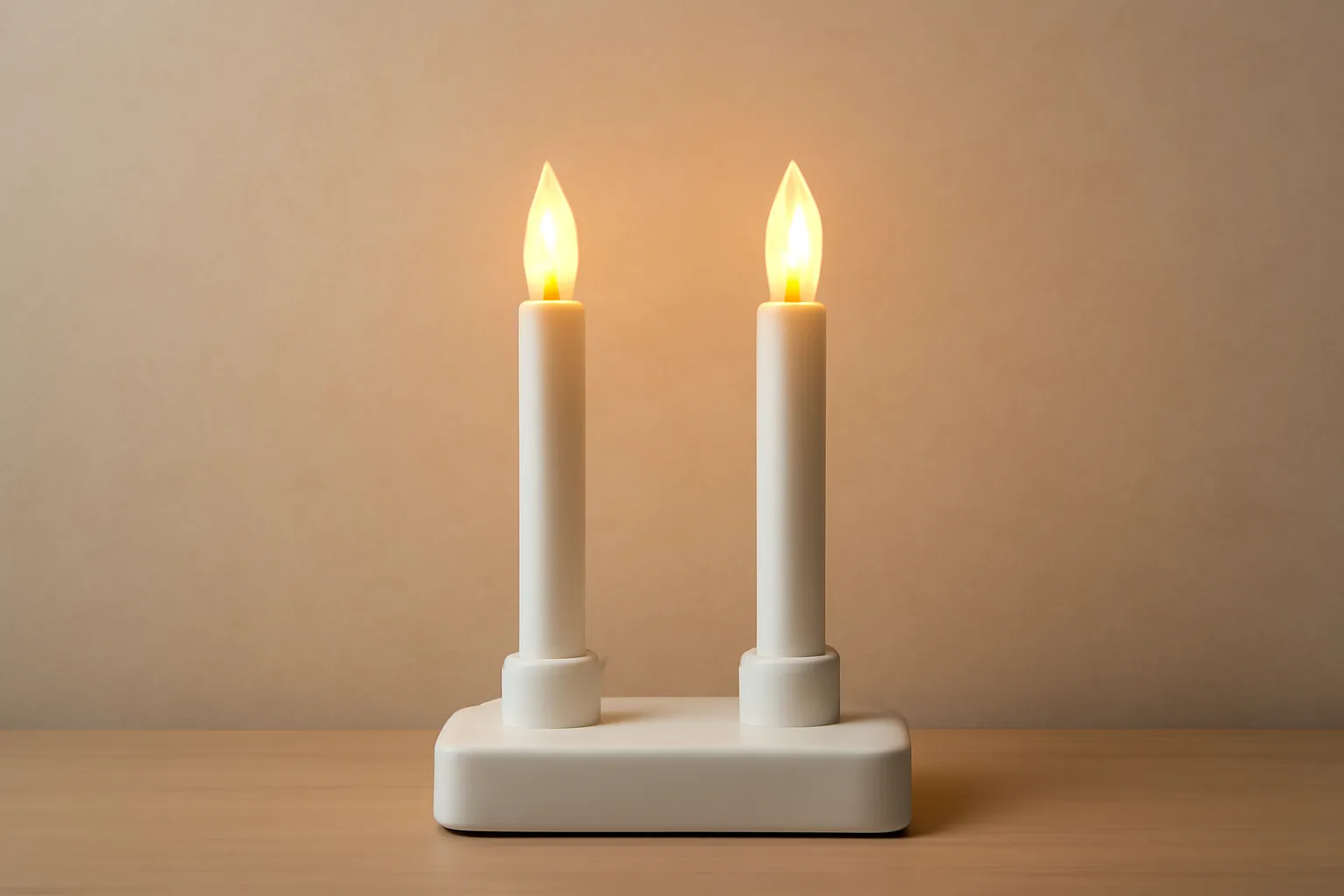
Two-candle sets on a dining table: A classic arrangement that mirrors traditional candles. Use cordless, battery-operated or plug-in versions with a warm yellow glow and a gentle flicker. Add a small decorative tray and reflective surface to enhance the glow.
Longer menorah displays with multiple branches: For larger spaces, consider a linear arrangement or a multi-branch electric menorah. Opt for models with adjustable brightness to suit the room’s lighting conditions during Shabbat meals or study sessions.
Mantel or shelf lighting: Electric Shabbat lights can sit gracefully on a mantelpiece, a dresser, or a bookshelf. Choose low-profile or slim-line designs to avoid clutter while keeping the ritual visible to the family and guests.
Portable glow for table settings: Small, battery-powered candles can accompany individual place settings, providing a personalized touch while keeping the main display cohesive. Look for sets with soft dimming for intimate dining experiences.
When selecting a model, consider the size, finish, and material—wood, metal, glass, or ceramic—to ensure the candles align with your room’s decor. A well-chosen set not only lights the space but also complements the tableware, the mezuzah, and any decorative elements around the dining area.
Care, maintenance, and long-term stewardship
To maximize the lifespan and performance of your electric Shabbat candles, practice routine care and mindful storage. Here are some helpful tips:
Regular cleaning: Wipe surfaces with a soft, dry cloth to remove dust. Avoid using abrasive cleaners that could scratch the finish or damage delicate flame-effect components.
Inspecting for wear: Periodically check for loose connections, frayed cords (for plug-in models), or degraded gaskets on battery compartments. Address issues promptly to prevent malfunctions.
Battery management: If you use battery-powered candles, replace batteries as recommended by the manufacturer. Remove batteries during extended periods of non-use to prevent leakage and corrosion.
Storage between seasons: Store in a cool, dry place in their original packaging or a protective case to guard against dust and accidental damage.
With thoughtful care, your electric Shabbat lighting can remain bright and reliable for many years, providing a steady reminder of tradition and a source of comfort throughout the year. If you notice changes in color temperature, brightness, or flicker, consult the user manual or contact the manufacturer for troubleshooting options or warranty information.
Cost considerations: upfront investment vs long-term savings
Price ranges for electric Shabbat candles vary widely based on design, materials, features, and brand. Here are some factors to weigh when budgeting for electronic Shabbat lights:
Initial cost: Lightweight, basic models can be affordable, while high-end decorative sets with smart features and premium finishes command higher prices.
Operating costs: LED technology typically uses very little energy, which translates into low ongoing electricity costs compared with traditional wax candles.
Maintenance: Consider replacement parts (batteries, flame simulators, dimmers) and warranty terms. Some sets offer lifetime LED modules or replaceable batteries, which affects long-term cost of ownership.
Replacement and resale value: Durable designs with timeless aesthetics may hold value better and can be sold or gifted if your lighting needs change over time.
For households seeking a balance of safety and beauty without breaking the bank, mid-range sets with good flame realism, a reliable timer, and rechargeable options can provide enduring satisfaction. In the end, the best choice aligns with your rituals, space, and budget while offering dependable performance throughout the year.
Ethical and environmental considerations
In today’s market, many families prefer eco-friendly electric Shabbat candles that minimize waste and energy use. LED-based designs consume less energy than incandescent options and reduce the environmental footprint over time. When evaluating products, you might consider:
Energy efficiency: Look for LED candles with low wattage and high luminous efficacy (lumens per watt).
Materials: Favor models built with recyclable or responsibly sourced materials and minimal hazardous substances.
End-of-life options: Check whether the product supports recycling programs or manufacturer take-back schemes for batteries and electronic components.
Even with safety advantages, mindful use remains important. Avoid overloading electrical outlets, manage cable clutter, and follow manufacturer guidance for safe charging and storage. By choosing responsible, well-made products, families can honor tradition while contributing to a sustainable future.
Shopping guide: what to look for when buying electric Shabbat candles
If you’re in the market for new lighting that honors Shabbat, here are practical criteria to consider. This checklist can help you compare options side by side and select a model that best fits your needs:
Flame realism: Decide whether you prefer a highly realistic flicker or a clean, modern glow. Flame accuracy may influence the ambiance and how closely it aligns with your aesthetic expectations.
Brightness control: A dimmable design offers flexibility for different times of day and occasions. Check whether brightness levels are adjustable via a dial, remote, or app.
Power source: Choose between battery-operated, plug-in, or rechargeable options based on space, accessibility of outlets, and portability needs.
Size and fit: Ensure the candles’ height, width, and base diameter are compatible with your table, mantel, or menorah display.
Durability and warranty: A robust build and a solid warranty provide confidence in long-term use, especially for frequent Shabbat setups or bustling households.
Safety certifications: Look for products with recognized safety marks, such as UL-listed or CE-certified, and read manufacturer recommendations for use and care.
Smart features: If you value automation, verify the reliability of timers, remotes, or app integrations and check for compatibility with your ecosystem (e.g., smart home platforms) if relevant to you.
Aesthetics: Consider finish, color temperature, and materials to ensure the candles align with your room’s decor and the ritual atmosphere you wish to create.
Common questions about electric Shabbat candles
Are electric Shabbat candles permissible to use in place of real candles?
Many households use electric models for safety, convenience, or accessibility, and some communities permit their use under specific conditions, such as when a timer is employed or when the electric lighting is clearly artificial in appearance. It is important to consult your rabbinic authority to determine the best practice for your family and community. If you choose to combine real candles with electric ones, ensure the arrangements reflect your tradition and the diniyos of your household.
How do I set up a timer correctly for Shabbat?
To optimize the use of timers, place the device in a dry, accessible spot and program it to illuminate the candles shortly before Shabbat begins. Test the timing before Friday to ensure that the lights turn on and off at the intended times. If you rely on automation, keep backup plans in case of power outages or unexpected changes to your schedule.
What maintenance is required for rechargeable electric Shabbat flames?
Rechargeable options require periodic charging, typically via USB or a dedicated charging base. Monitor battery health over time; if performance declines, you may need to replace the battery pack or switch to a model with a longer-lasting power source. Always follow the manufacturer’s guidelines for charging cycles and storage to preserve battery life.
Conclusion: embracing safe, stylish lighting for Shabbat
Electric Shabbat candles represent an evolution of a venerable ritual, offering a harmonious blend of safety, style, and practicality for today’s households. By understanding the differences between electric Shabbat lights and traditional wax candles, and by selecting models that fit your space, values, and daily life, you can create a warm, meaningful atmosphere that honors the sanctity of Shabbat while embracing modern comfort. Whether you prefer a classic two-candle arrangement on the dining table or a grander display on a mantel, the right set of electric Sabbath candles can illuminate your Friday evening with a glow that is both faithful to tradition and attentive to contemporary needs.
As you explore options, remember that the heart of Shabbat lighting is intention—the act of welcoming peace and rest into the home. Electric Shabbat candles are a tool to support that intention, not a replacement for the sacred meaning of the moment. With thoughtful selection, careful use, and a sense of reverence, your lighting can become a meaningful expression of tradition, beauty, and responsibility.