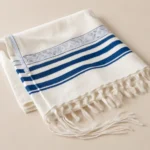
Across cultures, textiles carry memory, identity, and meaning. In the world of Jewish communities, the idea of a Jewish tartan — patterns traditionally associated with Scotland’s clans reimagined through Jewish symbolism and memory — has emerged as a flexible, contemporary vehicle for expressing heritage, diaspora experience, and collective belonging. This article surveys the history, symbolism, and practical uses of Jewish tartans, noting how variations in color, motif, and arrangement can convey different layers of meaning while remaining respectful to diverse Jewish cultures. The goal is to understand how tartan, a pattern with long genealogical roots in one place, can be woven into the fabric of Jewish life in many places and times.
History of Tartans and the Emergence of Jewish Associations
The tartan pattern has its deep roots in the Scottish Highlands, where different weaving structures and color schemes came to symbolize kin groups, territories, and personal or clan histories. In the 18th and 19th centuries, tartan became a popular symbol of Scottish national and regional identity, eventually spreading beyond Scotland through fashion, tourism, and colonial networks. In both popular culture and academic discussions, tartan has often functioned as a flexible canvas for meaning, capable of being adapted to new contexts without losing its distinctive visual language.
For Jewish communities abroad, tartan offered a neutral but resonant design system that could be adopted without pretending to belong to a single place. Patterns could be created to reflect a community’s memory of homeland, the diaspora experience, or the values it wished to emphasize. There is no single canonical “Jewish tartan”; rather, a family of patterns and projects has grown up around this concept. In many cases, the emergence of Jewish tartans parallels broader conversations about identity, continuity, and representation in minority communities.
Historically, a number of factors contributed to the emergence of Jewish tartans as a recognizable idea in contemporary textile culture:
Migration and diaspora: Jewish communities established across Europe, the Americas, and other continents often sought visual symbols that could travel with them across borders, languages, and customs.
Commemorative and ceremonial uses: community events, schools, synagogues, and museums looked to textiles as educational and commemorative tools.
Design experimentation: designers and textile artists began to explore patterns that could incorporate Jewish symbols, colors associated with Israel, or motifs drawn from Jewish liturgy and holidays.
Intercultural dialogue: interactions with Scottish textile heritage and global fashion opened a space where tartan could be reinterpreted through Jewish lenses.
In summary, the history of Jewish tartan is less a straight lineage than a conversation. It is a case study in how a traditional textile language can be repurposed to reflect identity in a new cultural frame, while still honoring the ancestral craft of weaving.
Meaning and Symbolism in Jewish Tartans
Every tartan pattern carries associations through its colors, line structure, and motifs. When a tartan is identified as Jewish, designers and communities frequently layer additional meaning onto the fabric. The symbolism can be explicit, or it can be a more nuanced, personal interpretation that emerges through use and memory. Below are several strands of meaning commonly found in discussions of Jewish tartans:
Colors linked to Jewish symbolism: blue and white are prominent in many Jewish designs, echoing the flag of Israel and the traditional tallit (prayer shawl). Accents like gold or silver may evoke historical memory or sacred time (holidays, temple eras) via luminous color symbolism.
Blue and white as a diaspora language: the palette can signal a longing for homeland, a celebration of shared history, or a nexus between community ties and national memory.
Pattern motifs representing liturgical life: elements reminiscent of the tallit’s stripes, the rhythm of weekly prayers, or the tabernacle’s tabernacle imagery can appear as allegorical lines within a tartan.
Star motifs and sacred emblems: some patterns intentionally echo the Star of David, the menorah, or other sacred forms to articulate a visible, daily reminder of Jewish faith and continuity.
Calendar and ritual symbolism: certain tartans weave in numerological or calendrical hints—patterns that reference the lunar cycle, festival dates, or the weekly rhythm of Shabbat can be used to convey a sense of time-bound memory.
Generational remembrance: tartans associated with families, congregations, or institutions can serve as wearable genealogies—allowing individuals to carry a thread of their community’s history with them.
Ethical and inclusive messages: contemporary Jewish tartans frequently foreground values such as social justice, education, charity, and intercultural dialogue, turning fabric into a statement about living principles.
Because there is no universal standard, the meaning of a given Jewish tartan can shift with context. A tallit-inspired tartan may emphasize prayer and ritual life, while a school’s pattern might focus on education and community service. This multiplicity of meanings is part of what makes the concept rich and adaptable rather than prescriptive.
Design Variations and Notable Patterns
While there is no single authoritative “Jewish tartan,” several recurring design directions have become recognizable within the broader ecosystem of Jewish textiles. Here are common variations and the kinds of symbolism or purpose they tend to convey:
Klezmer-inspired tartans: some patterns draw on the lively, improvisational energy of klezmer music, using bright contrasts and looping band-like stripes to evoke melodic movement. These tartans are often used for cultural events, concerts, and community gatherings rather than ceremonial ritual wear.
Diaspora plaid: patterns that deliberately combine colors and lines to suggest movement, travel, and connection across continents. They are popular for banners, university and synagogue events, and community outreach programs.
Israel-heritage tartans: blue and white palettes with accents of gold or silver, sometimes incorporating the Star of David or menorah-inspired motifs. These are frequently used in commemorations, exchanges, and diplomacy-related celebrations.
Shabbat-ready tartans: more restrained patterns that echo the calm, ordered rhythms of Shabbat—clean lines, balanced proportions, and soft contrasts appropriate for ceremonial textiles or kippot worn during Sabbath services.
Tallit-inspired tartans: tallit stripes or motifs appear as parallel lines or repeating bands within the sett, offering a direct visual link to the tallit while remaining a textile design suitable for scarves, fabrics for prayer shawls, or decorative hangings.
Commemorative or memorial tartans: patterns designed to honor a memory—such as a particular community leader, a historical event, or a milestone anniversary—often with a dedicated color scheme or symbol to mark the occasion.
Educational and youth tartans: bright palettes and simpler geometric arrangements that appeal to schools, youth groups, and camps, emphasizing learning, community service, and leadership development.
Designers sometimes blend elements from multiple traditions, making the Jewish tartan a hybrid that honors both Jewish identity and the broader textile arts. It is important to recognize that such hybrids should be approached with sensitivity and consultation with the relevant communities to avoid misrepresentation.
In addition to community and ceremonial uses, some organizations publish pattern catalogs or digital libraries that collect and showcase various tartan designs claimed as Jewish-inspired. These catalogs serve educators, designers, and curators by offering ideas for interpretation, study, and respectful application in exhibitions, school programs, and cultural festivals.
Modern Uses in Jewish Communities
Today, Jewish tartans inhabit a broad range of practical applications, from wearable fashion to public display. They are used to celebrate heritage, fundraise for programs, and reinforce a sense of shared identity in diverse communities. Here are some common uses that demonstrate the versatility of tartan as a Jewish textile language:
Tallit and kippah designs: patterns adapted for prayer shawls and head coverings provide a discreet or explicit Jewish reference in daily worship or special services. These can be produced as traditional woven textiles or modern printed fabrics.
Banners, regalia, and ceremonial cloths: Jewish schools, synagogues, and cultural centers may incorporate tartan banners for processions, transitions, or commemorations, turning space into a canvas for collective memory.
School uniforms and program attire: tartan details in scarves, blazers, or polo shirts can signal belonging to a particular school or summer camp while still staying within a broader Jewish cultural frame.
Community gift items: marketable goods such as scarves, totes, or desk accessories featuring Jewish-tinted tartans can support fundraising efforts or commemorative campaigns.
Museums and exhibitions: textile historians and curators use Jewish tartans in exhibitions about diaspora, identity, and fashion history, helping visitors engage with the idea that textile patterns carry memory across generations.
Cultural events and festivals: tartan-themed performances, workshops, or installations at Jewish cultural festivals can highlight cross-cultural dialogue and the weaving of tradition into contemporary life.
Crucially, many uses of Jewish tartan emphasize collaboration with synagogue committees, cultural organizations, and designers who understand the nuances of Jewish symbolism. This ensures that the patterns communicate respect, authenticity, and a sense of communal ownership rather than mere aesthetic novelty.
Case Studies and Conceptual Examples
Rather than presenting a single canonical example, it can be helpful to think in terms of representative projects and conceptual directions that have appeared in different communities. The following illustrative categories highlight how Jewish tartans function in practice:
Community heritage projects: a city’s Jewish museum commissions a set of tartans as part of an exhibit about migration stories, with colors chosen to reflect the origin countries of immigrant families and symbols embedded in the pattern to reference rituals and celebrations.
Youth leadership initiatives: a Jewish summer camp develops a bright, sports-friendly tartan that appears on banners, T-shirts, and flags to foster unity and a sense of shared purpose among campers from diverse backgrounds.
Interfaith and intercultural exchanges: a university program hosting Jewish and Scottish partners to explore shared textile traditions designs an inclusive tartan that invites dialogue about textiles, memory, and identity across communities.
Commemorations of historical memory: a memorial event uses a solemn, restrained tartan pattern with careful color choices to reflect a specific historical moment, such as a remembrance day or a cultural milestone.
These scenarios demonstrate how Jewish tartans can serve practical, educational, and commemorative purposes while remaining adaptable to local tastes and traditions.
Preservation, Education, and Public Memory
As with other forms of textile heritage, the preservation and study of Jewish tartans depend on a combination of textile conservation, documentation, and public education. Museums, libraries, and community archives may preserve woven samples, digital scans, and pattern catalogs that help future generations understand how these patterns were created, used, and interpreted. Key activities include:
Documentation and dating: records of designer credits, community provenance, and sewing or weaving techniques help place tartans within a historical timeline and cultural context.
Conservation and display: preserving textile patterns requires careful handling, stable climate control, and appropriate framing or housing for textiles used in public or ceremonial settings.
Educational programs: workshops, lectures, and textile workshops explain to participants how tartans are designed, woven, and read as symbols, building appreciation for the craft and for Jewish heritage.
Digital access: online pattern libraries, searchable catalogs, and high-resolution images allow researchers, students, and designers worldwide to study Jewish-inspired tartans and draw inspiration for new projects.
Public memory around Jewish tartans benefits from clear ethical guidelines, particularly when patterns reference sacred symbols or rituals. Museums and educators emphasize consent, community consultation, and the responsible use of symbols to avoid trivialization or misrepresentation.
Ethics, Sensitivity, and Cultural Respect
Given the cross-cultural nature of tartan patterns and the sacred significance of some Jewish symbols, ethical considerations are essential. While the idea of a Jewish tartan can be a bridge between communities, it can also raise concerns about appropriation, commodification, or misinterpretation if not approached with care. Consider these guiding principles:
Community consultation: involve Jewish communities, scholars, rabbis, and cultural leaders in the design and use of tartans tied to Jewish identity.
Respect for symbols: treat sacred or liturgical motifs—such as the Star of David, menorah, or specific religious text references—with reverence and caution, avoiding trivialization.
Clear attribution: credit designers and contributors accurately, and provide context that explains the intended meaning and audience for a given tartan.
Documentation of provenance: maintain records about the creation process, usage rights, and stewardship to prevent misrepresentation or misappropriation.
Accessibility and inclusivity: design patterns that welcome diverse Jewish communities (Ashkenazi, Sephardi, Mizrahi, and others) while avoiding essentializing or homogenizing distinct traditions.
When these principles are observed, Jewish tartans can serve as a respectful lens through which communities explore memory, faith, and shared values in a global context.
How to Create a Jewish Tartan: A Practical Guide
For designers, educators, or community groups interested in developing a Jewish tartan, the process can be both creative and meaningful. The following steps offer a practical framework, emphasizing consultation, symbolism, and technical accuracy in a responsible way:
Define the purpose: what is the tartan intended to express? Prayer life, diaspora memory, a particular holiday, a school or organizational identity, or commemoration?
Involve the community: assemble a diverse group of stakeholders including clergy, elders, youth representatives, and designers to discuss symbols, colors, and meanings.
Choose a palette with meaning: consider colors that evoke Jewish tradition (blue, white, gold, silver), national symbols if appropriate (colors associated with Israel), or neutral tones that fit ceremonial contexts.
Incorporate symbolic motifs: decide whether to reference liturgical elements (tallit stripes, tefillin straps), sacred emblems (Star of David, menorah), or calendar motifs (holiday cycles, lunar imagery).
Design the sett: use a traditional tartan structure (a 4-, 5-, or 6-shaft sett is common) to create a balanced pattern. Ensure the pattern reads well from a distance and remains legible at smaller scales for scarves or kippot.
Prototype and test: weave or digitally render samples to study how colors interact under different lighting and in various textile applications (woven fabric, fiber art, or printed materials).
Document and credit: record the design rationale, color codes, weave techniques, and any symbolic notes; acknowledge contributors and communities involved in the process.
Engage with a loom or supplier: work with a textile studio, weaver, or manufacturer capable of producing the pattern in the intended medium (woven fabric, ribbons, scarves, or ceremonial cloths).
Launch with care: present the tartan with clear education materials that explain symbolism, usage guidelines, and the community’s consent and ownership of the pattern.
Ultimately, a Jewish tartan should be more than a visually attractive pattern. It should be a vehicle for memory, a symbol of shared values, and a statement about how a community sees itself within a broader cultural landscape.
Conclusion: The Living, Evolving Language of Jewish Tartans
In the end, Jewish tartans are not a single tradition but a living, evolving language of textile symbolism. They reflect centuries of Jewish history—diaspora, migration, sanctuary, learning, and memory—through color, line, and form. They offer a flexible means to celebrate identity in ways that are tangible, portable, and teachable. From the quiet dignity of a tallit-inspired scarf to the public presence of a banner at a festival, these patterns invite both introspection and communal celebration. They encourage conversations about what it means to belong, to remember, and to participate in a global conversation about culture, faith, and the textures of daily life.
As with any cultural textile, the most resonant and responsible uses arise when communities lead the way—deciding what a pattern means, how it is worn or displayed, and how it travels between generations. When thoughtfully designed and respectfully presented, Jewish tartans can enhance the tapestry of Jewish life, offering new ways to honor tradition while looking toward the future.