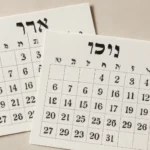
The first Hebrew month, known in Hebrew as Nisan, is a central unit in the Jewish calendar. In many discussions, this month is described as the opening month of the ecclesiastical year, a designation that emphasizes its role in marking the religious and agricultural cycle for the Jewish people. While in everyday civil reckoning the year often begins with Tishrei and the autumn festivals, the month of Nisan is traditionally considered the start of the religious year and the time when the biblical spring season comes into sharp focus. The alt-name Aviv appears in the Bible to describe the season, highlighting the natural rhythm of ripening grain and renewal that accompanies this period.
Throughout this article, you will encounter several variations of the first Hebrew month—from the short, Biblical form Aviv (the spring or «season of growth») to the more formal designation Nisan, including references to it as the month of Nisan, the opening month of the year, or the spring month. This multiplicity of terms reflects both linguistic history and the calendar’s dual emphasis on agricultural cycles and liturgical obligations.
Historical Origins and Evolution
The origin and naming of the first Hebrew month are deeply rooted in a long arc of history that stretches from the biblical era through the Persian and Hellenistic periods, into late antiquity and the Rabbinic era. In the Hebrew Bible, the months are already named in association with the seasons and with agricultural activities. The book of Exodus, for example, places the festival of Passover in the month of Nisan (the 14th day is the eve of the festival), while the term Aviv is used to describe the season itself in several verses. This pattern demonstrates a calendar that is both lunar-solar in structure and intimately tied to the land’s fertility.
The carving of the calendar we see in later Jewish literature reflects a two-step development: first, the biblical month of Aviv doctrine anchored to the spring harvest, and second, the post-exilic adoption of the Babylonian month-name Nisan. In exile and in the Persian-ruled period, many Jewish communities began to align their month names with the names used in surrounding cultures. The name Nisan (often transliterated as Nisanu in Akkadian-Babylonian sources) gradually came to dominate in Jewish liturgical and civil usage, especially in written rabbinic texts and in the medieval period. This shift mirrors a broader pattern of cultural exchange in the ancient Near East, where calendar nomenclature traveled along with trade, exile, and scholarly discourse.
The history of the month also reflects a shift in how the year is counted. In biblical times, the governing idea was that the first month marks a renewal or reset of religious duties—most notably the Passover, which inaugurates a cycle of festivals, counting, and rituals. In Rabbinic and later Jewish practice, the month of Nisan is anchored by a sequence of liturgical observances—most famously the Passover seder and the counting of the Omer—that emphasize memory, liberation, and spiritual growth.
The meaning of Nisan is complex and layered. Linguistically, the name Nisan is understood by many scholars to be derived from the Babylonian month name Nisannu, which designated a point in the springtime agricultural calendar. In contrast, the term Aviv in the Bible signals more directly the season of growth and the ripening of barley, a key agricultural marker. Thus, the first month of the Hebrew calendar embodies both a religious calendar moment and a natural seasonal event.
In terms of symbolism, Nisan is associated with:
Liberation and renewal: Passover commemorates the Exodus from Egypt, a foundational event that casts the month as a time of freedom and new beginnings.
Spring and agricultural abundance: The name Aviv highlights the barley harvest and the broader revival of life after winter.
Prophetic and liturgical themes: The month is linked to prophetic readings and prayers of gratitude for deliverance and renewal.
The first month thus carries two complementary meanings: it marks a leap into a new season of growth in the land of Israel, and it begins a spiritual journey that culminates in the giving of the Torah at Shavuot later in the year. This dual significance makes Nisan a bridge between nature and revelation, harvest and covenant.
Calendar and Length: How Nisan Fits Into the Jewish Year
The calendar mechanics surrounding Nisan reflect the lunar-solar structure that characterizes the Hebrew calendar. The months are lunar, and their days are determined by the cycles of the moon, with some adjustments to keep the calendar in step with the solar year. The month of Nisan typically lasts 30 days, though in any given year the sequence of month lengths must be coordinated to ensure that festival dates align with the appropriate seasons and agricultural realities.
Some key calendar points to know about Nisan include:
The start of the month is marked by Rosh Chodesh—the new moon of Nisan.
In the civil year that many Jews track, Nisan is the first month of the religious year, setting the tone for a season of redemption-themed holidays.
Passover, or Pesach, is observed from 15 Nisan (the eve of the festival) for seven or eight days depending on one’s community and country.
The period of the Omer counting begins on 16 Nisan and continues for 49 days until Shavuot, creating a bridge from the liberation narrative to the revelation at Sinai.
Because the Hebrew calendar is a lunisolar system, there are occasional leap years in which an extra month, Adar II, is added to keep the lunar cycle aligned with the solar year. Nisan itself remains a 30-day month in both common and leap years, preserving its essential length even as the surrounding months shift to accommodate the broader cycle.
Agricultural Context: Aviv, Barley, and the Seasonal Rhythm
The milieu of Nisan is inseparable from the land and its cycles. In ancient Israel, the month signaled a late-winter to early-spring transition when the barley harvest would soon begin. The term Aviv is often linked with the emergence of grain crops and the readiness of fields for harvest. This agricultural orientation was not incidental; it provided a practical frame for the liturgical calendar. The biblical ordinances tie the festival calendar to the soil—the barley offering being a cornerstone of the Temple economy in earlier periods.
In a broader sense, the interplay between agriculture and festivity in Nisan reflects a worldview in which ritual time follows the land’s vitality. The onset of barley, the spring rains, and the renewal of plant life supply a natural metaphor for emancipation and spiritual renewal. As such, the month of Nisan invites both farmers and worshippers to consider how the world around them is renewed and how people might renew their commitments and futures.
Traditions Within Nisan: Core Observances and Customs
The first Hebrew month carries several distinctive rituals and traditions that have shaped Jewish life for millennia. The most prominent among them is Passover (Pesach), a holiday that anchors the month in memory, law, and family ritual.
Passover (Pesach) and the Seder
The centerpiece of Pesach is the Seder, a structured, story-driven meal that retells the Exodus from Egypt. The Seder is a multi-part ceremony that unfolds on the first two nights in the Diaspora and the first night in Israel. Its symbolism is designed to engage all senses and generations:
Matzah (unleavened bread) stands in for the haste with which the Israelites fled Egypt, symbolizing poverty, simplicity, and faith.
Maror (bitter herbs) recalls the bitterness of bondage.
Karpas (vegetable dipped in saltwater) represents spring and the tears shed during exile; the saltwater evokes the tears of the enslaved.
Beitzah (a roasted egg) is a symbol of festival sacrifice and continuity of life.
Z’roa (a roasted bone) signals the Paschal sacrifice that accompanied the Exodus in ancient times.
Charoset (a sweet mixture) symbolizes the mortar used by enslaved Hebrews and the sweetness of redemption.
Four cups of wine accompany different parts of the Seder, each cup a reminder of God’s promises and the liberation process.
The Seder is also a time for Passover songs, the reading of the Haggadah, and family storytelling. The storytelling aspect connects the family to a broader national narrative, turning the private table into a stage for collective memory. For many, the Seder’s rituals become a powerful vehicle for teaching children and visitors about freedom, justice, and human dignity. Outside of Israel, the Seder is often the most widely observed ritual of the year, a bridge between the ancient Exodus and contemporary life.
Counting the Omer: From Nisan 16 to Shavuot
Beginning on the second night of Passover (16 Nisan), the Sefirat HaOmer—the counting of the Omer—begins. This debt of gratitude and anticipation stretches over 49 days, culminating on Shavuot. The Omer count is both a literal counting of days and a spiritual discipline, inviting worshippers to reflect on growth, moral refinement, and the journey from freedom to the revelation at Sinai.
Some people observe the Omer with daily readings or affirmations, making it a structured period of self-examination and ethical improvement. In practice, the Omer period is a bridge between the Spring festival of Passover and the summer festival of Shavuot, symbolizing a progression from liberation to covenant.
Rosh Chodesh Nisan: The New Moon and Lunar Significance
Rosh Chodesh marks the onset of the new month and is observed as a minor festival in many communities. For Nisan, Rosh Chodesh Nisan carries a special status because it marks the transition from a late winter/early spring period into a season of renewal. In some liturgical readings and prayers, the new month is associated with songs of praise and gratitude, acknowledging God’s ongoing creation and the cycles of time. The exact customs around Rosh Chodesh can differ among communities, but the underlying theme—beginning anew in the light of renewal—resonates across branches of Judaism.
Nisan in the Calendar Across Communities and Time
The way Nisan is observed has varied across historical periods and among different Jewish communities. In Israel, for example, some traditions align more closely with the agricultural calendar, while in the diaspora, the religious calendar emphasizes the universal themes of freedom and liberation through the Seder and the Omer.
Some notable variations and considerations include:
Duration of Pesach: In Israel, Pesach is commonly celebrated for seven days, while in many diaspora communities it is observed for eight days. The difference reflects divergent rabbinic decisions about when the festival begins and ends, and it has shaped how families organize travel, meals, and school/work schedules during the month.
Hallel and prayers: The practice of reciting Hallel during Pesach and the specific psalms recited can differ between communities, with variations in liturgical emphasis and the inclusion of certain piyyutim or liturgical poems.
Drafting and memory: Across centuries, the memory of the Exodus has been interpreted through many lenses—political, ethical, and spiritual—so sermons and educational materials during the month of Nisan may foreground different aspects of liberation, justice, or covenantal responsibility.
In addition, the first month has historical value beyond ritual life. Scholars trace its use in post-biblical Jewish calendars to the period when the calendar integrated the Babylonian and Persian administrative conventions. The result was a calendar that kept lunar months in rough alignment with the agricultural seasons, while also preserving a cohesive religious rhythm that anchors the year’s central events in and around Pesach.
Modern Relevance: Why Nisan Feels Alive Today
For contemporary readers, the first Hebrew month remains a living, participatory time rather than a purely historical topic. Its emphasis on liberation, renewal, and communal memory resonates in many non-religious contexts as well, offering a lens for understanding cycles of personal growth, family rituals, and national history.
Liberation narratives: The Passover celebration teaches about freedom from oppression, the dignity of human beings, and the ongoing responsibilities that freedom entails.
Spring renewal: The agricultural imagery of Aviv and the barley harvest invites reflections on growth, stewardship, and the seasons of life.
Family and education: The Seder is a pedagogical framework for teaching children about history, ethics, and the responsibilities of citizenship in a community.
Calendar literacy: Understanding Nisan helps readers grasp how a people can organize time around both sacred events and the cycles of nature.
Practical Guides for Observing Nisan Today
If you’re curious about how to engage with the first month in a thoughtful, contemporary way, here are practical ideas that blend tradition with modern life:
Learn and reflect: Read or discuss the Passover Haggadah’s core themes, focusing on freedom, responsibility, and the moral imperatives of justice and compassion.
Host a Seder: If you can, host a Seder to connect with family, friends, or community members who may be unfamiliar with the festival. Explain each symbol and ritual to foster understanding.
Explore the Omer: Use the 49-day Omer period as a time for personal goals, such as practicing gratitude, performing acts of kindness, or engaging in study and meditation.
Observe Rosh Chodesh: On the new moon that begins Nisan, consider a small observance—light a candle, share a short reading, or offer a blessing for new beginnings.
Whether you approach Nisan as a historic season of biblical memory or as a living calendar that guides modern life, its themes of renewal, liberation, and covenant remain relevant. The month of Nisan invites people to consider how freedom is achieved and how communities sustain dignity and hope across generations.
Key Terms to Remember
Nisan — the first month of the ecclesiastical year, often associated with Passover and spring.
Aviv — the biblical name for the spring season and the time of renewed growth.
Pesach — Passover, the central festival of the month, commemorating liberation from Egypt.
Seder — the structured, story-driven meal that retells the Exodus.
Matzah — unleavened bread, a central symbol of Passover.
Maror — bitter herbs, symbolizing oppression.
Omer — the counting of 49 days from 16 Nisan to Shavuot.
Rosh Chodesh — the celebration of the new month, here signaling the start of Nisan.
In sum, the first Hebrew month—whether called Nisan, the month of Nisan, or by its biblical name Aviv—is a keystone in the Jewish calendar. It anchors a dramatic narrative: a springtime of field work and harvest, a historically charged story of freedom, and a religious season that invites communal memory, study, and personal renewal. From the biblical exodus to modern-day family tables, this opening month of the year remains a living, evolving rhythm that continues to shape the way Jewish communities experience time, tradition, and shared identity.