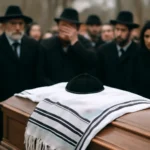
Jewish Mourning Customs: Essentials of Traditions & Rituals
M Judaism’s approach to mourning is both deeply traditional and paradoxically flexible. The framework of mourning customs is designed to honor the deceased, support the bereaved, and help the community absorb loss while continuing to live with meaning. Across generations and across communities—from Ashkenazi to Sephardi to Mizrahi, and including contemporary diaspora practices—the fundamental principles remain recognizable, even as specific rituals adapt to local customs, family needs, and individual circumstances. This article surveys the essential stages, terms, and practices that constitute Jewish mourning, with attention to variations that reflect the diversity within Jewish life.
Overview: The purpose and structure of Jewish mourning
In Jewish tradition, mourning is more than private sorrow; it is a communal process that emphasizes respect for the deceased and care for the living. The rituals are organized in stages—beginning with the Aninut before burial, proceeding through the Shiva (the first seven days), the Shloshim (thirty days), and, for some families, a longer period of remembrance in the form of the Yahrzeit and memorial practices. While the timeline is relatively standardized, the experience within each stage can vary dramatically depending on family customs, communal norms, and the specific tradition of the deceased’s community.
Key aims of the customs include:
Honor and respect for the deceased through rituals of burial, remembrance, and prayer.
Comfort and support for the bereaved by inviting mourners to receive communal presence, meals of condolence, and guided grieving.
Preservation of memory by reciting prayers, sharing stories, and creating a space where grief becomes part of ongoing life.
Key concepts in Jewish mourning
Understanding Jewish mourning requires familiarity with several central terms. The following concepts recur across rites, prayers, and practical observances, and they are often discussed in relation to one another.
Aninut — The period from the moment of death until the burial. This stage is distinctive because it is the time when the mourner is obligated to prepare for burial and the community focuses on comforting the family. Some customs reflect heightened ritual seriousness during Aninut, and practical restrictions may apply until burial occurs.
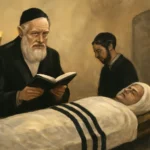
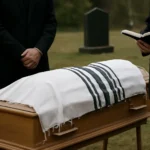
Taharah and Tachrichin — The taharah (purification) ritual performed by the Chevra Kadisha (the holy burial society) to cleanse and prepare the body for burial. Tachrichin are the simple white shrouds in which the deceased is wrapped; these garments symbolize equality in death and the simplicity of mortal life.
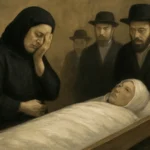
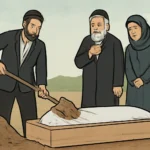
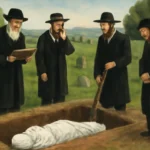
Levaya — The funeral procession and the burial itself. The act of burial is often accompanied by humility, solemnity, and communal respect, regardless of denomination.
Kriah — The tearing of garments or a symbolic gesture of tearing to express grief. Some families begin with a formal keriah at the moment of death or at the funeral; other families perform it as part of the mourning practice in the home or synagogue.
Seudat Havra’ah — The “meal of condolence” shared by mourners and visitors after the funeral to provide comfort through shared sustenance and communal presence.
Shiva — The seven-day mourning period following the burial during which the family sits on a low chair or couch, visitors come to offer comfort, and specific rules guide behavior, dress, and ritual focus.
Shloshim — The thirty-day period following burial when many restrictions begin to ease, but the mourner remains in a state of formal mourning and avoids festive events.
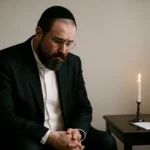
Yahrzeit — The anniversary of a death according to the Hebrew calendar, observed yearly with candles and the recitation of prayers, most often including Kaddish.
Kaddish — The mourner’s prayer traditionally said in a minyan (quorum of ten Jews). It is a central component of memorial practice, invoking sanctification of God’s name even in the face of loss.
From death to burial: Aninut, Taharah, and tachrichin
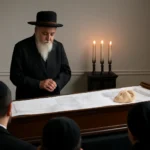
The period known as Aninut precedes burial. It is a time of acute vulnerability for the bereaved, and traditional practice emphasizes honoring the deceased and supporting the family. The family and the community prepare for the inevitable burial. In many communities, the Chevra Kadisha arranges the Taharah—the ritual cleansing of the body and preparation for burial—and ensures the deceased is wrapped in simple Tachrichin (shrouds). The emphasis during Taharah is on dignity, humility, and equality in death; by wrapping the body in plain shrouds, social distinctions are minimized in the face of mortality.
The levaya (funeral) typically takes place promptly after death, in keeping with the tradition of burying the deceased as soon as possible. This promptness reflects respect for the body and the community’s responsibility to return the deceased to the earth quickly. Funeral customs can vary in form and language—some communities emphasize a formal eulogy, others focus on Psalms and prayers in the wake of the burial. The process is deeply communal: family members, friends, and members of the local community may accompany the body to the grave, reciting verses and sharing memories as a way of sanctifying the life that has ended and comforting those who remain.
Shiva: The first seven days of mourning
“Shiva” is the centerpiece of the early mourning period in traditional Jewish practice. It is a structured time when mourners receive guests, reflect on the life of the deceased, and gradually re-enter the rhythms of daily life. The focus of Shiva is healing, while maintaining reverence for the loss. Practices vary between communities and families, but several core elements are common across most traditions:
Mourner’s bench — The bereaved often sit on a low chair or sofa, which symbolizes humility in the face of death. Some families designate a specific place in the home where visitors comfort the mourners and share stories about the deceased.
Acceptance of visitors — Friends and relatives are encouraged to visit, provide consolation, and contribute to the meal and care of the household. It is considered a mitzvah to visit and listen, rather than to speak at length about one’s own experiences of loss.
Panel of auditory and visual cues — Many mourners do not shave or cut their hair during Shiva. In some communities, men may not wear leather shoes, and mirrors might be covered to minimize vanity and to help focus on the mourners’ inner experience rather than outward appearance.
Prayer and study — Daily prayer services (often in a private home or synagogue) and Torah study may be joined by neighbors or family. The aim is to sustain spiritual focus and to provide a framework for grieving through sacred texts and prayers.
Seudat Havra’ah — The “meal of consolation” is shared during Shiva or after, hosted by friends or family. This meal is both practical and symbolic: nourishment for the mourners and a tangible sign of communal care.
Keriah — The ritual tearing of garments can occur during the funeral or the first days of Shiva; it remains a potent sign of grief, and some families perform a symbolic tear at home or as part of a formal service.
Across communities, the duration and intensity of these practices can vary. In some Sephardic and Mizrahi homes, for example, the Shiva period may begin immediately after burial but may incorporate different musical selections, prayers, and textures of communal support. Hasidic groups might place enhanced emphasis on prayer, with less emphasis on socializing during the early days. Regardless of style, the structure remains a seven-day focal point for mourning.
Shloshim: The thirty-day period beyond Shiva
After the initial seven days, the mourner enters Shloshim, the thirty-day period that signals a gradual return to regular routines while maintaining the memory of the deceased. The rules during Shloshim are less strict than during Shiva but still maintain a sense of mourning. Common features include:
Restriction on joyful events — The bereaved typically avoids attending weddings, parties, concerts, or other celebratory events during Shloshim, as well as partaking in frivolous entertainment. Some families may modify this practice depending on the significance of the event and the relationship to the deceased.
Resume of certain rituals — The mourner often resumes wearing normal clothing and begins to re-engage with daily life, albeit with an awareness of the ongoing loss.
Continuity of prayer and study — The daily prayers continued during Shiva often persist through Shloshim, with additional study of sacred texts or reflection on the legacy of the deceased.
Visitations and support — Friends and community members continue to offer support, albeit with less intensity than during Shiva. The physical presence of others remains a crucial source of solace.
In some communities, Shloshim also extends to a broader period of annual remembrance, eventually giving rise to the Yahrzeit and the ongoing engagement with memory through annual rituals. The transition from Shiva to Shloshim is a gradual shift from acute crisis to a more sustained, everyday rhythm that recognizes loss while continuing to live.
Yahrzeit and annual memorial practices
The annual Yahrzeit marks the anniversary of the death on the Hebrew calendar. Observance includes several steady practices that deepen memory and honor the deceased’s life:
Lighting a Yahrzeit candle — A small, steady flame is lit in memory of the departed, typically burning for 24 hours.
Kaddish — The mourner recites the mourner’s Kaddish during services or privately, often with a minyan. This prayer sanctifies God’s name and expresses devotion beyond personal sorrow.
Psalm recitation and study — Some families read specific psalms or portions of scripture associated with consolation and the memory of the righteous.
Generosity in the memory — Acts of charity or sharing merit in the deceased’s name are common ways to transform loss into ongoing goodness.
Throughout the year, some families keep a sense of ongoing memory by displaying a photograph or keeping a small shrine in the home. While the intensity of mourning often declines after the first year, the Yahrzeit ritual creates a regular, meaningful sequence that keeps a loved one within living memory.
Kaddish: The mourner’s prayer as a centerpiece of remembrance
The Kaddish occupies a central place in Jewish mourning. It is recited by mourners with a minyan, and its text praises God, exalts God’s greatness, and longs for a return to divine sanctification. Despite its outward focus on God, the Kaddish is often described as a public affirmation of faith amid personal suffering. Several versions exist, and practice varies:
Mourner’s Kaddish — The primary form recited by the bereaved, usually in a synagogue or home with a minyan. It is the emotional and liturgical anchor of the day for many mourners.
Shabbat and festival variations — On certain days, the Kaddish may be integrated with additional prayers or readings depending on the service structure.
Minyan requirements — In many communities, the Kaddish is traditionally said only with a board of ten Jewish adults (a minyan). This requirement shapes how and when mourners participate in communal prayer.
In some Sephardic and Mizrahi communities, there are variations in the cadence, tunes, or the way the Kaddish is integrated into liturgy, reflecting linguistic and musical traditions. Yet the spiritual aim remains: to sanctify God’s name in the face of loss and to reframe sorrow within a framework of faith and memory.
Terms and rituals: a brief glossary
Below is a concise glossary of some core terms commonly encountered in discussions of Jewish mourning. The terms are bolded to emphasize their significance when they appear in this article.
Kriah (keriah) — The ritual tearing of garments or a symbolic gesture of grief. It is a traditional sign of mourning and is sometimes performed by the mourners themselves or by family members at a service or the funeral.
Chevra Kadisha — The sacred burial society responsible for Taharah and burial arrangements, ensuring dignity and ritual purity in preparation for burial.
Taharah — The ritual cleansing of the body by the Chevra Kadisha, a central rite before burial.
Tachrichin — The plain white shrouds in which the deceased are wrapped, symbolizing equality before God in death.
Levaya — The funeral process and the burial itself.
Seudat Havra’ah — The condolence meal shared with mourners after the burial to provide nourishment and communal support.
Shiva — The seven-day mourning period with structured visitation, prayer, and reflection.
Shloshim — The thirty-day period following Shiva during which mourning continues with gradually decreasing restrictions.
Yahrzeit — The annual anniversary of a death in the Hebrew calendar, observed with prayers, lighting a memorial candle, and study or charitable acts.
Kaddish — The mourner’s prayer, recited to sanctify God’s name and affirm faith amid loss.
Variations across communities: Ashkenazi, Sephardi, Mizrahi, and beyond
Judaism encompasses a broad spectrum of communities, each with distinctive expressions of mourning that reflect historical, linguistic, and cultural differences. While the core purposes remain consistent, the specifics of ritual, timing, and emphasis can differ notably.
Ashkenazi customs often emphasize the centrality of keriah at the time of death or burial, the mourner’s bench during Shiva, and a turnout of minyan for Kaddish recitation. Leather shoes may be avoided by some mourners during Shiva, and mirrors in the house may be covered in some homes as a sign of humility and focus on mourning.
Sephardi and Mizrahi traditions may incorporate different liturgical melodies, additional Psalms, or unique customs during burial and the week of mourning. Some communities place a strong emphasis on hospitality and elaborate Seudot Havra’ah, while others emphasize more reserved observance of the mourning period.
Hasidic practices often highlight intense communal prayer, frequent Torah study, and the role of Rebbes or community leaders in guiding the grieving process. The symmetry of prayer with song and the public expression of lament can be especially pronounced in Hasidic settings.
Ethnic and regional variations — Ethiopian Jews, North African communities, and others bring distinct customs to the process of burial and mourning, sometimes including unique prayers, melodies, or orders of service, all rooted in a shared commitment to treat the dead with dignity and to support the living in times of sorrow.
Despite these differences, the shared aim is clear: to honor the memory of the deceased, to provide a framework for grieving, and to sustain the community’s sense of responsibility toward the bereaved. Families often blend elements from multiple traditions, adapting practices to fit the deceased’s life and the needs of the mourners, always with respect for the sanctity of life and memory.
Contemporary practice: medicine, hospitals, and the diaspora
In modern life, Jewish mourning customs extend beyond the home and the synagogue to hospitals, hospices, and airports, reflecting how Judaism approaches loss in a global, mobile world. Several trends and adaptations have emerged in recent decades:
Hospital and hospice care — In contemporary settings, hospital chaplains and community rabbis may coordinate support for a patient’s family and coordinate last rites, while ensuring respect for religious ritual and patient autonomy.
Chevra Kadisha in the digital age — Many Chevrot Kadisha maintain ongoing records and provide guidance to families, emphasizing dignified burial and the handling of remains with care, including in jurisdictions where legal or logistical constraints vary.
Minyan availability and accessibility — In diaspora communities, remote areas and large cities alike strive to maintain minyan availability for Kaddish, often arranging for mobile or satellite minyanes to ensure mourners can fulfill their obligations even when local circumstances are challenging.
Interfaith and plural contexts — In pluralistic communities, mourning rituals may include guests from various faith backgrounds who are invited to participate in Seudat Havra’ah or to share reflections on the life of the deceased, within the boundaries and sensitivities of Jewish practice.
These modern adaptations reflect a broader commitment to making Jewish mourning meaningful in diverse settings, while preserving the essential structure and intention of the traditions.
Practical guidance for mourners and visitors
What follows are pragmatic considerations drawn from traditional practice and modern experience. While individual families may differ, these guidelines help ensure that mourning remains a dignified, supportive, and meaningful process.
Timing and attendance — Respect the family’s schedule and local custom. When in doubt, ask a rabbi or community leader for guidance about visiting during Shiva or Shloshim.
Approach and conversations — Approach the mourners with empathy, listen more than you speak, and avoid offering quick, simplistic solutions to grief. Sharing a memory of the deceased can be profoundly comforting.
Prayers and participation — If a minyan is needed for Kaddish, offer to join or arrange for a temporary minyan. Follow the lead of the family when it comes to prayer motifs and liturgical preferences.
Food and Seudat Havra’ah — Offer practical help with meals and logistics. The Seudat Havra’ah is both practical and symbolic—a tangible sign of communal care. In some cases, the host family may specify dietary restrictions or preferences, such as keeping meals vegetarian or kosher according to local custom.
Respect for boundaries — Some mourners may prefer quiet or limited social engagement during Shiva; others may welcome conversation and storytelling about the deceased. Follow cues from the family about what feels comfortable.
Long-term remembrance — After the initial weeks, consider continuing acts of charity, study, or remembrance in the deceased’s name. These acts sustain memory and can be deeply meaningful for the bereaved.
Variations in observance: how families tailor mourning
Every family has its own rhythm of grief, shaped by temperament, life circumstances, and the deceased’s life path. Some examples of how mourning can vary include:
Some families emphasize a stricter adherence to traditional mourning laws, maintaining more formal rules about shaving, dress, and social events during Shiva and Shloshim.
Other families prioritize personal expression and flexibility, allowing mourners to participate in social engagements at times that feel emotionally manageable, while still honoring the memory of the deceased.
In communities with small or dispersed populations, mourners may coordinate a special minyan in a local synagogue, hospital room, or private home to ensure the Kaddish can be recited in a timely way.
Some families observe extended memorial periods for particularly beloved or influential figures, through 12 months or longer of study, charity, and communal memory activities.
Prayers and liturgy: what is typically recited
In Jewish mourning, certain prayers and readings repeatedly appear as anchors for the bereaved. While the exact liturgy may differ by tradition, the following elements are commonly encountered:
Psalm readings — A sequence of psalms or verses that speak to consolation, faith, and the endurance of memory.
Kaddish Yatom — The mourners’ Kaddish (often translated as “Mourner’s Kaddish”) recited with a minyan, and sometimes accompanied by a community blessing or reflection.
Kriya and other memorial readings
— Short readings or psalms on the first day of mourning and at other significant moments.
In Sephardic and Mizrahi communities, additional prayers and melodies in the vernacular or in ancient liturgical languages may accompany these core elements, enriching the liturgical tapestry of mourning with distinct musical and textual flavors.
Putting grief into life: the ongoing role of memory
Even after the formal mourning periods have passed, memory remains a living presence in Jewish life. Families continue to honor the deceased through:
Charitable acts in memory — Giving in the deceased’s name, supporting causes they cared about, or establishing tzedakah funds in their memory.
Study and learning — Reading passages, studying Torah portions associated with the deceased, or engaging in community learning as a form of remembrance.
Annual remembrance — Commemorating the Yahrzeit with candles, prayers, and gatherings that keep the life and values of the deceased present.
This ongoing engagement demonstrates that mourning is not merely a period of absence, but a transition toward continuing life enriched by memory, values, and communal responsibility.
Conclusion: the essential arc of Jewish mourning
Jewish mourning customs form a coherent arc from the moment of death through the subsequent weeks, months, and years. At their core, these practices cultivate dignity, community support, and memory that sustains life. They acknowledge loss without denying the necessity of living, balancing sacred obligation with human vulnerability. While the precise expressions differ among Ashkenazi, Sephardi, Mizrahi, Hasidic, and other Jewish traditions, the structure—Aninut, Taharah, Levaya, Shiva, Shloshim, Kaddish, Yahrzeit—serves as a common language for mourning that transcends individual backgrounds. By attending to these customs, families and communities honor the dead while offering ongoing care to the living, turning grief into a pathway for memory, meaning, and renewed life.