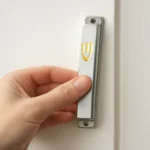
Welcome to a comprehensive guide on how to put up a mezuzah. This article explains not only the practical steps involved in mounting a mezuzah, but also the meaning, care, and variations across traditions. Whether you are installing a mezuzah for the first time, refreshing an existing one, or helping someone else complete this mitzvah, you’ll find clear instructions, thoughtful notes, and useful tips to make the process meaningful as well as correct.
A mezuzah is a small case mounted on the doorway of a Jewish home or room that contains a kosher parchment inscribed with two biblical paragraphs from Deuteronomy (the parsha of Shema Yisrael) and a reminder of the covenant between God and the Jewish people. The presence of the mezuzah is a symbol that the home is a place where Jewish living, study, and practice are valued. The commandment is not only about a physical object; it is a daily reminder of faith, family, memory, and responsibility.
In this article, you will encounter terms like klaf (the parchment wrapper), parsha (the scroll’s sections), and shidduch of tradition and modern living. We’ll cover variations among communities, but you will also find practical, step-by-step instructions that apply to most standard doors in homes, apartments, and small offices.
Choosing the right mezuzah: parchment, case, and quality
The journey to a proper mezuzah installation begins with choosing the right components. The quality and condition of the scroll, the integrity of the case, and the suitability of the mounting method all matter for a lasting and meaningful installation.
What makes a scroll kosher (the parsha and the klaf)
The parsha must be written by a qualified scribe on kosher parchment in accordance with traditional rules.
The script should be clean, legible, and intact. Any missing letters or smudges require repair or replacement.
Most communities require both paragraphs from Deuteronomy 6:4-9 and 11:13-21 on the parchment, written in their proper order.
Choosing the mezuzah case
Cases come in many materials: wood, metal, ceramic, glass, and plastic. The selection can reflect home decor, climate, and personal taste.
While the appearance of the case is often a matter of aesthetics, the case should securely protect the parchment and allow for easy replacement of the scroll if needed.
Some people prefer a modern design, others favor a traditional look. Either choice can be appropriate, as long as the scroll remains intact and the installation adheres to local practice.
Purchase a kosher mezuzah from a reputable supplier or a trusted rabbi who can certify that the scroll meets halachic standards.
If you are unsure about the scroll’s integrity—particularly if it has become damp, sticky, torn, or discolored—consider replacing it to prevent damage to the sacred text.
Keep the scroll away from extreme heat, moisture, or direct sunlight to preserve the writing and the parchment.
Preparing to install a mezuzah
Preparation involves both physical readiness and an intention to honor the mitzvah. Before you begin the actual mounting, gather tools, review the blessing (if you recite it aloud), and decide where you will place the mezuzah on the doorway. Being prepared helps the process move smoothly and respectfully.
Tools and materials you will need
Mezuzah case with a secure attachment mechanism
Kosher scroll (inscribed on parchment) sealed inside a klaf or appropriate wrapper
Measuring tape or ruler to determine height (in accordance with local custom)
Level or a simple plumb line to ensure vertical alignment
Pencil for marking, and a drill or screwdriver for mounting
Adhesive strips or nails/screws appropriate to the door material
Optional: small brush or cloth to keep the area clean
Deciding where to place the mezuzah on the doorpost
The standard practice is to mount the mezuzah on the right-hand doorpost as you enter the room.
Traditionally, the mezuzah should be placed within the upper third of the doorpost, measured from the floor upward. This guideline is common in many communities, though exact measurements can vary by tradition.
Some doors, such as interior passageways or apartments with shared doors, may have unique considerations. When in doubt, consult your rabbi or a knowledgeable authority in your community for the appropriate placement in your context.
Step-by-step: how to put up a mezuzah
Here is a clear, practical sequence you can follow. The steps are written to be adaptable to various doorways and coatings, and you can adjust based on your tradition or local guidance. Use this as a working guide rather than a rigid checklist if your community has specialized requirements.
Inspect the scroll and case. Before mounting, verify that the parsha is intact, that the klaf is in good condition, and that the mezuzah case is clean and ready to receive the scroll. Any concern about damage or misalignment should be addressed before installation.
Choose the mounting method. Decide whether you will use nails/screws or a strong adhesive suitable for the door material. Traditionalists often prefer a secure mounting with nails or screws, while some modern interiors rely on high-strength adhesive. Ensure the method you choose can withstand regular door use without the case coming loose.
Mark the placement. Use a pencil to lightly mark where the mezuzah will be attached on the doorpost. Align the case so that it sits on the right-hand side as you enter and so that the top of the mezuzah is within the upper third of the doorpost. Use a level to confirm vertical alignment.
Prepare the doorpost. If you are using screws or nails, predrill small pilot holes as needed to avoid splitting the wood or damaging plaster. If you are using adhesive, ensure the surface is clean and dry so the bond will be strong and lasting.
Mount the mezuzah case. Secure the case to the doorpost using the chosen mounting method. Double-check that the case is firmly attached and that it sits securely without wobble. For metal or heavier cases, ensure the mounting hardware is appropriate for the door material.
Roll and insert the scroll. If the scroll is not already wrapped in a protective wrapper, place it inside the klaf or protective cover and then insert the scroll into the case. The scroll should be positioned so that the text is legible when the door is closed, and the scrolls should be rolled in a way that preserves their readability.
Check the orientation and alignment. Stand back and verify that the mezuzah sits straight, is comfortable to touch, and is at the intended height. If the case has a visible symbol or emblem (for example, a Hebrew letter or crest), ensure it faces outward and aligns with local custom.
Recite the blessing (if applicable). In many traditions, a blessing is recited when affixing a mezuzah to a doorway. The traditional blessing is said in Hebrew:
«Baruch Atah Adonai, Eloheinu Melech ha’olam, asher kid’shanu b’mitzvotav, v’tzivanu lik’boa mezuzah.» If you are following a custom that requires or omits the blessing in some cases (for example, replacing a scroll or case), defer to your rabbi’s guidance.
Seal and verify. After the scroll is securely mounted, inspect the area to make sure there is no stray dust or moisture. Ensure that the case is closed and protected. The goal is a durable installation that will stand up to daily use.
Final blessing and dedication (optional but meaningful). If you say a personal dedication after installation, you might express a blessing for peace in the home, the protection of the family, and the sanctification of daily life through the home’s study, prayer, and hospitality.
Blessing and dedication: affirming the mitzvah
Many people recite a blessing when affixing a mezuzah to a door. The blessing acknowledges the commandment and invites grace and protection upon the home. Here are some practical notes to guide you:
The common blessing in Hebrew is Baruch Atah Adonai Eloheinu Melech ha’olam, asher kid’shanu b’mitzvotav, v’tzivanu lik’boa mezuzah.
Translations vary, but the essence is: «Blessed are You, Lord our God, King of the universe, who has sanctified us with His commandments and commanded us to affix a mezuzah.»
Intention matters. If you are installing a mezuzah as part of a family or community ritual, you may choose to recite the blessing aloud together or individually, depending on the setting and the family’s custom.
In some communities, the blessing is recited only on the first installation or only when replacing a scroll. Others recite with every new mezuzah installation. If you are unsure of your community’s practice, consult your rabbinic leader for clarity.
Placement and measurement: understanding tradition and nuance
The placement of the mezuzah is a subject of tradition and interpretation. While the general rule is clear—affix it to the right-hand doorpost as you enter—the precise height and alignment can vary by community and custom. Here are the main considerations to keep in mind:
Direction: The mezuzah should be mounted on the right-side doorpost as you pass through the doorway into the room. This direction is symbolic, aligning with the Jewish emphasis on heart and home.
Height and position: The common guidance is to place the mezuzah within the upper third of the doorpost height. This is a practical guideline that works for many doorways, though some traditions differ slightly in exact inches or centimeters.
Orientation of the scroll: Inside the case, the parshiyot should be oriented so that the text is legible when you look at the mezuzah from the door’s interior. This is a practical detail that helps ensure the scroll remains in proper condition over time.
Height examples: For an average doorway, the upper third placement means the mezuzah sits higher than the midpoint of the doorpost. If you are uncertain, consult a local rabbi for guidance tailored to your doorway and tradition.
Keeping a mezuzah in good condition is part of honoring the commandment. Proper maintenance protects the sacred text and ensures the mezuzah remains a reliable symbol of sanctity and welcome in the home.
Care and inspection
Check the scroll and case periodically for signs of moisture, heat, or wear. Humidity and direct sun can damage parchment and ink.
Replace a damaged scroll promptly with a new kosher scroll from a trusted source. Do not keep a damaged scroll in the case.
Inspect the mounting hardware (nails, screws, or adhesive) to ensure the mezuzah remains securely attached to the doorpost.
What to do when you need to repaint or repair a doorway
If you need to repaint or repair the doorframe, you should temporarily remove the mezuzah and reinstall it afterward. This is often done by taking the scroll out, wrapping it carefully, re-sealing the case, and reattaching the mezuzah after the project is complete.
During long renovations, you can store the mezuzah in a safe place and reattach it when the door is finished, ensuring the case is still intact and the scroll remains flat and undamaged.
The scroll becomes damaged, illegible, or damp beyond repair.
The case is cracked or the mounting hardware is worn out, compromising security.
You want to update the design to reflect a different interior or architectural style while preserving the mitzvah.
Variations across traditions and practical considerations
Across Jewish communities, there are variations in practice, aesthetics, and emphasis. Understanding these differences can help you install a mezuzah in a way that respects tradition while fitting your living environment.
Ashkenazi and Sephardi practices
Ashkenazi communities commonly place the mezuzah on the right-hand doorpost, within the upper third of the doorpost height, and recite the blessing when affixing it to a doorway for the first time or when replacing a scroll or case.
Sephardi communities may have slightly different height guidelines and practices regarding the blessing or the exact placement, depending on their customs and rabbinic authorities.
In both traditions, the mezuzah remains a symbol of divine protection and the home’s sanctity, and the blessing is a way to sanctify the act of installation.
Modern homes and practical realities
In apartments and condos with shared walls, ensure the installation complies with building rules and does not interfere with the structure or safety requirements.
For exterior doors, climate considerations may influence the choice of case material and mounting method to withstand weather while protecting the scroll.
Home decor can guide the selection of a mezuzah case that complements interior design while maintaining the reverence of the mitzvah.
Chabad and contemporary practice
Many contemporary communities emphasize accessibility and education, offering guidance for families and individuals who are new to mezuzah installation.
Some families use short-term or decorative cases for certain rooms, while reserving traditional cases for more formal or highly used doorways.
Common questions and practical answers
Here are answers to several frequently asked questions that people often have when planning or performing a mezuzah installation.
Do I need a rabbi to install a mezuzah?
Not always. It is common for individuals to install mezuzahs themselves, especially in their own homes, after receiving instruction. However, if you are unsure about tradition-specific requirements, or you are installing in a community with particular customs, consulting a rabbi can provide clarity and assurance.
Can I install a mezuzah on exterior doors or only interior doors?
Many people place mezuzahs on interior doors of the home, as well as on exterior doors that lead into interior living spaces. Exterior installations may require more robust mounting and weatherproofing, but the principle is the same: the right-hand doorway you enter should carry the mitzvah, with appropriate care for the environment.
What if the doorway is narrow or the doorframe is unusual?
In such cases, adapt the placement to the most appropriate doorpost that fits the doorway’s architecture, while maintaining the general practice of being on the right-hand side. If you are unsure, seek guidance from a rabbinic authority who can advise on your specific doorway.
What about replacing a worn scroll without re-mounting the mezuzah?
In many cases, you can replace only the parchment while keeping the same case in place, and you may recite the blessing again depending on tradition. If in doubt, confirm with your local rabbi whether a blessing is appropriate for a scroll replacement in your community.
Glossary: quick references to common terms
Mezuzah: a case affixed to the doorpost containing the two-parshah scroll.
Parsha: a section of text on the parchment, specifically Deuteronomy 6:4-9 and 11:13-21 in the mezuzah.
Klaf: the protective parchment wrapper around the scroll inside the mezuzah case.
Sh’ma (Shema Yisrael): a central declaration of faith found on the mezuzah’s scroll.
Blessing: the Hebrew blessing recited when affixing the mezuzah in accordance with tradition.
Anchor placement: the position of the mezuzah on the doorpost, typically on the right as you enter.
Putting it all together: a longer reflection on practice and meaning
Putting up a mezuzah is more than a mechanical procedure; it is an act of marking a space as a dwelling of memory, faith, and family life. While the practical steps—gathering materials, mounting the case, inserting the scroll, and reciting the blessing—provide a framework, the intention behind the action is what gives the mitzvah its true weight. It is a ritual of welcome and protection, a sign that the home is a place where teachings are passed down, where guests are hosted, and where daily life is infused with meaning. By following the steps with care, you contribute to a long lineage of Jewish practice that connects the present moment with generations past and future.
As you consider variations in your own home—such as the room-by-room approach, seasonal changes, or family traditions—remember that the core message remains: the mezuzah is a tangible reminder of the covenant, a physical gesture of sanctity, and a doorway into ongoing dialogue between sacred texts and everyday life. Whether you are installing a mezuzah in a new home, replacing an old one, or teaching children about the practice, approach the task with patience, respect, and curiosity. The result is not merely a mounted scroll but a living sign of continuity, memory, and hope.
Conclusion: a practical, respectful guide to a meaningful mitzvah
By now you should have a thorough understanding of how to put up a mezuzah that is both correct and meaningful. Remember these key points as you proceed:
Choose a kosher scroll and a sturdy mezuzah case that fits your doorway and decor.
Mount on the right-hand doorpost within the upper third of the doorpost height, following your tradition’s guidance.
Insert the scroll carefully inside a clean, dry klaf, and ensure the text is oriented for readability when the door is viewed from inside.
Recite the blessing as appropriate for your community, or follow your rabbi’s guidance on when to bless.
Maintain the mezuzah with regular checks, and replace damaged scrolls or worn cases to preserve the mitzvah’s integrity.
With these steps and considerations in mind, you can perform a careful, respectful installation that honors tradition, supports family learning, and welcomes guests into a home that is both physically and spiritually sustained.