Overview of the Jubilee Synagogue: History, Architecture, and Community
The Jubilee Synagogue stands as more than a place of worship. It is a living testimony to the way a single building can reflect the trajectory of a community through decades of change, upheaval, growth, and renewal. This article offers a detailed exploration of the institution’s history, its distinctive architecture, and the vibrant community life that has flourished within its walls. Across generations, the Jubilee institution has served as a shelter for sacred study, a center for charitable work, and a stage for cultural exchange, inviting congregants and visitors alike to see how place, memory, and meaning come together in a Jewish house of prayer.
As with many late modern synagogues, this particular synagogue—variously called the Jubilee congregation or the Jubilee synagogue—has absorbed multiple layers of identity. It has been touched by urban development, shifting demographics, and evolving styles of worship, yet it remains anchored by a shared commitment to learning, piety, and service. In this article, the focus is placed on three interwoven strands: the historical arc of the congregation, the architectural language of the building, and the community programs that keep the doors open to people of all ages and backgrounds.
History of the Jubilee Synagogue
The origin story of the Jubilee Synagogue is best understood as a reflection of its neighborhood and the wider currents that shaped Jewish life in the region. In its earliest days, the congregation emerged from a small handful of families who shared a conviction that a formal space for Friday night services, Shabbat study, and holiday observance would strengthen communal bonds. Over time, this house of worship grew from a modest gable-front hall to a prominent religious and communal hub.
Origins and Founding Moments
The initial sessions were intimate and intimate sometimes meant improvisational in design. The founders sought to establish more than ritual routine; they aspired to cultivate a sense of belonging and mutual aid. In the years that followed, the new synagogue became a place where neighbors could seek guidance, celebrate milestones, and participate in shared learning. As conversations about national and global events swirled around the synagogue, the community gathered to process difficult moments—whether it was times of war, migration, or economic fluctuation.
Growth Through the Late Modern Era
By mid-century, the Jubilee institution began to reflect larger changes in Jewish life: a shift toward formal education for children and adults, a growing interest in liturgical reform or traditional practice depending on the faction within the community, and an emphasis on charitable work as a moral obligation. The building itself stood as a testament to these evolving priorities—its spaces adapted to accommodate classrooms, larger weekday minyans, and outreach programs that invited members of the wider city to participate in Jewish life.
Twentieth-Century Transitions and Postwar Renewal
The late twentieth century brought a new era for the Jubilee church. As urban neighborhoods transformed, so did the needs and customs of congregants. The synagogue became a center not only for worship but also for intergenerational education, social services, and cultural activities that celebrated Jewish identity in a plural, metropolitan context. In this period, the institution often served as a bridge between immigrant families maintaining traditional practice and younger generations seeking a more contemporary form of Jewish experience. The building’s legacy grew with restored spaces, upgraded facilities, and an expanded calendar of programs.
Contemporary Identity and Global Connections
Today, the Jubilee Synagogue is widely regarded as a model of how a local house of worship can sustain relevance in a globalized age. It maintains a robust schedule of services, lectures, and community gatherings, while also participating in international conversations about Jewish learning, peace-building, and social justice. The synagogue’s story is not only about survival; it is about how a community chooses to embody its values in practical, daily life—through education, charity, and enduring friendship.
Durable memory of past generations, preserved through rituals and archives.
Adaptive governance that balances tradition with innovation.
Community outreach that welcomes newcomers and strengthens ties with neighboring faith communities.
Architecture and Design
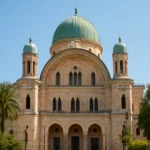
The architectural language of the Jubilee synagogue reflects a careful blend of traditional symbolism and modern practicality. The building speaks to a history of adaptation while preserving the dignified atmosphere associated with Jewish houses of prayer. Its façades, interior spaces, and decorative details were shaped not only by aesthetics but also by needs: acoustics for cantorial singing, sightlines for Torah reading, safety standards, and accessibility for people of all ages.
Exterior Architecture and Spatial Context
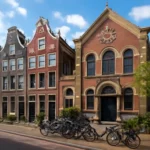
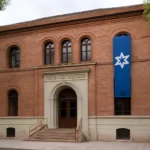
On approaching the sanctuary, visitors encounter a building that communicates its purpose through a dignified silhouette, with characteristic features such as a prominent entry, a menorah-inspired motif, and carefully proportioned windows that admit natural light without glare. The exterior materials—often a blend of brick, stone, and timber accents—offer a sense of permanence while remaining visually harmonious with the surrounding urban fabric. The outer envelope is designed to endure, yet the true revelation lies inside, where the interior arrangement is optimized for both worship and education.
Interior Layout: The Bimah, the Ark, and Seating
Inside, the layout places the bimah (reading platform) in a central or elevated position to facilitate congregational participation. The Ark, housing the Torah scrolls, stands as the focal point at the front, often framed by symbolic architectural elements such asפר decorative columns or an ornamented curtain. Seating arrangements are chosen to foster communal intimacy while preserving clear sightlines to the Torah and to the Torah reader. Material choices—wood, stone, and textiles—contribute to a warm, resonant acoustical environment that supports liturgical singing and communal reading.
Acoustics, Lighting, and Ornamentation
Good acoustics are essential in any synagogue, and the Jubilee complex typically emphasizes a balance between reverberation and intelligibility. The lighting strategy uses a combination of daylight amplification and carefully placed artificial fixtures to create a sense of reverent clarity during services and more intimate lighting for study sessions. Ornamentation—whether in the form of carved motifs, stained glass, or symbolic imagery—serves to convey theological themes without distracting from prayer. The result is a sanctuary that feels both venerable and accessible.
Restorations and Modern Additions
Over the years, the edifice has undergone restorations designed to preserve its historic character while updating its facilities. Modern additions may include accessible entrances, improved climate control for Torah preservation, and adaptable classrooms for religious education. Each restoration project seeks to honor heritage while responding to the practical needs of a living community. The balancing act between preservation and progress is a hallmark of the Jubilee synagogue’s architectural philosophy.
Timberwork and stone detailing that echo historic design vocabularies.
Flexible spaces that can host worship, study, concerts, and social programming.
Environmental considerations aimed at sustainability without compromising atmosphere.
Community Life, Education, and Service
The heart of the Jubilee synagogue is not merely its architecture but the people who gather there. The community thrives on a rhythm of prayer, study, and social action. This is a place where generations learn together, where families celebrate life-cycle events, and where volunteers translate tradition into service. The institution’s programming is typically designed to appeal to a broad spectrum of participants, from children in Hebrew school to adults engaged in advanced Talmud study, from longtime members to curious visitors.
Worship, Liturgy, and Spiritual Practice
Worship in the Jubilee congregation often blends formal liturgy with opportunities for reflection and personal prayer. Depending on the community’s particular streams of practice, services may feature traditional chants, contemporary melodies, and inclusive translations to ensure accessibility for all worshippers. The Sabbath and holiday calendars are observed with a seriousness that honors the past while inviting new expressions in contemporary life. The institution also hosts specials services for major community milestones, interfaith events, and commemorations that honor memory and hope.
Education, Youth, and Lifelong Learning
Education forms a central pillar of the Jubilee institution’s identity. The synagogue typically operates a Hebrew school, adult education programs, and occasional study retreats. Classes may cover a range of topics—from Torah study and Jewish law to modern Hebrew language courses and Jewish history. For younger learners, youth groups, Sunday schools, and after-school programs provide a bridge between home and synagogue life. The goal is to cultivate curiosity, ethical reasoning, and a sense of communal responsibility that extends beyond the walls of the building.
Charity, Community Service, and Social Action
A defining feature of the Jubilee community is its commitment to tzedakah and social justice. Initiatives might include food drives, shelter outreach, elderly care, and partnerships with other faith communities to address local needs. The synagogue often acts as a catalyst for volunteer networks, bringing together members who wish to translate spiritual values into practical aid. In this sense, the building serves as a center for service as well as prayer.
Interfaith Engagement and Cultural Programming
While the primary purpose of this place of worship is Jewish learning and ritual life, it also serves as a venue for interfaith dialogue, cultural events, and public lectures. Concerts, author readings, and exhibitions related to Jewish history and culture help broaden the audience and deepen mutual understanding among diverse communities. The Jubilee institution’s collaborative approach demonstrates how a religious center can be a welcoming space for exploring questions of faith, ethics, and shared humanity.
Weekly services that accommodate varying levels of observance and language needs.
Family programming designed to engage children, teens, and parents in meaningful experiences.
Outreach initiatives to newcomers, refugees, and city residents seeking knowledge about Judaism.
Notable Figures, Cultural Impact, and Collective Memory
The Jubilee Synagogue has been shaped by influential clergy, cantors, educators, and lay leaders whose work left lasting imprints on the community. The institution both reflects and has contributed to broader currents in Jewish religious life, urban history, and civic culture. Cantors and rabbis associated with the congregation often become known not only for their liturgical innovations but also for their mentorship of students, advocacy on social issues, and leadership during times of crisis.
Litrugical Leadership and Teaching
Leaders in the synagogue’s history have emphasized a balanced approach to liturgy, encouraging active participation while preserving the beauty and depth of traditional prayer. Their teaching often focused on making sacred texts accessible, helping congregants connect ancient wisdom to contemporary moral questions. These teachers fostered a sense of intellectual curiosity alongside spiritual devotion, encouraging families to explore Jewish texts together at home and in study circles.
Community Builders and Civic Engagement
Beyond religious services, the Jubilee congregation has contributed to civic life through programs that strengthen social cohesion and mutual aid. Members often collaborate with other faith communities on humanitarian projects, interfaith dialogues, and educational outreach. This cross-community engagement strengthens the synagogue’s external profile and illustrates how a spiritual institution can actively participate in public life without compromising its core values.
Preservation of Memory and Archives
A robust archive and historical record-keeping are crucial for a community with a long memory. The Jubilee institution preserves minutes, ritual manuals, cantorial recordings, and photographs, creating a resource for researchers, students, and family historians. These archives help narrate the story of migrations, milestones, and transformations that have shaped the congregation over generations.
Named leaders who helped guide the community through transitional periods.
Oral histories and written records that illuminate local Jewish life.
Public programming that invites wider audiences to participate in Jewish learning and culture.
The Jubilee Synagogue in Context: Urban Space, Heritage, and Future Prospects
Located within a dynamic urban landscape, the Jubilee institution has always been more than a private space for worship. It also functions as a guardian of heritage in a city that is constantly changing. The synagogue’s neighborhood has experienced demographic shifts, new architectural developments, and evolving public life. Yet the building persists as a stable landmark, sustaining a sense of continuity even as the surrounding streetscape adapts to new needs.
Urban Significance and Heritage Designation
The importance of the long-standing synagogue extends beyond its congregation. It has become a reference point for architectural heritage, a case study in how religious buildings respond to urban pressures, and a site for exploring the relationship between sacred space and city life. In many cases, the Jubilee temple has participated in preservation initiatives that recognize its architectural and historical value, ensuring that future generations can experience its atmosphere and learn from its legacy.
Tourism, Scholarship, and Public Engagement
For visitors and scholars, the Jubilee congregation offers an authentic glimpse into Jewish worship and communal life. Guided tours, archival exhibits, and public talks help demystify the rituals and practices performed within the sanctuary. These activities contribute to a broader understanding of Jewish culture, supporting educational goals that reach well beyond a single faith tradition.
Looking to the Future
Looking ahead, the Jubilee synagogue plans to preserve its spiritual integrity while embracing inclusive practices and innovative programming. Future developments might include revised educational curricula, expanded accessibility, and collaborations with nearby institutions to address shared community concerns. This adaptive spirit—paired with reverence for tradition—ensures that the institution remains relevant and welcoming to worshippers, scholars, and neighbors alike.
Adaptive programming that responds to changing community needs.
Continued preservation of architectural and archival resources.
Enhanced accessibility to ensure participation by all people, regardless of ability.