Judaism Death Customs: A Comprehensive Guide to Jewish Funeral and Mourning Practices explores the traditional and evolving practices that surround death, burial, and grieving in Jewish communities around the world. These customs are rooted in centuries of halachic discussion, communal responsibility, and a shared ethic of honoring the dead and supporting the living. While many details vary by denomination, geography, and community, the overarching framework emphasizes dignity for the deceased, reverence for life, and steady, communal mourning that helps the bereaved transition from loss to healing.
Judaism approaches death with a blend of solemn ritual, practical steps, and communal solidarity. At the heart of this framework are several enduring principles:
Dignity for the deceased (kevod ha-met): The body is treated with respect from the moment of death until burial, reflecting the belief that every person bears the image of God.
Community responsibility (kevudah shel met): The living carry out the rites, often with the help of a chevra kadisha (holy society) to ensure proper ritual purity and care.
Swift burial (taharat ha-met and burial within 24 hours when possible): Traditionally, many communities seek to bury as soon as feasible after death, in keeping with the respect shown to the deceased.
Structured mourning (shiva, shloshim, yarhzeit): Mourning unfolds in stages, offering the bereaved a clear path from immediate loss to eventual reintegration into life.
Prayer and memory (Kaddish, memorial candles, and annual remembrances): Communal prayer and personal remembrance help survivors process grief while maintaining continuity with the community.
Immediate After Death: Aninut, Tahara, and the Chevra Kadisha
Aninut: The Vigil Before Burial
The period known as Aninut lasts from the moment of death until the burial. During this time, the family might arrange logistical details, seek guidance from a rabbi, and prepare for the ritual washing and burial that follow. In many communities, close family members take care to maintain reverence for the deceased, limit distractions, and surround the body with respect. Aninut is a transitional phase in which the emphasis shifts from personal loss to ensuring the proper handling of the deceased according to halacha (Jewish law).
Tahara and Tachrichin: The Sacred Washing and Shrouding
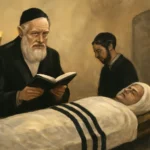
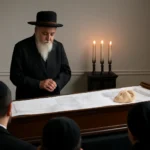
A central element of Jewish death customs is the taharah, a ceremonial washing of the body performed by members of the chevra kadisha (holy society). This sacred washing is done with great care and intention, symbolizing purification and respect for the person who has died. The tachrichin are the simple linen shrouds used to clothe the deceased. In most traditions, men are dressed in a white linen tachrichin with a belt and kippah, and women are dressed in similar shrouds, with variations across communities. The garments are intentionally simple, reflecting the belief that material possessions have no part in the afterlife and that humility is a virtue in death as in life.
The chevra kadisha often coordinates the washing, dressing, and preparation of the body in a way that preserves privacy and dignity. This society is typically an all-volunteer group drawn from the local Jewish community and may operate under the supervision of a rabbi or Jewish court (beth din).
During taharah, biblical verses, psalms, and prayers may be recited, and mourners can participate or observe as appropriate to their community norms.
The tachrichin are designed to unite the deceased with the community and with the shared memory of their life. These garments also reflect modesty and continuity with ancient burial customs described in rabbinic literature.
Aron: The Simple Wooden Casket
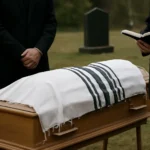
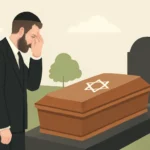
In traditional Jewish practice, the body is placed in an aron (casket) that is typically plain and wooden. The use of a simple, non-extravagant casket is intended to emphasize equality in death and to avoid elevating the material over the spiritual. In many Orthodox communities, caskets may be required by local custom or civil law to be sealed with no metal parts, though modern practice can vary depending on jurisdiction and rabbinic guidance. Some communities also choose to bury without a casket when civil law permits true burial in the ground; other communities use a casket to meet legal obligations or burial site requirements.
Funeral Service and Interment: Rite of Passage to the Burial Ground
The Funeral Service: Eulogies, Psalmody, and Prayer
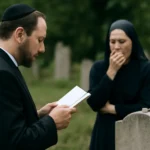
A Jewish funeral service is typically brief and focused on the life of the deceased, the memory left behind, and the hope of consolation for the mourners. Eulogies are common in many communities, but some traditional practices favor a concise service that emphasizes communal prayer. The service may include psalms (tehillim) and passages from the Bible that reflect on life, death, and the mazel of the deceased. In many communities, mourners recite or hear the Kaddish during the service; however, a form of Kaddish may also be recited by mourners at home after the service as part of the mourning period.
Keriah: The Rite of Mourning Garment Rending
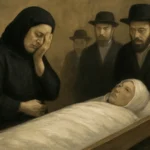
As a visible sign of grief, mourners participate in keriah, a ritual tearing of a garment or a symbolic gesture that signifies the sorrow of losing a loved one. The act serves as a tangible reminder that life has changed and that the mourner has entered a new chapter of mourning. Keriah is typically performed by the immediate family and is done in a respectful, controlled manner, in accordance with community customs.
Burial Practices: The Interment and Early Post-Burial Rituals
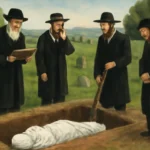
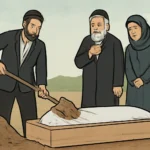
The interment is usually conducted with solemnity and speed, respecting the dignity of the deceased and the needs of the mourners. In many communities, burial takes place as soon as possible after taharah, often on the same day or the next day. The grave is marked with a simple headstone over time, and later visitors may place small stones as a sign of remembrance. The process is intentionally straightforward, without elaborate ceremony, aligning with the ideals of humility and equality before God.
The Mourning Process: Shiva, Shloshim, and Yahrzeit
Shiva: The First Seven Days
The most intensive period of mourning is shiva, typically observed for seven days immediately following the burial. Household rules during shiva vary, but common practices include:
Reserving a quiet, dignified space in the home for visitors and prayer
Receiving guests who come to offer condolences, often bringing food
Reciting prayers and readings, including the Shema and Kaddish by the mourners
Acknowledging the period of mourning with physical signs such as sitting on low chairs or the floor, depending on family custom
During shiva, mourners typically remain at home and are visited by family and friends who provide support, help with meals, and assist in practical matters. The community’s presence is a key source of solace during this intense period.
Shloshim: The Thirty-Day Decrescendo
After shiva, the shloshim period lasts thirty days (one month) for most mourners. The intensity of public mourning gradually diminishes, though certain restrictions on social engagements and revelry continue. Family life resumes more fully, though the bereaved still observe a heightened sense of memory and mindfulness. In some communities, the memorial one-month anniversary is marked with prayers and the recitation of weeping or recitation of specific psalms.
Yahrzeit and Memorial Practices
Beyond the initial mourning period, the annual yahrzeit marks the anniversary of the death. Traditions surrounding the yahrzeit include lighting a memorial candle that burns for 24 hours and reciting Kaddish in synagogue or at home. Over time, families may visit the grave site on the yahrzeit to place stones and reflect on the life of the deceased. Memorial practices help maintain a living memory and reinforce the bond between the living and the dead.
Prayer and Memory: Kaddish, Psalms, and Remembrance
Kaddish: The Mourners’ Prayer
The Kaddish is a central element of Jewish mourning. While it does not mention death or decay, it is a prayer of praise to God. It is traditionally recited by the mourners in a synagogue or in a private setting and serves as a means of elevating the memory of the deceased while acknowledging God’s sovereignty. Different versions exist (Mourner’s Kaddish, Half-Kaddish, etc.), and the practice varies by community. The act of saying Kaddish is often seen as a sign of fidelity to the deceased and an expression of faith amid loss.
Other Liturgical Practices
In addition to Kaddish, mourners commonly recite the psalms (especially Psalm 23 and Psalm 121 among others), prayers for comfort, and portions of the Torah or Megillah readings during memorial periods. Communities may also incorporate singing, personal reflections, and readings from Jewish poets and sages as a means of expressing grief and gratitude for the deceased’s life.
Variations Across Denominations: How Practices Differ
Orthodox Judaism
In Orthodox communities, the framework described above is typically followed with strict adherence to traditional law and custom. The burial often occurs as soon as possible, and the taharah process is performed by a trained chevra kadisha. The casket is plain, and the focus is on humility, simplicity, and speed. Eulogies may be encouraged, but some communities emphasize brevity and the solemnity of the moment. Mourning rituals—shiva, shloshim, and yarhzeit—are observed in a highly structured manner, and the reading of Kaddish is an important element for the mourners.
Conservative Judaism
Conservative communities often balance tradition with modern practice. Burial within 24 hours is common, but flexibility can exist due to community circumstances. The use of a casket and taharah remains significant, though there may be more openness to certain customs that reflect local practice or rabbinic guidance. Eulogies and memorial prayers align with the Jewish liturgical tradition, while shiva and shloshim are observed with emphasis on communal support.
Reform Judaism
In Reform communities, there can be a broader approach to rituals and language. Some families may opt for alternative memorial practices or adjust traditional wording to reflect inclusive or modern sensibilities. The goals—dignity for the deceased, support for the mourners, and meaningful memory—remain central, but the modes of practice may be adapted. Some congregations may not emphasize strict taharah or the use of a traditional tachrichin, depending on rabbinic guidance and community norms, while still honoring Jewish values surrounding death and mourning.
Reconstructionist Judaism
Reconstructionist communities often interpret death rites through a lens of contemporary meaning and communal participation. Rituals may be reimagined to emphasize memory, justice, and ethical caregiving, while preserving the core ideas of respect for the dead and support for the bereaved. Language, liturgy, and practice can vary significantly from community to community, reflecting evolving understandings of Jewish identity and tradition.
Geographic and Cultural Variations: Israel, Diaspora, and Sephardic-Ashkenazi Differences
Israel and the Diaspora
In Israel, burial practices are often influenced by national laws and the ritually urgent expectation to bury quickly, frequently within 24 hours. The public sphere may reflect broader national values and the intense pace of life in urban centers. In the Diaspora, the rituals are shaped by local laws, cemetery regulations, and the availability of chevra kadisha groups. Some communities face logistical complexities—coordinating taharah, transport, and burial across borders—yet the underlying values of dignity and communal support persist.
Sephardic and Mizrahi Traditions
Sephardic and Mizrahi Jewish communities bring distinct liturgical melodies, customs, and vocabulary to death rites. While the core sequence—aninut, taharah, burial, shiva, shloshim, and yarhzeit—remains, the prayers, selichot, and piyyutim (liturgical poems) may differ. Some Sephardic rites include unique blessings or readings from their own religious poets, and family customs surrounding guests and mourning may reflect regional heritage. The use of caskets, textiles, and ritual garments may vary, but the emphasis on dignity, humility, and communal care endures.
Eulogies, Memorialization, and the Community’s Role
Who Speaks Following a Death?
Eulogies are often delivered by family members, friends, or a rabbi who knew the deceased well. In many communities, a measured, heartfelt tribute emphasizes the person’s character, values, and impact on others. Some traditions encourage brief, respectful remembrances rather than long or overly celebratory speeches. In all cases, the purpose of a eulogy is to honor the deceased and strengthen the community’s connection to life and memory.
Memorialization Beyond the Burial
After burial, families and communities continue to honor the deceased through acts of charity, study, and remembrance. Common practices include:
Making charitable contributions in the deceased’s name
Engaging in Torah study or public learning sessions in memory of the deceased
Carrying forward the values and projects dear to the person’s life
Observing the yarhzeit with the lighting of a memorial candle and recitation of prayers
Cremation, Organ Donation, and Other Ethical Considerations
Cremation
Traditional Jewish law generally discourages cremation, favoring burial as a means of returning the body to the earth with respect. Some communities permit cremation under certain circumstances or modern civil law, but the prevailing custom in many Orthodox contexts remains to avoid cremation. Reform, Reconstructionist, and some Conservative communities may show greater flexibility, prioritizing personal conscience and family circumstances while explaining traditional reasons for burial.
Organ Donation and Medical Ethics
Organ and tissue donation is often encouraged as an act of saving lives, reflecting the value of preserving life—pikuach nefesh. However, halachic guidance on organ donation can vary, especially around the definition of death, timing, and consent. Many modern rabbinic authorities permit organ donation when donor criteria are met and death is determined according to widely accepted medical standards. Families should consult with their rabbi and medical team to understand the halachic position applicable to their community and the specifics of the case.
Questions about cremation, autopsy, and other post-mortem procedures are addressed within the framework of Jewish law and communal norms. It is common for families to seek guidance from a rabbi, a chevra kadisha, and medical professionals to navigate these sensitive topics with care and clarity.
Practical Guidance for Families and Communities
Planning and Coordination
Identify and contact a chevra kadisha early to understand the Taharah process and burial logistics.
Confirm local burial options, including cemetery rules about caskets, grave spacing, and grave markers.
Clarify whether the family will observe a full shiva, how visitors will be welcomed, and what meals or support arrangements will look like.
Communication and Bereavement Support
Provide a trusted point of contact for inquiries from friends and extended family.
Offer resources for grief counseling, if desired, while respecting religious beliefs and personal preferences.
Make arrangements for meals (seudat havra’ah) and practical needs, such as transportation to services or the cemetery.
Memorial Planning
After the initial mourning period, families may plan for future memorials, such as the yarhzeit observance, dedication of a memory plaque, or continuing charitable activities in the deceased’s name. Consistency with community customs and personal values can guide these decisions.
Frequently Asked Questions
Is cremation ever permissible in Judaism?
Traditionally, burial is preferred, reflecting ancient customs and the belief in returning the body to the earth. Some communities may permit cremation under particular circumstances, but this is generally avoided in Orthodox practice and discussed case by case in other denominations.
What if death occurs far from home or abroad?
Communication with a rabbi, the local synagogue, or the chevra kadisha is essential. They can coordinate taharah, casket selection, burial arrangements, and transport. In many cases, the body is repatriated for burial, while in others, burial may occur where the death occurred, depending on legal and family considerations.
How are interfaith considerations handled?
In mixed-faith families or communities, respect for each tradition’s beliefs is important. Rabbis and community leaders can help families navigate how to honor multiple traditions in a way that preserves dignity for the deceased and comfort for the mourners.
Conclusion: The Purpose of Jewish Death Customs
Judaism’s death customs serve a purpose beyond mere ritual. They organize loss into a meaningful sequence that honors the deceased, supports the bereaved, and sustains the community. By combining sacred washing, humble burial, and measured mourning, Jewish traditions seek to balance reverence for life with the reality of death. Whether one follows a strictly traditional path or adapts practices to contemporary circumstances, the core values remain the same: dignity for the dead, compassion for the living, and a shared commitment to memory and meaning that endures beyond the grave.
For anyone navigating Jewish death customs for the first time—or for those seeking to deepen their understanding—this guide provides a structured overview of the typical sequence, terminologies, and considerations that characterize Jewish funeral and mourning practices. Always consult with a local rabbi, a chevra kadisha, or a trusted community leader to ensure that specific practices align with local custom and halachic guidance.
Note: The practices described here reflect widely observed norms in many communities, but Jewish burial and mourning customs can vary significantly according to denomination, locale, and family tradition. When in doubt, seek guidance from knowledgeable authorities in your community.